Fundraising Ideas
Fundraising Ideas: The Complete Guide for Schools, Teams & Groups
The best fundraising ideas for schools, sports teams, PTAs, and nonprofits — from product fundraisers and events to no-upfront-cost programs that raise more with less work.
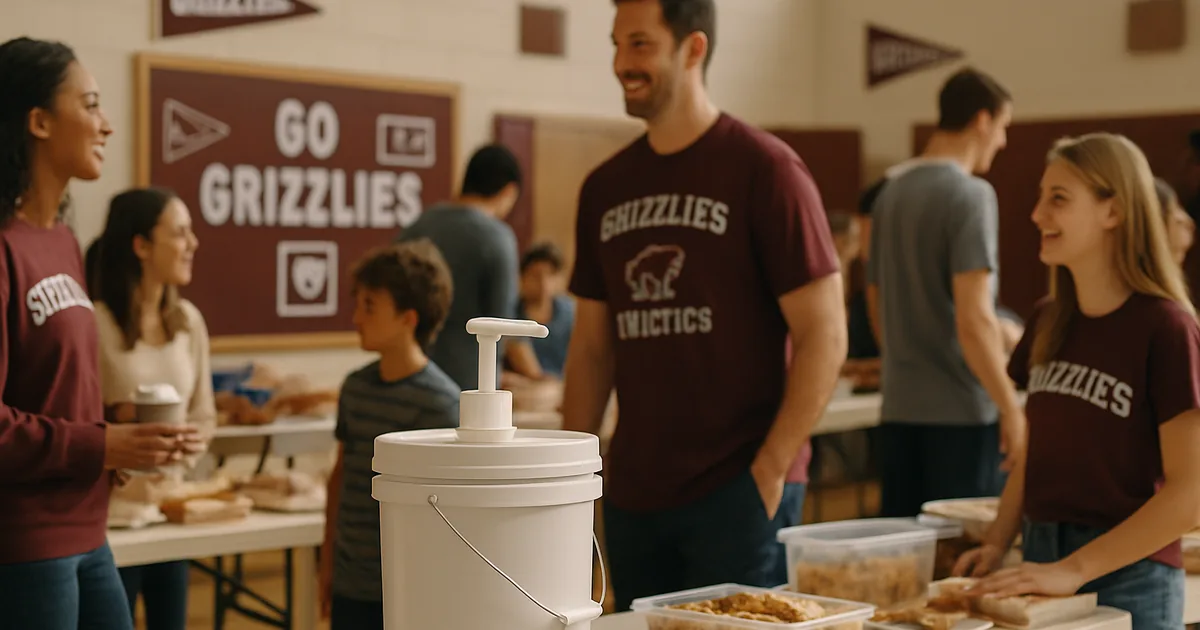
The most effective fundraising ideas fall into three categories: product fundraisers, where supporters buy something useful; event fundraisers, which bring the community together; and direct-support programs like crowdfunding. Product fundraisers that sell household necessities — especially laundry detergent, cleaning supplies, and everyday staples — tend to outperform novelty items because they reach nearly every household, require no extra spending from supporters, and are often available with no upfront cost to the group. Event fundraisers like car washes and dinners build community but demand significant volunteer time. The best choice depends on your group's size, volunteer capacity, and timeline, but programs that combine broad appeal, genuine value for supporters, and simple logistics tend to raise the most with the least friction.
Every school, team, and nonprofit eventually needs to raise money, and the sheer number of fundraising ideas out there makes it hard to know where to start. Some groups default to the same cookie dough or candy bar program they have always run, while others chase elaborate events that sound exciting but demand weeks of volunteer time and rarely break even.
The truth is that the best fundraising idea is not the one with the highest theoretical profit margin or the most creative concept — it is the one your group can actually execute well, that reaches the widest pool of supporters, and that gives people something they genuinely want. A simple program that checks those boxes will typically outperform a complicated one that looks better on paper.
This guide walks through every major category of fundraising idea — product fundraisers, event fundraisers, and direct-support programs — how they compare on effort, profit, and participation, which types of groups each works best for, and how to choose the right one for your situation without wasting time or money on something that will not deliver.
- The most effective fundraisers combine broad appeal, genuine value for supporters, and simple logistics.
- Product fundraisers that sell household necessities tend to outperform novelty items because they reach more buyers and require no extra spending.
- Event fundraisers build community but demand significant volunteer time and often carry lower profit margins.
- No-upfront-cost programs remove financial risk, making them ideal for groups with limited budgets or first-time coordinators.
- Participation matters more than per-item profit — a fundraiser that gets more families involved raises more total dollars.
- The best fundraising idea for your group depends on your volunteer capacity, timeline, and how many people you can realistically reach.
What are the main types of fundraising ideas?
Fundraising ideas break into three broad categories, each with different trade-offs in effort, profit, and participation. Product fundraisers have supporters buy something — food items, household goods, or novelty products. Event fundraisers bring people together for an activity like a car wash, dinner, or fun run. Direct-support programs ask for donations or pledges, often through online platforms.
Product fundraisers tend to raise the most per participant because each supporter can reach multiple buyers — family, neighbors, coworkers — and the group keeps a margin on every sale. Event fundraisers build community and visibility but require significant volunteer coordination and often cap out at lower totals because attendance is limited by time and location. Direct-support programs are the simplest to run but depend entirely on donor generosity rather than offering something of value in return, which can limit participation.
The strongest fundraising ideas combine elements from more than one category — a product sale with a community kickoff event, or an online donation page paired with a tangible thank-you gift. But for most groups, a well-chosen product fundraiser delivers the best balance of effort, reach, and total dollars raised.
What are the best product fundraising ideas?
Product fundraisers work because they give supporters something useful in exchange for their money, which makes the ask easier and widens the pool of buyers. The key is choosing a product that scores well on four factors: how many people will actually buy it, whether it offers genuine value, the profit margin, and how simple it is to manage.
Household-necessity fundraisers — laundry detergent, cleaning supplies, paper products — are the standout category. Everyone needs these items, they are repurchased regularly, and they are non-perishable, which eliminates the frozen-delivery logistics that make food fundraisers hard to run. A bulk laundry detergent program, for example, reaches grandparents, neighbors, and coworkers who would never buy a tub of cookie dough but always need detergent, especially when it costs less per ounce than leading national brands.
Food fundraisers like cookie dough, candy, and popcorn have been popular for decades, but they share the same weakness: they only appeal to people who want a treat, which narrows the buyer pool and caps how much each family can sell. They also tend to be perishable or seasonal, adding complexity. Non-food novelty items — wrapping paper, candles, discount cards — avoid perishability but are usually one-time purchases, so they score lower on repeat appeal.
The best product fundraisers are the ones people were going to buy anyway. When you sell a household staple at a genuinely good price, you are not asking supporters to spend extra money on something they do not need — you are asking them to shift a purchase they already make to support your group. That is the dynamic that drives higher participation and bigger totals.
What are the best event fundraising ideas?
Event fundraisers — car washes, dinners, auctions, fun runs, bake sales — build community, create visibility, and give volunteers a shared experience. They work well for groups with strong volunteer capacity, a tight-knit community, and a goal that does not require raising a large amount quickly.
The trade-off is effort. A successful event demands weeks of planning, day-of coordination, and often upfront costs for supplies, permits, or venue rental. Attendance is capped by time and location, so even a well-attended event may raise less than a product sale that reaches the same number of families over two weeks. Profit margins on events also tend to be lower — a car wash might charge about ten dollars per car, but after supplies and volunteer time, the net per participant is modest.
The strongest event ideas are the ones that double as community-builders and fundraisers rather than pure money-makers. A spaghetti dinner or school carnival creates goodwill and brings families together, which has value beyond the dollars raised. But if your primary goal is hitting a specific financial target with limited volunteer hours, a product fundraiser typically delivers more with less work.
Some groups pair an event with a product sale — a kickoff party to launch a two-week detergent drive, for example — which combines the community benefit of an event with the reach and profit of a product program. That hybrid approach often works better than either alone.
What are the best direct-support and no-inventory fundraising ideas?
Direct-support fundraisers — crowdfunding, pledge drives, donation pages — are the simplest to run because there is no product to manage and no inventory to track. Supporters give money and receive nothing tangible in return, which works well for groups with a compelling story, a loyal donor base, or an urgent need.
The downside is that participation tends to be lower. Asking for a donation is a harder sell than offering something useful at a fair price, and many supporters prefer to get value for their money rather than give it away. Crowdfunding platforms also take a percentage of every donation, which cuts into the total.
Hybrid programs that combine direct support with a small tangible benefit — a branded item, a thank-you gift, or recognition — often perform better than pure donation drives. Some groups also use direct-support fundraisers as a secondary option alongside a product sale, giving supporters who do not want the product a way to contribute.
For groups with limited volunteer capacity or a very short timeline, a well-promoted donation page can be effective. But for most organizations, a product fundraiser that gives supporters genuine value will reach more people and raise more total dollars.
How do you choose the right fundraising idea for your group?
The right fundraising idea depends on five factors: your goal, your timeline, your volunteer capacity, the size of your supporter base, and whether you can afford any upfront cost. A small team with a tight deadline needs something simple and low-risk; a large group with months to plan can handle a more complex event.
Start by setting a specific dollar goal and working backward. If you need to raise a few hundred dollars, a bake sale or small product drive may be enough. If you need several thousand, you need a program that can scale — either a product with broad appeal or a well-attended event. Then assess your volunteer capacity honestly: if you have two or three helpers, favor a no-upfront-cost product program with vendor support; if you have a dozen active volunteers, an event becomes more feasible.
Next, consider your supporter base. A school with hundreds of families can run a large-scale product sale; a small nonprofit with a few dozen donors may do better with a targeted direct-support campaign. Finally, evaluate risk: if your group cannot afford to front money for inventory, eliminate any fundraiser that requires upfront payment and focus on no-cost programs where you collect orders first.
The groups that choose well are not the ones chasing the highest margin or the most creative idea — they are the ones who pick something they can actually execute, that fits their capacity, and that their supporters will respond to. Simple and well-run beats ambitious and half-finished every time.
What fundraising ideas raise the most money?
The fundraisers that raise the most are not necessarily the ones with the highest per-item profit — they are the ones that maximize participation and average sales per person. Total dollars raised is the product of three things: how many people take part, how much each person sells or raises, and the profit per unit. A fundraiser that gets twice as many families involved will raise more than one with a slightly higher margin.
Household-necessity product fundraisers tend to rank among the highest-grossing because they score well on all three terms. Nearly every family can find buyers for a staple like laundry detergent, each participant can sell to multiple households, and the profit per unit is strong when the product is sold in bulk. That broad appeal should support higher participation and higher per-family totals than food or novelty fundraisers, though results vary by group.
Large-scale events like auctions and galas can raise significant amounts, but they require months of planning, corporate sponsorships, and a large volunteer team. For most schools and small nonprofits, the effort-to-return ratio makes them impractical. The sweet spot for most groups is a simple, no-upfront-cost product fundraiser that runs for two to four weeks and reaches as many supporters as possible.
If your goal is to maximize total dollars with the resources you have, favor fundraisers with the widest buyer appeal, the simplest logistics, and the lowest barrier to participation. Complexity and friction are what kill totals, not a few points of margin.
| Factor | Product Fundraiser | Event / Direct-Support |
|---|---|---|
| Buyer reach | Family, neighbors, coworkers | Limited by attendance / donor base |
| Volunteer effort | Moderate coordination | High (events) / Low (direct) |
| Upfront cost | Often none (no-cost options) | Varies (events yes, direct no) |
| Profit potential | Strong, scales with participation | Modest (events) / Variable (direct) |
| Best for | Broad supporter base | Strong volunteers / loyal donors |
Common mistakes to avoid
Choosing a fundraiser that is too complicated
If you cannot explain the fundraiser in one sentence, it is too hard to sell and too hard to run. Simple programs with broad appeal typically outperform elaborate ones.
Picking a product with narrow appeal
Novelty items and niche treats only reach a small slice of your supporter base. A household necessity reaches nearly everyone, which drives higher participation and bigger totals.
Ignoring upfront cost and financial risk
Fundraisers that require the group to buy inventory first put your organization at financial risk if the campaign underperforms. No-upfront-cost programs remove the inventory-purchase risk.
Underestimating the volunteer time required for events
Event fundraisers look fun on paper but demand weeks of planning and day-of coordination. If your volunteer capacity is limited, a product fundraiser will raise more with far less work.
Running a fundraiser for too long
Campaigns that stay open for months lose momentum and raise less than focused two-to-four-week drives. A clear deadline creates urgency and keeps participants engaged.
Failing to communicate the goal and deadline clearly
Supporters need to know exactly what you are raising money for and when the fundraiser ends. Vague goals and open-ended timelines kill participation.
- Good Clean Fundraising program terms ($49.95 per 5-gallon bucket; 50-bucket minimum; group profit about $5–$12 per bucket at 50–99 buckets, $13.45–$15.45 at 100+ by volume; no upfront cost; free shipping at 100+ buckets) — GCF pricing
- GCF return and refund policy (GCF refunds the customer directly; the group keeps its earned profit; 30-day return window) — refund and returns page
- Payment-processing fees — for example, Stripe's published U.S. rate is 2.9% + 30¢ per successful domestic card transaction; crowdfunding and donation platforms set their own fees — Stripe pricing
- Per-ounce comparison — national-brand shelf prices vary by retailer, size, and week, so check current prices before quoting a savings figure. This guide makes no specific percentage claim.
- Comparative statements about participation and profit (“tend to,” “usually”) are editorial guidance built on the fundraising formula (participants × average sales per person × profit per item), which is arithmetic rather than a sourced statistic. No measured benchmark is cited.
Our recommendation
If you are comparing fundraising ideas and want the best balance of effort, reach, and total dollars raised, start with a household-necessity product fundraiser — specifically, a bulk laundry detergent program. Good Clean Fundraising runs The Good Clean Fundraiser, a program built around 5-gallon pump buckets of premium detergent that supporters typically buy at a lower per-ounce price than leading national brands. Groups sell each bucket for about $50 (the listed customer price is $49.95). With a 50-bucket minimum, groups keep about $5 to $12 per bucket at 50–99 buckets (freight varies) and $13.45 to $15.45 per bucket at 100 or more, with no upfront cost, free shipping on orders of 100 buckets or more, and GCF support — a Getting Started packet, instructions, marketing materials, and social-media strategies — while the organizer runs the fundraiser and arranges a commercial delivery address (a loading dock or forklift is recommended). It reaches nearly every household and requires no extra spending from supporters, which should support higher participation and higher per-family totals than food or novelty fundraisers. Good Clean Fundraising advertises a 100% money-back guarantee: GCF refunds a dissatisfied customer directly within 30 days of purchase, and the group keeps its earned profit.
Frequently asked questions
The best fundraising ideas for schools are product fundraisers that sell household necessities like laundry detergent or cleaning supplies, because they reach nearly every family, many require no upfront cost, and give supporters genuine value, often at a lower price than retail. They tend to outperform food and novelty fundraisers on participation because they reach more buyers.
Fundraising ideas that work are the ones that combine broad appeal, genuine value for supporters, and simple logistics. Household-necessity product fundraisers, no-upfront-cost programs, and short focused campaigns with clear goals tend to raise the most with the least friction.
The most profitable fundraisers are not necessarily the ones with the highest per-item margin — they are the ones that maximize participation and average sales per person. Household-necessity product fundraisers tend to deliver strong totals because they reach more buyers, require no extra spending, and scale with participation.
Small groups should favor no-upfront-cost product fundraisers or targeted direct-support campaigns that do not require a large volunteer team or significant planning. A simple program with broad appeal and vendor support will raise more than a complex event that stretches limited capacity.
Event fundraisers build community and visibility but demand significant volunteer time and often raise less per hour of effort than product fundraisers. For groups focused on hitting a specific dollar goal with limited capacity, product fundraisers usually deliver better results.
Many product fundraisers, including bulk laundry detergent programs, are no-upfront-cost — the group collects orders first and never fronts money for inventory. Direct-support fundraisers like crowdfunding also have no upfront cost, though platform fees apply to donations.
Choose a fundraising idea based on your goal, timeline, volunteer capacity, supporter base size, and whether you can afford upfront costs. The right choice is the one you can actually execute well, that fits your resources, and that your supporters will respond to — simple and well-run beats ambitious and half-finished.
Fundraising ideas that raise the most are the ones that maximize participation and average sales per person, not just per-item profit. Household-necessity product fundraisers tend to rank among the highest-grossing because they reach nearly every household, are easy to sell, and scale with participation.
The easiest fundraisers to run are no-upfront-cost product programs with vendor support, where the vendor's coordinator helps with setup and materials and orders ship directly to the group. Direct-support fundraisers like online donation pages are also simple but tend to raise less because they do not offer supporters tangible value.
Household-necessity fundraisers work better because they reach nearly every household, not just people who want a treat, and they require no extra spending from supporters — people simply shift a purchase they were already going to make. They are also non-perishable, which eliminates the frozen-delivery logistics that make food fundraisers hard to run.
The best fundraising idea is not the one with the flashiest concept or the highest theoretical margin — it is the one your group can execute well, that reaches the most supporters, and that gives people something they genuinely want. For most schools, teams, and nonprofits, that means a household-necessity product fundraiser with no upfront cost, broad appeal, and simple logistics. Keep it simple, give people real value, and the total will take care of itself.