
Sports & Athletic Team Fundraising
Football Team Fundraising Ideas That Actually Work
The best fundraising ideas for football teams — from youth leagues to high school programs — that raise serious money without burning out coaches and parents.
The most effective football team fundraisers fall into three categories: necessity-based product sales that reach nearly every household, seasonal event fundraisers that leverage game-day traffic, and hybrid approaches that combine both. Necessity fundraisers — especially household staples like laundry detergent — can outperform traditional options because they appeal to a much wider buyer pool than treats or novelties, require no perishable inventory, and let supporters shift a purchase they already make rather than spend extra money. Event fundraisers like concession stands and car washes can work well but demand significant volunteer hours and depend heavily on weather and attendance. The strongest programs pair a high-margin necessity product with a short two-to-four-week selling window, no upfront cost, and a clear per-player goal that turns the whole roster into active participants.
Football is expensive — equipment, travel, field maintenance, uniforms that get outgrown every season. Most programs need to raise several thousand dollars a year just to keep the lights on, and the pressure to find that money usually lands on a coach or team parent who already has a full schedule.
The good news is that the fundraisers that work best for football teams are not the most complicated ones. The programs that raise the most tend to share a few traits: they reach a wide pool of buyers, they are simple enough that busy parents can actually run them, and they do not require a stadium full of people to show up on one specific Saturday.
This guide covers the fundraising ideas that tend to work for football teams at every level — youth leagues, middle school, and high school programs — including what raises the most, what is easiest to manage during a season, and the mistakes that cost teams money every year.
- Necessity-based fundraisers reach far more buyers than treat or novelty products because every household needs them.
- Game-day events like concession stands can generate steady income but require significant volunteer coordination and depend on attendance.
- No-upfront-cost product programs remove the upfront inventory risk and let teams collect orders before spending a dollar.
- A short two-to-four-week selling window with a clear per-player goal drives higher participation than open-ended campaigns.
- Household-staple fundraisers let supporters shift a purchase they already make rather than asking them to spend extra money.
- The biggest fundraising mistake football teams make is choosing a product with a narrow buyer pool that exhausts family networks in one season.
Why do football teams need fundraisers in the first place?
Football carries costs that other sports do not. Helmets, shoulder pads, and practice gear run hundreds of dollars per player, and most of it has to be replaced or refitted as kids grow. Travel expenses add up fast — buses, hotels, and meals for away games. Field maintenance, referee fees, and insurance are ongoing. Even well-funded programs often rely on fundraising to cover the gap between what the school or league provides and what the team actually needs.
For youth and middle school programs, fundraising is often the only source of income. High school teams may get some budget support, but it rarely covers everything, and coaches are left figuring out how to fund the difference without cutting players or opportunities.
What are the best fundraising ideas for football teams?
The strongest football fundraisers fall into a few proven categories. What works best depends on your team size, volunteer capacity, and how much time you have, but the programs that raise the most share common traits: broad appeal, manageable logistics, and a structure that does not punish you if participation is uneven.
Necessity-based product fundraisers
Selling household necessities — laundry detergent, cleaning products, paper goods — has become a common choice for football teams that need to raise serious money without exhausting their volunteer base. The reason is simple: these products reach nearly every household, not just the small slice that wants candy or cookie dough. A parent can sell to grandparents, neighbors, and coworkers who would never buy a dessert fundraiser but always need detergent.
The economics work in the team's favor, too. Programs like Good Clean Fundraising's bulk laundry detergent fundraiser let teams sell a 5-gallon bucket for $49.95 and keep $13.45 to $15.45 per bucket at 100 or more buckets, depending on order volume, with no upfront cost and free shipping on orders of 100 buckets or more. Supporters pay roughly half the per-ounce price of premium national brands, so they are getting genuine value rather than paying a premium to support the team. That makes the ask easier and repeat participation higher.
The logistics are straightforward: no perishable inventory, no freezer, no timed delivery day. Teams collect orders and payment over two to four weeks, then submit the final order with payment. The program includes a Getting Started packet, instructions, marketing materials, and social media strategies, which can help keep the coach from managing spreadsheets during practice.
Game-day and event fundraisers
Concession stands, spirit wear sales, and 50/50 raffles leverage the built-in traffic of game days. They can generate steady income over a season, especially for high school programs with strong attendance. The trade-off is volunteer time: someone has to staff the booth, manage inventory, and handle cash for every home game. For teams with an active parent base, that is manageable. For smaller programs or those where most parents work Friday nights, it becomes a grind.
Car washes and similar one-day events can work well as supplemental fundraisers but rarely raise enough on their own to fund a whole season. They are weather-dependent, labor-intensive, and the per-car profit is modest. They make sense as a team-building activity or a quick boost for a specific need, but they are not a replacement for a primary fundraiser.
Sponsorships and advertising
Local business sponsorships — banners on the field, ads in the program, logo placement on team materials — can bring in meaningful dollars with relatively little ongoing effort once the relationships are established. The challenge is that someone has to sell them, and that often falls to the coach or a parent who is not comfortable with business development. Sponsorships also tend to be a one-time ask per business per year, so the revenue ceiling is lower than a product fundraiser where every family can participate.
For programs with strong community ties or a parent with sales experience, sponsorships are a great supplemental revenue stream. For most teams, they are not the primary answer.
What fundraiser raises the most money for football teams?
Total dollars raised comes down to three variables: how many people participate, how many items each person sells, and the profit per item. A high-margin product does not help if only half the team participates. A low-margin product can raise more if everyone sells and the buyer pool is wide.
Necessity fundraisers tend to win on total dollars because they score well on all three variables. Participation is higher because the product is easy to sell, average sales per player are higher because the buyer pool is not limited to treat buyers, and the per-item profit is competitive. A football team with 40 players where 35 participate and each sells an average of 6 buckets at $13.45 to $15.45 profit per bucket (at 100 or more buckets) will raise meaningfully more than the same team selling candy bars where 25 participate and average 20 bars each at lower per-unit profit.
How do you run a football fundraiser during the season?
Timing is everything. Most football teams run their primary fundraiser in the first few weeks of the season — late summer or early fall — when energy is high and families are not yet buried in the weekly game schedule. A two-to-four-week selling window keeps urgency high without dragging into the heart of the season when everyone is focused on Friday nights.
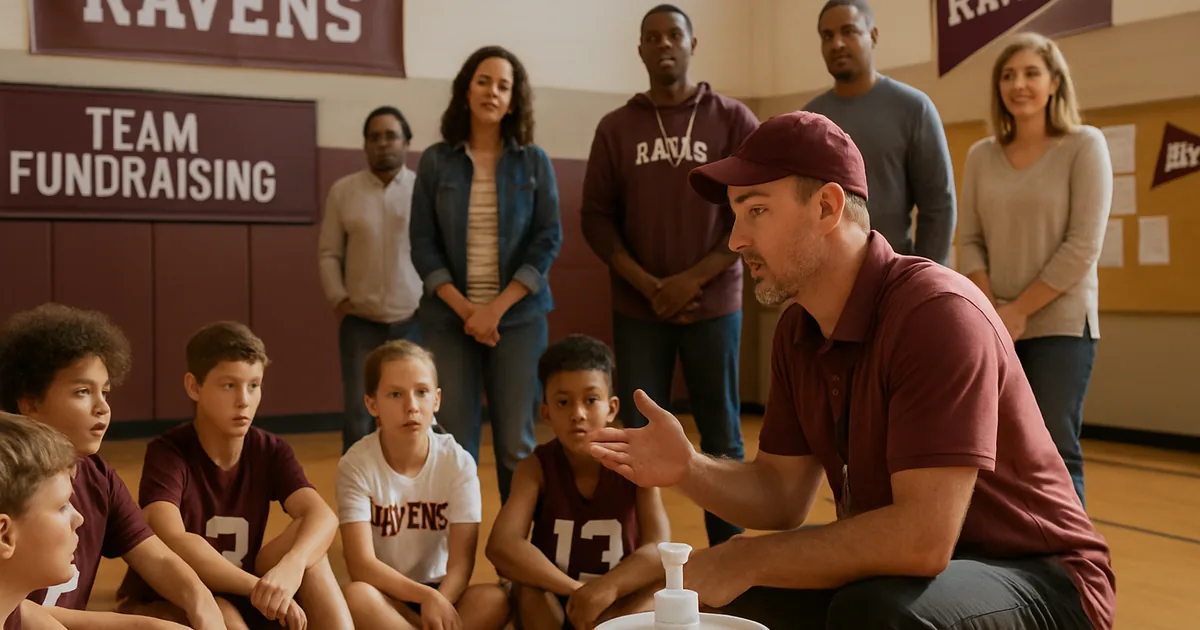
Set a clear per-player goal at the kickoff and make it visible. Players respond to targets, and parents are more likely to participate when they know exactly what is expected. A short team meeting where the coach explains the goal, the product, and the timeline does more to drive participation than a dozen reminder emails.
Delegate the logistics. Recruit one parent to own order tracking and another to handle delivery. The coach should be coaching, not managing spreadsheets.
What mistakes do football teams make with fundraising?
The most expensive mistake is choosing a product with a narrow buyer pool. Cookie dough, popcorn, and candy all appeal to a limited slice of each family's network, so participation and per-player sales both suffer. Teams run the same fundraiser every year, watch the totals decline, and assume fundraising just does not work anymore. The problem is not fundraising fatigue — it is product fatigue.
The second mistake is leaving the selling window open too long. A fundraiser that runs for two months raises less than one that runs for three weeks, because urgency fades and families procrastinate. Set a hard deadline and hold to it.
The third is taking on upfront cost and financial risk. Some programs still require teams to buy inventory in advance, which means the team is on the hook if the fundraiser underperforms. No-upfront-cost programs remove that inventory risk — the team collects orders first and never fronts a dollar.
| Factor | Treat Fundraiser | Necessity Fundraiser |
|---|---|---|
| Buyer pool | Dessert/snack buyers only | Nearly every household |
| Repeat participation | Buyer fatigue after 1-2 seasons | Repurchased regularly |
| Logistics | Perishable, freezer, timed delivery | Non-perishable, ships easily |
| Upfront cost | Often requires inventory purchase | No-cost options available |
| Profit per item | Moderate | Higher with bulk pricing |
Common mistakes to avoid
Choosing a product with a narrow buyer pool
Treats and novelties exhaust family networks fast. A necessity product reaches grandparents, neighbors, and coworkers who would never buy candy.
Leaving the selling window open too long
A three-week deadline raises more than a two-month open window because urgency drives action. Set a hard end date and hold to it.
Taking on upfront cost and financial risk
Programs that require buying inventory in advance put the team on the hook if sales fall short. No-upfront-cost programs remove that inventory risk.
Running too many small fundraisers instead of one strong one
Three mediocre fundraisers burn out volunteers and raise less than one well-run primary campaign. Consolidate your effort.
Not setting a clear per-player goal
Players and parents need a target. A vague ask gets vague results; a specific goal drives participation and accountability.
- Good Clean Fundraising program terms — $49.95 per bucket; $13.45 profit per bucket at 100 to 299 buckets (usually $5 to $12 at 50 to 99 buckets, depending on actual shipping costs), $14.45 at 300 to 499, $15.45 at 500 or more; $0 upfront cost; free shipping at 100+ buckets; 50-bucket minimum (smaller orders are not accepted); 100% money-back guarantee under which, according to the company, any customer who is not satisfied is refunded and the group keeps its profit. — GCF pricing, GCF how it works, and GCF refund and returns.
- Detergent price comparison — Good Clean Fundraising's stated comparison: retail liquid laundry detergent commonly runs about 14 to 19 cents per ounce, while a 5-gallon (640 oz) bucket at $49.95 works out to about 7.8 cents per ounce. Company-supplied figures; retail prices vary by brand, size, store, and region, and value-tier or store brands can cost less.
- Editorial guidance: general planning advice on this page reflects the authors' editorial judgment and common youth-sports fundraising practice; it is not based on measured campaign data or a cited study. Dollar figures in examples are illustrative, not sourced averages.
Our recommendation for football teams
If your football program needs to raise serious money without adding another part-time job to the coach's plate, start with a household-necessity fundraiser. Good Clean Fundraising's bulk laundry detergent program is built for exactly this: teams sell a 5-gallon bucket of laundry detergent for $49.95, supporters pay roughly half the per-ounce price of premium national brands, and your team keeps $13.45 to $15.45 per bucket at 100 or more buckets, depending on order volume. There is no upfront cost, a 50-bucket minimum order, free shipping on orders of 100 buckets or more, and the program includes a Getting Started packet, instructions, marketing materials, and social media strategies. It is a fundraiser that can reach a wide buyer pool with modest volunteer time and often raises more than traditional treat sales. At 50 to 99 buckets, profit is usually $5 to $12 per bucket depending on actual shipping costs.
Before committing, verify four practical fit questions: Can your confirmed buyer network reach the 50-bucket program minimum? Is there local demand for a five-gallon bulk product? Does your delivery point have a commercial address with unloading capacity — the company recommends a location with a loading dock or forklift? And can you coordinate pickup and distribution of product to supporters from that point? A “yes” to all four makes this one of the most straightforward paths to your season funding goal.
Frequently asked questions
The best fundraiser for most football teams is a necessity-based product sale — especially household staples like laundry detergent — because it reaches nearly every household, not just treat buyers, and lets supporters shift a purchase they already make rather than spend extra money. It raises more with less volunteer time than traditional options.
It depends on your program size and what the school or league covers, but most youth and high school football teams need to raise several thousand dollars per season to cover equipment, travel, uniforms, and field costs. A realistic goal is to calculate your known expenses, subtract any guaranteed funding, and set your fundraising target to cover the gap.
Necessity fundraisers — products like laundry detergent that every household already buys — tend to raise the most because they score well on participation, average sales per player, and per-item profit. A wide buyer pool and high repeat participation drive total dollars higher than high-margin novelties with narrow appeal.
Two to four weeks is the sweet spot. A short, focused selling window creates urgency and keeps volunteers engaged, while campaigns that drag on for months lose momentum and raise less. Set a clear deadline at the kickoff and hold to it.
One strong primary fundraiser often raises more and burns out fewer volunteers than three or four smaller ones. Layer in a supplemental option like game-day concessions if you have the capacity, but consolidate your main effort into a single well-run campaign.
Not always. Many product programs are no-upfront-cost, meaning you collect orders first and never front money for inventory. For football teams operating on tight budgets, that removes the upfront inventory risk if the campaign raises less than hoped.
Set a clear per-player goal, explain it at a team meeting with the coach present, and keep the selling window short. Players respond to targets and urgency. When the product is something easy to sell — like a household staple — participation rises because families do not feel like they are pushing an overpriced novelty.
Yes, and most teams do. The best timing is the first few weeks of the season — late summer or early fall — when energy is high and families are not yet buried in the weekly game schedule. Keep the selling window tight so it does not compete with Friday night games.
A no-upfront-cost product fundraiser with included setup materials is often the easiest to run because there is no inventory to manage. The team collects orders, submits them, and the product ships. The coach is not managing inventory, delivery, or spreadsheets during practice.
Football teams use laundry detergent fundraisers because detergent is a household necessity every family already buys, so it reaches a much wider buyer pool than treats or novelties. It is non-perishable, easy to store and deliver, and supporters pay roughly half the per-ounce price of premium national brands, so they get real value. Teams keep $13.45 to $15.45 per bucket at 100 or more buckets with no upfront cost, and the whole program can be run in two to four weeks with minimal volunteer time.
Football teams do not need a dozen different fundraisers to hit their goals — they need one strong program that reaches a wide buyer pool, keeps logistics simple, and does not burn out the volunteers running it. A necessity fundraiser checks all three boxes, and when you pair it with a clear goal and a short timeline, it raises more with less effort than any combination of car washes and candy bars ever will.