
Fundraising Goals: How to Raise $X
How to Raise $20,000 for a Program
A step-by-step plan to reach a $20,000 fundraising goal — from choosing the right product to organizing volunteers and hitting your number.
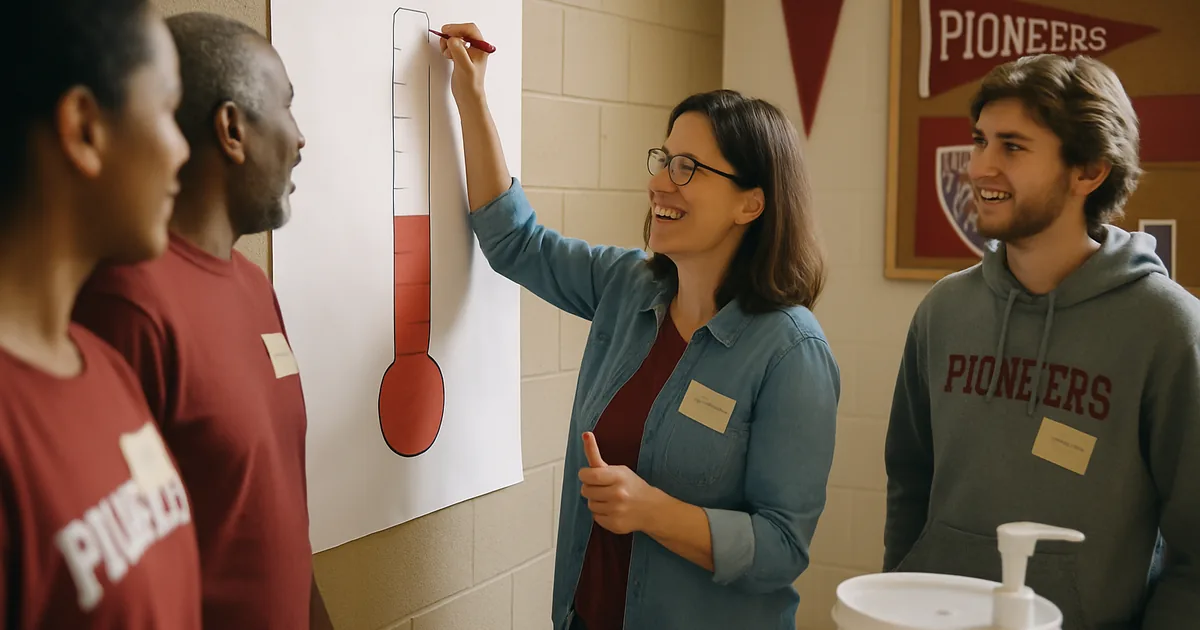
Raising $20,000 requires a clear plan built around three levers: the profit per item you sell, how many participants you have, and how many sales each participant averages. Start by choosing a product with strong per-unit profit and broad appeal — household necessities tend to outperform novelty items because nearly every supporter will buy. Then work backward from your goal to calculate how many units you need to sell total, divide that across your participant base, and set a realistic per-person target. Run a focused two-to-four-week campaign with a strong kickoff, regular check-ins, and recognition for top sellers. A campaign at this size is best served by a high-margin consumable product, active volunteer coordination, and a tight timeline that keeps momentum high from start to finish. For example, at Good Clean Fundraising's $15.45 profit per bucket (orders of 500 or more), $20,000 takes about 1,295 buckets.
A $20,000 fundraising goal is substantial, and it is realistic mainly for larger school groups, booster clubs, and programs — if the plan is built around the right product and realistic participation numbers. The difference between groups that hit this target and those that fall short often comes down to three decisions made before the campaign even starts: what they sell, how they calculate the math, and how they organize their volunteers.
This is not a goal you reach by hoping for the best or running the same tired catalog fundraiser one more time. It requires a product people actually want to buy, a per-unit profit high enough that the math works without requiring heroic sales from every family, and a coordinator who knows how to keep momentum going for three to four weeks straight.
This guide walks through the whole process: how to choose a fundraiser that can realistically deliver this kind of total, how to calculate exactly how many units you need to sell, how to recruit and organize the volunteers who will get you there, and the six-step plan to run the campaign from kickoff to payout.
- A $20,000 goal is reachable when you combine strong per-unit profit, realistic participation, and a product with broad appeal.
- Household-necessity products tend to raise more at this scale than novelty or treat items because the buyer pool is wider.
- Work backward from your goal to calculate total units needed, then divide that across your participant base to set per-person targets.
- A focused two-to-four-week timeline keeps urgency high and prevents the campaign from losing momentum.
- Active volunteer coordination — kickoff, mid-campaign check-ins, and recognition — supports participation throughout the campaign.
- A consumable product supporters repurchase is a better fit for a large goal than a one-time novelty item.
What kind of fundraiser can realistically raise $20,000?
Not every fundraiser is built to reach a goal this size. Small-margin novelty items, one-time purchases, and products with narrow appeal tend to cap out well below $20,000 unless you have an unusually large participant base. The fundraisers best suited to this target share three traits: strong per-unit profit, a product people actually need and will buy in volume, and logistics simple enough that volunteers stay engaged for the full campaign.
Household-necessity products — laundry detergent, cleaning supplies, paper goods — score well on all three. They reach nearly every household, they carry solid margins when sold in bulk, and supporters are shifting a purchase they were already going to make rather than buying something extra. That wider buyer pool is what makes the math work at scale: instead of each family scrambling to find a handful of people who want cookie dough or popcorn, they are offering a staple product to grandparents, neighbors, coworkers, and anyone else who does laundry.
Event fundraisers like car washes or dinners can work for smaller goals, but they rarely scale to $20,000 without massive volunteer hours and perfect weather. Catalog programs with thin margins require enormous participation to hit this number. A consumable necessity with a per-unit profit high enough to make the total achievable without requiring every family to be a top seller is the better fit for a goal this size.
How do you calculate how much you need to sell to raise $20,000?
The math is straightforward: your goal divided by your profit per unit tells you how many units you need to sell. If you are selling Good Clean Fundraising buckets at the $15.45 profit rate for orders of 500 or more, you need to move about 1,295 buckets to reach $20,000 ($20,000 ÷ $15.45). That total then divides across however many participants you have — if 100 families are selling, each family needs to average about 13 buckets; if 150 families participate, the per-family target drops to about 9.
This is why per-unit profit matters so much at this scale. A product that nets your group only a few dollars per item means you need to sell thousands of units, which pushes the per-family target into territory most volunteers will not hit. A product with strong per-unit profit keeps the individual sales targets realistic and achievable.
The other variable is participation. A goal this size is hard to reach if only a small fraction of your group is actively selling. You need broad participation and a handful of strong sellers who go above the average. The more families take part, the lower each family's target; relying on one or two superstars leaves the goal exposed.
What product should you sell to raise $20,000?
For a goal this size, the best products are consumable household necessities with strong per-unit margins and universal appeal. Laundry detergent is the standout in this category: every household uses it, it is repurchased regularly, and when sold in bulk it carries a profit per unit that makes a $20,000 goal more realistic without requiring massive participation.
Compare that with traditional fundraising products. Cookie dough, candy, and popcorn appeal to a narrow slice of buyers — people who want a treat — and most families exhaust that pool quickly. Catalog items often carry thin margins, so hitting $20,000 means selling huge volumes. Household necessities flip the dynamic: instead of asking supporters to buy something extra, you are offering them a product they already purchase at a better price than they would pay at the store, which dramatically widens the buyer pool.
One concrete example: a group selling 5-gallon buckets of laundry detergent at about $50 per bucket and keeping $15.45 per bucket (the rate for orders of 500 or more) would need to sell about 1,295 buckets to reach $20,000. If 120 families participate, that is roughly 11 buckets per family — a more achievable target when the product is a necessity and the price is about half the per-ounce cost of leading national brands. The buyer is getting genuine value, the seller is not making an awkward ask, and the group is keeping a strong margin.
How do you organize volunteers to reach a $20,000 goal?
A goal this size requires more than a product and a signup sheet. You need a small core team to handle coordination, a clear communication plan, and a structure that keeps volunteers engaged and accountable for the full campaign. Start by recruiting three to five lead volunteers to split the main jobs: tracking orders, managing communication, coordinating delivery, and recognizing top sellers. When one person tries to do it all, burnout is almost guaranteed and the campaign stalls halfway through.
Set clear expectations at the kickoff. Every participant should know the overall goal, their individual target, the timeline, and exactly how to collect and submit orders. Do not leave this to chance — hand out order forms, walk through the process, and make sure every family leaves the kickoff ready to start selling that day.
Mid-campaign check-ins are critical. Send a progress update at the one-week mark showing how close the group is to the goal and recognizing top sellers by name. A leaderboard or shout-out list creates friendly competition and reminds families who have not yet started that the campaign is happening now, not later. A second reminder a few days before the deadline catches stragglers and pushes strong sellers to one more round of asks.
Finally, recognize and reward participation. Whether it is public thanks, small prizes for top sellers, or a celebration when the goal is hit, acknowledgment keeps volunteers motivated and can make them more likely to participate next time. Treating volunteers well and making selling feel like a team effort, not a solo grind, helps a large campaign hold together.
How long should a $20,000 fundraising campaign run?
Two to four weeks is a common window for a goal this size, and Good Clean Fundraising recommends 2–3 weeks for its program. A campaign shorter than two weeks may not give families enough time to reach all their potential buyers; a campaign longer than four weeks tends to lose urgency. A three-week plan works well: one week to build momentum, one week of peak activity, and one final week to close out stragglers and push top sellers to their final totals.
Set a firm end date at the kickoff and hold to it. Open-ended campaigns with no deadline often struggle to hit large goals because there is little reason for families to act now rather than later, and later turns into never. A clear deadline creates urgency, focuses effort, and gives the coordinator a date to plan delivery and payout around.
Within that timeline, plan for three key moments: the kickoff where everyone starts together, a mid-campaign check-in to share progress and recognize leaders, and a final push reminder three to four days before the deadline. Those three touchpoints keep the campaign visible and keep volunteers engaged when the initial excitement fades.
What are the steps to run a $20,000 fundraising campaign?
Once you have chosen your product and done the math, the campaign itself follows a repeatable six-step process. These steps take you from planning to payout and give you a structure to keep the effort organized and on track.
- Set your goal and do the math. Confirm your $20,000 target, choose a product with strong per-unit profit, and calculate how many total units you need to sell and how that divides across your participant base.
- Recruit your core volunteer team. Line up three to five lead volunteers to handle order tracking, communication, delivery coordination, and recognition so the work does not fall on one person.
- Plan your timeline and set a firm deadline. Choose a two-to-four-week selling window with a clear end date, and schedule your kickoff, mid-campaign check-in, and final reminder.
- Hold a strong kickoff. Launch everyone on the same day with a clear explanation of the goal, the per-family target, the product, and exactly how to collect and submit orders.
- Track progress and communicate regularly. Send a mid-campaign update showing progress toward the goal, recognize top sellers by name, and send a final reminder three to four days before the deadline.
- Collect, deliver, reconcile, and thank. Gather all orders and payments, coordinate delivery, reconcile your totals to confirm you hit the goal, and publicly thank every participant and supporter.
Common mistakes to avoid
Choosing a product with margins too thin to make the math work
If your per-unit profit is low, you need to sell enormous volumes to hit $20,000, which pushes per-family targets into unrealistic territory. Pick a product with strong margins first, then do the math.
Setting an open-ended timeline with no firm deadline
Campaigns without a clear end date lose urgency and participation fades. A firm three-week window usually works better than an open-ended campaign that drags on for months.
Skipping the math and hoping for the best
Work backward from your goal to calculate exactly how many units you need to sell and what that means per participant. Launching without that math is guessing, and guessing makes a $20,000 target hard to hit.
Weak or nonexistent mid-campaign communication
A strong kickoff is not enough. Progress updates, leaderboards, and reminders keep volunteers engaged and catch families who have not yet started selling.
Relying on a handful of top sellers instead of broad participation
A few superstars can help, but a $20,000 goal requires steady contributions from much of your group. Build a plan that gets as many families as possible actively selling.
- Good Clean Fundraising program terms — a 5-gallon bucket sells for $49.95; the group keeps $13.45 at 100 to 299 buckets, $14.45 at 300 to 499, and $15.45 at 500 or more; no upfront cost; free shipping at 100+ buckets. — GCF pricing and GCF how it works
- GCF return and refund policy — refund and returns page
- Detergent pricing comparison — Good Clean Fundraising states its price works out to roughly half the per-ounce store price of leading national-brand liquid detergent, or about 7 to 8 cents per ounce for a $49.95, 640-ounce bucket; GCF has not published the specific retailers, sizes, or dates compared.
- Fundraising timeline and urgency — editorial planning guidance; no external statistical source claimed.
Our recommendation for a $20,000 goal
If you are planning a campaign to raise $20,000, the clearest path is a household-necessity product with strong per-unit profit and universal appeal. Good Clean Fundraising runs The Good Clean Fundraiser, a bulk laundry-detergent program built for exactly this kind of goal: groups sell premium 5-gallon pump buckets for about $50 each — a household staple supporters buy at roughly half the per-ounce price of leading national brands — and keep $13.45 to $15.45 per bucket depending on order volume. To reach $20,000 at the $15.45 rate for orders of 500 or more, a group would need to sell about 1,295 buckets; with 120 participating families, that is about 11 buckets per family. The program is no-upfront-cost and includes free shipping on orders of 100 buckets or more; a dedicated coordinator will help you get started while your group arranges a commercial delivery address (a loading dock or forklift is recommended). Good Clean Fundraising advertises a 100% money-back guarantee: an unhappy customer contacts support and returns the product within 30 days of purchase, GCF refunds that supporter directly, and the group keeps its earned profit.
Frequently asked questions
Raising $20,000 requires a product with strong per-unit profit, broad participation, and a focused campaign. Choose a household necessity with wide appeal, calculate how many units you need to sell to hit the goal, recruit a core volunteer team, and run a two-to-four-week campaign with a strong kickoff, regular progress updates, and a firm deadline.
Fundraisers suited to a $20,000 goal combine strong per-unit profit, a product nearly every household will buy, and simple logistics that keep volunteers engaged. Household-necessity products like bulk laundry detergent tend to fit this goal better than novelty items or thin-margin catalog programs because the buyer pool is wider and the per-unit profit makes the math more realistic.
It depends on your product and how much each participant sells on average. If your group keeps $15.45 per bucket (the rate for orders of 500 or more) and each family averages 12 buckets, you would need about 108 participating families to reach $20,000 (about 1,295 buckets). Broader participation with lower per-family averages can also work; the key is doing the math before you launch.
Campaigns at this scale commonly run for two to four weeks, and Good Clean Fundraising recommends 2–3 weeks for its program. A three-week timeline gives families enough time to reach their buyers without losing urgency. Campaigns that drag on longer tend to lose momentum.
The best products for a goal this size are consumable household necessities with strong per-unit margins and universal appeal. Laundry detergent, sold in bulk, is the standout: every household uses it, it is repurchased regularly, and when priced at about half the per-ounce cost of national brands it reaches a wider buyer pool than novelty or treat items.
Divide your goal by your profit per unit to get total units needed, then divide that by your number of participants to get the per-family target. For example, at $15.45 profit per bucket (the rate for orders of 500 or more), you need to sell about 1,295 buckets; with 120 families participating, that is about 11 buckets per family.
Not necessarily. Many high-margin product programs are no-upfront-cost, meaning you collect orders first rather than fronting money for inventory. For a goal this size, a no-upfront-cost structure removes the risk of paying for unsold inventory and makes the campaign accessible to groups without a large treasury.
The most common mistakes are choosing a product with margins too thin to make the math work, setting an open-ended timeline with no firm deadline, skipping the calculation of how many units are needed, weak mid-campaign communication, and relying on a few top sellers instead of building broad participation.
Good Clean Fundraising provides a bulk laundry-detergent program where groups sell 5-gallon buckets for about $50 and keep $13.45 to $15.45 per bucket depending on order volume. To reach $20,000, a group sells about 1,295 buckets at the $15.45 rate. The program is no-upfront-cost and includes free shipping at 100 buckets or more; a dedicated coordinator will help you get started while the group arranges a commercial delivery address (a loading dock or forklift is recommended).
A $20,000 fundraising goal is reachable when you start with a product that makes the math work, calculate exactly how many units you need to sell, recruit a team to share the coordination load, and run a focused campaign with a firm deadline. Groups that reach this number tend to be organized: they choose a necessity product with strong margins and keep volunteers engaged from kickoff to payout.