Product Fundraising: What to Sell
Household Product Fundraising: Why Necessity Items Can Outperform Novelties
How selling what people already buy — laundry detergent, cleaning supplies, and everyday staples — widens participation, simplifies logistics, and can raise more than traditional treat fundraisers.
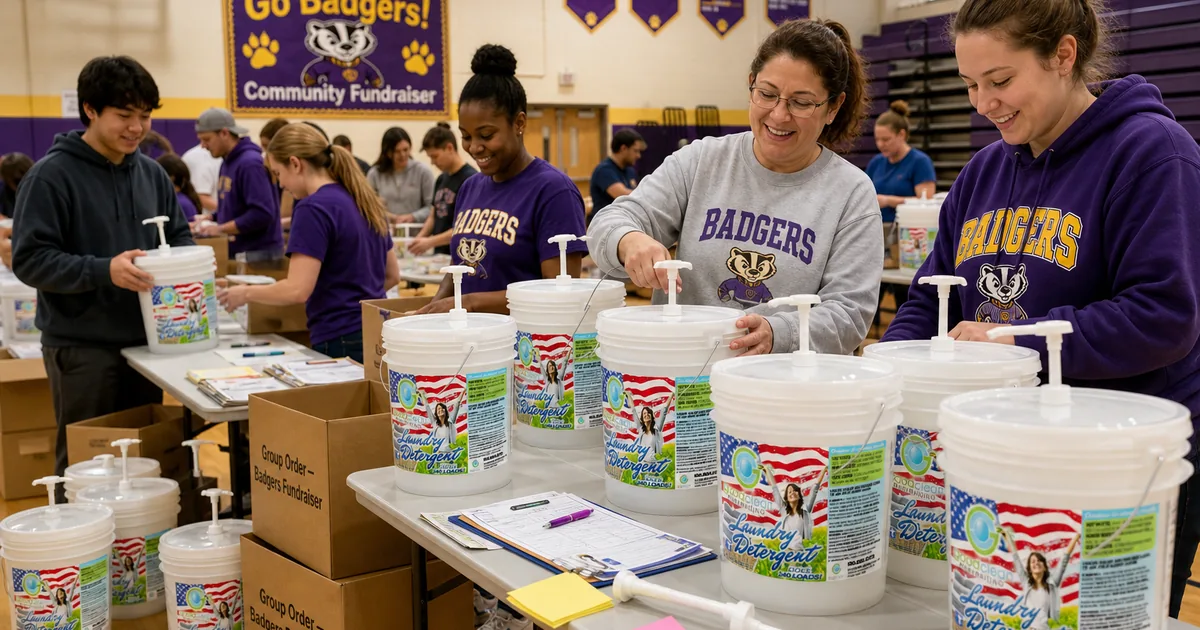
Household product fundraising — selling everyday necessities like laundry detergent, cleaning supplies, and paper goods — often outperforms traditional novelty and treat fundraisers because it reaches a wider buyer pool, eliminates the awkwardness of asking supporters to spend extra money on something they don't need, and allows groups to offer genuine value at prices below retail. A bulk household-necessity fundraiser works by shifting a purchase supporters already make from their usual store to the group's campaign, so they save money while backing the cause. The strongest programs are non-perishable, require no upfront cost, and provide a product at a lower per-unit price than premium national brands, which may make selling easier and participation higher. Groups keep a per-item profit while supporters get a staple they use regularly at a good per-ounce price — a dynamic that can drive repeat participation and higher totals than asking people to buy marked-up cookies, candy, or novelty items they didn't need in the first place.
For decades, school and team fundraisers followed the same script: sell a treat, a novelty, or a marked-up catalog item, and hope enough people buy it out of goodwill. The problem with that model is that it relies on supporters spending extra money on something they don't actually need, which limits who will buy, how much they'll spend, and whether they'll come back next time.
Household product fundraising flips that dynamic. Instead of asking supporters to buy something extra, it asks them to shift a purchase they're already making — laundry detergent, cleaning supplies, paper goods — from their usual store to the group's campaign. The supporter saves money, the group raises funds, and no one is left with a tub of cookie dough they didn't want. It's a fundamentally different value proposition, and it shows up in the results.
This guide explains why household-necessity fundraisers can beat novelty and treat programs, how the economics work for both the group and the buyer, what makes a strong household-product program, how to evaluate your options, and why one category — bulk laundry detergent — is a strong choice for groups that want high participation and repeatable results.
- Household necessities appeal to a wide buyer pool — most households need detergent, cleaner, or paper goods — while treats and novelties appeal only to a narrow slice of potential buyers.
- Shifting a purchase supporters already make removes the awkwardness and resistance that comes with asking them to spend extra money.
- The best household-product fundraisers offer genuine value — a useful staple at roughly half the per-ounce price of premium national brands — so supporters feel they got a deal, not that they overpaid to help.
- Non-perishable household products eliminate the frozen-delivery logistics and spoilage risk that make food fundraisers hard to run.
- No-upfront-cost household-product programs remove inventory financial risk for the group while still delivering strong per-item profit.
- Bulk formats — like a 5-gallon detergent bucket instead of a single bottle — increase per-transaction profit and reduce the number of sales needed to hit a goal.
- Household staples drive repeat participation because supporters use them up and are willing to buy again, unlike one-time novelty purchases.
Why can household products outperform traditional fundraisers?
The difference comes down to buyer breadth and value perception. A cookie dough or candy fundraiser appeals mainly to people who want a treat — a subset of your potential supporters. A household-necessity fundraiser appeals to anyone who does laundry, cleans their home, or uses paper products — a much wider pool than treat or novelty buyers. That wider pool means more families find buyers, and more buyers per family means higher totals.
The second advantage is that household products remove the guilt and resistance that come with traditional fundraisers. When you ask someone to buy a $15 tub of cookie dough, they know they're paying a premium to support the group — the product itself isn't a good deal. When you offer a 5-gallon bucket of detergent for about half the per-ounce price of premium national brands, the supporter is getting genuine value. They're not spending extra to help; they're shifting a purchase they were going to make anyway and saving money in the process. That changes the conversation entirely.
Third, household products are consumable and repurchased regularly, which makes them ideal for repeat fundraisers. A family that buys detergent in the fall will need more in the spring. A novelty item is a one-time purchase, so you're constantly hunting for new buyers instead of building a base of repeat supporters.
What makes a strong household-product fundraiser?
Not all household-product programs are created equal. The strongest ones share five characteristics: broad appeal, genuine value to the buyer, strong per-item profit for the group, a $0 upfront cost or inventory financial risk, and simple logistics. A program that scores well on all five is likely to outperform one that's weak on any of them.
Broad appeal means the product is something nearly every household uses regularly — laundry detergent, all-purpose cleaner, paper towels, trash bags. Niche household items (specialty cleaners, single-use gadgets) shrink your buyer pool back down to a subset, which defeats the whole point of switching to necessities.
Genuine value means the supporter is getting a better deal than they'd get at the store, not a marked-up version of the same product. If a household item is priced at or above retail, you're back to asking people to overpay out of goodwill, and participation drops. The best programs price below retail — in the detergent example below, at roughly half the per-ounce price of premium national brands — so supporters feel they're getting real value while backing the group.
Strong per-item profit matters because it determines how many sales you need to hit your goal. A program that keeps a few dollars per item requires far more transactions than one that keeps ten or fifteen dollars per item. Bulk formats — a 5-gallon bucket instead of a single bottle, a case instead of a roll — tend to deliver higher per-transaction profit, which makes hitting a goal faster and easier.
No upfront cost removes the financial risk that sinks many first-time or small-group fundraisers. If the group has to buy inventory in advance, a campaign that underperforms leaves the organization holding the cost. No-upfront-cost programs flip that: the group collects orders first, places one bulk order, and never fronts a dollar.
Simple logistics means the product is non-perishable, ships and stores easily, and doesn't require special handling. Food fundraisers often fail on this point — frozen cookie dough needs a timed delivery day and freezer space, chocolate melts in warm weather, popcorn tins dent and leak. Bulk detergent and cleaning supplies sit on a shelf indefinitely and hand off without drama.
How does the profit and value work for household-product fundraisers?
The economics of a household-necessity fundraiser are straightforward: the group sells a product at a price that's well below retail but high enough to leave a meaningful profit after the supplier's cost. The supporter saves money compared to buying the same item at a store, the group keeps a solid per-item margin, and the supplier makes a modest profit on volume. Everyone wins because the value is real, not manufactured.
Here's what that looks like with a concrete example. Good Clean Fundraising's bulk laundry-detergent program — one example of household-necessity fundraising — sells a 5-gallon (640-ounce) bucket of detergent for $49.95. At that price, the buyer is paying roughly 7 to 8 cents per ounce. Premium national-brand liquid detergents typically run about 13 to 16 cents per ounce, so a supporter may pay roughly half the per-ounce price of premium national brands. Value-tier and store brands can cost less, but on a per-ounce basis the saving against premium brands is meaningful.
For the group, the profit is about $13.45 to $15.45 per bucket at 100 or more buckets, depending on order volume, with free shipping on orders of 100 buckets or more. That per-bucket profit is a meaningful amount per transaction, which can mean fewer sales are needed to hit a goal. As an illustration, a group selling 200 buckets at $13.45 per bucket would keep about $2,690.
The key difference from traditional fundraisers is that the supporter isn't paying a premium to help the group — they're paying less than retail for something they need. That removes the resistance and guilt that cap participation in treat and novelty fundraisers, and it's one reason household-necessity programs may see higher participation rates and larger average orders per family.
Why has laundry detergent become the standout household-product fundraiser?
Laundry detergent scores well on the factors that make a strong household-product fundraiser, which is why it is a strong choice for groups moving away from treats and novelties. It's a true necessity — every household with a washing machine buys it regularly — so the buyer pool is as wide as it gets. It's consumable and repurchased, so supporters come back. It's non-perishable and ships and stores easily, so logistics are simple. And in bulk formats like a 5-gallon bucket, it delivers strong per-transaction profit for the group while offering supporters a genuinely good price.
The bulk format is what makes detergent particularly effective. A 5-gallon bucket holds 640 ounces — several times the size of a typical store bottle — and may last a household a good while, depending on use. That means one sale delivers the profit of multiple smaller transactions, and the supporter makes fewer trips to the store. For coordinators, it means hitting a fundraising goal with fewer total sales, which is easier to manage and less work for volunteers.
Detergent also avoids the perception problems that sink other fundraisers. Few people feel guilty buying detergent — it's not a treat they shouldn't have, it's not an impulse purchase, and it's not something that will sit unused in a closet. It's a straightforward value exchange: the supporter needs detergent, the group is offering it at a better price than the store, and everyone benefits. That clarity is what drives high participation.
Good Clean Fundraising has built its entire program around this model. Groups sell a bulk detergent in 5-gallon pump buckets for $49.95, supporters pay roughly half the per-ounce price of premium national brands, and groups keep about $13.45 to $15.45 per bucket at 100 or more buckets with no upfront cost and free shipping on orders of 100 buckets or more. The company provides a Getting Started packet, instructions, marketing materials, and social media strategies, so a volunteer organizer isn't figuring out logistics alone. Good Clean Fundraising advertises a 100% money-back guarantee under which, according to the company, any unsatisfied customer is refunded and the group keeps its profit.
How do household-product fundraisers compare to traditional options?
The comparison comes down to who will buy, what they're getting for their money, and how easy the program is to run. Household-necessity fundraisers may win on all three for many groups, but it helps to see the differences side by side.
Traditional treat fundraisers — cookie dough, candy, popcorn — appeal mainly to people who want a dessert or snack, which is a narrow slice of potential buyers. They're often perishable or temperature-sensitive, which creates delivery and storage headaches. They're marked up well above their everyday value because both the group and the fundraising company need to profit off that single sale, so supporters know they're overpaying. And they're one-time purchases, so you're starting from scratch with every campaign.
Household-necessity fundraisers can reach a wide buyer pool because most households need the product. They're non-perishable and easy to store and deliver. They offer genuine value — a useful staple at roughly half the per-ounce price of premium national brands — so supporters feel they got a deal, not that they donated out of obligation. And they're consumable and repurchased, so the same supporters come back campaign after campaign.
Catalog and novelty fundraisers fall somewhere in between. They avoid perishability, but they still rely on supporters buying something they don't need at a price above its real value. Participation tends to be lower than household necessities because the value proposition is weaker.
Event fundraisers — car washes, bake sales, fun runs — can work well for groups with strong volunteer capacity, but they require significant upfront planning, day-of coordination, and often weather-dependent execution. A product fundraiser, by contrast, can run mostly on its own once the kickoff is done: families sell on their own schedule, orders come in over a few weeks, and the coordinator tracks and reconciles at the end.
What should you look for when choosing a household-product fundraiser?
Start with the five factors that define a strong program: broad appeal, genuine value, strong per-item profit, no upfront cost, and simple logistics. Then confirm the specifics in writing before you commit.
Ask what the group keeps per item and whether that profit changes with order volume. Some programs offer tiered pricing where larger orders unlock higher margins or free shipping — that can make a meaningful difference to your total. Ask whether there's any upfront cost or minimum order, and if so, what happens if you don't hit it. No-upfront-cost programs remove that risk entirely.
Ask what the supporter is actually getting for their money, and compare it to retail. If the product is priced at or above what they'd pay at a store, it's not a good deal, and participation will suffer. The best programs price below retail — in the detergent example below, at roughly half the per-ounce price of premium national brands — so the value is obvious and the sell is easy.
Ask about logistics: how does the product ship, who handles delivery, what support does the coordinator get, and what happens if there's a problem. Programs that provide clear setup instructions, materials, and delivery steps are often easier for a volunteer organizer to run than ones that leave everything to the group.
Finally, ask about guarantees. A program that advertises a money-back guarantee signals confidence in what it's selling; confirm the exact terms. A program that doesn't is asking supporters to take a risk, which lowers participation.
| Factor | Household Necessity (e.g. Detergent) | Traditional Treat (e.g. Cookie Dough) |
|---|---|---|
| Buyer pool | Nearly every household | Dessert/snack buyers only |
| Value to supporter | Useful staple at ~½ premium-brand price | Marked up above everyday value |
| Repeat purchases | Consumable, repurchased regularly | One-time or occasional |
| Perishability & logistics | Non-perishable, easy to store/deliver | Often perishable, frozen delivery |
| Upfront cost | Many no-upfront-cost options | Often requires inventory advance |
| Per-item profit | Strong (bulk formats) | Moderate (more sales needed) |
| Participation rate | Higher (genuine value, easy sell) | Lower (narrow appeal, weak value) |
Common mistakes to avoid
Choosing a household product with narrow appeal
Specialty cleaners or niche household items shrink your buyer pool back down to a subset, which defeats the whole point of switching to necessities. Stick with true staples — detergent, all-purpose cleaner, paper goods — that every household uses.
Pricing at or above retail
If the household product costs the same as or more than what supporters would pay at a store, you're back to asking them to overpay out of goodwill, and participation drops. The value has to be real and obvious.
Ignoring per-item profit in favor of margin percentage
A high percentage margin on a low-dollar item still leaves you needing hundreds of sales to hit a goal. Focus on dollars kept per transaction, not percentages — bulk formats that deliver $13 to $15 per sale beat small items with a higher percentage but lower absolute profit.
Choosing a program with upfront cost when a no-cost option exists
If a no-upfront-cost household-product fundraiser is available, there's rarely a reason to take on the financial risk of fronting money for inventory. The no-cost model removes that risk entirely.
Overlooking logistics and support
A household-product fundraiser is only simple if the program handles delivery and provides clear materials and support. If you're figuring out logistics alone, you've lost the main advantage of a product fundraiser over an event.
- Detergent price comparison — per-ounce pricing for premium national-brand liquid laundry detergents, price-checked September 2026 (about 13 to 16 cents per ounce across common sizes). A 5-gallon (640 oz) bucket at $49.95 is about 7.8 cents per ounce. Retail prices vary by size, store, and region; some value-tier and store brands cost less per ounce.
- Good Clean Fundraising program terms — $49.95 per bucket; $13.45 profit per bucket at 100 to 299 buckets (usually $5 to $12 at 50 to 99 buckets, depending on actual shipping costs), $14.45 at 300 to 499, $15.45 at 500 or more; $0 upfront cost; free shipping at 100+ buckets; 50-bucket minimum (smaller orders are not accepted); 100% money-back guarantee under which, according to the company, any customer who is not satisfied is refunded and the group keeps its profit. — GCF pricing, GCF how it works, and GCF refund and returns.
- Household consumables as fundraising products — general category guidance based on buyer-pool breadth, repeat-purchase behavior, and value perception. No statistical claims; these are editorial observations, not measured data.
Our recommendation
If you're looking for a household-product fundraiser that's simple to run, low-risk, and delivers strong results, Good Clean Fundraising's bulk laundry-detergent program is one option worth considering. Groups sell a 5-gallon (640-ounce) pump bucket of detergent for $49.95 — a price that gives supporters roughly half the per-ounce cost of typical premium national-brand liquid detergents — and keep about $13.45 to $15.45 per bucket at 100 or more buckets, depending on order volume, with no upfront cost and free shipping on orders of 100 buckets or more. The company provides a Getting Started packet, instructions, marketing materials, and social media strategies, so a volunteer organizer isn't managing logistics alone. Good Clean Fundraising advertises a 100% money-back guarantee under which, according to the company, any unsatisfied customer is refunded and the group keeps its profit. It's a household necessity people already buy, offered at a good per-ounce price, with strong per-item profit and no inventory financial risk to your group.
Frequently asked questions
Household product fundraising is selling everyday necessities — laundry detergent, cleaning supplies, paper goods, trash bags — that supporters already buy regularly. Instead of asking people to spend extra money on a treat or novelty, it asks them to shift a purchase they were going to make anyway from their usual store to the group's campaign, usually at a lower price than retail. The supporter saves money, the group raises funds, and no one is left with something they didn't need.
They reach a wider buyer pool — nearly every household needs detergent, cleaner, or paper goods, while only a subset wants cookie dough or candy. They also remove the resistance that comes with asking supporters to overpay for something they don't need. When the product is a genuine necessity offered at roughly half the per-ounce price of premium national brands, selling may be easier, participation may be higher, and buyers may come back for repeat campaigns because they use the product up and need more.
The best household-product fundraisers are true staples with broad appeal: laundry detergent, all-purpose cleaners, paper towels, trash bags. Laundry detergent has become the standout category because every household with a washing machine buys it regularly, it's non-perishable and easy to store and deliver, and bulk formats like a 5-gallon bucket deliver strong per-transaction profit while offering supporters a genuinely good price.
It depends on the product and the program, but the strongest household-product fundraisers deliver higher per-item profit than traditional treat fundraisers because of bulk formats. As a concrete example, Good Clean Fundraising's bulk detergent program has groups keep about $13.45 per 5-gallon bucket at 100 to 299 buckets, $14.45 at 300 to 499, and $15.45 at 500 or more at the $49.95 price, with free shipping at 100 buckets or more. That per-transaction profit can mean fewer sales are needed to hit a goal.
Not always. Many household-product programs are no-upfront-cost, meaning the group collects orders first, places one bulk order, and never fronts money for inventory. That removes the financial risk if the campaign raises less than hoped. Always confirm the cost structure in writing before you commit — if a no-cost option exists, there's rarely a reason to choose a program that requires buying inventory in advance.
Yes, if you choose a non-perishable product and a program that provides support. Household staples like detergent and cleaning supplies don't spoil, don't require frozen delivery or special storage, and ship and hand off easily. Programs that provide clear setup instructions, materials, and delivery steps are often simpler for a volunteer organizer to run than treat fundraisers with complicated logistics or events that require day-of coordination.
The sell is straightforward because the value is real: you're offering a product supporters already buy at a meaningfully lower price than they'd pay at a store. Most groups use a simple order form or online link, hold a kickoff to start everyone on the same day, and give families a few weeks to reach their buyers. Because it's a necessity and a genuine deal, supporters are more willing to buy and buy more per transaction than they would with a treat or novelty item.
For many groups, bulk laundry detergent is a standout choice. It's a true necessity every household buys regularly, it's non-perishable and easy to handle, bulk formats deliver strong per-item profit, and supporters get genuine value — often around half the per-ounce price of premium national brands. Good Clean Fundraising's program is one example: groups sell a 5-gallon bucket for $49.95 and keep about $13.45 per bucket at 100 to 299 buckets, $14.45 at 300 to 499, and $15.45 at 500 or more, with a $0 upfront cost, free shipping at 100 buckets or more, a Getting Started packet and marketing materials, and an advertised 100% money-back guarantee.
Often, because they may be getting real value. When a household staple is priced at roughly half the per-ounce price of premium national brands, supporters aren't donating out of obligation — they're making a smart purchase that also happens to back a local group. That's one reason household-necessity fundraisers may see higher participation and larger average orders than treat and novelty fundraisers. Supporters use the product up and may be willing to buy again, which makes repeat campaigns easier.
Good Clean Fundraising runs a bulk laundry-detergent fundraiser where groups sell a 5-gallon (640-ounce) pump bucket of detergent for $49.95 — roughly half the per-ounce price of premium national brands — and keep about $13.45 to $15.45 per bucket at 100 or more buckets, depending on order volume. There's a $0 upfront cost, free shipping on orders of 100 buckets or more, and the company provides a Getting Started packet, instructions, marketing materials, and social media strategies. Good Clean Fundraising advertises a 100% money-back guarantee under which, according to the company, any unsatisfied customer is refunded and the group keeps its profit.
Household product fundraising works because it aligns what supporters need with what groups need to raise. When the product is a genuine necessity offered at a genuinely good price, selling becomes easier, participation rises, and totals go up — not because you're asking people to be more generous, but because you're giving them a reason to buy that makes sense. That's the whole case for switching.