Laundry Detergent Fundraising
Is Selling Laundry Detergent a Good Fundraiser?
Why bulk detergent fundraisers can outperform traditional product programs for some groups — and what makes one worth running.
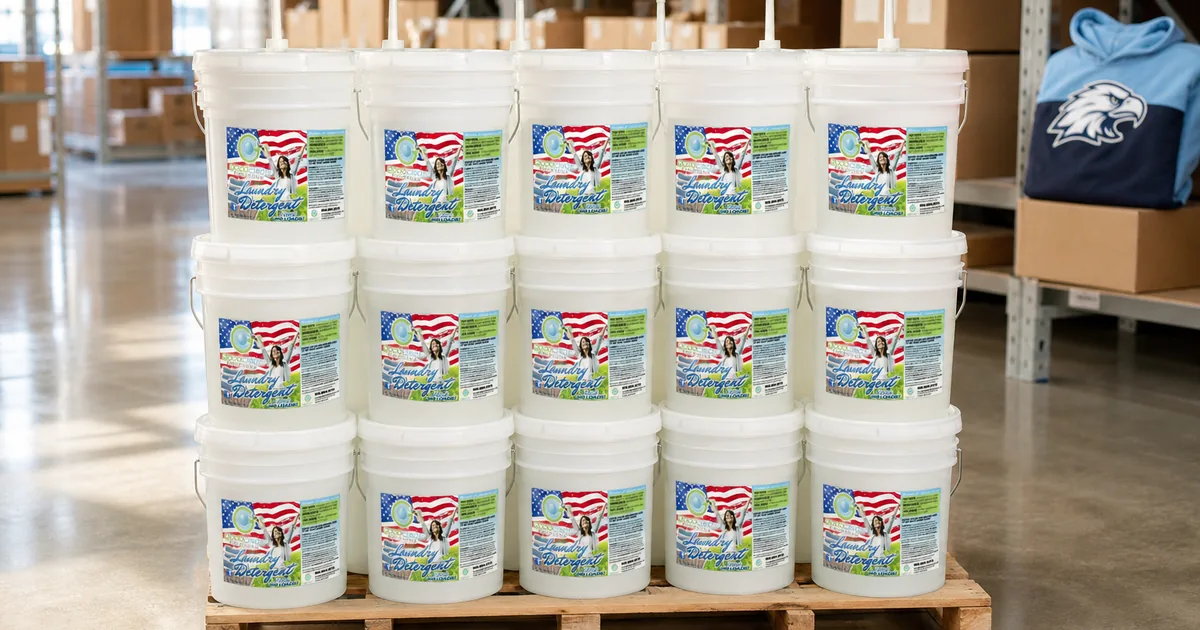
Yes, for many groups, selling laundry detergent is a strong fundraiser — often one of the better product-based options. It works because detergent is a household necessity most families already buy, which means your sellers may reach more potential buyers than they would with treats, candles, or novelty items. A bulk detergent fundraiser like Good Clean Fundraising's offers supporters a useful product at roughly half the per-ounce retail price based on a September 2026 retailer price check, so they get value while backing your group. Groups keep about $13.45 to $15.45 per bucket at 100 or more buckets, there is no perishability or complicated delivery, and because detergent is something people repurchase, supporters may reorder in future campaigns. The trade-offs are a 50-bucket minimum and a commercial delivery address for the bulk shipment.
If you are weighing whether a laundry detergent fundraiser is worth running, the short answer is yes — and for many groups it can compare favorably with traditional catalog staples. But that answer only matters if you understand why it works, what makes one program better than another, and whether the economics actually deliver.
Detergent fundraisers are one replacement groups consider for cookie dough, candy, and popcorn programs, and the appeal is simple: they sell a product people need, at a price that compares well with retail, without the perishability of food products. When a supporter can stock up on something they were going to buy anyway and pay roughly half the store price, the pitch stops being a favor and starts being a smart purchase.
This guide answers the question directly, walks through why detergent fundraisers work, how the profit and value compare to other programs, what to look for in a provider, and the few scenarios where a different fundraiser might be a better fit.
- Laundry detergent is a household necessity most families already buy, so it may reach more potential buyers than treats or novelty items.
- Good Clean Fundraising's bucket is priced at about half the per-ounce retail price of premium national brands, based on a September 2026 retailer price check, giving supporters value rather than asking for a donation disguised as a sale.
- Detergent is non-perishable, which eliminates the frozen-delivery logistics and spoilage risk that complicate food fundraisers.
- Groups keep about $13.45 to $15.45 per bucket at 100 or more buckets, and because the product is repurchased regularly, supporters may reorder in future campaigns.
- The model can widen participation — more families may find buyers, and each family may find more of them — which can raise the total more than a higher margin on fewer sales.
- Programs differ; compare upfront cost, profit tiers, shipping, the support provided, and the guarantee before you commit.
Why does a laundry detergent fundraiser work so well?
The main reason a detergent fundraiser can outperform traditional programs is buyer breadth. Cookie dough appeals to people who want dessert; candles appeal to people who like candles; detergent appeals to households that do laundry — which is most people. That difference in addressable market is what changes the math.
When a family is selling cookie dough, they may quickly run through the relatives and neighbors who want a treat. When they are selling detergent, they are reaching grandparents, coworkers, and neighbors who would never buy a fundraiser novelty but absolutely need detergent and will stock up if the price is right. The pool of potential buyers can be much wider, which may raise participation and let each seller move more product.
The second reason is value. A bulk detergent fundraiser is not asking supporters to overpay for something they do not need — it is offering a staple they already buy at about half the per-ounce price of premium national brands. That shifts the conversation from charity to smart purchasing, and people respond. They are not doing you a favor; they are getting a deal and helping the group at the same time.
How does the profit compare to other fundraisers?
Profit depends on your program, your price, and how many families participate, so be skeptical of any fundraiser that promises one magic percentage. The more useful way to think about it is that total dollars raised equals participants times average sales per family times profit per unit. Detergent may do better on the first two terms — more families find buyers, and each finds more of them — which can move the total more than a few points of margin.
With Good Clean Fundraising, groups sell a 5-gallon bucket for $49.95 (about $50) and keep about $13.45 to $15.45 per bucket at 100 or more buckets, depending on order volume: $13.45 at 100 to 299 buckets, $14.45 at 300 to 499, and $15.45 at 500 or more; at 50 to 99 buckets, profit is usually about $5 to $12 per bucket depending on actual shipping costs, and orders under 50 buckets are not accepted. Whether that per-bucket profit beats another product fundraiser depends on the alternative's terms, so compare quotes; the wider buyer pool may help groups move more units.
Compare that to a cookie dough or candy program, where the group might keep a different amount per item and may reach a narrower set of buyers. If the detergent model raises more for a group, it is more likely because participation is higher than because the margin is higher; that is editorial reasoning, not a measured result.
What is the value to the person buying?
This is the part that can drive repeat participation and make the fundraiser easier to sell. A 5-gallon bucket holds 640 ounces and sells for $49.95, which works out to about 7.8 cents per ounce. Premium national-brand liquid detergents at major retailers commonly run about 13 to 16 cents per ounce (value-tier and store brands can cost less), so a supporter is paying roughly half the per-ounce store price for a product they already use.
That is not a novelty item — it is a household staple priced below typical retail per ounce, based on a September 2026 retailer price check. The supporter stocks up on something they need, may save money doing it, and backs the group. Repeat buying is plausible because detergent is consumable, though this guide has no repeat-purchase data.
The value proposition also makes the ask easier. Sellers are not pushing an overpriced treat or asking for a donation disguised as a sale — they are offering a household staple at about half price. That is a pitch most people can make without feeling awkward, which may raise participation among families who would otherwise sit out.
How does a detergent fundraiser compare to other common programs?
The clearest way to see why detergent fundraisers work is to compare them side-by-side with the traditional alternatives across the factors that actually decide how much a group raises.
What should you look for in a detergent fundraiser provider?
Not all detergent programs are built the same, and the difference between a good one and a mediocre one shows up in your total. Here are the factors that matter most:
First, no upfront cost. Some programs require the group to buy inventory in advance, which puts financial risk on your organization if the campaign underperforms. A $0-upfront-cost model — where you collect orders and payment first and then submit a paid order — avoids that risk, and Good Clean Fundraising works this way. Confirm the payment terms in writing before you launch.
Second, support. Look for a program that provides instructions, materials, and marketing help so the volunteer organizer is not figuring it out alone. Good Clean Fundraising provides a Getting Started packet, instructions, marketing materials, and social media strategies. The group still runs the campaign and arranges delivery.
Third, a clear product guarantee. Ask what the guarantee covers, who bears the cost of a refund, and whether the group's profit is affected. Good Clean Fundraising advertises a 100% money-back guarantee under which, according to the company, any customer who is not satisfied is refunded and the group keeps its profit.
Fourth, volume-based profit. Ask how the group's cost per bucket changes with order size. Good Clean Fundraising's cost drops by $1 per bucket at 300 buckets and by $2 at 500, which is why profit rises from $13.45 to $14.45 to $15.45 per bucket.
Fifth, transparent pricing and volume tiers. Confirm exactly what the group keeps per bucket at different order sizes, when shipping becomes free, and whether there are any hidden fees. Get the terms in writing before you launch.
Are there any downsides or scenarios where detergent is not the best choice?
Detergent fundraisers work well for most groups, but there are a few scenarios where a different program might be a better fit. If your group is very small and may struggle to reach the 50-bucket minimum, or your goal is modest, a simple direct-ask or online donation campaign may be faster and simpler than managing product orders.
If your supporters are primarily people who strongly prefer eco-friendly or specialty detergents and will not switch to a bulk generic option, the buyer pool narrows and the model loses some of its advantage. That said, many households use standard detergent, so this may affect fewer groups than others, though this guide has not measured how common that preference is.
Finally, if your group has access to a high-traffic event where you can sell directly — a well-attended game, festival, or community gathering — an event-based fundraiser like a concession stand or raffle may raise more per hour of effort. But for most groups without that built-in audience, a detergent fundraiser may be easier to run than an event.
Our recommendation
If you are evaluating whether a laundry detergent fundraiser is worth running, the answer for many groups is yes — and if you are going to run one, Good Clean Fundraising's program is worth comparing.
The Good Clean Fundraiser is a bulk laundry-detergent program designed for schools, teams, boosters, and community groups. Your supporters buy a premium 5-gallon pump bucket for about $50 — roughly half the per-ounce price of premium national brands — and your group keeps about $13.45 to $15.45 per bucket at 100 or more buckets, depending on order volume. There is a $0 upfront cost, free shipping on orders of 100 buckets or more, and a Getting Started packet, instructions, marketing materials, and social media strategies. The group arranges a commercial delivery address (a loading dock or forklift is recommended), plans for a 50-bucket minimum, and allows about two weeks for fulfillment after submitting the paid order.
Good Clean Fundraising advertises a 100% money-back guarantee under which, according to the company, any customer who is not satisfied is refunded and the group keeps its profit.
The model is built around a product people need, at a price that compares well with retail, with none of the perishability of food fundraisers. It can widen participation, simplify delivery, and give supporters value, which is why some groups find it worth switching from cookie dough, candy, or popcorn; this guide does not include measured results.
| Factor | Traditional (cookie dough, candy, popcorn) | Bulk Detergent |
|---|---|---|
| Buyer pool | Narrow — mainly treat buyers | Most households |
| Product type | Non-necessity, occasional treat | Household necessity |
| Value to buyer | Often marked up for dual profit | ~½ retail price |
| Perishable? | Often yes (frozen/climate) | No |
| Repeat buyers | Occasional | Repurchased regularly |
| Logistics | Often timed delivery, freezer (varies by item) | Ships & stores easily |
Common mistakes to avoid
Choosing a program with upfront cost
Some detergent programs require the group to buy inventory in advance. If a $0-upfront-cost option exists, there is little reason to take on that financial risk.
Not confirming the guarantee terms
Ask what the guarantee covers and who bears the cost of a refund, and confirm that in writing before you launch.
Underestimating the importance of support
A program that provides a Getting Started packet, instructions, and marketing materials is easier to run than one where the volunteer organizer is figuring it out alone. That support is worth prioritizing.
Leaving the selling window open too long
A focused two-to-four-week campaign creates urgency and keeps momentum high. Fundraisers that drag on for months tend to lose participation and raise less.
- Detergent price comparison — per-ounce pricing for premium national-brand liquid laundry detergent at a major U.S. retailer, price-checked September 2026 (~13–16¢ per ounce across common sizes). Retail prices vary by size and store; based on a single online retailer's listings for premium brands; some value-tier and store brands cost less per ounce.
- Good Clean Fundraising program terms — $49.95 per bucket; $13.45 profit per bucket at 100 to 299 buckets (usually $5 to $12 at 50 to 99 buckets, depending on actual shipping costs), $14.45 at 300 to 499, $15.45 at 500 or more; $0 upfront cost; free shipping at 100+ buckets; 50-bucket minimum (smaller orders are not accepted); 100% money-back guarantee under which, according to the company, any customer who is not satisfied is refunded and the group keeps its profit. — GCF pricing, GCF how it works, and GCF refund and returns policy
- Household necessity vs. treat fundraiser buyer-pool comparison — editorial reasoning; this guide does not cite measured buyer-pool data.
Our recommendation
If you are evaluating whether a laundry detergent fundraiser is worth running, the answer for many groups is yes — and if you are going to run one, Good Clean Fundraising's program is worth comparing. The Good Clean Fundraiser is a bulk laundry-detergent program designed for schools, teams, boosters, and community groups. Your supporters buy a premium 5-gallon pump bucket for about $50 — roughly half the per-ounce price of premium national brands — and your group keeps about $13.45 to $15.45 per bucket at 100 or more buckets, depending on order volume. There is a $0 upfront cost, free shipping on orders of 100 buckets or more, and a Getting Started packet, instructions, marketing materials, and social media strategies. The group arranges a commercial delivery address (a loading dock or forklift is recommended), plans for a 50-bucket minimum, and allows about two weeks for fulfillment after submitting the paid order. Good Clean Fundraising advertises a 100% money-back guarantee under which, according to the company, any customer who is not satisfied is refunded and the group keeps its profit.
Frequently asked questions
Yes, for many groups. Detergent is a household necessity most families already buy, so it may reach more potential buyers than treats or novelty items. Good Clean Fundraising's bucket is priced at roughly half the per-ounce retail price of premium national brands based on a September 2026 retailer price check, which gives supporters value. Whether it raises more than another program depends on your group's participation and the terms you compare.
With Good Clean Fundraising, groups sell a 5-gallon bucket for $49.95 (about $50) and keep about $13.45 to $15.45 per bucket at 100 or more buckets, depending on order volume; at 50 to 99 buckets profit is usually about $5 to $12 per bucket, and orders under 50 buckets are not accepted. The bigger lever can be participation — because detergent may reach more buyers, groups may move more units, which can raise the total more than a higher margin on fewer sales.
For some groups it can be, mainly because detergent may reach a wider buyer pool — every household that does laundry — while cookie dough and candy mainly appeal to people who want a treat. Detergent is also non-perishable, so there is no frozen delivery or spoilage risk, and Good Clean Fundraising's bucket is priced at roughly half the per-ounce price of premium national brands based on a September 2026 retailer price check. Results vary by group; this is editorial reasoning rather than measured data.
Often, when the value is clear. A 5-gallon bucket at $49.95 works out to about 7.8 cents per ounce — roughly half the per-ounce price of premium national brands based on a September 2026 retailer price check. Supporters are stocking up on something they already buy at a lower per-ounce price, so the pitch can be easy.
Not with Good Clean Fundraising, which has a $0 upfront cost: the group collects orders and payment first, then submits the final order with payment. Some other programs require buying inventory in advance, so confirm the payment terms before you commit. The 50-bucket minimum still applies.
Good Clean Fundraising pays about $13.45 to $15.45 per bucket at 100 or more buckets, which is about 27% to 31% of the $49.95 price. The potential advantage is volume: because detergent may appeal to most households, more families may participate and each may find more buyers, which can raise the total more than a slightly higher margin on a narrow product. Compare each program's actual terms.
Look for no upfront cost, clear instructions and materials, a money-back guarantee whose terms you understand, transparent pricing with clear volume tiers, and free shipping on larger orders. Get all terms in writing before you launch.
There are a few. The model can work well for schools, teams, boosters, and community organizations, but very small groups may struggle with the 50-bucket minimum, and groups with a high-traffic event may raise more per hour of effort with an event-based fundraiser. Groups also need a commercial delivery address for the bulk shipment (a loading dock or forklift is recommended).
The Good Clean Fundraiser is Good Clean Fundraising's bulk laundry-detergent program. Groups sell a 5-gallon pump bucket for about $50 and keep about $13.45 to $15.45 per bucket at 100 or more buckets, with $0 upfront cost, free shipping at 100 or more buckets, and a Getting Started packet, instructions, marketing materials, and social media strategies. Good Clean Fundraising also advertises a 100% money-back guarantee under which, according to the company, any unsatisfied customer is refunded and the group keeps its profit.
A laundry detergent fundraiser can be a strong product-based option for many groups. It may reach more buyers, offers a lower per-ounce price than typical retail based on a September 2026 retailer price check, simplifies logistics, and may raise more per family than traditional catalog staples, though this guide does not include measured results. If you are ready to run one, compare programs on upfront cost, support materials, and the guarantee terms.