
How to Run a Successful Fundraiser
How to Run a Fundraiser: The Complete Step-by-Step Guide
A practical, start-to-finish guide for coordinators at any experience level — from setting your goal to collecting the money and everything in between.
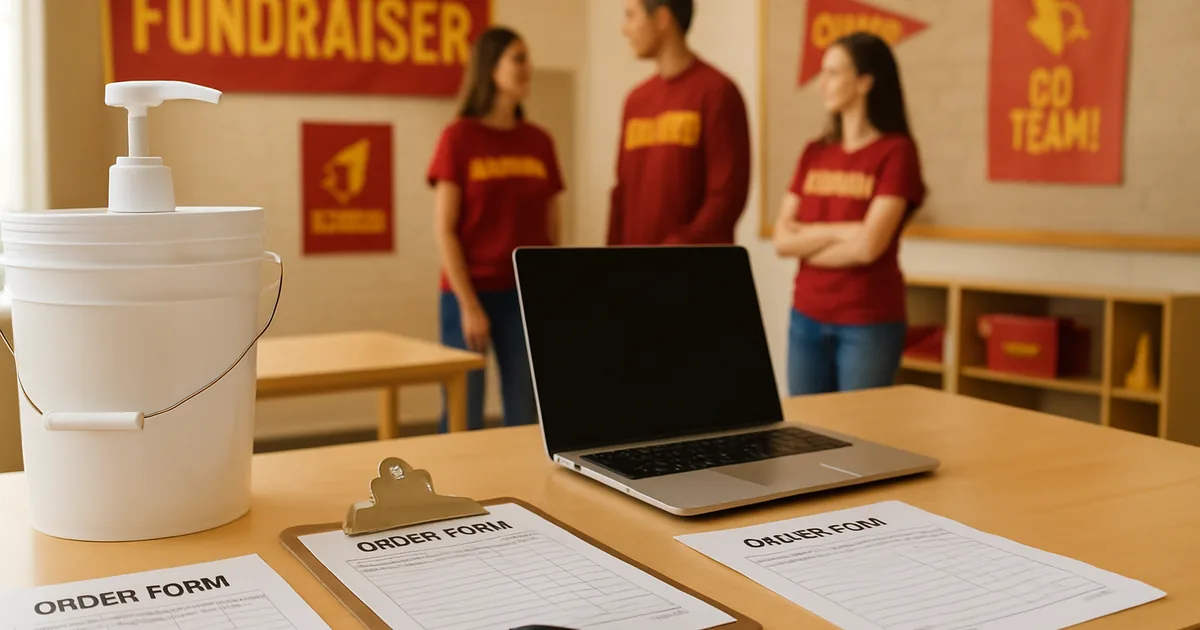
Running a successful fundraiser comes down to six core steps: set a specific dollar goal and deadline, choose a fundraiser that fits your group's capacity and audience, recruit a small team to share the workload, hold a kickoff to launch everyone on the same day, run a focused two-to-four-week selling or donation window with regular communication, and then collect funds, deliver products or rewards, and thank participants. Success depends less on the type of fundraiser than on clarity of goal, simplicity of execution, and consistent follow-through. Common mistakes include vague goals, overly complex programs, weak kickoffs, and selling windows that drag on too long. Whether you are a first-timer or a veteran, the fundamentals stay the same: clear goal, simple plan, strong start, short timeline, and genuine thanks.
Running a fundraiser can feel like a lot when you are staring at a blank plan and a dollar goal that needs to be hit. But strip away the noise and every successful campaign — whether it is a school PTA, a sports booster club, a scout troop, or a church group — follows the same basic structure: a clear goal, a simple plan, a strong start, and consistent follow-through.
This guide walks you through the whole process in plain, repeatable steps. It covers how to set a goal that actually means something, how to pick a fundraiser you can manage, how to recruit help, how to launch and run the campaign, and how to close it out and get paid. Whether you are doing this for the first time or the tenth, the fundamentals do not change — and getting them right is what separates a fundraiser that limps along from one that finishes strong.
What follows is the step-by-step playbook coordinators use to plan, launch, and finish fundraisers that hit their goals without burning out the volunteers running them.
- Every successful fundraiser starts with a specific dollar goal and a firm deadline — vague goals produce vague results.
- The best fundraiser for your group is the one you can actually run well, not the one that promises the highest margin.
- A strong kickoff where everyone starts on the same day builds momentum that follow-up messages alone are unlikely to recover.
- A two-to-four-week selling window is a practical default rather than months — a firm deadline helps keep urgency high.
- Even two or three helpers can noticeably reduce coordinator burnout and improve execution.
- Consistent communication and visible progress tracking keep participants engaged through the full campaign.
- Thanking participants and supporters is a low-cost courtesy that helps preserve goodwill for the next campaign.
Step 1: Set a clear goal and deadline
Before you think about what to sell or how to sell it, decide exactly how much money you need and by when. A specific goal — like four thousand dollars for new uniforms by November 15 — gives you a target to plan around and a way to measure whether the campaign is on track. A vague goal like raise some money for the team tells you nothing and makes every decision harder.
Your goal should be realistic for your group size and the effort you can sustain. If you have thirty active families and you are asking each to raise about one hundred and thirty dollars, that is a four-thousand-dollar campaign. If the math does not work with reasonable participation, either adjust the goal or pick a different fundraiser. Once the goal is set, work backward from your deadline to schedule your kickoff, your selling window, and your delivery or payout date.
Step 2: Choose the right fundraiser for your group
The right fundraiser is not the one with the highest profit margin or the flashiest pitch — it is the one your group can execute well with the time, volunteers, and audience you actually have. Judge your options on five factors: does it require upfront money, and what other costs or obligations remain; how complex are the logistics; will your audience actually want it; what is the realistic profit per unit or participant; and how much coordinator time does it demand.
Product fundraisers work well when you have a broad base of supporters and a product with wide appeal — household necessities like laundry detergent tend to reach more buyers than novelty treats. Event fundraisers like car washes or dinners can build community but require more volunteer hours and coordination. Direct-ask or pledge campaigns are simple but depend heavily on your audience's willingness to give without receiving a product. For most groups, a no-upfront-cost product program with simple logistics and broad appeal is the safest first choice.
Whatever you pick, make sure you can explain it in one sentence. If the fundraiser is too complicated to describe quickly, it is too complicated to sell and too hard to run.
Step 3: Recruit a small team and delegate early
You do not need a committee of twelve, but you do need at least two or three people to share the load. Running a fundraiser solo is how coordinators burn out halfway through. Identify the main jobs — communication and reminders, order or donation tracking, delivery coordination, and money handling — and assign each to a specific person. Even splitting just two of those tasks off your plate makes the whole thing manageable.
Recruit people early, before the campaign starts, and be specific about what you are asking them to do and how much time it will take. Most people will help if the ask is clear and bounded; nobody volunteers for an undefined commitment. A simple role like tracking orders in a shared spreadsheet or sending two reminder emails is an easy yes.
Step 4: Plan and hold a strong kickoff
The kickoff is the single biggest lever you have. A campaign where everyone starts on the same day with the same information tends to build more momentum than one where families trickle in whenever they get around to it. Schedule your kickoff for a specific date and time — in person if possible, or via email and video if your group is remote — and make it short, clear, and energizing.
At the kickoff, cover four things: what the goal is and why it matters, what you are selling or asking for, how participants sign up or get their materials, and when the campaign ends. Make it as easy as possible for someone to take the first action right there — hand out order forms, share the online link, distribute the product samples. The easier you make it to start immediately, the more people will.
Send a follow-up message the same day with everything in writing: the goal, the deadline, the link or materials, and who to contact with questions. That follow-up is what people will reference when they finally sit down to participate.
Step 5: Run a focused two-to-four-week campaign
A selling window of two to four weeks is a practical default, rather than months. A short, focused window tends to create urgency and keep participants engaged; campaigns that stay open indefinitely tend to fade into the background. Set a firm end date at the kickoff and hold to it.
During the campaign, send regular updates — two or three reminders over the course of the window is about right. Share progress toward the goal, recognize top participants, and remind everyone of the deadline. Visible progress and public recognition are widely used motivators: research on reward programs finds that people speed up as they near a goal, and a field experiment found that the promise of public recognition increased giving (see References). A simple we are at sixty percent of our goal with one week left message is more likely to prompt action than a generic please remember to participate email.
Track orders or donations as they come in, ideally in a shared spreadsheet or simple tracking tool the whole team can see. Real-time visibility helps you spot problems early — if participation is lower than expected halfway through, you have time to course-correct with an extra reminder or a quick call to families who have not started yet.
Step 6: Collect, deliver, thank, and close out
Once the selling window closes, move quickly to collect money and deliver products or rewards. Delays between the end of the campaign and payout erode trust and make the next fundraiser harder to run. If you are running a product fundraiser, confirm delivery dates and logistics with your vendor early so there are no surprises. If it is a pledge or direct-donation campaign, send payment reminders promptly and make it easy for supporters to pay online or by check.
Reconcile your totals carefully — count every order, donation, and payment, and make sure the money you collected matches what you expected. If there are discrepancies, resolve them before you distribute funds or report results to your group. Transparency and accuracy here protect you and build confidence in your leadership.
Thank every participant and every supporter. Send a message to your families recognizing their effort, share the final total and what it will fund, and thank the people who bought or donated. A genuine thank-you is not just polite — it is a low-cost way to keep goodwill for the next campaign. Close the loop, celebrate the win, and document what worked and what did not so the next coordinator has a head start.
How long does it take to run a fundraiser?
From planning to payout, most fundraisers take four to seven weeks total: one to two weeks of planning and setup, two to four weeks of active selling or fundraising, and one week for delivery and close-out. The active campaign itself — the window when participants are selling or asking for donations — should be short and focused. Two to four weeks is the sweet spot for most groups; shorter than that and people do not have time to reach their networks, longer than that and momentum fades.
If you are running your first fundraiser or working with a complicated program, add extra time for planning. If you are using a proven program with vendor support, you can move faster. The key is to set a realistic timeline at the start and then stick to it — a fundraiser that drags on past its deadline tends to underperform.
What makes a fundraiser successful?
Success is not about the type of fundraiser you choose — it is about execution. The campaigns that hit their goals share a few common traits: a specific, well-communicated goal; a simple program that is easy to explain and easy to participate in; a strong kickoff that launches everyone together; consistent communication and visible progress tracking; and a team structure that spreads the work across multiple people.
The inverse is also true. Fundraisers that fall short usually fail on one of those fundamentals: the goal was vague, the program was too complex, the kickoff was weak or nonexistent, communication was inconsistent, or one person tried to do everything alone. Fix the fundamentals and the results follow, regardless of whether you are selling product, running an event, or asking for direct donations.
How do you keep participants motivated?
Motivation comes from three things: clarity about the goal and why it matters, visible progress toward that goal, and recognition for the people doing the work. At the kickoff, explain exactly what the money will fund and why it is worth the effort — new uniforms, a field trip, updated equipment. Make it concrete and real.
During the campaign, share progress updates regularly. A simple we have raised twenty-two hundred dollars toward our four-thousand-dollar goal message reminds people that their effort is adding up and that the finish line is in sight. Recognize top sellers or donors publicly — a shout-out in an email or at a meeting costs nothing and is a useful complement to any prize.
Some programs offer incentives or prizes for participants who hit certain thresholds, and those can help, but they are not a substitute for clear goals and consistent communication. People participate when they understand the goal, see that others are participating, and feel that their contribution matters.
- Set a clear goal and deadline. Choose a specific dollar amount and a firm date, then work backward to schedule your campaign timeline.
- Choose the right fundraiser for your group. Pick a program that fits your capacity, audience, and logistics — favor simplicity and broad appeal over complexity and high margins.
- Recruit a small team and delegate early. Line up two or three helpers and assign specific roles like communication, order tracking, and delivery so the work does not fall on one person.
- Plan and hold a strong kickoff. Launch everyone on the same day with a clear explanation of the goal, the product or ask, how to participate, and when the campaign ends.
- Run a focused two-to-four-week campaign. Set a firm end date, send regular progress updates, recognize top participants, and track orders or donations in real time.
- Collect, deliver, thank, and close out. Move quickly to collect funds and deliver products, reconcile your totals, thank every participant and supporter, and document what worked for next time.
Common mistakes to avoid
Setting a vague or unrealistic goal
A goal like raise money for the team gives you nothing to plan around and no way to know if you succeeded. Pick a specific dollar amount and a firm deadline, and make sure the math works for your group size.
Choosing a fundraiser that is too complex
If you cannot explain it in one sentence, it is too hard to sell and too hard to run. Complexity kills participation and burns out coordinators.
Skipping the kickoff or launching weakly
A campaign where families trickle in whenever they feel like it tends to underperform one where everyone starts together with energy and clarity. The kickoff is your biggest lever.
Leaving the campaign open too long
Fundraisers that stay open for months can lose urgency and fade into the background. A focused two-to-four-week window helps keep the deadline visible.
Trying to do everything alone
Solo coordinators burn out, miss details, and raise less. Recruit at least two or three helpers and delegate specific tasks early.
Weak or inconsistent communication
Participants need regular reminders and progress updates to stay engaged. Two or three well-timed messages help keep the campaign visible without over-messaging.
Forgetting to thank people
A genuine thank-you to participants and supporters is a courtesy that helps keep goodwill for next time. Skip it and your next fundraiser may be harder to run.
- General fundraising process guidance — editorial guidance based on common school and nonprofit fundraising practice, not on a data set. Timelines, team sizes and dollar figures are illustrative, and results vary by group.
- Locke, E. A., & Latham, G. P. (2002). Building a practically useful theory of goal setting and task motivation. American Psychologist, 57(9), 705–717. Cited only for the general principle that specific goals guide effort better than vague ones. — source
- Kivetz, R., Urminsky, O., & Zheng, Y. (2006). The goal-gradient hypothesis resurrected: Purchase acceleration, illusionary goal progress, and customer retention. Journal of Marketing Research, 43(1), 39–58. Field studies of customer reward programs found that people speed up as they get closer to a reward; cited here as an analogy for showing progress toward a fundraising goal, not as fundraiser data. — source
- Karlan, D., & McConnell, M. A. (2014). Hey look at me: The effect of giving circles on giving. Journal of Economic Behavior & Organization, 106, 402–412. A field experiment found that the promise of public recognition increased giving; cited as support for recognizing participants. — source
- Damgaard, M. T., & Gravert, C. (2018). The hidden costs of nudging: Experimental evidence from reminders in fundraising. Journal of Public Economics, 157, 15–26. Field experiments with a charity found that reminders increased donations but also increased unsubscribes, which is why this guide recommends a small number of short reminders. — source
- Samek, A., & Longfield, C. (2023). Do thank-you calls increase charitable giving? Expert forecasts and field experimental evidence. American Economic Journal: Applied Economics, 15(2), 103–124. Large field experiments found no effect of thank-you calls on donor retention, so this guide treats thanking supporters as good practice and courtesy rather than a proven way to raise future giving. — source
Start your fundraiser Talk to Good Clean Fundraising →
Frequently asked questions
Start by setting a specific dollar goal and deadline, then choose a fundraiser that fits your group's capacity and audience. Recruit a small team to share the workload, hold a kickoff to launch everyone on the same day, run a focused two-to-four-week campaign with regular updates, and then collect funds, deliver products, and thank participants. The whole process typically takes four to seven weeks from planning to payout.
Success comes down to execution, not the type of fundraiser. The campaigns that hit their goals have a specific well-communicated goal, a simple program that is easy to explain, a strong kickoff that launches everyone together, consistent communication and progress tracking, and a team structure that spreads the work across multiple people. Fix those fundamentals and the results follow.
Most successful fundraisers run for two to four weeks of active selling or fundraising. Shorter than that and participants do not have time to reach their networks; longer than that and momentum fades. A focused, urgent timeline helps keep the deadline visible.
The best fundraiser is the one your group can execute well with the time, volunteers, and audience you have. Product fundraisers with broad appeal and simple logistics work well for most groups, especially no-upfront-cost programs. Event fundraisers build community but require more volunteer hours. Direct-ask campaigns are simple but depend on audience willingness to give without a product. Choose based on your capacity, not on margin alone.
You can run a small fundraiser with just two or three helpers beyond the main coordinator. The key is to delegate specific tasks like communication, order tracking, delivery, and money handling so no one person is doing everything. Larger campaigns need proportionally more hands, but even a small team can make a real difference.
Give people a clear goal, an easy way to participate, and a short deadline. Hold a strong kickoff where everyone starts on the same day, send regular progress updates during the campaign, and recognize participants publicly. Participation rises when the ask is simple, the goal is concrete, and people see that others are taking part.
Not always. Many product fundraisers are no-upfront-cost, meaning you collect orders first and never front money for inventory. That avoids advancing money for unsold inventory if the campaign underperforms. Event fundraisers may require some upfront spending for supplies or permits, and direct-ask campaigns typically have no cost at all. Choose a structure that matches your group's risk tolerance.
The most common mistake is choosing a fundraiser that is too complex to explain and too hard to run. Other frequent errors include setting vague goals, skipping a real kickoff, leaving the campaign open too long, trying to do everything alone, and forgetting to thank participants. Most of these are execution problems, not product problems.
Motivation comes from clarity, progress, and recognition. Explain exactly what the money will fund and why it matters, share regular updates showing progress toward the goal, and recognize top participants publicly. A short campaign with a firm deadline also creates urgency that keeps people engaged.
Send a message to all participants recognizing their effort, share the final total and what it will fund, and thank the supporters who bought or donated. Make it specific and genuine — a form letter feels like one. Thanking people is not just polite; it helps preserve goodwill for the next campaign, although one large field study of donor thank-you calls found no effect on retention.
Running a successful fundraiser is not about finding a magic program or a secret strategy — it is about executing the fundamentals well. Set a clear goal, pick something simple, start everyone together, keep the timeline short, and thank the people who helped. Do those things consistently and the results will follow, whether it is your first campaign or your fiftieth.