
Sports & Athletic Team Fundraising
Competitive Dance Team Fundraising Ideas That Actually Work
The fundraising strategies that competitive dance teams use to cover costumes, travel, and competition fees — without burning out families or coordinators.
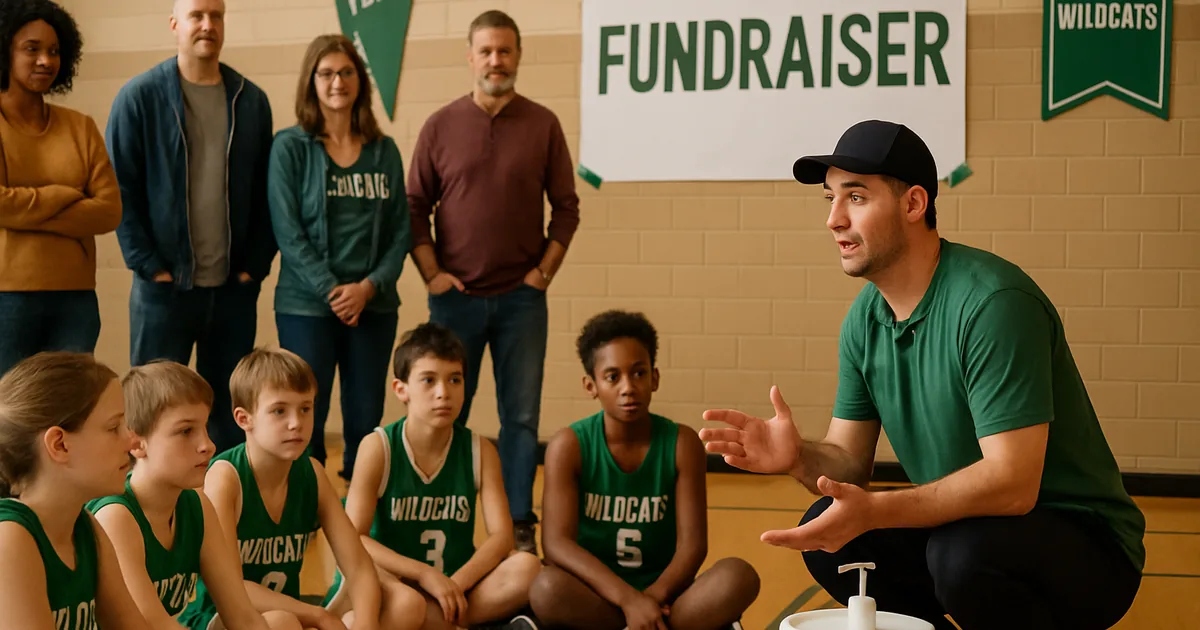
The most effective competitive dance team fundraisers fall into three categories: high-margin product sales that reach beyond the studio (household necessities like laundry detergent, spirit wear, and consumables), low-effort passive income streams (discount cards, online giving platforms, and percentage nights), and targeted events that leverage the team's performance skills (showcases, workshops, and recital concessions). The strongest programs combine a major product fundraiser in the fall or winter with one or two smaller passive efforts throughout the season. Product fundraisers tend to raise the most because they reach the widest buyer base — supporters get something useful and the team keeps a significant profit per item — while passive programs fill gaps between competitions without requiring active selling.
Competitive dance is expensive in a way that catches families off guard. Registration fees, competition travel, costumes for every routine, private lessons, and choreography costs add up fast — and most of it hits before the season even starts. A recreational dance program might fundraise once a year for recital expenses; a competitive team needs a year-round strategy just to keep families from shouldering the full cost alone.
The coordinators and studio owners who manage this well are not running more fundraisers — they are running smarter ones. They pick programs that raise enough to matter, reach buyers outside the studio, and do not require dancers to sell door-to-door or parents to manage complicated logistics during competition season.
This guide covers the fundraising ideas that work best for competitive dance teams, how to structure a year-round plan without overwhelming families, what raises the most per effort, the mistakes that cost teams money, and how to pick the right mix for your studio and competition schedule.
- Competitive dance teams face higher costs than recreational programs — costumes, travel, competition fees, and choreography — which require a year-round fundraising strategy.
- The strongest fundraisers combine one major product sale with passive income streams that do not require active selling during competition season.
- Product fundraisers that sell household necessities reach far more buyers than dance-specific items and raise more per family.
- Passive programs like discount cards and percentage nights generate smaller amounts but require almost no coordinator effort.
- Performance-based events (showcases, workshops, master classes) leverage the team's skills but need careful planning around the competition calendar.
- The biggest mistake is running too many small fundraisers instead of one or two that raise enough to move the budget.
- Families participate more when the product is easy to sell and the timeline does not conflict with competition weekends.
Why do competitive dance teams need different fundraising strategies than recreational programs?
The cost structure is completely different. A recreational dancer might pay for classes and one recital costume; a competitive dancer pays for all of that plus competition entry fees for every routine, travel and hotel costs for weekend competitions, multiple costumes per season, private lessons, and choreography fees. Those costs are not optional, and they are not spread evenly — most hit in the fall when teams are preparing for the season.
That front-loaded expense means competitive teams cannot rely on a single spring fundraiser the way a recreational program might. They need a plan that raises money before the bills come due, reaches beyond the small pool of dance families, and does not add to the coordinator workload during the competition season when everyone is already stretched thin.
The teams that fund their seasons successfully tend to run one major fundraiser in the fall or early winter — something that raises enough to cover a significant portion of the season — and then layer in one or two low-effort passive programs that generate smaller amounts without requiring active selling.
What are the best product fundraisers for competitive dance teams?
Product fundraisers work well for dance teams because they reach supporters who will never attend a performance or buy spirit wear — grandparents, coworkers, neighbors — and the team keeps a clear profit per item. The key is choosing a product with broad enough appeal that every family can find buyers, not just the most connected ones.
Household necessities can outperform novelty items because the buyer pool is wider. A laundry detergent fundraiser, for example, reaches every household that already buys detergent, and when the product is priced at roughly half the per-ounce cost of premium national brands, supporters feel they are getting real value while backing the team. Good Clean Fundraising's program is built exactly for this: teams sell 5-gallon detergent buckets for $49.95 and keep $13.45 to $15.45 per bucket at 100 or more buckets, depending on order volume, with no upfront cost and free shipping on orders of 100 or more.
Spirit wear and apparel fundraisers work when the studio has a strong local brand, but they are limited to people who want to wear dance gear. Cookie dough, candy, and popcorn reach a wider audience than spirit wear but narrower than a true necessity, and they are perishable, which adds logistics. Discount cards (coupon books for local businesses) can work in tight-knit communities, though the value depends entirely on the quality of the merchant partnerships.
What passive fundraising ideas work for dance teams during competition season?
Passive fundraisers are the ones that generate money without requiring dancers or parents to actively sell. They raise less than a major product campaign, but they require almost no coordinator effort, which makes them ideal for filling gaps during the busy competition months.
Percentage nights at local restaurants are the most common: the team promotes a specific night, families and supporters dine in or order takeout, and the restaurant donates a share of sales. The team's cut is usually modest, but the effort is minimal — one social media post and a reminder the day of. Online giving platforms and crowdfunding pages work similarly: set it up once, share the link, and let donations trickle in. Neither will fund a season, but both can cover smaller line items like warm-up suits or a team banner.
Discount card programs (where supporters buy a card that gives discounts at local businesses) can generate steady income if the merchant partnerships are strong and the cards offer real value. The upfront work is in securing the partnerships; after that, cards sell themselves. Some studios also run passive programs like shopping rewards (a percentage of purchases made through affiliated retailers) or spirit wear stores that stay open year-round, though these tend to generate smaller amounts unless the studio is large.
Should competitive dance teams run performance-based fundraisers?
Performance-based fundraisers — showcases, workshops, master classes, or recital concessions — can raise significant money, but they add an event to the calendar, which is the tradeoff. A showcase where the team performs and charges admission leverages the skills the dancers already have, and it can double as both a fundraiser and a community-building event. The profit comes from ticket sales, concessions, and sometimes a silent auction or raffle run alongside the performance.
Workshops and master classes (where your team's advanced dancers or a guest instructor teach younger students) work well if your studio has the space and the draw. The team charges a registration fee, covers the instructor cost if there is one, and keeps the rest. These tend to work best in the off-season when the competition calendar is lighter.
Recital and competition concessions are a smaller lift: the team runs a snack table at the studio's recital or at a competition the studio is hosting, and keeps the profit from sales. It will not fund the season, but it can cover a specific cost like new team jackets with almost no planning. The main consideration with any performance-based fundraiser is timing — adding an event during peak competition season often means low turnout because families are already traveling every weekend.
How do you structure a year-round fundraising plan for a competitive dance team?
The teams that fund their seasons without burning out families follow a simple pattern: one major fundraiser that raises the bulk of the money, timed for early fall or late summer before competition costs hit, and one or two passive programs that run in the background and require minimal effort.
A typical plan might look like this: a product fundraiser (detergent, cookie dough, or discount cards) in September or October, a percentage night every other month during the season, and an online giving page that stays open year-round. The product sale does the heavy lifting — it is where the team raises enough to make a dent in costumes, travel, or competition fees — and the passive programs fill in the gaps and keep the team visible in the community between competitions.
The mistake teams make is running too many small fundraisers. Three mediocre efforts that each raise a modest amount take more coordinator time and generate less total revenue than one strong campaign. Families also tune out when they are asked to sell something new every month. Fewer, bigger, better is the rule.
What fundraising ideas work best for small competitive dance teams?
Small teams — under 15 or 20 dancers — face a participation math problem: fewer families means fewer potential sellers, which means the fundraiser has to reach beyond the team to raise enough. That makes product fundraisers that appeal to a wide buyer base especially important. A household necessity like laundry detergent works because every family can sell to grandparents, neighbors, and coworkers who would never buy dance-specific items.
Small teams also benefit from passive programs that do not require hitting a participation threshold to succeed. A percentage night raises the same amount whether five families show up or fifteen. An online giving page works the same way — it is there for anyone who wants to contribute, and it does not depend on every family selling a quota.
The programs that do not work well for small teams are the ones that require high volume to hit a profit tier or that depend on a large volunteer base to staff an event. A car wash or a bake sale can work for a 50-dancer studio; for a 12-dancer team, the return rarely justifies the effort.
How much can a competitive dance team raise with a product fundraiser?
Total raised depends on three things: how many families participate, how many items each family sells, and the profit per item. A team of 20 dancers where 15 families participate and each sells an average of 8 items at roughly $13.45 to $15.45 profit per item will raise in a very different range than a team where only 8 families participate and average 5 items each.
The bigger lever is often participation, not margin. A fundraiser where most families find it easy to sell will raise more than one with a slightly higher profit per item but a narrower buyer appeal. That is why household necessities can outperform novelty products — the buyer pool is wider, so more families hit their goals, and the total climbs.
As a concrete example, Good Clean Fundraising's detergent program has teams sell 5-gallon buckets for $49.95, and groups keep $13.45 to $15.45 per bucket at 100 or more buckets, depending on order volume. A team where 18 out of 20 families sell an average of 10 buckets each is moving 180 units at that per-bucket profit. The exact total depends on the volume tier, but the principle is the same: broad participation in a product people actually want is what raises the money.
| Factor | Major Product Fundraiser | Passive Programs |
|---|---|---|
| Effort required | Active selling, 2–4 weeks | Minimal after setup |
| Potential revenue | High — funds major expenses | Low — fills gaps |
| Best timing | Early fall, before costs hit | During competition season |
| Participation needed | Broad family participation | Works at any level |
| Coordinator workload | Moderate upfront, tracking | Very low ongoing |
Common mistakes to avoid
Running too many small fundraisers instead of one strong campaign
Three modest efforts take more coordinator time and raise less total revenue than one well-executed major fundraiser. Families also tune out when asked to sell something new every month.
Scheduling a major fundraiser during peak competition season
Families are traveling every weekend and have no time to sell. Fall or early winter, before the competition calendar fills up, is when participation is highest.
Choosing a product with narrow appeal to save a few points of margin
A novelty item with a high profit per unit but a small buyer pool will raise less than a necessity product with a slightly lower margin but wide appeal, because participation drives the total more than margin does.
Not communicating the goal clearly to families
When families do not know what the money is for or how much the team needs, participation drops. A clear goal — new costumes, competition fees, travel fund — gives everyone a reason to sell.
Assuming the same families will carry the fundraiser every time
Coordinator burnout and donor fatigue are real. Rotate responsibilities, recognize top sellers, and make it easy for less-connected families to participate so the load does not fall on the same few people every season.
- Good Clean Fundraising program terms — $49.95 per bucket; $13.45 profit per bucket at 100 to 299 buckets (usually $5 to $12 at 50 to 99 buckets, depending on actual shipping costs), $14.45 at 300 to 499, $15.45 at 500 or more; $0 upfront cost; free shipping at 100+ buckets; 50-bucket minimum (smaller orders are not accepted); 100% money-back guarantee under which, according to the company, any customer who is not satisfied is refunded and the group keeps its profit. — GCF pricing, GCF how it works, and GCF refund and returns.
- Detergent price comparison — Good Clean Fundraising's stated comparison: retail liquid laundry detergent commonly runs about 14 to 19 cents per ounce, while a 5-gallon (640 oz) bucket at $49.95 works out to about 7.8 cents per ounce. Company-supplied figures; retail prices vary by brand, size, store, and region, and value-tier or store brands can cost less.
- Editorial guidance: general planning advice on this page reflects the authors' editorial judgment and common youth-sports fundraising practice; it is not based on measured campaign data or a cited study. Dollar figures in examples are illustrative, not sourced averages.
Our recommendation for competitive dance teams
If your team needs to raise enough to actually cover costumes, travel, or competition fees, start with one strong product fundraiser in early fall — before the competition season fills the calendar — and choose a product with broad enough appeal that every family can find buyers. Good Clean Fundraising's laundry detergent program is built for exactly this: teams sell a 5-gallon laundry detergent bucket for $49.95, supporters pay roughly half the per-ounce price of premium national brands, and your team keeps $13.45 to $15.45 per bucket at 100 or more buckets, depending on order volume. There is no upfront cost, free shipping on orders of 100 or more, and the program includes a Getting Started packet, instructions, marketing materials, and social media strategies. Layer in one or two passive programs — percentage nights, an online giving page — and you have a year-round plan that raises real money without burning out families. Good Clean Fundraising requires a 50-bucket minimum order; at 50 to 99 buckets, profit is usually $5 to $12 per bucket depending on actual shipping costs.
Before committing, verify four practical fit questions: Can your confirmed buyer network reach the 50-bucket program minimum? Is there local demand for a five-gallon bulk product? Does your delivery point have a commercial address with unloading capacity — the company recommends a location with a loading dock or forklift? And can you coordinate pickup and distribution of product to supporters from that point? A “yes” to all four makes this one of the most straightforward paths to your season funding goal.
Frequently asked questions
The best fundraiser is one that raises enough to cover a significant expense (costumes, travel, competition fees), reaches buyers beyond the studio, and does not conflict with the competition calendar. Product fundraisers that sell household necessities tend to raise the most because they appeal to the widest buyer base and families can sell to grandparents, neighbors, and coworkers who would never buy dance-specific items.
It depends on your team size, competition schedule, and what costs you are trying to offset. A small team might need to raise a few thousand dollars to cover costumes and entry fees; a larger team traveling to nationals might need significantly more. Start by listing your major expenses (costumes, competition fees, travel, choreography) and decide which ones the fundraiser will cover, then work backward to set a realistic goal.
The best time for a major fundraiser is early fall or late summer, before competition season starts and families are not traveling every weekend. That timing also gets money in before the big costs (costumes, early competition fees) come due. Passive fundraisers like percentage nights and online giving can run year-round without conflicting with the calendar.
Small teams need fundraisers that reach beyond the team to succeed, because fewer families means fewer potential sellers. Product fundraisers with broad appeal (household necessities, consumables) work well because every family can sell to a wide network. Passive programs like percentage nights and online giving also work because they do not depend on hitting a participation threshold.
Spirit wear can work as a supplementary fundraiser if your studio has a strong local brand, but it is limited to people who want to wear dance gear. It will not reach the grandparents, neighbors, and coworkers who would buy a household necessity, so it tends to raise less than a product with universal appeal. Some teams run spirit wear as a passive year-round store rather than a one-time campaign.
Participation rises when the product is easy to sell, the goal is clear, and the timeline does not conflict with competition weekends. Choose something supporters actually want (not an overpriced novelty), communicate exactly what the money will fund, keep the selling window short (two to four weeks), and send a couple of friendly reminders. Families are more likely to participate when they can explain the value to buyers in one sentence.
The easiest fundraisers during competition season are passive ones that require no active selling: percentage nights at local restaurants, an online giving page, or a year-round spirit wear store. These generate smaller amounts than a major product campaign, but they require almost no coordinator effort, which is critical when everyone is already traveling every weekend.
It depends on how many families participate and how many buckets each sells, so treat any single number with caution. As a concrete example, Good Clean Fundraising's program has teams sell a 5-gallon bucket for $49.95 and keep $13.45 to $15.45 per bucket at 100 or more buckets, depending on order volume. A team where 18 families each sell an average of 10 buckets is moving 180 units at that per-bucket profit — the exact total depends on the volume tier, but the principle is the same: broad participation in a product people need is what raises the money.
Most successful teams do not fundraise constantly, but they do have a year-round plan: one major fundraiser (usually fall) that raises the bulk of the money, and one or two low-effort passive programs that fill gaps without requiring active selling. Running too many fundraisers burns out families and coordinators; fewer, bigger, better is the rule.
Competitive dance is expensive, and the teams that fund their seasons successfully are not the ones running the most fundraisers — they are the ones running the right ones. One strong product campaign in the fall, a couple of passive programs during competition season, and a clear goal that families understand: that is the plan that raises real money without burning everyone out.