
Sports & Athletic Team Fundraising
Cross Country Team Fundraising Ideas That Actually Work
The best fundraising ideas for cross country teams — from no-upfront-cost product sales to event-based campaigns that fit your season and raise real money.
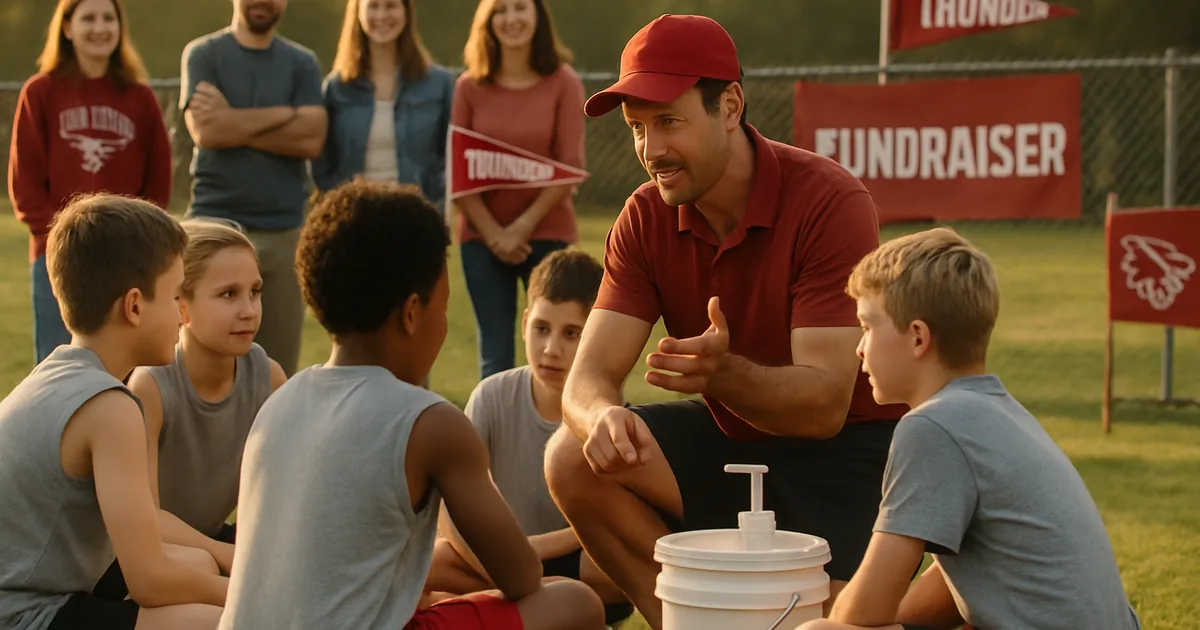
The most effective cross country fundraising ideas fall into three categories: product fundraisers with broad appeal and no upfront cost, event-based fundraisers that leverage your team's running identity, and hybrid approaches that combine both. The strongest performers are necessity-based product sales — household staples like laundry detergent that supporters already buy — because they reach far more buyers than specialty items, require minimal logistics during your season, and carry solid per-unit profit. Event fundraisers like fun runs and pledge-per-mile campaigns work well as secondary efforts but demand significant volunteer coordination. The key is matching the fundraiser to your team's size, your season's timing, and how much volunteer bandwidth you actually have.
Cross country teams sit in an unusual fundraising spot: you need real money for travel, uniforms, and equipment, but your season runs through fall when families are already stretched thin with back-to-school expenses and other commitments. You also have a smaller roster than football or basketball, which means fewer families to sell and less margin for a fundraiser that underperforms.
The good news is that the right fundraiser can work exceptionally well for a cross country team — if it is simple to run during a busy season, appeals to a wide base of supporters beyond just parents, and does not require your coaching staff to become event planners. The fundraisers that often raise the most for XC teams are the ones that make it easy for a small group of families to reach a lot of buyers.
This guide covers the best fundraising ideas for cross country teams, how to choose one that fits your season and roster size, what works for small versus large programs, the logistics to plan around, and the mistakes that cost teams money every fall.
- Cross country teams need fundraisers that work with a small roster and a compressed fall season.
- Necessity-based product fundraisers reach more buyers than specialty items and require less volunteer time during the season.
- Event fundraisers like fun runs can work well but demand significant planning and volunteer coordination.
- The best XC fundraisers are ones that supporters can participate in without attending an event or being a runner themselves.
- No-upfront-cost programs remove the upfront inventory risk, which matters when your participant base is smaller.
- Timing matters: launch early in the season before families are fundraised-out, or wait until after championships when coaches have bandwidth.
- A household-staple fundraiser lets supporters shift a purchase they already make rather than asking for extra spending.
What makes a good fundraiser for a cross country team?
Cross country programs face constraints that other sports do not: a smaller roster, a short competitive season, and limited name recognition compared to football or basketball. That means your fundraiser has to work harder with fewer people. The ones that succeed tend to share four traits: they appeal to buyers who are not runners, they do not require your coaching staff to run an event during the season, they carry enough profit per sale to matter with a small team, and they involve zero or minimal upfront cost.
Judge any fundraiser against your actual situation. If you have thirty runners and can count on strong parent involvement, you have more options. If you have fifteen athletes and two engaged families, you need something nearly automatic. Either way, the math is the same: total raised equals participants times average sales per participant times profit per item. Growing the first two terms matters more than chasing a high margin on the third.
What are the best product fundraisers for cross country teams?
Product fundraisers work well for XC teams because they do not require an event, they let families sell on their own schedule, and the right products reach buyers far beyond the team's immediate circle. The key is choosing something with genuinely broad appeal — not a niche running item.
Household necessity products can outperform specialty items for cross country teams. A bulk laundry detergent fundraiser, for example, reaches grandparents, neighbors, coworkers, and community members who would never buy a running-themed novelty but absolutely need detergent. Good Clean Fundraising's program has cross country teams sell a 5-gallon bucket of laundry detergent for $49.95 — roughly half the per-ounce price of premium national brands at major retailers — and the team keeps $13.45 to $15.45 per bucket at 100 or more buckets, depending on order volume, with no upfront cost and free shipping at 100 buckets or more.
Other strong product options include reusable water bottles, team apparel, and discount cards, though each has trade-offs. Apparel works if you have a strong local brand, but it is a one-time purchase. Discount cards can carry decent margins but require local business partnerships and annual renewal. Specialty food items like cookie dough or candy appeal to a narrow buyer base and often require upfront inventory costs, which adds risk for a small team.
What are the best event-based fundraisers for cross country teams?
Event fundraisers leverage your team's running identity and can build community visibility, but they require significant volunteer coordination and often pull coaches and athletes away from training during the season. The most common options are fun runs, pledge-per-mile campaigns, and community race sponsorships.
A fun run or community 5K can work well if you have strong parent volunteers to handle logistics, permits, timing, and race-day setup. The profit comes from entry fees, sponsorships, and sometimes a small vendor fair. The challenge is that organizing a race is effectively a part-time job for several weeks, and if turnout is low, the return may not justify the effort. These work best as an annual signature event with multi-year momentum, not a one-off scramble.
Pledge-per-mile or run-a-thon fundraisers ask supporters to sponsor runners for each mile logged during a set period. They are simpler to organize than a full race, but collecting pledges and tracking miles adds administrative work, and participation depends heavily on how motivated your athletes are to recruit sponsors. Hybrid models where families can choose to give a flat donation instead of a per-mile pledge tend to perform better.
Community race sponsorships — where your team volunteers at a local race in exchange for a portion of entry fees or a flat donation — can be a low-effort option if a race director in your area is willing to partner. The profit is usually modest, but the time investment is minimal compared to hosting your own event.
Should small cross country teams fundraise differently than large programs?
Yes. A large program with fifty or sixty runners can succeed with almost any fundraiser because sheer participation volume compensates for weaker per-person sales. A small team with fifteen to twenty athletes has no such cushion — every family has to sell more, which means the product or event has to appeal to a much wider audience.
Small teams should favor no-upfront-cost product fundraisers with universal appeal and high per-unit profit. The goal is to maximize what each participating family can sell without requiring them to push a niche item. A household necessity like detergent, cleaning products, or other consumables works because the buyer pool is nearly unlimited — every household needs these items, and if the price is genuinely competitive, supporters are shifting a purchase they were already going to make.
Large teams have more flexibility. They can run event fundraisers that require more volunteer hours because they have the parent base to staff them, and they can absorb the risk of upfront inventory costs if needed. That said, even large programs increasingly favor simple, high-margin product sales over complex events because coaching staff and parent volunteers are stretched thin regardless of roster size.
How do you time a cross country fundraiser around your season?
Timing is one of the most overlooked levers in XC fundraising. Launch too early and families are not yet engaged; launch mid-season and you are competing with meet travel and peak training; launch too late and you miss the fall giving window entirely.
The two best windows are the first two weeks of the season and the week after your championship meet. An early launch capitalizes on beginning-of-season energy and gets orders in before families are fundraised-out by other fall asks. A post-championship launch gives your coaching staff bandwidth to focus and lets you celebrate the season while asking for support. Both work; the wrong choice is launching in the middle of your competitive season when no one has time.
For product fundraisers, plan a two-to-three-week selling window. Any longer and momentum fades; any shorter and families do not have time to reach all their potential buyers. For event fundraisers, build in at least six to eight weeks of planning time before race day, and avoid scheduling your event within two weeks of a major invitational or your league championship.
What fundraising mistakes do cross country teams make?
The most common mistake is choosing a fundraiser that requires too much volunteer coordination during the season. Coaches and parents are already managing practice, meets, travel, and schoolwork — adding a complex event or high-touch product sale on top of that guarantees burnout and a lower total raised.
Another frequent error is picking a product with narrow appeal. Running-themed novelty items, specialty foods, or expensive gear might seem like a natural fit for a cross country team, but they limit your buyer pool to people who are already invested in the sport. A household staple reaches ten times as many potential supporters.
Teams also underestimate the importance of a strong kickoff. When families trickle into the fundraiser over several weeks, participation never peaks. A single kickoff day where everyone gets materials, hears the goal, and starts selling together drives far more urgency and results.
Finally, many teams do not confirm profit terms and delivery logistics in writing before launching. Surprises about shipping costs, minimum orders, or actual per-item profit after fees cost teams money every season.
| Factor | Product Fundraiser | Event Fundraiser |
|---|---|---|
| Volunteer time required | Low after kickoff | High planning & race-day |
| Timing flexibility | Run anytime in season | Must schedule around meets |
| Buyer reach | Anyone who needs product | Runners & local community |
| Upfront cost | Often no-cost options | Permits, insurance, supplies |
| Profit predictability | Fixed per-unit margin | Depends on turnout/weather |
| Best for | Small teams, busy seasons | Large teams, strong volunteers |
Common mistakes to avoid
Choosing a fundraiser that demands too much volunteer time during the season
Coaches and parents are already stretched thin with practices, meets, and travel. A fundraiser that requires constant coordination or event planning guarantees burnout and lower results.
Picking a product with narrow appeal
Running-themed novelties or specialty items limit your buyer pool to people already invested in the sport. A household necessity reaches far more supporters.
Launching mid-season when no one has bandwidth
The best windows are the first two weeks of the season or right after championships. Mid-season launches compete with meet schedules and peak training.
Skipping a real kickoff
When families trickle in over weeks, participation never peaks. A single kickoff day where everyone starts together drives urgency and results.
Not confirming profit terms and logistics in writing
Surprises about shipping costs, minimums, or actual per-item profit after fees cost teams money. Get everything in writing before you launch.
- Good Clean Fundraising program terms — $49.95 per bucket; $13.45 profit per bucket at 100 to 299 buckets (usually $5 to $12 at 50 to 99 buckets, depending on actual shipping costs), $14.45 at 300 to 499, $15.45 at 500 or more; $0 upfront cost; free shipping at 100+ buckets; 50-bucket minimum (smaller orders are not accepted); 100% money-back guarantee under which, according to the company, any customer who is not satisfied is refunded and the group keeps its profit. — GCF pricing, GCF how it works, and GCF refund and returns.
- Detergent price comparison — Good Clean Fundraising's stated comparison: retail liquid laundry detergent commonly runs about 14 to 19 cents per ounce, while a 5-gallon (640 oz) bucket at $49.95 works out to about 7.8 cents per ounce. Company-supplied figures; retail prices vary by brand, size, store, and region, and value-tier or store brands can cost less.
- Editorial guidance: general planning advice on this page reflects the authors' editorial judgment and common youth-sports fundraising practice; it is not based on measured campaign data or a cited study. Dollar figures in examples are illustrative, not sourced averages.
Our recommendation for cross country teams
If you are coaching or coordinating fundraising for a cross country team, start with a household-necessity product sale — it is the option that works with a small roster, fits into a compressed season, and reaches the widest base of supporters. Good Clean Fundraising runs The Good Clean Fundraiser, a bulk laundry-detergent program built for exactly this situation: your team sells a 5-gallon laundry detergent bucket for $49.95 (roughly half the per-ounce price of premium national brands), keeps $13.45 to $15.45 per bucket at 100 or more buckets, depending on order volume, and pays nothing upfront. Free shipping kicks in at 100 buckets, and the program includes a Getting Started packet, instructions, marketing materials, and social media strategies. It is simple, low-risk, and designed to let a small team raise as much as a large one. Good Clean Fundraising requires a 50-bucket minimum order; at 50 to 99 buckets, profit is usually $5 to $12 per bucket depending on actual shipping costs.
Before committing, verify four practical fit questions: Can your confirmed buyer network reach the 50-bucket program minimum? Is there local demand for a five-gallon bulk product? Does your delivery point have a commercial address with unloading capacity — the company recommends a location with a loading dock or forklift? And can you coordinate pickup and distribution of product to supporters from that point? A “yes” to all four makes this one of the most straightforward paths to your season funding goal.
Frequently asked questions
The best fundraiser for most cross country teams is a no-upfront-cost product sale with broad appeal — specifically, a household necessity like laundry detergent or cleaning products that every supporter already buys. These reach far more buyers than specialty items, require minimal volunteer time during the season, and carry solid per-unit profit. Event fundraisers like fun runs can work well as secondary efforts but demand significant planning and coordination.
It depends on your roster size, how many families participate, and what you sell, so set a goal based on your specific situation rather than a generic number. As a concrete example, a cross country team selling a household-necessity product like bulk detergent at $49.95 per unit and keeping $13.45 to $15.45 per bucket at 100 or more buckets can raise meaningful money even with a small roster if participation is strong. In our editorial view, the bigger lever is often participation rate, not just per-item profit.
The two best windows are the first two weeks of the season when energy is high and families are not yet stretched thin, or the week after your championship meet when coaches have bandwidth and you can celebrate the season. Avoid launching mid-season when meets, travel, and peak training leave no one with time to sell.
Small teams need fundraisers with universal appeal and high per-unit profit because you have fewer families to sell. No-upfront-cost product fundraisers featuring household staples work best — every participating family can reach a wide base of buyers, and there is no upfront inventory risk if the campaign raises less than hoped. Avoid event fundraisers unless you have exceptionally strong parent volunteers, because small teams rarely have the bandwidth to staff them well.
A fun run or community 5K can work well if you have strong parent volunteers to handle permits, timing, race-day logistics, and promotion, and if you are willing to invest six to eight weeks of planning time. The profit comes from entry fees and sponsorships, but organizing a race is effectively a part-time job. For most teams, especially smaller programs, a simple product fundraiser raises as much or more with far less effort.
Sell something with genuinely broad appeal that supporters already buy, not a niche running item. Household necessities like laundry detergent, cleaning products, or other consumables reach the widest buyer pool because everyone needs them. Specialty foods, running-themed novelties, or expensive gear limit you to buyers who are already invested in the sport, which caps how much a small team can raise.
Plan a two-to-three-week selling window for product fundraisers. That is long enough for families to reach their buyers but short enough to maintain urgency. Campaigns that stay open for months lose momentum and raise less than a focused short push. For event fundraisers, build in six to eight weeks of planning time before race day.
No. Many product fundraisers are no-upfront-cost, meaning you collect orders first and never front money for inventory. For a cross country team with a small roster, that removes the upfront inventory risk if participation is lower than hoped. Always confirm cost structure and delivery terms in writing before you launch.
Cross country teams typically have smaller rosters than football, basketball, or soccer, which means fewer families to sell and less margin for error. You also have a compressed competitive season in the fall when families are already stretched with back-to-school expenses and other commitments. That makes simple, high-appeal, no-upfront-cost fundraisers more important for XC than for larger or off-season sports.
Cross country teams do not need a complicated fundraiser — they need one that works with a small roster, fits into a busy fall season, and reaches supporters who are not runners. A household-necessity product sale checks all three boxes, and when the product offers genuine value at a competitive price, families sell more because buyers feel good about the purchase. Keep it simple, launch early or late in the season, and let the product do the work.