
Sports & Athletic Team Fundraising
Tennis Team Fundraising Ideas That Actually Work
Smart fundraising strategies for tennis teams — from product sales that reach beyond the tennis community to no-upfront-cost programs that maximize profit without the logistics headaches.
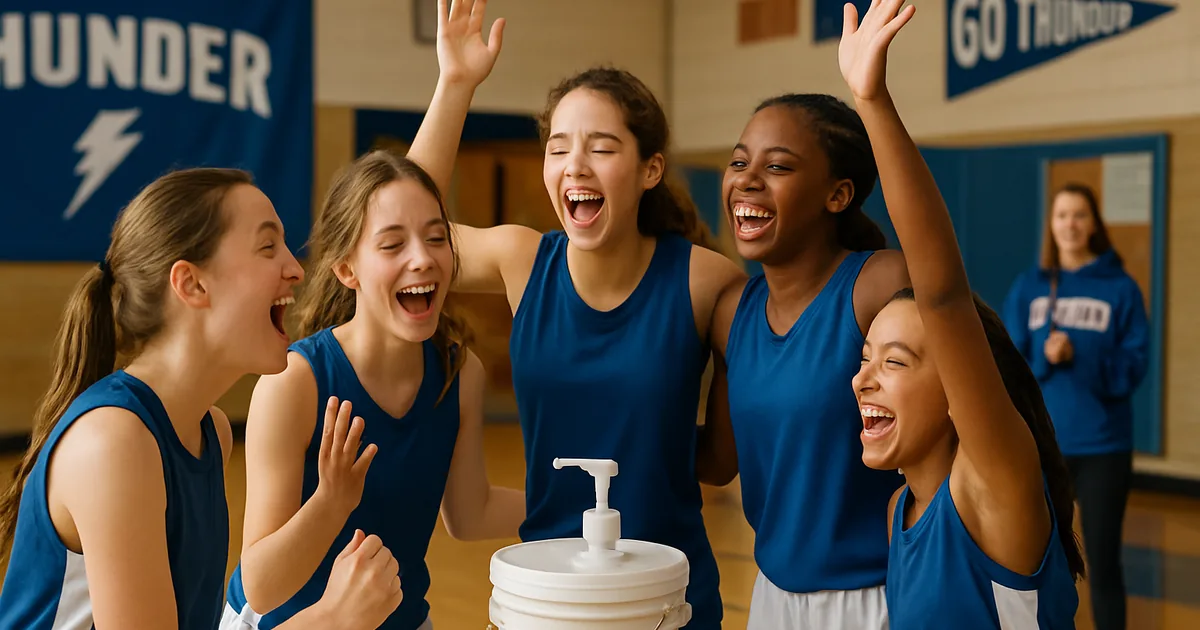
The most effective tennis team fundraisers balance broad appeal with simplicity. Product-based programs that sell household necessities — like laundry detergent or cleaning supplies — can reach more supporters than niche tennis gear or treat sales, extending the buyer pool beyond tennis families. The strongest programs require no upfront cost, handle logistics for you, and offer genuine value to buyers at roughly half the per-ounce price of premium national brands. Event fundraisers like tennis clinics or round-robins can work well for engaged communities but require significant volunteer time. For teams that want maximum participation with minimum complexity, a necessity-based product fundraiser with simple included setup materials can can reach more buyers per player than traditional catalog sales, car washes, or bake sales.
Tennis teams face a unique fundraising challenge: you need serious money for court time, equipment, travel, and tournament fees, but your supporter base is often smaller and more scattered than football or basketball programs. The traditional playbook — selling candy bars, running a car wash, hosting a bake sale — rarely raises enough to cover a single away tournament, let alone a full season.
The teams that raise the most have figured out a different approach: they sell products people actually need to a much wider audience than just tennis families. Instead of asking the same twenty parents to buy overpriced popcorn for the third time this year, they offer something every household already purchases — at a genuinely good price — and suddenly grandparents, neighbors, coworkers, and local businesses become buyers.
This guide covers what works for tennis teams specifically: why product fundraisers beat events for most programs, which products reach the widest buyer pool, how to structure a campaign that does not burn out your volunteers, the profit math that actually matters, and the mistakes that cost teams money every season.
- Tennis teams need higher fundraising totals than many realize — court fees, travel, and tournament entry costs add up fast.
- Product fundraisers that sell household necessities reach far more buyers than tennis-specific gear or treat sales.
- The best tennis fundraisers require no upfront cost and include logistical support so coaches and parents are not managing inventory.
- Event fundraisers like clinics or tournaments can work but demand significant volunteer time and often cap participation.
- A two-to-three-week focused campaign with a clear goal raises more than an open-ended sale that drags on for months.
- Profit per player matters more than total margin — wide participation at a decent margin beats high margin with low participation.
- Supporters are more willing to buy when they receive genuine value rather than being asked to donate or overpay for a novelty item.
Why do tennis teams need better fundraising strategies?
Tennis is an expensive sport to run. Court rental, equipment replacement, coaching stipends, tournament entry fees, travel to away matches, and uniforms create a budget that easily runs into thousands of dollars per season — and most school athletic budgets allocate far less to tennis than to higher-profile sports. That gap falls on the team to fill.
The second problem is audience size. A football booster club can sell to hundreds of families; a tennis team might have fifteen to twenty-five players. If you rely only on player families to buy, you hit a ceiling fast. The teams that raise serious money have learned to widen the buyer pool dramatically — and that means changing what you sell.
What are the best product fundraisers for tennis teams?
Product fundraisers work for tennis teams because they scale: every player becomes a salesperson, and the right product reaches buyers who have zero interest in tennis but plenty of interest in saving money on something they already buy. Here are the categories that often perform.
Household necessity products
This is the category that has replaced traditional fundraisers for teams that want maximum participation. Laundry detergent, cleaning supplies, paper products — items every household repurchases — reach nearly every supporter a player knows. A 5-gallon bucket of laundry detergent sold at roughly half the per-ounce price of premium national brands is an easy sell to grandparents, neighbors, coworkers, and local businesses, none of whom would ever buy a tub of cookie dough or a tennis-themed candle.
The economics work because the product is genuinely useful and the value is real. When a supporter pays roughly half the per-ounce price of premium national brands for something they were going to buy anyway, it does not feel like a donation disguised as a sale — it feels like a smart purchase that also helps the team. That difference drives repeat buyers and wider participation.
Some programs in this category require no upfront cost and include starter materials; confirm each program's terms in writing. For a coach or team parent, that means less work than a car wash and higher profit than a bake sale.
Discount cards and coupon books
Discount cards to local businesses can work well if your team is in a community with strong local merchant participation and if someone is willing to do the legwork to line up the deals. The profit per card is usually decent, but the upfront coordination is significant, and buyer interest depends heavily on the quality of the participating businesses.
Specialty food items
Cookie dough, popcorn, candy bars, and similar treats are familiar, but they share the same weakness: they appeal to a narrow slice of buyers, they are often overpriced relative to value, and participation tends to be shallow. A few strong sellers carry the whole campaign while most families sell little or nothing. If you go this route, keep the selling window short and the expectations realistic.
What are the best event fundraisers for tennis teams?
Event fundraisers can generate strong community engagement and work especially well for teams with an active parent base and a visible local presence. The trade-off is volunteer time: events require planning, promotion, day-of coordination, and often permits or insurance. Here are the ones tennis teams run most successfully.
Tennis clinics and lessons
Hosting a clinic where varsity players or the coach teach younger kids or beginners is a natural fit. Charge a reasonable fee per participant, keep the session fun and instructional, and you create value for the community while raising money. The profit depends on attendance, so promotion matters — and you will need liability coverage and possibly facility rental if you are not using school courts.
Round-robin tournaments or play days
A community doubles round-robin or mixed-level play day can draw recreational players who want organized competition without the pressure of a serious tournament. Charge an entry fee, offer small prizes or just bragging rights, and keep the format simple. This works best in communities with an established recreational tennis scene.
Serve-a-thons or hit-a-thons
Players collect pledges based on serves made, volleys hit, or rallies sustained during a set time period. It is a visible, team-oriented event that showcases skill and effort. The challenge is that pledge collection can be slow and incomplete, so set clear expectations and follow up promptly after the event.
How much can a tennis team raise with a product fundraiser?
The total depends on three variables: how many players actively participate, how many items each player sells on average, and the profit per item. A tennis team of twenty players where fifteen participate, each selling an average of ten units at $13.45 to $15.45 profit per bucket (at 100 or more buckets), would keep in the range that covers several away tournaments or a significant portion of seasonal expenses. In our editorial view, the bigger lever is often participation — getting more players to sell rather than chasing a higher per-item margin.
With a household-necessity program, the typical dynamic is that more players find buyers because the product is something people need rather than a novelty. That wider participation is what lifts the total, not a few star sellers carrying the whole team.
How do you structure a tennis team fundraiser for maximum participation?
Participation is the single biggest factor in how much a tennis team raises, and it comes down to a few structural decisions that most teams get wrong. Here is what works.
Set a clear team goal and individual target
Tell the team exactly what you are raising money for and how much you need. Then break it into a per-player target so everyone knows their part. A vague goal gets vague effort; a specific number creates accountability.
Run a tight two-to-three-week campaign
A short, focused window creates urgency. Fundraisers that stay open for months lose momentum and raise less than a tight two-week sprint. Set a firm end date and stick to it.
Hold a real kickoff
Start everyone on the same day with a brief, energetic explanation of the goal, the product, and how to sell. A kickoff creates collective momentum that trickles-in participation never generates.
Recognize effort, not just top sellers
Celebrate players who hit their individual target, show improvement, or bring creative ideas. If only the top three sellers get recognized, everyone else stops trying. Broad recognition drives broad participation.
Common mistakes tennis teams make with fundraisers
| Factor | Product Fundraiser | Event Fundraiser |
|---|---|---|
| Volunteer time required | Low (starter materials) | High (planning & day-of) |
| Buyer reach | Wide household reach | Local tennis community |
| Profit potential | Scales with participation | Variable (attendance-dependent) |
| Upfront cost/risk | None (order-first) | Permits, insurance, rental |
| Repeatability | Easy to repeat | Causes burnout if frequent |
Common mistakes to avoid
Selling only to tennis families
If your buyer pool is limited to the twenty families on the team, you will hit a ceiling fast. The whole point of a product fundraiser is to reach grandparents, neighbors, coworkers, and local businesses — people who will never attend a match but will buy a useful product at a good price.
Choosing a product with narrow appeal
Tennis-themed candles, specialty snacks, or overpriced novelty items appeal to a small slice of potential buyers. A household necessity reaches nearly everyone, which is why it often raises more.
Running an open-ended campaign
Fundraisers without a firm end date lose urgency and momentum. A focused two-to-three-week window raises more than a campaign that drifts on for months.
Fronting money for inventory
Programs that require the team to buy inventory upfront put your budget at risk if the campaign underperforms. No-upfront-cost programs eliminate that inventory risk.
Skipping the kickoff
When players start whenever they feel like it, most never start at all. A single kickoff day where everyone launches together creates the momentum that drives participation.
Recognizing only top sellers
If only the top three players get celebrated, the rest of the team stops trying. Recognize everyone who hits their target or shows effort, and participation stays high across the roster.
- Good Clean Fundraising program terms — $49.95 per bucket; $13.45 profit per bucket at 100 to 299 buckets (usually $5 to $12 at 50 to 99 buckets, depending on actual shipping costs), $14.45 at 300 to 499, $15.45 at 500 or more; $0 upfront cost; free shipping at 100+ buckets; 50-bucket minimum (smaller orders are not accepted); 100% money-back guarantee under which, according to the company, any customer who is not satisfied is refunded and the group keeps its profit. — GCF pricing, GCF how it works, and GCF refund and returns.
- Detergent price comparison — Good Clean Fundraising's stated comparison: retail liquid laundry detergent commonly runs about 14 to 19 cents per ounce, while a 5-gallon (640 oz) bucket at $49.95 works out to about 7.8 cents per ounce. Company-supplied figures; retail prices vary by brand, size, store, and region, and value-tier or store brands can cost less.
- Editorial guidance: general planning advice on this page reflects the authors' editorial judgment and common youth-sports fundraising practice; it is not based on measured campaign data or a cited study. Dollar figures in examples are illustrative, not sourced averages.
Because this program requires a minimum order of 50 buckets, the first question for a smaller program like a tennis team is whether your confirmed buyer network can realistically reach that threshold. Map your confirmed-buyer count before committing — if 50 sales is a stretch, either expand your outreach plan or consider other options until the group is larger.
Our recommendation for tennis teams
If you want a fundraiser that reaches more supporters, requires no upfront cost, and does not add another part-time job to your coaching or parent-volunteer workload, a household-necessity product program is the clear choice. Good Clean Fundraising runs The Good Clean Fundraiser, a bulk laundry-detergent program designed specifically for teams like yours. Players sell 5-gallon laundry detergent buckets for $49.95 — roughly half the per-ounce price of premium national brands — and your team keeps $13.45 to $15.45 per bucket at 100 or more buckets, depending on order volume. There is no upfront cost, a 50-bucket minimum order, free shipping on orders of 100 buckets or more, and the program includes a Getting Started packet, instructions, marketing materials, and social media strategies. Good Clean Fundraising advertises a 100% money-back guarantee under which, according to the company, any unsatisfied customer is refunded and the group keeps its profit. It is the fundraiser tennis teams switch to when they are done managing candy sales and car washes. At 50 to 99 buckets, profit is usually $5 to $12 per bucket depending on actual shipping costs.
Before committing, verify four practical fit questions: Can your confirmed buyer network reach the 50-bucket program minimum? Is there local demand for a five-gallon bulk product? Does your delivery point have a commercial address with unloading capacity — the company recommends a location with a loading dock or forklift? And can you coordinate pickup and distribution of product to supporters from that point? A “yes” to all four makes this one of the most straightforward paths to your season funding goal.
Frequently asked questions
The best tennis team fundraiser is one that reaches a wide buyer pool, requires no upfront cost, and does not overload volunteers. Household-necessity product programs — especially bulk laundry detergent — can reach more buyers than treat sales and events because they appeal broadly to households, not just tennis families, and the logistics are handled for you.
It depends on how many players participate and what you sell, so focus on realistic per-player targets rather than headline totals. A team of twenty players where fifteen actively participate, each selling an average of ten units at $13.45 to $15.45 profit per bucket (at 100 or more buckets), raises enough to cover multiple away tournaments or a significant portion of seasonal expenses.
The strongest alternatives are household-necessity products like laundry detergent or cleaning supplies, discount cards to local businesses, tennis clinics or play days, and serve-a-thons. Necessity products reach the widest buyer pool and require the least volunteer time.
Not always. Many product programs are no-upfront-cost, meaning you collect orders first and never front money for inventory. Event fundraisers often do require upfront spending for permits, insurance, facility rental, or supplies.
Two to three weeks is the sweet spot. A short, focused campaign creates urgency and keeps players engaged. Fundraisers that stay open for months lose momentum and raise less than a tight sprint.
Product fundraisers usually raise more with less volunteer time because they scale with participation and reach a much wider buyer pool. Event fundraisers can build community and work well for engaged parent groups, but they require significant planning, day-of coordination, and often carry weather or attendance risk.
Set a clear team goal and individual target, run a tight two-to-three-week campaign, hold a real kickoff so everyone starts together, and recognize effort across the roster, not just top sellers. Participation rises when the product is easy to sell and the structure creates accountability.
The Good Clean Fundraiser is Good Clean Fundraising's bulk laundry-detergent program. Tennis teams sell 5-gallon laundry detergent buckets for $49.95, keep $13.45 to $15.45 per bucket at 100 or more buckets, depending on order volume, and the program includes a Getting Started packet, instructions, marketing materials, and social media strategies, along with an advertised 100% money-back guarantee under which, according to the company, unsatisfied customers are refunded and the group keeps its profit. There is no upfront cost and free shipping on orders of 100 or more buckets.
Yes, but space them out and vary the type. A product fundraiser in the fall and an event in the spring works better than running the same sale three times. Supporter fatigue is real, so each ask should offer something different or reach a different audience.
By widening the buyer pool beyond just tennis families. Selling a household necessity to grandparents, neighbors, coworkers, and local businesses reaches supporters who would never buy a tennis-specific item or attend a match. That broader reach is what levels the playing field against larger programs.
Tennis teams do not need elaborate events or high-margin novelty sales to raise serious money — they need a product that reaches more people than just tennis families and a structure that makes participation easy. A household necessity sold at genuine value, with starter materials included, can raise more per player than traditional fundraisers with less volunteer burden. Keep it simple, keep it focused, and widen the buyer pool — that is the whole game.