
Booster Club Fundraising
Athletic Booster Club Fundraising Ideas That Actually Work
The fundraising strategies that help athletic booster clubs raise more with less volunteer burnout — from necessity products to no-upfront-cost programs.
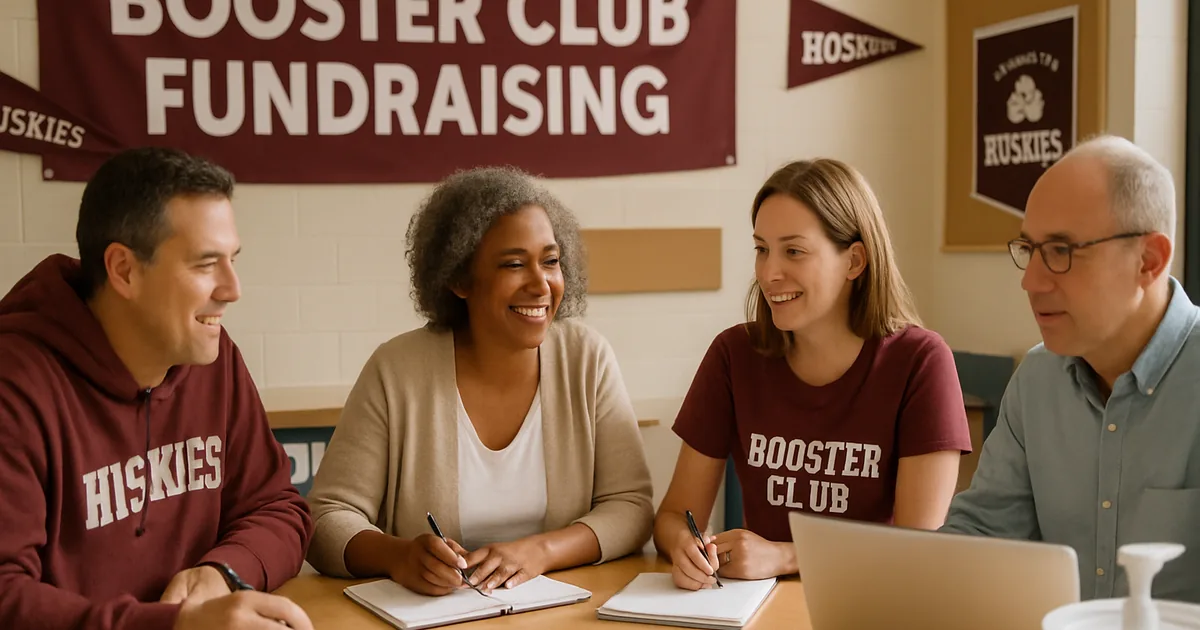
Athletic booster clubs should compare fundraising options on demand, net proceeds, upfront commitments, and volunteer duties across sports seasons. Household necessities, spirit wear, discount cards, concessions, and events can each fit different audiences. Bulk detergent avoids frozen storage but needs safe handling and scheduled pickup. Pre-orders reduce speculative inventory, not every financial risk. Use written vendor terms and your own participation estimate before choosing a repeatable program.
Athletic booster clubs face a fundraising challenge most other groups do not: they need to raise money repeatedly, across multiple sports and seasons, often with the same small pool of parent volunteers doing the work. A strategy that burns out coordinators or asks supporters to buy one more tub of cookie dough is not sustainable — and most booster leaders know it.
The programs that work long-term for athletic boosters are the ones that widen the buyer pool, remove logistical complexity, and give supporters something they actually want at a fair price. Use those factors to compare expected net proceeds with the full season budget; no category or payment model alone determines the outcome.
This guide covers the fundraising ideas that athletic booster clubs are using now to raise more with less effort: how necessity products compare with treats, how no-upfront-cost programs reduce advance-inventory exposure, what profit and logistics to expect, the mistakes that quietly cap results, and a clear recommendation for clubs that want a repeatable, high-margin program they can run year after year.
- Compare household necessities with spirit wear, cards, and events using actual demand and written terms.
- No-upfront-cost programs reduce advance-inventory exposure — the club collects orders and supporter payments first and pays for the group order from collected funds.
- A household product may interest buyers beyond team families, but affordability and preferences still matter.
- Non-perishable products avoid the frozen-delivery logistics and storage problems that make food fundraisers hard to run.
- Coordinator support can help with questions and planning; assign club volunteers to orders, payments, and pickup.
- Compare combined net proceeds and volunteer hours before deciding how often to repeat a campaign.
- Evaluate supporter value using the actual price, quantity, dosage, and current alternatives.
Why do traditional fundraisers struggle for athletic booster clubs?
Athletic boosters can hit fundraising fatigue quickly because they are asking the same families, multiple times a year, across football, basketball, baseball, and every other sport the school runs. A parent who bought cookie dough in the fall for volleyball is less enthusiastic about buying it again in the spring for track — and their coworkers and relatives are tapped out even faster.
The second problem is logistics. Booster volunteers are already managing practice schedules, uniforms, and travel; adding a fundraiser with complicated delivery, perishable inventory, or upfront costs turns into a second job. Programs that require the booster to front money for product, coordinate a timed frozen delivery, or manage a multi-week event quietly get dropped because no one has the bandwidth.
The fundraisers that work for athletic boosters are the ones that solve both problems at once: they reach buyers beyond the team families, and they are simple enough that a small volunteer crew can run them without burning out.
What makes a fundraiser work well for athletic booster clubs?
Before comparing specific programs, it helps to have a scorecard. Booster coordinators can compare fundraisers on the same six factors — and weakness on any one of them can help explain why a campaign underperforms.
What are the best fundraising ideas for athletic booster clubs?
Use that scorecard to compare these options with your own demand, budget, and volunteer capacity.
Household-necessity fundraisers (the standout for athletic boosters)
Everyday consumables — laundry detergent, cleaning products, paper goods — are one category to consider. Repeat orders depend on whether supporters want the product and have used their previous purchase. Check storage requirements, payment terms, and the group’s delivery duties rather than assuming staples are hands-off.
Bulk laundry detergent is an option for supporters who want a five-gallon purchase. A $49.95, 640-fluid-ounce bucket costs about 7.8 cents per fluid ounce before any surcharge. Compare current prices and label dosage; a per-ounce comparison alone does not establish equal cost per load. It does not need freezer space, but the club still needs scheduled delivery, safe handling, storage, and distribution.
Good Clean Fundraising offers a bulk-detergent program for groups including athletic boosters. At the published $49.95 price (online orders add $2), GCF lists $13.45 per bucket for 100–299, $14.45 for 300–499, and $15.45 for 500+, before additional group expenses. Collect orders and supporter payments, then submit one paid group order. The minimum is 50 buckets; shipping is free at 100+, with shipping charges below 100. Allow two to three weeks for selling plus about two weeks after the paid order for fulfillment. Arrange a commercial delivery address and a volunteer pickup team; a loading dock or forklift is recommended. A repeat campaign uses its own order tier and should be based on fresh demand.
Spirit wear and team gear
Custom apparel with the team name and logo appeals to team families, alumni, and fans, and it doubles as free advertising when supporters wear it around town. The profit margin can be strong if you use a print-on-demand vendor with no upfront inventory cost. The downside is that spirit-wear reorders depend on demand, so it does not have the repeat-buyer advantage of a consumable product. It works well as a secondary fundraiser alongside a necessity-product program.
Discount cards and coupon books
Supporters buy a card that gives them discounts at local businesses, and the booster keeps the profit. These work best in communities with strong local merchant participation and when the discounts are genuinely valuable. The challenge is that the buyer pool is limited to people who will actually use the card, and selling requires explaining the value rather than offering an immediate tangible product. Logistics are simple, but participation depends on the offers and audience.
Car washes and concession stands
These are classic booster fundraisers because they are visible, community-oriented, and can be fun team-building events. The profit per transaction is moderate, and they require a lot of volunteer hours on the day of the event. They work well as occasional one-off fundraisers but are hard to scale or repeat frequently because of the labor and logistics involved. For clubs that need to raise significant money across multiple sports, they are better as a supplement than a primary strategy.
Raffles and prize drawings
Supporters buy raffle tickets for a chance to win a donated or purchased prize. Raffles can raise money quickly with minimal logistics, but they are subject to state and local gaming laws, so check your regulations before launching. The other limitation is that not everyone is motivated by a chance to win — many supporters would rather buy something useful and keep it than gamble on a prize.
How much can an athletic booster club raise with these fundraisers?
Total dollars raised depends on how many families participate, how many buyers each family reaches, and the profit per item, so be skeptical of any program that promises one fixed percentage or total. The more useful way to think about it is that a wider buyer pool and higher participation matter alongside the applicable margin and extra costs.
At the published $49.95 price (online orders add $2), GCF lists $13.45 per bucket for 100–299, $14.45 for 300–499, and $15.45 for 500+, before additional group expenses. A $49.95, 640-fluid-ounce bucket costs about 7.8 cents per fluid ounce before any surcharge. Compare current prices and label dosage; a per-ounce comparison alone does not establish equal cost per load.
For illustration, 40 participating families averaging 6 buckets sell 240 buckets. At the $13.45 tier, that retains $3,228 before other group expenses. Each separate sports campaign uses its own order volume for pricing; do not combine annual units to claim a higher tier.
What logistics should athletic booster clubs expect?
Look for written details of the vendor’s responsibilities and the club’s work. Pre-ordering can reduce speculative inventory, but the club still needs payment tracking, minimum-order planning, and a budget for other costs. Coordinator support does not make the campaign risk-free or hands-off.
Collect orders and supporter payments, then submit one paid group order. The minimum is 50 buckets; shipping is free at 100+, with shipping charges below 100. Allow two to three weeks for selling plus about two weeks after the paid order for fulfillment. Arrange a commercial delivery address and a volunteer pickup team; a loading dock or forklift is recommended. The club handles reconciliation and distribution, with support for program questions. Detergent avoids freezer storage, but commercial delivery and safe pickup arrangements remain necessary.
Common mistakes athletic booster clubs make with fundraisers
Common mistakes to avoid
Running the same tired program every season
If participation or proceeds are dropping, ask supporters and volunteers why. Test a change against your own records rather than assuming a necessity product will automatically reverse the decline.
Choosing a fundraiser with upfront cost
Pre-order programs reduce the need to buy speculative inventory. Confirm minimums, shipping, fees, and refund obligations before committing; some costs can remain even when sales fall short.
Picking a program with complicated logistics
Booster volunteers are already managing team schedules and travel. A fundraiser that requires frozen delivery, perishable storage, or multi-day events quietly becomes a burden no one wants to repeat.
Ignoring the repeat-buyer advantage
One-time novelty items cap your total because each supporter buys once and you are done. Consumable products that get repurchased let you run the same program across multiple sports and seasons if supporters are ready to reorder.
Not briefing families on why the product is easy to sell
Participation may improve when families understand that they are offering something people already buy at a price they can compare, not pushing an overpriced treat. A short, honest kickoff explaining the value does a lot of the work.
- GCF pricing — published price, online surcharge, and order-volume margins; figures are before additional group expenses.
- GCF how it works — minimum order, shipping threshold, selling window, paid-order lead time, commercial delivery, and advertised guarantee.
- IRS tax-exempt organization gaming guide — federal gaming considerations. Check the relevant state and local authorities before offering a raffle; exemption alone does not authorize one.
Our recommendation for athletic booster clubs
If your supporters want bulk household supplies, GCF is a product option to compare with your other athletic fundraisers. At the published $49.95 price (online orders add $2), GCF lists $13.45 per bucket for 100–299, $14.45 for 300–499, and $15.45 for 500+, before additional group expenses. Collect orders and supporter payments, then submit one paid group order. The minimum is 50 buckets; shipping is free at 100+, with shipping charges below 100. Allow two to three weeks for selling plus about two weeks after the paid order for fulfillment. Arrange a commercial delivery address and a volunteer pickup team; a loading dock or forklift is recommended. GCF advertises a 100% money-back guarantee: GCF refunds a dissatisfied supporter directly, and the group keeps its earned profit. Ask GCF about return costs and refund procedures for your campaign after registration. Use demand and volunteer availability to decide when a repeat campaign is appropriate.
Frequently asked questions
The best choice fits your audience, net budget, and volunteer capacity. Compare demand, repeat purchases, margin, upfront commitments, delivery, and staffing. Bulk detergent can suit interested buyers, but it is not an established winner across all six factors.
For illustration, 40 families averaging 6 buckets sell 240 GCF buckets. At $13.45 each, that retains $3,228 before extra expenses. At the published $49.95 price (online orders add $2), GCF lists $13.45 per bucket for 100–299, $14.45 for 300–499, and $15.45 for 500+, before additional group expenses. Estimate demand using your own records rather than treating the example as a typical result.
Fundraisers you can repeat across multiple sports and seasons are often consumable products people may repurchase — household staples like laundry detergent, cleaning supplies, and paper goods — if demand supports it. One-time novelty items and treats can hit buyer fatigue quickly when you ask the same supporters multiple times a year.
GCF requires no payment to start. Collect orders and supporter payments before submitting a paid group order of at least 50 buckets. Shipping is free at 100+. Other group costs remain possible, so budget them before launch.
They can be when supporters want bulk detergent and the group can handle delivery and pickup. A $49.95, 640-fluid-ounce bucket costs about 7.8 cents per fluid ounce before any surcharge. Compare current prices and label dosage; a per-ounce comparison alone does not establish equal cost per load. Compare projected net proceeds with other options; neither sales volume nor savings are guaranteed.
Choose fundraisers that are simple to run, require no upfront cost, and come with vendor support for materials and questions while club volunteers manage orders, delivery arrangements, and pickup. The programs that burn out volunteers are the ones with complicated delivery, perishable inventory, or high labor requirements. A household-necessity program with vendor support can be run by a small team across multiple sports with a realistic workload plan.
Choose duties your small team can cover. GCF provides support, but club volunteers still collect orders and payments, arrange a commercial delivery location, and distribute buckets. A donation or direct-fulfillment program may have different responsibilities; compare written terms.
Yes, that can be an advantage of a household-necessity fundraiser. If supporters want to repurchase the product and the buyer pool is wide enough, you can run the same program for football in the fall, basketball in the winter, and baseball in the spring, provided demand supports another campaign, rather than reinventing the process each time.
At the published $49.95 price (online orders add $2), GCF lists $13.45 per bucket for 100–299, $14.45 for 300–499, and $15.45 for 500+, before additional group expenses. Collect orders and supporter payments, then submit one paid group order. The minimum is 50 buckets; shipping is free at 100+, with shipping charges below 100. Allow two to three weeks for selling plus about two weeks after the paid order for fulfillment. Arrange a commercial delivery address and a volunteer pickup team; a loading dock or forklift is recommended. Coordinator support helps with questions; the club manages payments and distribution.
Participation may improve when the product is something supporters actually want at a fair price, when the fundraiser is simple to explain and easy to sell, and when you hold a real kickoff so everyone starts on the same day. A household necessity that people already buy can reduce the awkwardness of pushing an overpriced novelty, which may make it easier for more families to take part.
Running the most fundraisers is not the same as running the right one repeatedly. A household-necessity program that reaches a wide buyer pool, requires no upfront cost, and is simple enough for a small volunteer crew to manage is one option that can help fund seasons, not just games. Switching to a product people already buy may ease participation and sustainability, but compare projected net proceeds, demand, and volunteer hours before deciding.