
Booster Club Fundraising
Booster Club Fundraising Ideas: The Complete Guide
The most effective fundraising strategies for booster clubs — from high-profit product programs to event-based campaigns that build community and raise serious money.
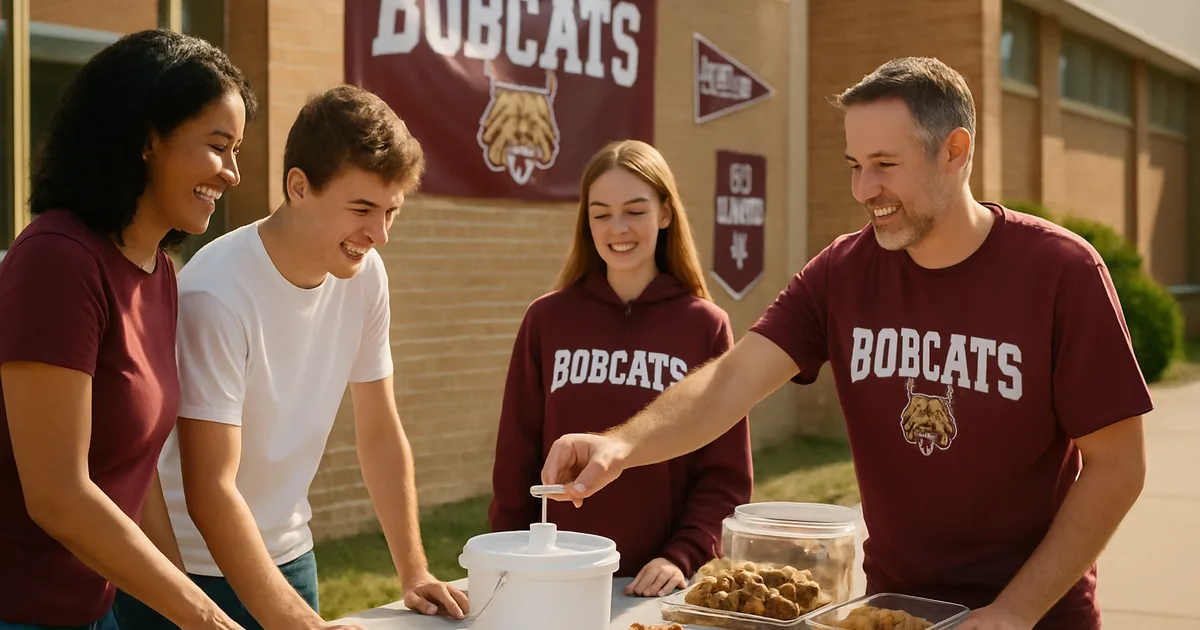
A good booster club fundraiser balances likely supporter demand, net proceeds, and volunteer capacity. Product campaigns, community events, and sponsorships each have trade-offs; household necessities are one option, not an established winner over treats. Compare written vendor terms, use realistic sales or attendance estimates, and subtract all extra costs. One or two main campaigns plus smaller events can be a useful calendar model if that mix meets your budget and fits the school schedule.
Booster clubs exist to fund the gap — the uniforms, equipment, travel, and facility upgrades that school budgets do not cover. But the coordinators running these programs are almost always volunteers with full-time jobs, which means the fundraiser has to work without becoming a second career.
Raising the most does not necessarily mean doing the most events; one option is to pick a repeatable, high-participation program and run it well. A single well-chosen fundraiser that reaches many families can outperform three complicated events that only the most dedicated volunteers can pull off.
This guide covers the full menu of booster club fundraising options — product programs, events, hybrid models — how they compare on profit and volunteer load, what drives participation, and how to build a sustainable annual fundraising calendar that does not burn out your core team.
- A useful fundraising plan considers broad participation, a product people want, and strong per-unit profit.
- Household necessities may interest supporters who want the product; storage, price, and buying preferences still limit demand.
- Events need a staffing and expense plan; compare net proceeds per volunteer hour using your own estimates.
- A sustainable booster calendar can center on one or two primary product fundraisers, with smaller events filling the gaps.
- Participation, units per participant, margin, and extra expenses all affect proceeds; calculate them together.
- No-upfront-cost programs reduce advance-inventory exposure and make it easier to try a new approach without betting the budget.
What makes a good booster club fundraiser?
Before comparing specific programs, it helps to have a scorecard. The fundraisers that work best for booster clubs tend to win on the same five factors, and weakness on any one of them usually shows up in the total.
First, buyer breadth: how many people will actually buy it? Estimate demand for the actual product rather than assuming necessities beat treats. Second, profit per unit: what does the club keep after cost? Higher margins mean fewer sales to hit your goal. Third, volunteer load: how many hours does it take to run, and does that work fall on the same three parents every time? Fourth, repeatability: can you run it again next year without reinventing the process? And fifth, upfront cost and risk: does the club have to front money for inventory, or is it no-cost until orders come in?
Measure every option against those five, and the right choice for your booster club usually becomes obvious.
What are the best product fundraisers for booster clubs?
Product fundraisers are one common way booster clubs build their budgets because they can scale with participation, may require less day-of coordination than events, and can be repeated year after year with the same process.
Household necessities — laundry detergent, cleaning products, paper goods — are options for supporters who use those products. Detergent does not need frozen storage, but bulk purchases still need suitable storage and pickup. Ask families about demand rather than assuming a necessity will sell better than treats.
Food fundraisers — cookie dough, candy, popcorn — can work for groups with interested supporters. Storage requirements differ: frozen dough and shelf-stable treats do not have identical logistics. Catalog and gift programs offer variety; compare their actual margins, pre-order options, fees, and delivery duties.
How do event-based booster fundraisers compare?
Event fundraisers — car washes, tournaments, dinners, auctions — can be excellent community builders and they give supporters a way to participate beyond writing a check. The trade-off is volunteer hours: most events require significant day-of coordination, setup, and cleanup, and the dollars-per-volunteer-hour ratio needs its own estimate.
A well-run car wash might raise a few hundred dollars in a morning, but its staffing and weather needs depend on the venue and setup. A tournament or dinner can raise more, but planning, permits, sponsorships, and logistics can stretch across weeks. Auctions and raffles add another layer of rules and often require licenses depending on your state.
That does not mean events are not worth it — many booster clubs run one signature event a year because it brings the community together in a way a product sale never will. The key is to be realistic about the return on volunteer time and check whether your event budget can cover the funding need.
What is the profit comparison across booster fundraiser types?
Profit varies widely by program, so be skeptical of any fundraiser that promises one magic number. What matters is total dollars raised, which is roughly participants times average sales per participant times profit per item. A high-margin program that only a few families can sell will often raise less than a moderate-margin program that everyone participates in.
Compare written terms across categories. Food, gift, and detergent vendors each set their own margins and fees. Events need an attendance estimate and a budget for supplies, venue, permits, insurance, and staffing. There is no universal margin ranking across these options.
For a concrete GCF illustration, 40 families averaging 6 buckets sell 240; 240 × $13.45 retains $3,228 before other expenses. At the published $49.95 price (online orders add $2), GCF lists $13.45 per bucket for 100–299, $14.45 for 300–499, and $15.45 for 500+, before additional group expenses. A $49.95, 640-fluid-ounce bucket costs about 7.8 cents per fluid ounce before any surcharge. Compare current prices and label dosage; a per-ounce comparison alone does not establish equal cost per load.
How do you boost participation in a booster club fundraiser?
Participation is one useful lever you have. A fundraiser where most families sell a moderate amount can beat one where only the top few families go all-in.
The first move is to pick a product or event that has broad appeal — something supporters actually want or need, not a novelty item they are buying out of obligation. The second is a real kickoff where everyone starts on the same day with a clear goal and a short timeline; campaigns that drift open for months lose momentum fast. The third is to make it easy: simple order forms, clear instructions, and a process families can explain to a buyer in one sentence.
Incentives help, but they are not the main driver. A useful approach is to offer a product supporters want and keep the ask low-pressure. When supporters feel they are getting real value — not doing the group a favor — they may choose to buy and recommend it.
What does a sustainable booster club fundraising calendar look like?
One calendar model to consider is one primary product fundraiser in the fall and one in the spring, with one or two smaller community events in between. That spreads the revenue across the year if demand and volunteer capacity support it.
Fall may fit your main campaign — families are back in the routine, the season is starting, and there is urgency around funding the year. Spring is a second bite, often with the same product so you are not reinventing the process. The community events — a car wash, a tournament, a dinner — fill the calendar and keep the booster club visible, and may carry more or less of the budget depending on your estimates.
Review the workload before running four or five different fundraisers a year, each with its own logistics, or relying entirely on one complicated event that only works if everything goes right. Choose a calendar with clear responsibilities and realistic projections.
Should your booster club try a new fundraiser or stick with what works?
If your current fundraiser is hitting your goals, participation is strong, and volunteers are not burning out, there is no reason to change. But if you are seeing declining participation, if the logistics are a headache, or if you are not hitting your budget, it is worth testing something new.
A pre-order pilot can reduce the need to buy speculative inventory. Collect orders and payments, confirm minimums, and budget shipping, fees, and refunds before committing. Replace or test your weakest campaign and compare actual net proceeds and volunteer hours.
The booster clubs that grow their budgets over time are usually the ones willing to test, measure, and adjust. Loyalty to a program that is not working is not a strategy.
| Factor | Product Fundraiser | Event Fundraiser |
|---|---|---|
| Buyer pool | Product demand | Event attendance |
| Volunteer hours | Orders and delivery | Staffing and setup |
| Repeatability | Reuse and update process | Reuse and update event plan |
| Upfront cost | Pre-orders; confirm fees | Permits, supplies, venue |
| Profit per participant | Vendor/order terms | Attendance and costs |
| Community engagement | Repeat relationships | Community visibility |
Common mistakes to avoid
Running too many different fundraisers in one year
Volunteer fatigue and supporter burnout are real. One or two strong repeatable programs may raise more than five scattered efforts.
Choosing a fundraiser based on margin alone
A high-margin program that only a few families can sell may raise less than a moderate-margin program with broad participation. Total dollars matter, not percentage.
Ignoring the volunteer-hour cost of events
A car wash that raises a few hundred dollars but burns out a dozen volunteers is not always a win. Measure return on volunteer time, not just gross revenue.
Leaving the selling window open too long
Campaigns that drift for months lose urgency. A focused two-to-three-week selling window tells families when orders are due, which an open-ended ask does not.
Fronting money for inventory without a backup plan
If a fundraiser underperforms and you are stuck with unsold product, that is budget risk. No-upfront-cost programs reduce speculative inventory exposure.
- IRS booster-club guidance — individual fundraising credits and private benefit; confirm your club’s own status and requirements.
- GCF pricing — published price, online surcharge, and order-volume margins; figures are before additional group expenses.
- GCF how it works — minimum order, shipping threshold, selling window, paid-order lead time, commercial delivery, and advertised guarantee.
Our recommendation for booster clubs
If you are looking for a repeatable product campaign, consider GCF alongside your other options. At the published $49.95 price (online orders add $2), GCF lists $13.45 per bucket for 100–299, $14.45 for 300–499, and $15.45 for 500+, before additional group expenses. Collect orders and supporter payments, then submit one paid group order. The minimum is 50 buckets; shipping is free at 100+, with shipping charges below 100. Allow two to three weeks for selling plus about two weeks after the paid order for fulfillment. Arrange a commercial delivery address and a volunteer pickup team; a loading dock or forklift is recommended. Compare demand and the volunteer workload before choosing it as your main campaign.
Frequently asked questions
One option for booster clubs is a product program with broad appeal, strong per-unit profit, and low volunteer load — ideally something people already buy, like a household necessity. These programs scale with participation, are repeatable year after year, and still need payment, delivery, and pickup planning.
Use your expected units and the correct order tier. For illustration, 240 GCF buckets at $13.45 retain $3,228 before extra expenses. At the published $49.95 price (online orders add $2), GCF lists $13.45 per bucket for 100–299, $14.45 for 300–499, and $15.45 for 500+, before additional group expenses. Use actual past sales or a supporter survey to estimate demand.
Event fundraisers can be excellent community builders and they give supporters a way to participate beyond buying a product, but staffing and costs need their own estimate. A sustainable booster calendar can include one or two repeatable product fundraisers, with one signature event a year that builds visibility and engagement.
Household necessities, treats, catalogs, and events can each work with the right audience. Bulk detergent avoids frozen storage but needs safe bulk handling and pickup. Compare real prices, margins, fees, and demand; there is no established universal winner among the categories.
Pick a product or event with broad appeal, hold a real kickoff so everyone starts on the same day, set a short two-to-three-week selling timeline, and make the process simple enough that families can explain it in one sentence. Participation may improve when supporters feel they are getting real value, not doing the group a favor.
One calendar model to consider is one primary product fundraiser in the fall and one in the spring, with one or two smaller community events in between. That spreads revenue across the year if demand and volunteer capacity support it. Check demand and volunteer capacity before adding more programs.
Many pre-order programs require no payment to start. With GCF, collect orders and supporter payments before placing one paid group order. The minimum is 50 buckets; shipping is free at 100+, with charges below that. Other expenses and refund obligations can remain.
For GCF, allow two to three weeks for selling, then about two weeks after the paid order for fulfillment, plus setup and pickup. Other vendors and events have different timelines. Choose dates around the school calendar and when funds are needed.
Detergent can appeal to supporters who use it and want a bulk purchase. It avoids freezer storage but still needs a delivery and pickup plan. A $49.95, 640-fluid-ounce bucket costs about 7.8 cents per fluid ounce before any surcharge. Compare current prices and label dosage; a per-ounce comparison alone does not establish equal cost per load. Interest and participation depend on your audience rather than the category alone.
At the published $49.95 price (online orders add $2), GCF lists $13.45 per bucket for 100–299, $14.45 for 300–499, and $15.45 for 500+, before additional group expenses. Collect orders and supporter payments, then submit one paid group order. The minimum is 50 buckets; shipping is free at 100+, with shipping charges below 100. Allow two to three weeks for selling plus about two weeks after the paid order for fulfillment. Arrange a commercial delivery address and a volunteer pickup team; a loading dock or forklift is recommended. A coordinator supports the group; volunteers remain responsible for payments, tracking, and distribution.
Choose a repeatable plan only when expected net proceeds and volunteer capacity support it. A simple product people need, a clear goal, a short timeline, and a process that does not burn out your volunteers can give volunteers a clearer plan to manage.