
Clubs, Nonprofits & Community Organizations
Service Club Fundraising Ideas: What Works for Key Club, Interact, Beta, and NHS
Fundraising options for student service clubs — from household products to community events that can support your mission.
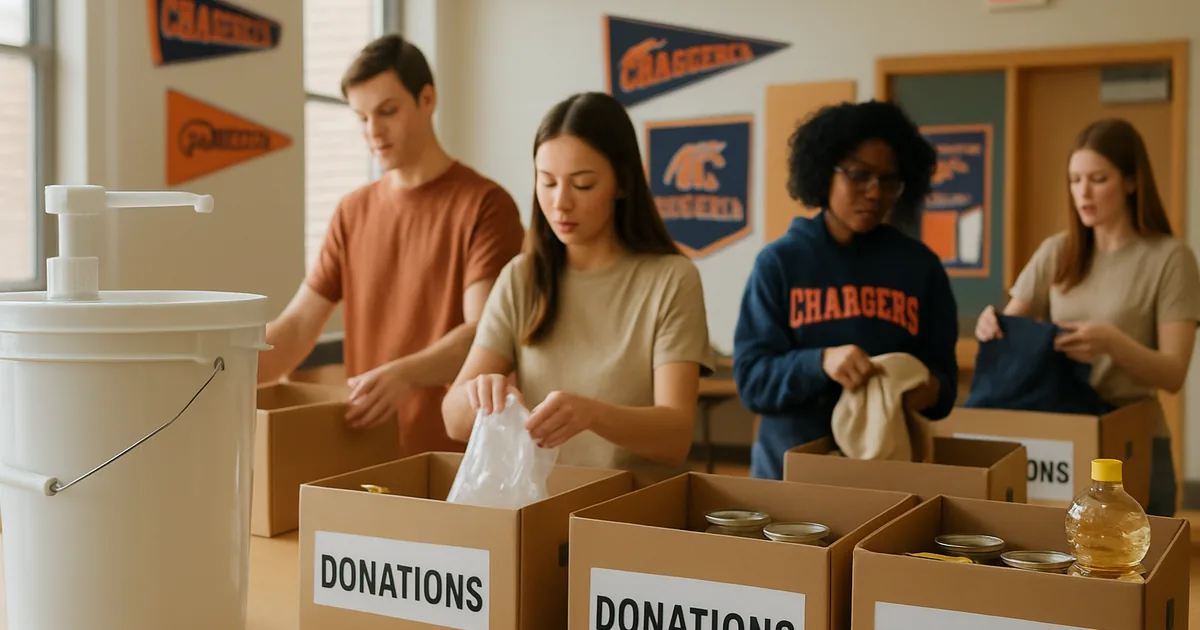
For Key Club, Interact, Beta, NHS, and similar groups, compare household-staple preorders, sponsored service projects, digital appeals, and discount cards. Choose an option that fits the mission and your members' capacity. A product category alone does not establish better participation or service value. Get adviser approval, assign payment and distribution duties, and explain exactly what the proceeds will support.
Service clubs occupy a specific spot in the fundraising landscape. Unlike sports teams selling for new equipment or arts groups raising for a trip, clubs like Key Club, Interact, Beta Club, and National Honor Society are fundraising to fund service — community projects, scholarships, charitable donations, and leadership programming. That mission changes what works.
Look for a plan that fits the club's values, is manageable for student officers, and gives supporters a clear reason to participate. Evaluate treats, catalogs, household staples, and direct giving against those same questions.
This guide compares fundraising options for service-oriented clubs, including product sales and community events, with checks for mission fit, budget, communication, and student leadership responsibilities.
- Explain how the fundraiser and use of proceeds support the club's mission.
- Check demand for household staples alongside other products and giving options.
- No-upfront-cost programs reduce advance inventory spending, which matters for student-led organizations with limited budgets.
- Set a clear selling deadline and leave separate time for fulfillment and distribution.
- Mission-aligned community events — service fundraisers that combine giving back with raising funds — can appeal to service club members when the jobs fit your officers' capacity.
- Student officers need simple logistics and coordinator support; complex programs with inventory management and delivery coordination can be harder for volunteer leadership to sustain without enough help.
- A workable program pairs a product supporters want with a clear, honest explanation of where the funds go that members can confidently share.
Why do traditional fundraisers often fall short for service clubs?
A fundraiser should make sense to members and supporters, but selling a treat or gift item does not inherently conflict with service. Explain the cause, price, and use of proceeds and ask whether the offer fits your audience.
There is also a practical issue. Service club members are often juggling academics, other extracurriculars, and the club's actual service projects. A fundraiser that requires managing inventory, coordinating a delivery day, or running a complex event competes with the work the club exists to do. The easier the logistics, the more likely officers can keep members engaged.
Repeated asks may stretch supporters' budgets. Check interest before repeating any product sale; necessities are not automatically immune to fatigue.
What makes a fundraiser a good fit for a service club?
Compare mission fit, buyer interest, organizing duties, financial commitments, and value to supporters. These are planning questions, not a measured model that guarantees one option will outperform another.
Mission fit means explaining how the activity and proceeds support the club's purpose. Buyer breadth needs an estimate from your network, while organizing effort includes orders, payments, and delivery even when a coordinator helps.
A preorder program reduces the need to buy speculative inventory; it does not eliminate costs or financial risk. For GCF, collect orders and payments before submitting the paid group order, meet the 50-bucket minimum, and budget for shipping below 100 buckets and any local expenses.
What are the best fundraising ideas for service clubs?
Use those five questions to compare the following options:
Household necessity products (the standout)
Household staples such as detergent, cleaning products, and paper goods are options when supporters want them. Check demand, pricing, bulk storage, and distribution rather than assuming they outperform food or catalogs.
At $49.95 for 640 fluid ounces, the base price is about 7.8 cents per fluid ounce, before online fees or other applicable costs. Compare current prices and dosing instructions before claiming a saving per load.
GCF's 5-gallon pump bucket sells for $49.95 (online orders add $2). The published margin is $13.45 per bucket at 100–299 buckets, $14.45 at 300–499, and $15.45 at 500+, before additional group expenses. The minimum order is 50 buckets; shipping is free at 100+, while shipping charges below 100 reduce the margin. There is no payment to start: collect supporter orders and payments, then submit the paid group order. GCF recommends 2–3 weeks of selling, followed by about two weeks after the paid order for fulfillment. Allow extra time for setup and distribution. A coordinator provides guidance; your group arranges a commercial delivery address, unloading, and supporter pickup.
Mission-aligned community events
Service fundraisers — events that combine community benefit with fundraising — can fit service club members well because the work itself reflects the mission, when the jobs and schedule are manageable. A car wash, community cleanup with sponsorships, or a service-a-thon where members collect pledges for volunteer hours all align with what these clubs stand for.
A service event can connect fundraising with hands-on work, but its engagement and workload depend on the activity. Agree on the sponsorship or donation terms and check whether fundraising activity counts toward your club's service requirements with the adviser.
No-inventory digital and direct-support programs
Online appeals avoid product handling but still need promotion, payment records, acknowledgments, and suitable permissions. Direct giving can attract repeat supporters; it does not need a product exchange to be worthwhile.
Discount card programs
Local discount cards that offer deals at community businesses can work for service clubs with strong local ties. They provide ongoing value to supporters and align with a community-benefit mission, though they require upfront coordination with local merchants and often involve some financial risk if cards do not sell.
How do service clubs structure a successful product fundraiser?
Start with a project goal, adviser approval, a clear deadline, and a kickoff where officers explain the offer and duties. For a GCF sale, plan the 2–3-week selling period separately from fulfillment and distribution.
Coordinator support helps with planning and questions, but your group still promotes the sale, reconciles orders and payments, arranges commercial delivery and unloading, and distributes buckets. Assign those jobs before setting the campaign dates.
Tracking is simple: a shared spreadsheet logs orders as they come in, and the club organizer sends a midpoint update so members know where the club stands relative to the goal. Transparency can support participation: when members see progress, some may be more likely to make a final push.
What profit can service clubs expect?
Estimate retained funds from active sellers × average units sold × the applicable margin, less extra costs. Neither participation nor margin is always the bigger lever; compare the complete budget.
GCF's 5-gallon pump bucket sells for $49.95 (online orders add $2). The published margin is $13.45 per bucket at 100–299 buckets, $14.45 at 300–499, and $15.45 at 500+, before additional group expenses. The minimum order is 50 buckets; shipping is free at 100+, while shipping charges below 100 reduce the margin. At $49.95 for 640 fluid ounces, the base price is about 7.8 cents per fluid ounce, before online fees or other applicable costs. Compare current prices and dosing instructions before claiming a saving per load.
Ask likely supporters about demand before relying on a product's familiarity. As an illustration, 20 active members averaging eight GCF buckets would sell 160 and retain $2,152 before extra group expenses; those sales are an assumption.
How do service clubs communicate the fundraiser to members and supporters?
Clear, mission-focused communication can help a fundraiser reach its goal. Start with the why: tell members exactly what the funds will support — scholarships, a specific service project, a charitable donation, leadership conference fees — and make that goal visible throughout the campaign.
For supporters, the message is simple: you are buying something you need at a great price, and the purchase funds the club's service work. That is the whole pitch. Service club members should never feel like they are asking for a favor; they are offering value and explaining where the profit goes.
Use an agreed mix of meeting announcements, email or text, and reminders near the deadline. Give members clear materials and a contact for questions, and track which channels help your own campaign.
Common mistakes to avoid
Choosing a fundraiser that does not match the club's mission
Explain the use of proceeds and ask members whether the activity fits the club's values. A household staple, treat, or direct appeal can each fit depending on the plan.
Picking a program with complex logistics that overwhelm student leaders
Service club officers are volunteers juggling academics and other commitments. A fundraiser that requires managing inventory, coordinating delivery, and constant troubleshooting competes with the club's actual service work.
Running an open-ended campaign with no clear deadline
For GCF, plan 2–3 weeks for selling and about two weeks for fulfillment after submitting the paid group order, plus setup and distribution. Set dates around your own calendar; the selling window is not the full campaign timeline.
Failing to communicate the specific goal and impact
Members participate more when they know exactly what the funds will support. A vague goal like 'club expenses' does not motivate; 'funding three scholarships' or 'supporting our spring service trip' does.
Skipping a real kickoff meeting
When members start whenever they get around to it, some may miss the start. A single kickoff where everyone begins together creates momentum and accountability.
Underestimating the value of coordinator support
Coordinator support helps with planning and questions, but your group still promotes the sale, reconciles orders and payments, arranges commercial delivery and unloading, and distributes buckets. Assign those jobs before setting the campaign dates.
- Key Club International — official background on its high-school service and leadership mission; this does not validate comparative fundraising claims. — official source
- Rotary Interact — official background on service clubs for ages 12–18; context rather than evidence of fundraising outcomes. — official source
- National Beta — official background on academic achievement, character, leadership, and service for elementary and secondary students. — official source
- National Honor Society — official background on scholarship, service, leadership, and character. — official source
- GCF pricing — customer price, online surcharge, order tiers, and shipping. Calculations use the tier for a single group order and exclude additional group expenses. GCF how it works — 50-bucket minimum, selling period, paid-order lead time, commercial delivery and distribution, and advertised guarantee.
- Editorial scope — fundraiser comparisons and scheduling suggestions are planning judgments, not measured rankings or campaign results. Illustrative calculations do not predict participation.
Our recommendation for service clubs
For a student service club considering a household-staple preorder sale, confirm adviser approval and enough help for payment handling and delivery. GCF's 5-gallon pump bucket sells for $49.95 (online orders add $2). The published margin is $13.45 per bucket at 100–299 buckets, $14.45 at 300–499, and $15.45 at 500+, before additional group expenses. The minimum order is 50 buckets; shipping is free at 100+, while shipping charges below 100 reduce the margin. There is no payment to start: collect supporter orders and payments, then submit the paid group order. GCF recommends 2–3 weeks of selling, followed by about two weeks after the paid order for fulfillment. Allow extra time for setup and distribution. A coordinator provides guidance; your group arranges a commercial delivery address, unloading, and supporter pickup.
Frequently asked questions
Household-staple preorders, sponsored service projects, digital appeals, and discount cards are options. Choose from the mission, available helpers, likely supporters, and costs rather than a universal ranking.
Household staples are worth considering alongside treats, apparel, and direct giving. Ask your own supporters about price, product preferences, storage, and pickup: familiarity with detergent does not mean everyone wants a 5-gallon bucket.
Estimate retained funds as active sellers × average units sold × the applicable per-unit margin, less additional group expenses. For an illustrative GCF order of 200 buckets, 200 × $13.45 = $2,690 before those expenses. This is a calculation, not a campaign result or forecast.
Student officers need clear duties, an adviser-approved plan, and enough adult help for payments and delivery where required. Coordinator support helps with planning and questions, but your group still promotes the sale, reconciles orders and payments, arranges commercial delivery and unloading, and distributes buckets. Assign those jobs before setting the campaign dates.
For GCF, plan 2–3 weeks for selling and about two weeks for fulfillment after submitting the paid group order, plus setup and distribution. Set dates around your own calendar; the selling window is not the full campaign timeline.
A preorder program reduces the need to buy speculative inventory; it does not eliminate costs or financial risk. For GCF, collect orders and payments before submitting the paid group order, meet the 50-bucket minimum, and budget for shipping below 100 buckets and any local expenses.
Give them a clear goal tied to a specific project, a product they can confidently sell, and a short deadline. Participation may improve when members believe in what they are selling and know exactly what the funds will support — scholarships, a service trip, a charitable donation — rather than vague 'club expenses.'
A common mistake is choosing a plan without checking mission fit, costs, and capacity. Treats or novelty items do not automatically conflict with service; explain the purpose and choose an offer your members and supporters understand.
Yes. A fall product sale and spring service event are one possible calendar, provided there is demand and enough help. Confirm the separate budgets, delivery dates, and adviser requirements before launching both.
GCF's 5-gallon pump bucket sells for $49.95 (online orders add $2). The published margin is $13.45 per bucket at 100–299 buckets, $14.45 at 300–499, and $15.45 at 500+, before additional group expenses. The minimum order is 50 buckets; shipping is free at 100+, while shipping charges below 100 reduce the margin. There is no payment to start: collect supporter orders and payments, then submit the paid group order. GCF recommends 2–3 weeks of selling, followed by about two weeks after the paid order for fulfillment. Allow extra time for setup and distribution. A coordinator provides guidance; your group arranges a commercial delivery address, unloading, and supporter pickup.
Choose a fundraiser that fits the club's purpose and the people available to run it. Clear roles, adviser support, an honest offer, and a workable budget give student leaders a practical way to fund service projects.