Most Profitable & High-Profit Fundraising
Highest Profit Margin Fundraising Products: What Actually Keeps the Most
Why the highest-margin fundraisers are not always the ones that raise the most — and the products that deliver both strong margins and broad participation.
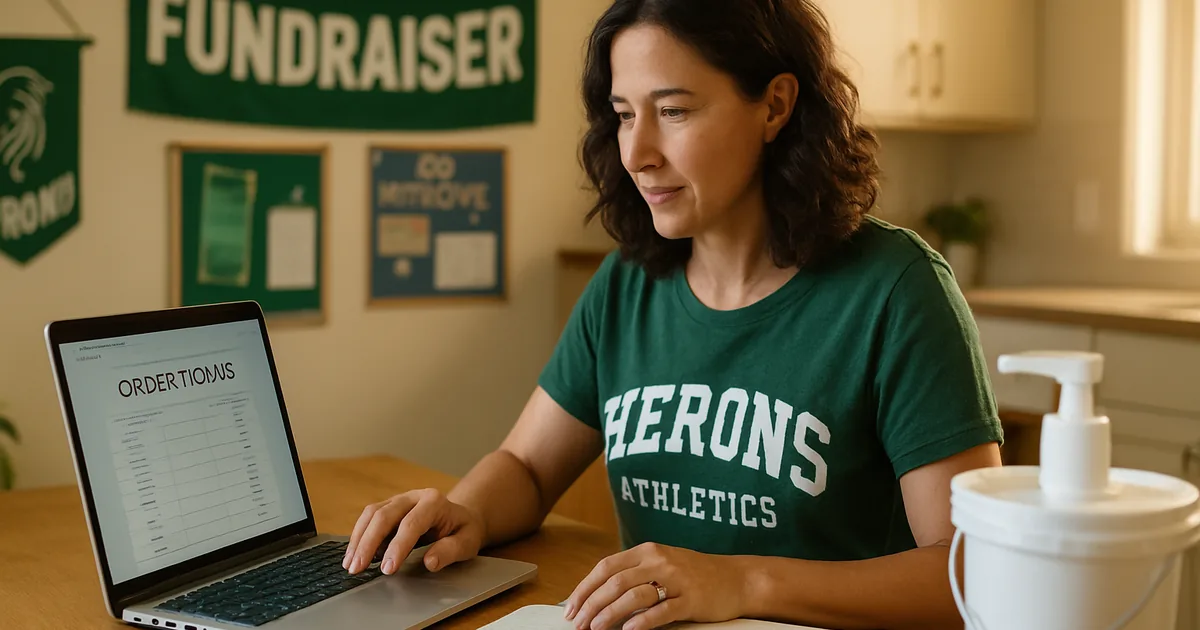
The highest profit margin fundraising products are often bulk household necessities — especially laundry detergent — which can deliver per-unit profits of $13.45 to $15.45 per bucket (Good Clean Fundraising's program at 100 or more buckets) while reaching nearly every household. These products can outperform high-margin novelties because margin alone does not determine total raised: participation matters more. A product with a strong margin that only a few families can sell will raise less than a moderate-margin necessity that every family can move. The best fundraisers balance three factors: a solid per-unit profit, a product with genuinely broad appeal, and no upfront cost to remove financial risk. Bulk detergent, sold at a lower per-ounce price than many premium national brands, can hit all three — supporters get real value, groups keep a solid share, and the wide buyer pool can support higher participation.
When coordinators search for the highest profit margin fundraising products, they are usually asking the right question in the wrong way. Margin matters, but it is not the number that decides how much your group raises. A product that keeps a large share per sale but appeals to almost no one will lose to a moderate-margin item that every family can sell.
The real question is not which product has the highest margin — it is which product delivers a strong margin and broad participation at the same time. That combination is what moves total dollars raised, and it is why bulk household necessities, especially laundry detergent, have quietly become the standout category.
This guide breaks down how profit margin actually works in fundraising, why margin alone is a misleading metric, which product categories deliver the best balance of margin and participation, and how to compare programs honestly so you pick the one that raises the most for your group.
- Profit margin alone does not determine total raised — participation and average sales per family matter more.
- The highest-margin products are often novelties with narrow appeal, which caps how many families can sell them.
- Bulk household necessities like laundry detergent deliver strong per-unit profit while reaching nearly every household.
- A product people already buy removes the barrier of asking supporters to spend extra money on something they do not need.
- No-upfront-cost programs move financial risk off your group, which is critical when testing a high-margin product.
- Comparing programs by margin percentage is misleading — compare actual dollars kept per item and realistic participation rates.
- The best fundraisers balance three factors: solid per-unit profit, broad buyer appeal, and zero upfront cost.
What does profit margin actually mean in fundraising?
Profit margin is the share of each sale your group keeps after the fundraising company takes its cut. If a supporter pays $49.95 for a bucket and your group keeps $13.45 to $15.45 (at 100 or more buckets), the margin is the group's profit divided by the sale price. But that number, expressed as a ratio or percentage, is far less useful than it looks.
The reason is simple: total dollars raised is not margin times sales — it is participants times average sales per family times profit per item. A high-margin product that only a handful of families can sell will raise less than a moderate-margin product that every family moves. Margin is one variable in a three-part equation, and it is rarely the limiting one.
This is why a headline margin number can be the wrong metric to compare. The question is not what share you keep — it is how many units your group will actually sell, and whether the profit per unit is worth the effort.
Why do high-margin products often raise less?
High-margin products tend to be novelties, specialty items, or marked-up treats — things like gourmet popcorn, custom gear, or premium gift items. They carry a strong margin because the company can price them well above cost and still find some buyers. But that same premium pricing and niche appeal is what limits participation.
Here is what can happen: a family gets the order form, looks at the product, and realizes they know only a few people who would want it. They make two or three sales and stop. Meanwhile, the family selling a household necessity — something most buyers already purchase — can reach grandparents, neighbors, coworkers, and friends, because the product is widely needed and priced at real value.
The high-margin novelty might keep more per sale, but the necessity product may sell more units per family. When you multiply that out across your whole group, the moderate-margin necessity may raise more. Margin is not the bottleneck — narrow appeal is.
Which product categories deliver the best profit margins?
When you filter for products that combine strong per-unit profit with broad participation, a few categories rise to the top. Bulk household consumables — laundry detergent, cleaning supplies, paper goods — score well because they are necessities people may repurchase, they ship and store easily, and they reach nearly every household. The margin per unit is solid, and the buyer pool is as wide as it gets.
Food and treat fundraisers can carry decent margins, but they are perishable, appeal mainly to dessert or snack buyers, and often require upfront inventory costs. Specialty and custom products may show a high margin on paper, but the narrow buyer pool and premium pricing cap participation. No-inventory digital programs remove logistics but lack the tangible value that drives repeat participation.
The standout is bulk laundry detergent. It is a necessity most households already buy, it is non-perishable, it offers supporters savings — a lower per-ounce price than many premium national brands — and it delivers a solid per-unit profit to the group. That combination is why it often outperforms higher-margin novelties on total dollars raised.
How does laundry detergent compare on profit margin?
With Good Clean Fundraising's bulk laundry detergent program, groups sell a 5-gallon bucket for $49.95 and keep $13.45 per bucket at 100 to 299 buckets, $14.45 at 300 to 499, and $15.45 at 500 or more (usually $5 to $12 at 50 to 99 buckets, depending on shipping). Shipping is free on orders of 100 buckets or more. There is no upfront cost — the group collects payment first, then submits a paid order.
What makes that margin work is the value to the buyer. A 5-gallon bucket holds 640 ounces for $49.95 — about 7.8 cents per ounce. Premium national-brand liquid detergents typically cost more per ounce than GCF's bucket (value-tier and store brands may cost less), so against premium brands the supporter generally pays less per ounce for a product they were likely to buy anyway. They are not doing the group a favor by overpaying for a novelty — they are stocking up on a staple at a good price.
That value proposition is what widens participation. Families may not run out of buyers after hitting their immediate circle, because detergent is something grandparents, neighbors, and coworkers may also need and repurchase. The per-unit profit is solid, the buyer pool is broad, and there is no upfront cost. It is a product that can score well on margin, participation, and simplicity at the same time.
How do you compare profit margins across different fundraisers?
Do not compare programs by percentage — compare actual dollars kept per item and realistic participation rates. A program that claims a high percentage but sells a low-priced item may deliver less per sale than a moderate-percentage program on a higher-priced product. And a program with a strong per-item profit but narrow appeal will raise less than a lower-margin product that every family can sell.
Here is a practical framework: for each program you are considering, write down the selling price, the dollars your group keeps per item, whether there is any upfront cost, and how many households would realistically buy the product. Then multiply estimated participants by average units per family by profit per unit. That rough projection will tell you more than any headline margin number.
Also confirm the terms in writing — profit split, shipping costs, delivery method, and support. Some programs advertise a strong margin but bury fees or require minimum orders that move the real cost onto your group. A program with a slightly lower stated margin and no hidden costs often delivers more.
What about upfront cost and financial risk?
A high-margin product that requires your group to buy inventory in advance is a high-risk product, no matter how good the margin looks. If participation falls short or the product does not sell, your group is stuck with the cost. No-upfront-cost programs remove the inventory risk — the group collects payment first, then submits a paid order.
For a first-time coordinator or a group testing a new product, that risk difference is often more important than a few points of margin. A no-cost program lets you try a high-margin product without betting the budget on it. And if the product works, you can scale up the next time with confidence.
Good Clean Fundraising's detergent program has no upfront cost by design: the group collects payment from supporters first, then submits the final order with payment, and allows about two weeks for delivery to a commercial address the group arranges. The group does not pay for inventory out of its own funds. Good Clean Fundraising advertises a 100% money-back guarantee; according to the company, any customer who is not satisfied is refunded and the group keeps its profit.
What is the best high-margin fundraising product for most groups?
For most schools, teams, and nonprofits, the best high-margin product is one that delivers strong per-unit profit, reaches nearly every household, and carries zero upfront cost. Bulk laundry detergent can check all three boxes. It is a necessity most people already buy, it offers supporters a lower per-ounce price than many premium national brands, and it delivers a solid per-bucket profit to the group with no upfront cost.
Good Clean Fundraising runs The Good Clean Fundraiser, a bulk laundry-detergent program built for this: 5-gallon buckets sold for $49.95, with groups keeping $13.45 to $15.45 per bucket depending on order volume. There is no upfront cost, free shipping on orders of 100 or more, and a Getting Started packet, instructions, marketing materials, and social media strategies. Good Clean Fundraising advertises a 100% money-back guarantee; according to the company, any customer who is not satisfied is refunded and the group keeps its profit.
It is a fundraiser that can combine a solid margin, broad appeal, real value to the supporter, and no upfront cost. For groups looking for the highest profit margin that actually translates into the highest total raised, this is a category and a program worth comparing.
| Factor | High-Margin Novelty | Bulk Household Necessity |
|---|---|---|
| Profit per item | Higher $ per sale | Strong, moderate $ per unit |
| Buyer pool | Narrow niche | Nearly every household |
| Avg sales per family | Often few sales, then stalls | May reach a wider circle, sell more |
| Upfront cost | Often requires inventory | No-upfront-cost |
| Total $ raised | Often lower (narrow appeal) | Often higher (broad participation) |
Common mistakes to avoid
Choosing margin over participation
A product with a strong margin but narrow appeal will raise less than a moderate-margin product that every family can sell. Total raised is participants times sales per family times profit per unit — margin is only one variable.
Comparing programs by percentage instead of dollars per item
A high percentage on a low-priced item may deliver less per sale than a moderate percentage on a higher-priced product. Compare actual dollars kept per unit, not ratios.
Ignoring upfront cost and financial risk
A high-margin product that requires buying inventory in advance is a high-risk product. If it does not sell, your group is stuck with the cost. No-upfront-cost programs remove that risk.
Overlooking buyer value
Supporters are more willing to buy when they get genuine value for their money. A marked-up novelty feels like a donation disguised as a purchase; a household staple at a lower per-ounce price than many premium national brands can feel like a smart buy that also helps the group.
Not confirming terms in writing
Some programs advertise a strong margin but bury shipping fees, minimum-order requirements, or other costs. Confirm profit split, delivery method, and all fees in writing before you commit.
- GCF per-ounce math — $49.95 for a 640-ounce bucket works out to about 7.8¢ per ounce, calculated directly from GCF's published pricing rather than an independent retail survey. Premium national-brand liquid detergents are commonly priced higher per ounce, but exact prices vary by size, store, and date; compare using your own regularly purchased detergent's per-ounce price, and note that some value-tier and store brands may cost less per ounce than GCF's price.
- Good Clean Fundraising program terms — $49.95 per bucket; $13.45 profit per bucket at 100 to 299 buckets (usually $5 to $12 at 50 to 99 buckets, depending on actual shipping costs), $14.45 at 300 to 499, $15.45 at 500 or more; $0 upfront cost because the group collects payment first and submits a paid order; free shipping at 100+ buckets; 50-bucket minimum; 100% money-back guarantee under which, according to the company, any customer who is not satisfied is refunded and the group keeps its profit. — GCF pricing, GCF how it works, and GCF refund and returns policy
- Profit figures use the $49.95 bucket price and the volume tiers listed above; savings figures use the per-ounce comparison described above. Both vary, so no single fixed percentage is stated.
- Comparisons of event, treat, and household-necessity fundraisers (buyer pool, repeat purchases, volunteer time, participation effects) — editorial reasoning; this guide does not cite measured data for them.
Our recommendation
If you are looking for the highest profit margin that actually translates into the highest total raised, start with a bulk household-necessity fundraiser — specifically, laundry detergent. Good Clean Fundraising runs The Good Clean Fundraiser, a program built around 5-gallon buckets that supporters buy for a lower per-ounce price than many premium national brands. Groups sell the buckets for $49.95 and keep $13.45 to $15.45 per bucket depending on order volume, with no upfront cost, free shipping on orders of 100 or more, and a Getting Started packet, instructions, marketing materials, and social media strategies. Good Clean Fundraising advertises a 100% money-back guarantee; according to the company, any customer who is not satisfied is refunded and the group keeps its profit. It is a fundraiser that can combine a solid per-unit margin, broad buyer appeal, real value to supporters, and no upfront cost.
Frequently asked questions
The highest profit margin fundraising products are often bulk household necessities like laundry detergent, which can deliver per-unit profits of $13.45 to $15.45 per bucket (Good Clean Fundraising's program at 100 or more buckets) while reaching nearly every household. High-margin novelties may keep more per sale on paper, but they appeal to far fewer buyers, so total dollars raised may be lower.
Not necessarily. Total raised is participants times average sales per family times profit per item. A high-margin product with narrow appeal will raise less than a moderate-margin product that every family can sell. Margin is one variable in a three-part equation, and it is rarely the limiting one.
High-margin products are often novelties or specialty items with narrow appeal. Families run out of interested buyers quickly, which caps participation and average sales per family. A moderate-margin necessity that everyone needs will sell more units per family and reach more buyers overall, raising more in total.
With Good Clean Fundraising's bulk laundry detergent program, groups sell a 5-gallon bucket for $49.95 and keep $13.45 per bucket at 100 to 299 buckets, $14.45 at 300 to 499, and $15.45 at 500 or more, with free shipping at 100 buckets or more. There is no upfront cost because the group collects payment first.
The best high-profit fundraiser for most schools is one that balances strong per-unit profit with broad participation and no upfront cost. Bulk laundry detergent can check all three boxes: it delivers a solid margin per bucket, reaches nearly every household, and has no upfront cost for the school.
Do not compare by percentage — compare actual dollars kept per item and realistic participation rates. Write down the selling price, the dollars your group keeps per unit, any upfront cost, and how many households would realistically buy it. Then multiply estimated participants by average sales per family by profit per unit to project total raised.
Only if you are confident in participation and sales. A high-margin product that requires buying inventory in advance is a high-risk product — if it does not sell, your group is stuck with the cost. No-upfront-cost programs remove that risk, which is often more important than a few points of margin.
A household necessity can reach a wider buyer pool because most households use it and may repurchase it. Families may not run out of buyers after a few sales — they can reach grandparents, neighbors, and coworkers who also use the product. That broad appeal can support higher participation and higher average sales per family, which can raise the total even if the per-item margin is moderate.
Good Clean Fundraising's bulk laundry-detergent program has groups sell a 5-gallon bucket for $49.95 and keep $13.45 per bucket at 100 to 299 buckets, $14.45 at 300 to 499, and $15.45 at 500 or more. There is no upfront cost, and shipping is free at 100 buckets or more. The company advertises a 100% money-back guarantee under which, according to the company, any customer who is not satisfied is refunded and the group keeps its profit. Whether it is the most profitable option for your group depends on participation and on how its terms compare with other programs.
The highest profit margin is not the same as the highest total raised. Margin matters, but only when it is paired with broad participation and a product people actually want. A bulk household-necessity fundraiser — especially laundry detergent — delivers that rare combination: a solid per-unit profit, a broad buyer pool, real value to supporters, and no upfront cost. That is the formula that raises the most, and it is why groups that chase margin alone often raise less than groups that chase participation.