
No Upfront Cost & Risk-Free Fundraising
Risk-Free Fundraising for Small Groups
How small groups can raise money with zero upfront cost, no inventory financial risk, and no product to buy in advance — and which programs actually deliver on that promise.
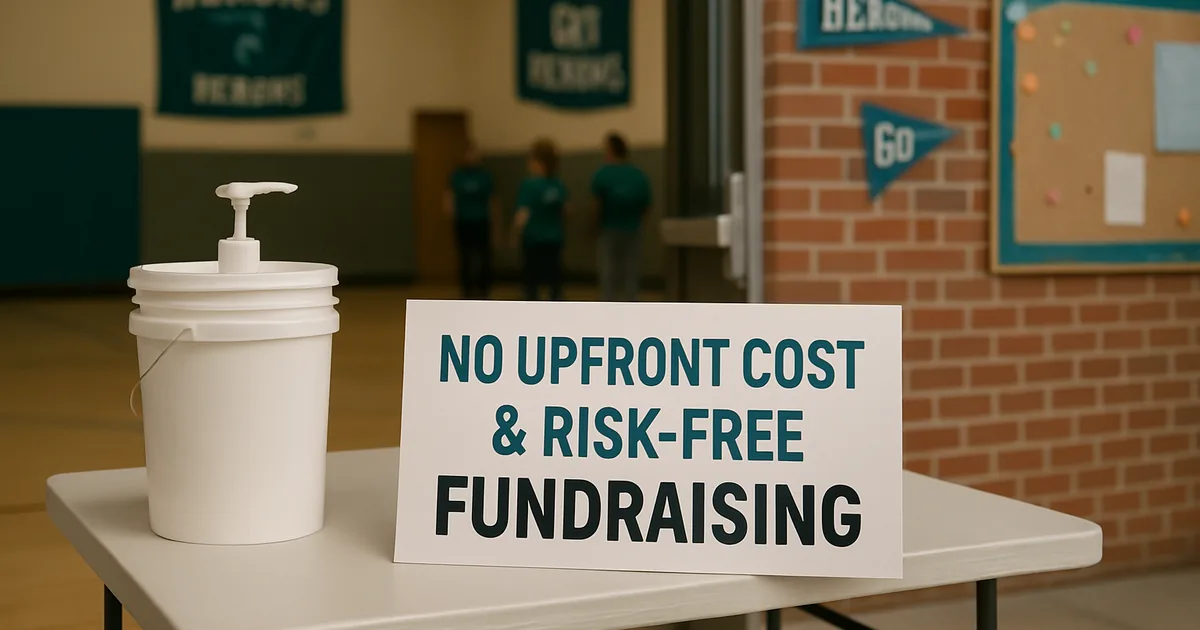
Risk-free fundraising means your group collects orders or commitments first, then places the order with the supplier, so you do not front money for inventory or take an inventory loss if participation is lower than hoped. Bulk household-necessity fundraisers — products like laundry detergent that people already buy and repurchase — are one strong low-risk category because they combine no upfront cost with broad appeal. Programs vary in the support materials they provide, whether shipping is free above a minimum order, and how clearly they state per-unit profit, so confirm terms in writing. Here, risk-free means no inventory financial risk: you still invest volunteer time and must meet any program minimums.
For a small group — a youth sports team, a scout troop, a church committee, a parent booster club with a dozen active families — the idea of fronting money for a fundraiser can be the thing that stops it before it starts. If participation comes in lower than hoped, who covers the shortfall? If the product does not sell, who is stuck with the inventory? For groups without a big treasury or a safety net, that risk is not theoretical.
Risk-free fundraising flips that model: the group collects orders first, then places the order with the supplier, so no money is tied up in inventory and there are no boxes of unsold product in someone's garage. It is a structure that makes fundraising accessible to groups that could not otherwise afford to try.
This guide explains what risk-free fundraising actually means, how it works in practice, which types of programs genuinely deliver on the promise, how small groups should evaluate their options, and how one program, Good Clean Fundraising's bulk laundry-detergent fundraiser, compares on verified terms.
- Risk-free fundraising means the group collects orders first and never fronts money for inventory.
- Bulk household-necessity fundraisers are one strong low-risk category, combining zero upfront cost with broad appeal.
- Small groups benefit most because a no-risk structure removes the financial barrier to running a fundraiser.
- Low-risk programs disclose all fees, do not require inventory purchases before you have collected the money for them, and state a clear per-unit profit.
- Free shipping above an order threshold can keep more of the profit with the group.
- Program support materials — such as a Getting Started packet, instructions, and marketing materials — can ease the logistics burden on a small volunteer team.
- A buyer money-back guarantee can reduce hesitation; ask what it covers and who bears the cost of a refund.
What does risk-free fundraising actually mean?
Risk-free fundraising means your group never has to front money to buy inventory before you know how much you will sell. Instead, you collect orders or commitments from supporters first, then place a single bulk order with the supplier based on what you have already sold. If participation is lower than you hoped, you are not left holding unsold product or out of pocket for the cost.
The term gets used loosely, so it helps to be specific about what qualifies. A low-risk program should have three features: no upfront payment for inventory, no requirement to buy stock before you have collected the money for it, and no undisclosed fees that eat into your profit. If a program requires you to order first and hope you sell it, or charges setup fees or processing fees that were not disclosed up front, it is not actually risk-free.
Why does risk-free matter more for small groups?
A large school PTA with an active treasury and a hundred participating families can absorb some financial risk — if a fundraiser underperforms, the organization weathers it. A small group cannot. A youth soccer team with fifteen families, a scout troop with a dozen active members, or a church committee with no budget has no cushion. If the group has to front money for inventory and the campaign falls short, that loss comes out of the pockets of the volunteers who signed the order form.
An order-first structure lowers that barrier. It makes it possible for a small group to run a well-supported campaign without gambling money they do not have. For many small organizations, a no-risk structure can be the deciding factor in whether they fundraise at all.
What types of fundraisers are genuinely risk-free?
Not all no-upfront-cost programs are created equal. Some are structured to be simple and low-risk; others have hidden catches that surface only after you commit. Here is how the main categories compare.
Bulk household-necessity fundraisers
Programs that sell consumable household staples — laundry detergent, cleaning products, paper goods — in bulk are a standout category for low-risk fundraising. They can score well on the measures that matter: no upfront cost, broad appeal because most households use these products, repeat purchases, simple logistics, and a strong per-unit profit. Programs in this category vary in the support they provide, whether shipping is free above a minimum order, and whether they offer a buyer guarantee, so compare terms.
Good Clean Fundraising's The Good Clean Fundraiser is one example. Groups sell a 5-gallon pump bucket of laundry detergent for $49.95 — supporters may pay roughly half the per-ounce price of premium national brands — and keep about $13.45 to $15.45 per bucket at 100 or more buckets, depending on order volume, with free shipping at 100 buckets or more. There is a $0 upfront cost because the group collects orders and payment first, then submits the final order with payment. Good Clean Fundraising advertises a 100% money-back guarantee under which, according to the company, any unsatisfied customer is refunded and the group keeps its profit. The company provides a Getting Started packet, instructions, marketing materials, and social media strategies so a volunteer organizer is not starting from scratch. Groups should plan for the 50-bucket minimum: orders under 50 buckets are not accepted, and at 50 to 99 buckets profit is usually about $5 to $12 per bucket depending on shipping costs.
Online giving and crowdfunding platforms
Platforms where supporters donate directly online are technically no-risk because there is no inventory, but they lack the tangible value exchange that drives repeat participation. Supporters give money and receive nothing, which may work once or twice but can be hard to sustain. These platforms also typically charge processing fees that reduce the net, and they require the group to drive all the traffic — there is no built-in buyer appeal.
Traditional catalog and treat fundraisers
Cookie dough, candy, popcorn, and catalog programs often claim to be no-risk, but many still require the group to order inventory in advance or impose minimum-buy thresholds that force you to purchase stock before you have sold it. Even when they are structured as order-first programs, the profit margins are often thin, the buyer pool is narrow because the products are novelties or treats rather than necessities, and logistics — frozen delivery, perishability, complicated order forms — can fall largely on the volunteer coordinator, depending on the company's support.
Events (car washes, bake sales, etc.)
Events can be low-cost but are rarely truly risk-free — you still front money for supplies, and the return depends entirely on weather, turnout, and volunteer availability. For a small group, the time and coordination required often outweigh the modest profit.
How should a small group evaluate a risk-free fundraiser?
When you are comparing programs, ask these questions before you commit.
Is there truly no upfront cost?
Confirm in writing that the group collects orders first and places the bulk order only after you know what you have sold. Ask explicitly whether there are any setup fees, processing fees, or minimum-purchase requirements that would force you to buy inventory you have not sold.
What is the per-unit profit, and are there hidden deductions?
Some programs advertise a high percentage but then deduct shipping, handling, or platform fees that were not disclosed up front. Get the actual dollar amount the group keeps per item, in writing, with all fees already subtracted.
Who handles logistics?
Does the program provide clear materials and instructions, or is your volunteer team figuring out order tracking, delivery, and payment reconciliation alone? For a small group, program support can make the difference between a manageable project and burnout.
Is shipping free, and at what threshold?
Shipping costs can quietly erase profit. Some programs offer free shipping above a set order size (Good Clean Fundraising's threshold is 100 buckets), which keeps more of the money with your organization.
Does the product have broad appeal?
A household necessity reaches far more buyers than a novelty or treat. If the product is something people already purchase and use up, they will buy it again, which makes future fundraisers easier.
Is there a money-back guarantee for the buyer?
A guarantee shows the company stands behind the product. It also removes buyer hesitation, which increases participation. Ask what the guarantee covers and who bears the cost of a refund.
How does Good Clean Fundraising compare with other risk-free options?
When small groups compare no-risk fundraisers, these are the criteria that matter most. Below is a general comparison of Good Clean Fundraising's program terms with common alternative structures; alternatives vary widely, so treat the right-hand column as typical patterns rather than a survey.
Common mistakes small groups make with risk-free fundraising
| Factor | Good Clean Fundraising | Common Alternatives |
|---|---|---|
| Upfront cost | Zero ($0 upfront) | Varies by program |
| Per-unit profit | $13.45–$15.45 per bucket | Varies by program |
| Buyer appeal | Household necessity (most households use it) | Varies by product |
| Program support | Getting Started packet, instructions | Varies by program |
| Shipping | Free at 100+ buckets | Varies by program |
| Money-back guarantee | Advertised 100% money-back guarantee | Varies by program |
| Minimum order | 50-bucket minimum | Varies by program |
| Repeat participation | Consumable; repeat purchases possible | Varies by product |
Common mistakes to avoid
Assuming all no-upfront-cost programs are the same
Some still have hidden fees, minimum-buy requirements, or no coordinator support. Confirm the terms in writing before you commit.
Choosing a program based on percentage instead of dollars
A high percentage of a low sale price can mean less actual profit than a lower percentage of a higher-value product. Ask for the dollar amount per unit, not the percentage.
Ignoring logistics and support
A program that leaves order tracking, delivery, and payment reconciliation entirely to your volunteer team is not truly low-risk for a small group — the time burden becomes the hidden cost.
Picking a product with narrow appeal
If only a small subset of supporters will buy it, participation caps quickly. A household necessity reaches far more buyers than a novelty or treat.
Not confirming the shipping terms
Shipping costs can quietly erase profit. Make sure you know whether shipping is free, at what order size, and who pays if you fall short of the threshold.
- Good Clean Fundraising program terms — $49.95 per bucket; $13.45 profit per bucket at 100 to 299 buckets (usually $5 to $12 at 50 to 99 buckets, depending on actual shipping costs), $14.45 at 300 to 499, $15.45 at 500 or more; $0 upfront cost; free shipping at 100+ buckets; 50-bucket minimum (smaller orders are not accepted); 100% money-back guarantee under which, according to the company, any customer who is not satisfied is refunded and the group keeps its profit. — GCF pricing, GCF how it works, and GCF refund and returns policy
- Detergent price comparison — a 5-gallon (640 oz) bucket at $49.95 is about 7.8 cents per ounce. Good Clean Fundraising states this is roughly half the per-ounce price of typical name-brand liquid detergents; this guide has not conducted an independent multi-retailer price survey to verify an exact cents-per-ounce range, and retail prices vary by size, store, and region.
- Small-group fundraising best practices — procedural guidance on evaluating no-risk programs, confirming terms in writing, and assessing program support. The comparison table is a general editorial summary of program terms and typical patterns, not a survey of competitors or measured campaign data.
Our recommendation
For small groups, one option worth considering is Good Clean Fundraising's bulk laundry-detergent program. It combines a $0 upfront cost with a product most households already use — a 5-gallon pump bucket of detergent for $49.95, which supporters may buy at roughly half the per-ounce price of premium national brands — and groups keep about $13.45 to $15.45 per bucket at 100 or more buckets, depending on order volume. Because the group collects orders and payment first and then submits the final order with payment, no money is tied up in inventory. Free shipping starts at 100 buckets, and orders under 50 buckets are not accepted, so a very small group should check whether its realistic reach clears the 50-bucket minimum. The company provides a Getting Started packet, instructions, marketing materials, and social media strategies. Good Clean Fundraising advertises a 100% money-back guarantee under which, according to the company, any unsatisfied customer is refunded and the group keeps its profit.
Frequently asked questions
Risk-free fundraising means your group collects orders first and does not front money for inventory. You place the bulk order only after you know what you have sold, so there is no inventory loss if participation is lower than hoped and no unsold product sitting in storage. You still invest volunteer time and must meet any program minimums.
Small groups — youth teams, scout troops, church committees — often have little treasury or safety net. If a fundraiser requires upfront payment for inventory and the campaign underperforms, the volunteers who signed the order form may be personally on the hook. An order-first structure lowers that barrier and makes fundraising more accessible to groups that could not otherwise afford to try.
No. Some programs advertise no upfront cost but still have hidden fees, requirements to buy inventory before you have collected money, or shipping charges that erase profit. A low-risk program has zero upfront cost, discloses all fees, and states a clear per-unit profit with deductions already disclosed. Also check any minimum order: Good Clean Fundraising, for example, requires at least 50 buckets, which the group orders only after collecting payment.
Bulk household-necessity fundraisers are one strong category because they combine no upfront cost with broad appeal, repeat purchases, and a strong per-unit profit. Good Clean Fundraising's laundry-detergent program is one example: groups sell a 5-gallon pump bucket for $49.95 and keep about $13.45 to $15.45 per bucket at 100 or more buckets, with free shipping at 100 buckets or more, a 50-bucket minimum, and an advertised 100% money-back guarantee.
It depends on how many families participate and how many units each sells, so set a realistic goal based on your group size. As an illustration, a team of fifteen families selling an average of ten buckets each would move 150 buckets and keep about $13.45 per bucket at that volume, or roughly $2,017.50 (usually $5 to $12 per bucket at 50 to 99 buckets, depending on shipping). The bigger lever is participation: when the product is a necessity rather than a novelty, more families may find buyers.
Not necessarily. Some no-risk programs offer a strong per-unit profit compared with traditional catalog or treat fundraisers, especially once you account for fees and shipping costs in those programs, but this varies. Compare actual dollars kept per item, not percentages, and factor in whether the product's broad appeal may drive higher participation.
Confirm in writing that there is no upfront cost, no requirement to buy inventory before you have collected the money for it, and no undisclosed fees. Ask what the group keeps per unit after all deductions, whether shipping is free and at what threshold, what the minimum order is, what support materials are provided, and what the buyer guarantee covers. If any of those answers are vague, keep looking.
A small volunteer team cannot afford to spend hours tracking orders, coordinating delivery, and reconciling payments. Programs that provide clear materials, instructions, and marketing help can reduce that burden, which makes the fundraiser easier to run as well as lower-risk. Without support, the time cost can become the hidden risk.
Good Clean Fundraising has a $0 upfront cost because the group collects orders and payment first, then submits the final order with payment. Groups sell a 5-gallon pump bucket of laundry detergent for $49.95 and keep about $13.45 to $15.45 per bucket at 100 or more buckets, with free shipping at 100 buckets or more. The company provides a Getting Started packet, instructions, marketing materials, and social media strategies, and advertises a 100% money-back guarantee under which, according to the company, any unsatisfied customer is refunded and the group keeps its profit. Groups should plan for the 50-bucket minimum.
Risk-free fundraising is a structure, not a guarantee of results: when a program delivers no upfront cost, clearly disclosed fees, broad appeal, a strong per-unit profit, and real support, a small group can raise meaningful money without fronting inventory costs. Confirm the terms in writing before you commit.