School Fundraising
Fundraising for School Playground & Facility Projects
How schools and PTAs raise the money for playgrounds, equipment upgrades, and facility improvements — and which fundraisers actually close the gap.
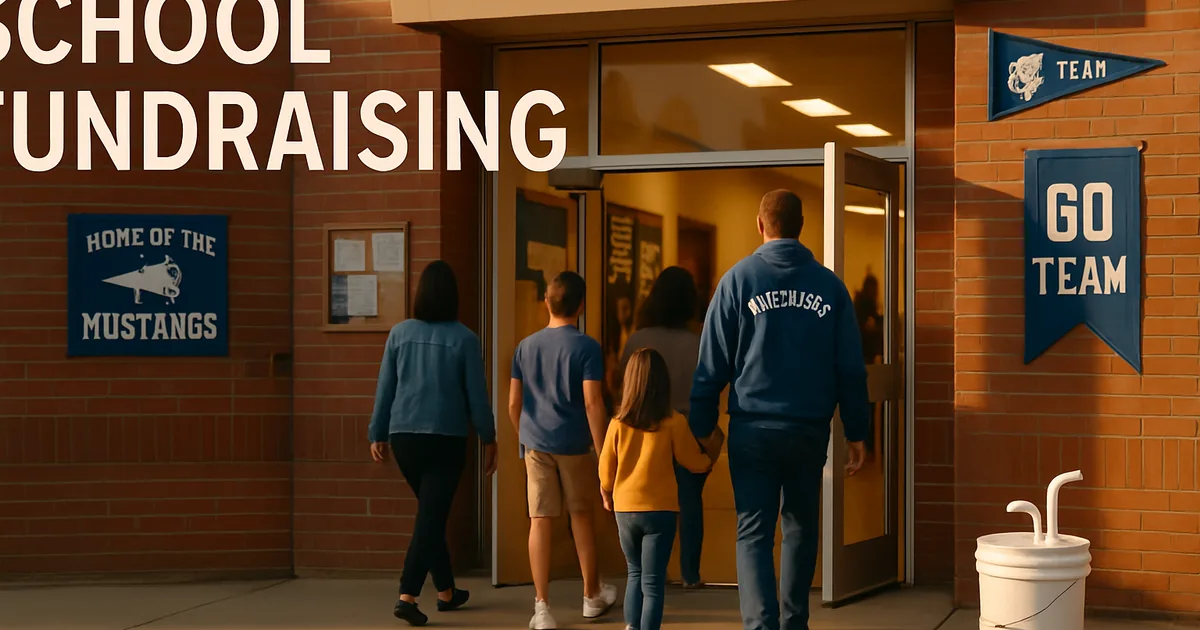
School playground and facility fundraising works best as a multi-year, multi-method effort that combines high-dollar donor campaigns with repeatable, broad-participation fundraisers that engage every family. Large capital goals — vendor quotes for playgrounds commonly run from a few thousand dollars for small equipment upgrades to well over $100,000 for a full installation — are rarely met by a single event. The most successful campaigns layer three approaches: a lead-gift phase targeting businesses and major donors, an ongoing product fundraiser that reaches every family and builds momentum over multiple cycles, and supplemental events or grants that fill specific gaps. The key is choosing a core fundraiser that families can support multiple times without fatigue — household necessities outperform novelty products here because supporters are shifting a purchase they already make rather than being asked for discretionary spending again and again.
A playground fundraiser is different from raising money for uniforms or a field trip. The goal is bigger, the timeline is longer, and a single bake sale is not going to move the needle. Schools and PTAs that successfully fund playgrounds, shade structures, or major equipment upgrades do it by treating the effort as a campaign, not an event — and by combining high-dollar asks with fundraisers that can run multiple times without burning out families.
Playground campaigns that reach their goals often follow a similar pattern: they start with a realistic budget and timeline, secure a few anchor donations early, then run a repeatable fundraiser that reaches every family and can cycle two or three times over the course of a year or more. A common mistake is picking a one-time event fundraiser and hoping it covers everything, or choosing a product that families will buy once but not again six months later.
This guide covers how to set a realistic playground fundraising goal, why large capital campaigns require a layered approach, which types of fundraisers work for multi-cycle efforts, how to balance donor outreach with broad participation, and the common mistakes that stall playground projects halfway to the finish line.
- Vendor quotes for playground projects commonly range from a few thousand dollars for equipment additions to over $100,000 for a full installation, so many campaigns run for a year or longer.
- Successful playground fundraising combines three layers: lead gifts from businesses and major donors, a repeatable broad-participation fundraiser, and supplemental events or grants.
- The core fundraiser needs to be something families can support multiple times without fatigue — household necessities work better than novelty products for this reason.
- Starting with a few anchor donations creates momentum and makes the goal feel achievable to the wider community.
- Single-event fundraisers rarely cover large capital goals; repeatable programs that cycle two or three times raise more over the campaign timeline.
- Transparency about progress — regular updates showing how close the group is to the goal — keeps participation high across multiple cycles.
Why is playground fundraising different from other school fundraisers?
The difference is the size of the goal and the length of the timeline. A team raising money for jerseys might need a few thousand dollars in a month; a PTA raising money for a playground might need $50,000 or more over a year or two. That changes everything about how the fundraiser is structured. A one-time product sale or event can work for a short-term, modest goal, but large capital projects require a campaign — multiple fundraising methods running in sequence or in parallel, with a plan that sustains momentum over many months.
The other difference is donor fatigue. Families will buy cookie dough once, maybe twice. Ask them a third time in the same year and participation may drop. Playground campaigns that rely on novelty products or high-effort events hit a wall after the first cycle. The groups that succeed pick a core fundraiser that families can support repeatedly without it feeling like another ask — which usually means offering something they were going to buy anyway.
What does a school playground actually cost?
Playground costs vary widely depending on the scope of the project. Adding a few pieces of equipment to an existing play area might cost a few thousand dollars. Resurfacing or adding safety surfacing can run several thousand to tens of thousands. A full playground installation — equipment, surfacing, site prep, installation labor, and permits — is commonly quoted at roughly $30,000 to well over $100,000, and larger or more complex projects can go higher; these are planning ranges, so get local written quotes.
Before launching a fundraiser, get a real quote from a playground vendor or contractor. A vague goal makes it impossible to plan the right mix of fundraising methods or to communicate progress to families. Once you have a number, add a buffer for unexpected costs — site prep, permits, and installation often come in higher than the initial estimate.
What is the best way to structure a playground fundraising campaign?
The campaigns that work layer three approaches. First, a lead-gift phase: before you ask every family for $20, approach local businesses, alumni, and a few families who can afford a larger donation. Securing a few anchor gifts — even one or two donations that cover 10 to 20 percent of the goal — creates momentum and makes the project feel real and achievable to everyone else.
Second, a repeatable broad-participation fundraiser that reaches every family and can run multiple times. This is your base layer, the one that brings in steady, predictable money over the course of the campaign. It should be simple to run, carry a decent margin, and — most importantly — be something families can support more than once without feeling tapped out. Household-necessity fundraisers work well here because supporters are shifting a purchase they already make rather than spending extra money on a novelty item.
Third, supplemental efforts: one-time events, grant applications, matching-gift challenges, or smaller product sales that fill specific gaps or create energy at key moments. These are not the foundation of the campaign, but they can accelerate progress or close the final gap.
Which fundraisers work best for multi-cycle playground campaigns?
The best core fundraiser for a playground campaign is one that families can support multiple times without fatigue, that reaches a wide base of buyers, and that carries enough margin to make repeated cycles worth the effort. Household-necessity fundraisers — laundry detergent, cleaning products, paper goods — check all three boxes. Supporters buy these products regularly anyway, so asking them to shift one purchase to the school's fundraiser twice a year does not feel like a burden. The buyer pool is also much wider than a novelty or treat product: grandparents, neighbors, and coworkers who would never buy cookie dough will buy detergent, especially when it is offered at a better price than they would pay at the store.
Product fundraisers that rely on treats, novelty items, or seasonal goods tend to work well for the first cycle but lose steam quickly. Families run out of buyers who want another tub of cookie dough or popcorn, and participation drops. For a campaign that needs to run multiple times, that drop is a problem. Events like car washes, fun runs, or auctions can supplement a campaign, but they require significant volunteer labor and cannot easily be repeated every few months without burnout.
How does a household-necessity fundraiser support a large capital goal?
A household-necessity fundraiser works for playground campaigns because it is built for repetition. Take a bulk laundry-detergent program: families sell 5-gallon buckets to supporters at about half the per-ounce price of premium national brands, the group keeps a solid margin per bucket, and because detergent is something every household repurchases, the same supporters may buy again in six months when the school runs the fundraiser a second time. That repeat-buyer dynamic can make it possible to run the same program multiple cycles without losing participation.
The math on a multi-cycle approach adds up over time. If a school runs a detergent fundraiser three times over 18 months and sells 200 buckets per cycle at the $13.45 tier, it keeps $2,690 per cycle, or $8,070 in total — about 16 percent of a $50,000 goal, so lead gifts, grants, and other methods still need to cover the rest. Pair that with a few lead gifts and a grant or two, and a $50,000 or $75,000 project becomes more achievable without relying on a single high-stress event.
How do you keep momentum going over a long playground campaign?
Momentum in a long campaign comes from visible progress and regular communication. Families need to see that the effort is working — update them after every fundraiser with the new total, show how much closer the school is to the goal, and celebrate milestones. A thermometer poster in the hallway, email updates, and social-media posts all reinforce that the project is real and moving forward.
The other key is varying the ask without overloading volunteers. Run your core repeatable fundraiser on a predictable schedule — fall and spring, for example — and fill the gaps with lighter efforts like a matching-gift week, a direct-donation drive, or a grant application. Families can handle multiple asks over a long timeline as long as each one is clear, manageable, and tied to visible progress toward a goal they care about.
What role do grants and major donors play in playground fundraising?
Grants and major donors can cover a meaningful portion of a playground project, but they should not be the entire plan. Many community foundations, local businesses, and national organizations offer grants for school playground and facility projects. Applying takes time, and approval is never guaranteed, so treat grants as a supplement to your broader fundraising effort, not a replacement for it.
Major donors — local businesses, alumni, or families with the capacity to give larger amounts — are often willing to contribute if approached directly and early. A personal ask from a principal or PTA president, paired with a clear project plan and budget, is often more effective than a mass email. Securing one or two anchor gifts early in the campaign signals to the rest of the community that the project is serious and achievable, which lifts participation across the board.
Common mistakes in school playground fundraising
The most common mistake is underestimating the timeline and trying to fund a large project with a single event. A $60,000 playground is not going to be covered by one bake sale or one product fundraiser. Successful campaigns plan for a year or more and layer multiple methods.
Another mistake is choosing a core fundraiser that cannot be repeated. If your main fundraiser is a novelty product or a high-effort event, you will struggle to run it again six months later. Pick something that families can support multiple times without fatigue.
Groups also often fail to communicate progress. If families do not see regular updates showing how close the school is to the goal, participation drops in later cycles. Transparency and celebration of milestones keep momentum high.
Finally, many campaigns launch without a real budget. A vague goal makes it impossible to plan effectively or to know when you are done. Get a firm quote, add a buffer, and build your campaign around that number.
Common mistakes to avoid
Trying to fund a large project with a single event
A $50,000 or $75,000 playground cannot be covered by one fundraiser. Successful campaigns layer multiple methods over a year or more.
Choosing a core fundraiser that cannot be repeated
Novelty products and high-effort events lose participation in the second cycle. Pick something families can support multiple times without fatigue.
Failing to communicate progress
If families do not see regular updates showing how close the school is to the goal, participation drops. Transparency keeps momentum high.
Launching without a real budget
A vague goal makes it impossible to plan effectively. Get a firm quote from a playground vendor, add a buffer, and build your campaign around that number.
Skipping the lead-gift phase
Securing a few anchor donations early creates momentum and makes the project feel achievable to the wider community. Start with major donors before asking every family.
- Editorial guidance: playground cost ranges, lead-gift targets, and multi-cycle campaign structure on this page are planning heuristics based on common practice and vendor quotes, not measured data or a cited study; get written vendor quotes for your project.
- Good Clean Fundraising program terms — $49.95 per bucket; $13.45 profit per bucket at 100 to 299 buckets (usually $5 to $12 at 50 to 99 buckets, depending on actual shipping costs), $14.45 at 300 to 499, $15.45 at 500 or more; $0 upfront cost; free shipping at 100+ buckets; 50-bucket minimum (smaller orders are not accepted); 100% money-back guarantee under which, according to the company, any customer who is not satisfied is refunded and the group keeps its profit. — GCF pricing, GCF how it works, and GCF refund and returns.
Our recommendation for playground campaigns
If your school or PTA is raising money for a playground or major facility project, plan for a multi-cycle campaign and choose a core fundraiser that families can support more than once without fatigue. Good Clean Fundraising's bulk laundry-detergent program is built for exactly this: groups sell 5-gallon buckets of detergent at about half the per-ounce price of premium national brands, keep about $13.45 to $15.45 per bucket at 100 or more buckets, depending on order volume, and can run the same program two or three times over 12 to 18 months because supporters are shifting a household staple they already buy, not spending extra money on a novelty. There is no upfront cost, free shipping on orders of 100 buckets or more, and a Getting Started packet, instructions, marketing materials, and social media strategies so your volunteers can focus on communication and momentum. Pair it with a lead-gift phase and a grant or two, and a $50,000 or $75,000 playground goal becomes more achievable without relying on a single high-stress event. Orders under 50 buckets are not accepted.
Frequently asked questions
Playground costs vary widely. Adding a few pieces of equipment might cost a few thousand dollars, while a full playground installation — equipment, safety surfacing, site prep, installation, and permits — is commonly quoted at roughly $30,000 to over $100,000 depending on size and complexity. Get a firm quote from a playground vendor before launching your fundraiser so you have a realistic goal.
The best playground fundraiser is one that can run multiple times without burning out families. Household-necessity programs like bulk laundry detergent work well because supporters are shifting a purchase they already make rather than spending extra money, so the same families and buyers will participate in a second or third cycle. Pair that repeatable core fundraiser with lead gifts from businesses and major donors, and supplement with grants or one-time events.
Many playground campaigns run for a year to 18 months, sometimes longer for very large projects. The timeline depends on the size of your goal, how many fundraising methods you layer, and how often you can run your core fundraiser. A multi-cycle approach — running the same repeatable fundraiser two or three times — is more effective than trying to cover everything with a single event.
For a small equipment addition, possibly. For a full playground installation, rarely. Large capital goals require a campaign, not a single event. The groups that succeed layer lead gifts, a repeatable broad-participation fundraiser that runs multiple cycles, and supplemental efforts like grants or matching-gift challenges.
Momentum comes from visible progress and regular communication. Update families after every fundraiser with the new total, show how much closer the school is to the goal, and celebrate milestones. A thermometer poster, email updates, and social-media posts all reinforce that the project is moving forward. Varying the ask — running your core fundraiser on a predictable schedule and filling gaps with lighter efforts — also helps prevent fatigue.
Yes, but do not make grants your only plan. Many community foundations, businesses, and national organizations offer playground grants, but approval is never guaranteed and the process takes time. Treat grants as a supplement to your broader fundraising effort. Apply for every relevant grant, but build your campaign around methods you control — lead gifts, repeatable fundraisers, and direct donations.
Approach local businesses early with a clear, professional ask. A personal visit or call from the principal or PTA president, paired with a one-page project summary showing the budget, timeline, and community benefit, is often more effective than a mass email. Offer recognition — a plaque, signage, or a mention in school communications — and ask for a specific amount. Securing one or two anchor business donations early creates momentum for the rest of the campaign.
Household necessities like laundry detergent can be sold to the same supporters multiple times because people repurchase them regularly. Cookie dough and candy are novelty purchases — families will buy once, maybe twice, but participation drops sharply in the third cycle. For a playground campaign that needs to run over a year or more, a repeatable, fatigue-resistant fundraiser is essential, and necessities outperform treats for that reason.
It depends on participation and how many cycles you run. A school that sells 200 buckets in one cycle at the $13.45 tier keeps $2,690, and running it two or three times over 12 to 18 months can add up, though a large playground goal will still need lead gifts, grants, and other methods. One program has groups keep about $13.45 to $15.45 per bucket at 100 or more buckets, with free shipping on larger orders, so the math scales with the size of your school and the number of families participating.
The three-layer model combines lead gifts from businesses and major donors, a repeatable broad-participation fundraiser that runs multiple cycles, and supplemental efforts like grants or one-time events. Lead gifts create early momentum, the repeatable fundraiser provides steady revenue over the campaign timeline, and supplemental efforts fill gaps or accelerate progress. Together, these three layers provide the sustained, diversified revenue needed to reach large capital goals.
A playground is not funded by a bake sale. It is funded by a campaign — one that layers lead gifts, a repeatable core fundraiser that families can support multiple times, and supplemental efforts that fill the gaps. The groups that succeed pick a fundraiser built for repetition, communicate progress relentlessly, and treat the effort as a marathon, not a sprint. Do that, and a goal that looked impossible at the start becomes a ribbon-cutting a year later.