School Fundraising
PTA Fundraising Ideas That Actually Work in 2026
The best PTA fundraising ideas for schools — from high-profit product fundraisers to no-upfront-cost programs that reach more families and raise more per campaign.
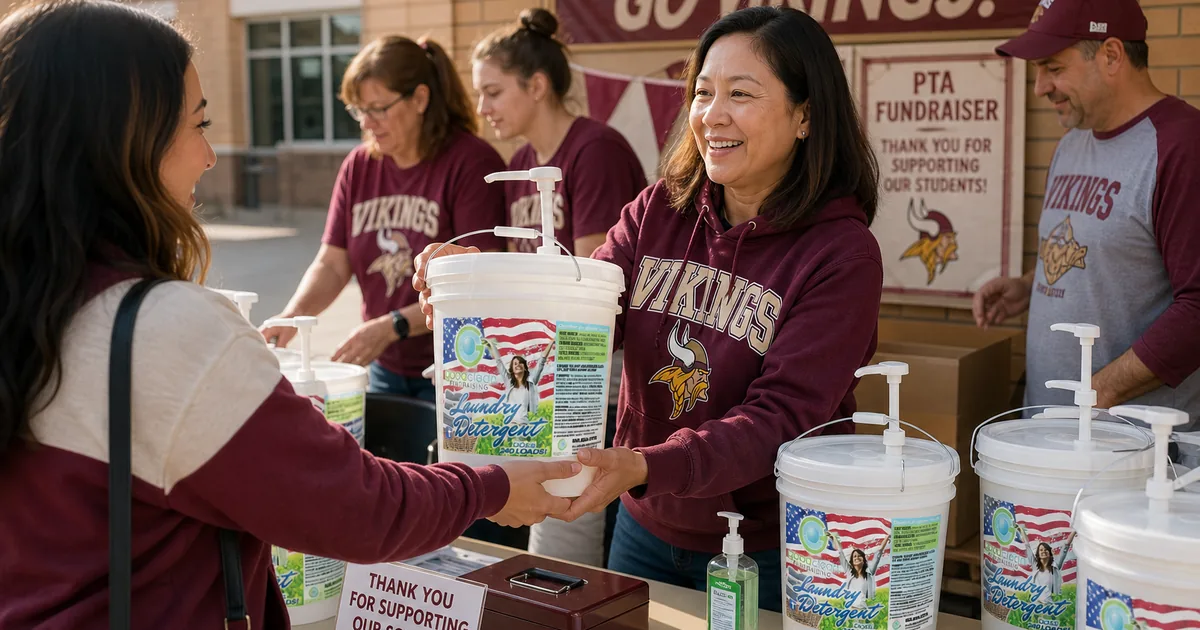
The most successful PTA fundraising ideas in 2026 share three traits: they sell products or experiences people genuinely want, they remove inventory financial risk from the organization, and they make participation easy for busy families. Household-necessity fundraisers — especially bulk laundry detergent and cleaning products — often outperform traditional treat-based programs because they reach nearly every household, not just dessert buyers, and supporters pay roughly half the per-ounce price of premium national brands for something they already purchase. No-upfront-cost product programs, hybrid online-offline campaigns, and well-run events like fun runs or restaurant nights also perform well when executed with clear goals and strong volunteer coordination. The key shift is moving away from novelty items families feel obligated to buy toward genuinely useful products or experiences supporters choose because they deliver real value.
If you are leading PTA fundraising this year, you are likely weighing a long list of ideas that all claim to be easy, profitable, and parent-friendly — and most of them are not. The reality is that the fundraisers raising the most money in 2026 look different from the cookie dough and wrapping paper campaigns that dominated a decade ago.
The shift is straightforward: families are tired of overpriced novelty items, and participation has, in our editorial view, dropped across traditional programs. The PTAs raising more are the ones selling products people genuinely need, removing upfront cost and risk, and making it easy for working parents to participate without guilt or logistics headaches.
This guide covers the PTA fundraising ideas that work now — what is raising the most, why the old standbys are fading, how to choose the right program for your school, and the mistakes that can cost PTAs real money.
- The highest-performing PTA fundraisers sell household necessities people already buy, not novelty treats or overpriced catalog items.
- No-upfront-cost programs remove inventory financial risk and make it easier for smaller PTAs to launch campaigns confidently.
- Participation rates rise when the product delivers genuine value to supporters at a fair price.
- Hybrid campaigns that combine online ordering with traditional order forms reach more buyers, especially working parents and remote family members.
- Short, focused campaigns with clear goals and firm deadlines often outperform open-ended fundraisers.
- The most common mistake is choosing a program based on nostalgia or tradition rather than what families will actually buy today.
- Event-based fundraisers like fun runs and restaurant nights work well but require significantly more volunteer coordination than product programs.
Why are traditional PTA fundraisers raising less?
The cookie dough, wrapping paper, and candle catalogs that were PTA staples for decades are, in our editorial view, underperforming for a simple reason: buyer fatigue. Families have been asked to purchase the same overpriced novelty items year after year, and participation tends to decline as a result.
Three specific problems show up repeatedly. First, the buyer pool is narrow — a dessert or candle only appeals to a fraction of potential supporters, so families exhaust their contact lists quickly. Second, the value proposition is weak: when supporters pay a premium for an item marked up to cover both the vendor's profit and the PTA's share, they know they are overpaying, and that awareness reduces repeat participation. Third, logistics have become a burden — coordinating delivery, managing inventory, and chasing down payments takes more volunteer hours than most PTAs can spare.
The programs replacing them solve all three problems at once: they sell necessities with universal appeal, they offer supporters genuine value at or below retail prices, and they streamline logistics so coordinators are not managing freezers or tracking down missing order forms.
What are the best PTA fundraising ideas for 2026?
The strongest PTA fundraisers today fall into three categories: high-value product programs, low-coordination events, and hybrid digital-physical campaigns. Within each category, the winners share the same DNA — broad appeal, real value, and minimal friction for volunteers and supporters alike.
Household-necessity product fundraisers
Bulk laundry detergent, cleaning supplies, and similar household staples are increasingly considered as replacements for traditional catalog programs, and the reasons are straightforward. A necessity product reaches nearly every household — grandparents, neighbors, coworkers, and extended family who would never buy cookie dough but always need detergent. Supporters get genuine value, often at roughly half the per-ounce price of premium national brands, so the purchase feels smart rather than obligatory. And because the products are non-perishable, there is no frozen delivery day or spoilage risk.
The profit structure is straightforward and transparent. Per-unit margins vary by program, and because participation is higher — more families find buyers when the product is universally needed — total dollars raised often exceed traditional programs even when the per-item profit is comparable. The logistics are simpler, too: most programs are no-upfront-cost, meaning the PTA collects orders first and never fronts money for inventory, and delivery arrangements vary by program, so confirm them before you launch.
In our editorial view, the benefits PTAs are most likely to notice after switching are fewer complaints from families about asking friends to overpay for something they do not need, wider participation, and coordinators who are less burned out by delivery-day chaos.
No-upfront-cost and low-risk programs
Any fundraiser that requires the PTA to purchase inventory before collecting orders introduces financial risk, and for smaller schools or first-time coordinators, that risk is often enough to kill a campaign before it starts. No-upfront-cost programs flip the model: the PTA collects orders and payment first, then places the group order, so there is zero financial exposure if participation is lower than hoped.
This structure works across product categories — detergent, discount cards, cookie dough sold on a pre-order basis, and even some catalog programs now offer no-risk options. The key is confirming in writing that the PTA never fronts money and that unsold inventory is not the school's problem. For PTAs with limited budgets or volunteer capacity, this single feature often matters more than the profit margin.
Event-based fundraisers: fun runs, restaurant nights, and auctions
Events can raise significant money and build community, but they require substantially more volunteer coordination than product fundraisers. A fun run, for example, can generate strong totals through pledge-based participation and sponsorships, but it demands weeks of planning, day-of logistics, and a core team of organizers. Restaurant partnership nights are lower-lift — the restaurant donates a share of sales on a designated evening — but the profit is typically modest unless turnout is very high.
Auctions and galas can be high-dollar events, especially when corporate sponsorships and donated items are secured, but they are labor-intensive and work best for PTAs with experienced event volunteers and strong community networks. The rule of thumb: if your PTA has the volunteer capacity and enjoys event planning, these can be worth the effort; if you are short on time or coordinators, a simple product program is likely to raise more per volunteer hour invested.
Hybrid online and offline campaigns
In our editorial view, it pays to make it easy for supporters to buy however they prefer — traditional paper order forms for families who like face-to-face asks, and online storefronts for working parents, remote relatives, and anyone who prefers to order from a link. Hybrid campaigns often outperform single-channel efforts because they remove friction: a grandparent across the country can support the PTA with two clicks, and a neighbor who prefers to hand over cash can do that, too.
Many fundraising platforms and product vendors offer online ordering; ask whether it is included at no extra cost before you commit. The key is promoting both options equally and making the online link prominent in every communication.
How do you choose the right fundraiser for your PTA?
Start by asking four questions. First, how many active volunteers do you have, and how much time can they realistically commit? A fun run requires a planning team; a product fundraiser can be managed by one or two coordinators. Second, does your PTA have any money to front, or do you need a zero-risk program? Third, what has worked or failed in the past, and why? If families complained about overpriced catalogs, do not pick another catalog. Fourth, what is your goal, and does the program's realistic profit-per-participant math get you there?
Run the numbers before you commit. If your goal is to raise a specific dollar amount, estimate how many families will participate, multiply by average sales per family, and multiply by profit per unit. If the math does not work, the fundraiser will not either. And confirm every term in writing — profit split, delivery method, refund policy, and what happens to unsold product — before you launch.
What profit can a PTA expect from different fundraisers?
Profit varies widely by program type, product, and participation, so be skeptical of any vendor promising a fixed return without knowing your school's specifics. That said, general patterns hold. Traditional catalog programs often promise margins that sound high but deliver modest totals because participation is low. Household-necessity programs may show a comparable or slightly lower per-item margin but raise more overall because more families participate and each finds more buyers.
As a concrete example, a bulk laundry detergent program might have a PTA sell a 5-gallon bucket for $49.95 and keep roughly $13.45 to $15.45 per bucket at 100 or more buckets, depending on order volume, with free shipping on larger orders. The lever that moves the total is not squeezing another dollar per unit — it is getting more families to sell and each family to reach more buyers, which a universally needed product enables.
Event-based fundraisers are harder to model because profit depends on sponsorships, turnout, and donated items, so ask organizers or restaurants for their actual terms and past results before projecting totals. Compare programs on realistic total dollars raised, not advertised percentages.
Common mistakes PTAs make when choosing a fundraiser
| Factor | Traditional Fundraiser | Household Necessity |
|---|---|---|
| Buyer pool | Treat or novelty buyers | Nearly every household |
| Repeat participation | One-time novelty | Repurchased regularly |
| Value to supporter | Marked up above retail | At or below retail price |
| Perishability | Often perishable or fragile | Non-perishable, ships easily |
| Upfront cost | Sometimes required | No-upfront-cost options |
| Profit per unit | Moderate | Comparable or higher |
Common mistakes to avoid
Choosing a fundraiser based on tradition instead of what families will buy today
Just because your PTA has always sold cookie dough does not mean it is still the best option. Buyer preferences have shifted, and sticking with a program out of habit costs money.
Ignoring the upfront cost and financial risk
Programs that require the PTA to purchase inventory before collecting orders put your budget at risk. If a no-upfront-cost option exists, there is rarely a good reason to take on that exposure.
Underestimating the volunteer hours required for event fundraisers
A fun run or auction can raise significant money, but if your PTA does not have a strong volunteer base with event experience, a simple product program is likely to deliver a better return on effort.
Failing to set a clear goal and deadline
Open-ended fundraisers lose momentum. Set a specific dollar target and a firm end date, communicate both at the kickoff, and hold to the timeline.
Not running the participation math before committing
If your goal requires every family to participate and sell above average, your plan is not realistic. Model your goal around the families who will actually engage, not the whole enrollment.
Skipping the hybrid online option
Limiting your campaign to paper order forms cuts off working parents, remote relatives, and anyone who prefers digital. Many vendors offer online ordering — ask whether it carries a fee.
- Editorial guidance: general planning advice on this page reflects the authors' editorial judgment and common school fundraising practice; it is not based on measured campaign data or a cited study.
- Good Clean Fundraising program terms — $49.95 per bucket; $13.45 profit per bucket at 100 to 299 buckets (usually $5 to $12 at 50 to 99 buckets, depending on actual shipping costs), $14.45 at 300 to 499, $15.45 at 500 or more; $0 upfront cost; free shipping at 100+ buckets; 50-bucket minimum (smaller orders are not accepted); 100% money-back guarantee under which, according to the company, any customer who is not satisfied is refunded and the group keeps its profit. — GCF pricing, GCF how it works, and GCF refund and returns.
- Detergent price comparison — per-ounce pricing for premium national-brand liquid laundry detergent at major U.S. retailers, price-checked September 2026 (about 13 to 16 cents per ounce across common sizes). A 5-gallon (640 oz) bucket at $49.95 is about 7.8 cents per ounce. Retail prices vary by size, store, and region; based on a single online retailer's listings for premium brands; some value-tier and store brands cost less per ounce.
Our recommendation
If your PTA is ready to move past traditional catalog and treat fundraisers, start with a household-necessity product program — it is a shift that can raise participation and total dollars. Good Clean Fundraising runs The Good Clean Fundraiser, a bulk laundry-detergent program built specifically for schools and PTAs: supporters buy a 5-gallon pump bucket of detergent for $49.95, roughly half the per-ounce price of premium national brands, and your PTA keeps about $13.45 to $15.45 per bucket at 100 or more buckets, depending on order volume. There is no upfront cost, free shipping on orders of 100 buckets or more, and a Getting Started packet, instructions, marketing materials, and social media strategies so your volunteers are not managing logistics. Good Clean Fundraising advertises a 100% money-back guarantee under which, according to the company, any unsatisfied customer is refunded and the group keeps its profit. Orders under 50 buckets are not accepted.
Frequently asked questions
The most profitable PTA fundraisers are the ones that combine high participation with solid per-unit margins, and in 2026 that usually means household-necessity product programs. A bulk laundry detergent fundraiser, for example, reaches nearly every household, keeps about $13.45 to $15.45 per bucket at 100 or more buckets at typical pricing, and often sees higher participation than treat-based programs because supporters get genuine value at roughly half the per-ounce price of premium national brands.
Elementary school PTAs do best with fundraisers that are simple for young families to participate in and easy for volunteers to coordinate. Household-necessity product programs, fun runs, and restaurant partnership nights all work well because they do not require kids to sell door-to-door or parents to manage complex logistics. The key is picking something families can support without guilt or extra work.
It depends on your school size, participation rate, and what you sell, so set a realistic goal based on your specifics rather than a generic number. A useful formula is: total raised equals participating families times average sales per family times profit per unit. As a conservative planning assumption, use roughly one-third to one-half of families and adjust to your school's own history, not your full enrollment.
Many product programs now offer no-upfront-cost structures, including bulk laundry detergent, some discount card programs, and pre-order catalog fundraisers. The PTA collects orders and payment first, then places the group order, so there is no inventory financial risk if participation is lower than expected. Always confirm the no-cost terms in writing before you launch.
For many PTAs, probably not — participation and total dollars raised often decline as families grow tired of overpriced novelty items. Household-necessity fundraisers often outperform traditional programs because they reach more buyers, offer genuine value, and avoid the perishability and logistics headaches that make cookie dough hard to coordinate.
The easiest PTA fundraisers are no-upfront-cost product programs with simple logistics and, where available, online ordering. A household-necessity program like bulk laundry detergent is simple to explain, appeals to nearly everyone, and requires minimal volunteer coordination because the product is non-perishable.
Most successful PTA fundraisers run for two to four weeks. A short, focused timeline creates urgency, keeps families engaged, and makes it easier to coordinate delivery and payout. Campaigns that stay open for months tend to lose momentum and raise less than a tight two-week push.
It depends on your volunteer capacity. Event fundraisers like fun runs and auctions can raise significant money and build community, but they require weeks of planning and a strong volunteer team. Product fundraisers are lower-coordination and can be managed by one or two people, so if your PTA is short on time or volunteers, a product program will almost always deliver better return on effort.
Hybrid campaigns that offer both online ordering and traditional paper forms often raise more than single-channel efforts because they remove friction for supporters. Online options let working parents, remote relatives, and digital-first buyers participate easily, while paper forms work for families who prefer face-to-face asks. Many vendors offer online ordering; ask whether it carries a fee.
A good PTA fundraising product has universal appeal, delivers genuine value to supporters at a fair price, and is simple to distribute. Household necessities like laundry detergent check all three boxes: everyone needs them, supporters pay roughly half the per-ounce price of premium national brands, and the products are non-perishable so logistics are straightforward.
The PTA fundraisers that work in 2026 are the ones that respect families' time, deliver real value to supporters, and make coordination simple for volunteers. That is why many schools are considering household-necessity programs in place of the catalog and treat fundraisers that dominated for decades — they can address the participation problem and the value problem at the same time, with less risk of burning out your coordinators. Pick something people actually need, make it easy to buy, set a firm deadline, and the money follows.