School Fundraising
Middle School Fundraising Ideas That Actually Work
The fundraisers that connect with middle schoolers, their families, and the unique challenges of raising money for grades 6–8.
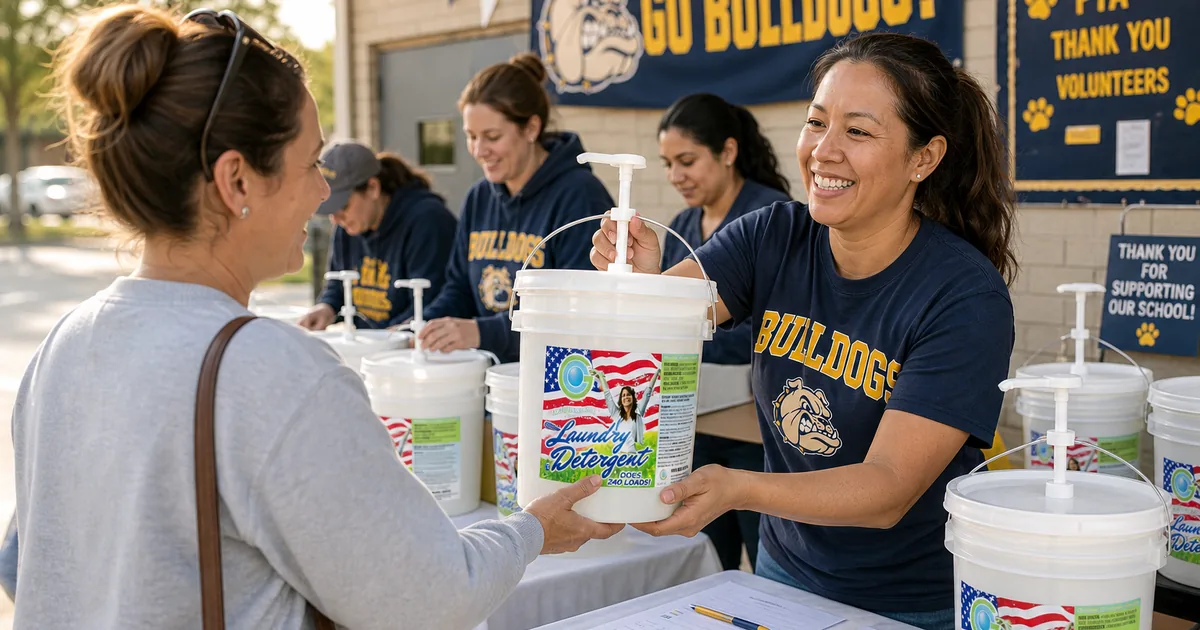
The best middle school fundraisers balance three realities: middle schoolers are often reluctant door-to-door sellers, families are stretched thin and fundraiser-fatigued, and participation drops sharply if the ask feels awkward or the product feels unnecessary. The programs that work best offer household necessities people already buy, require no door-to-door selling, carry no upfront cost, and give supporters genuine value rather than overpriced novelties. Laundry detergent, cleaning supplies, and similar staples often outperform candy and cookie dough at the middle school level because they reach a wider buyer pool—grandparents, neighbors, coworkers—and students can sell confidently knowing supporters get something useful at a fair price. Short two-to-three-week campaigns with clear goals and incentives can drive higher participation than open-ended drives.
Middle school fundraising occupies an awkward spot. Your students are too old for the elementary-school charm that made selling cookie dough easy, but not yet old enough to drive participation through sports team pride or senior-class unity. Parents are deep into the years of multiple kids, multiple teams, and multiple asks, and their patience for another overpriced catalog has worn thin.
The fundraisers that work at this level are the ones that remove the friction: no door-to-door selling, a product people actually want, a short timeline, and a structure that makes it easy for reluctant middle schoolers to participate without feeling like they are begging. When those pieces align, participation rises and so does the total raised.
This guide covers why middle school fundraising is different, the ideas that often perform well, how to structure a campaign for maximum participation, what to avoid, and how to pick the right program for your school or team.
- Middle schoolers are often reluctant door-to-door sellers, so the best programs work without requiring it.
- Families at this stage are fundraiser-fatigued and stretched thin—simplicity and real value matter more than novelty.
- Household necessities like laundry detergent reach a far wider buyer pool than treats or novelties and remove the awkwardness of the ask.
- Short two-to-three-week campaigns with clear goals outperform open-ended drives that lose momentum.
- No-upfront-cost programs remove inventory financial risk and make it easier for schools to say yes.
- Student incentives such as prizes can motivate participation; confirm whether a program offers them and who pays.
- Programs that let students sell to family networks online or through order forms perform better than door-to-door models.
Why is middle school fundraising harder than elementary or high school?
Three dynamics converge to make middle school the toughest fundraising years. First, middle schoolers are in the self-conscious stage where going door-to-door or asking relatives to buy something feels mortifying, so participation drops if the program requires a hard sell. Second, these are the years when families are juggling the most—multiple kids in multiple activities, each with their own fundraiser—so parents are selective about which ones they will actually push. Third, the buyer pool has been tapped repeatedly by the time a family hits middle school, and supporters are less willing to pay a premium for another tub of cookie dough or a candle they do not need.
The programs that break through are the ones that solve all three problems at once: they do not require door-to-door selling, they offer something supporters genuinely want at a fair price, and they are simple enough that a busy parent can hand their child an order form and know it will not become a second job.
What are the best middle school fundraising ideas?
The strongest middle school fundraisers fall into a few common categories, each built around low-pressure participation and broad appeal.
Household necessity fundraisers
Selling everyday staples—laundry detergent, cleaning products, paper goods—is the standout category for middle school. These products reach nearly every household, students can sell confidently because supporters get real value, and there is no door-to-door requirement. A bulk laundry detergent fundraiser, for example, lets students take an order form to relatives and family friends, and supporters stock up on something they were going to buy anyway at roughly half the per-ounce price of premium national brands. The ask is easy, the buyer pool is wide, and participation stays high because no one feels like they are pushing an overpriced novelty.
Some programs in this category offer strong per-item profit, no upfront cost, and free shipping on larger orders, which can make them lower-risk for the school and appealing to families who are tired of fronting money for inventory.
Online and social-media fundraisers
Middle schoolers are digital natives, and fundraisers that let them share a link with family and friends via text or social media remove the in-person discomfort entirely. Crowdfunding platforms, peer-to-peer donation pages, and online storefronts work well for tech-comfortable schools, though they lack the tangible value exchange that drives repeat participation. These programs are best for one-time goals or when your student body is geographically spread out.
School events with low volunteer load
Events like movie nights, game nights, or school dances can work at the middle school level if they require minimal setup and tap into what students actually want to do. The key is keeping the volunteer load light—middle school parents are already stretched thin, so an event that needs weeks of planning and a dozen volunteers will struggle to get off the ground. A simple ticketed event with concessions, where the school keeps the profit, is often the upper limit of complexity that works.
No-door-to-door product fundraisers
If you are set on a traditional product fundraiser, choose one that explicitly does not require door-to-door selling. Order-form-based programs where students sell to family, neighbors they already know, and parents' coworkers perform far better than programs that expect middle schoolers to knock on strangers' doors. Cookie dough, popcorn, and candy fall into this category, though they score lower on buyer breadth and value than household necessities.
Read-a-thons and pledge-based fundraisers
Pledge fundraisers where students collect donations based on books read, laps run, or hours volunteered can work well in middle school because they tie fundraising to an activity students are already doing. The challenge is that these programs require strong coordinator follow-through to collect pledges, and totals can be unpredictable. They work best as a supplement to a product fundraiser rather than the sole campaign.
How do you structure a middle school fundraiser for maximum participation?
Structure may matter more at the middle school level than at other stages, because students may not self-motivate and parents may not push unless the program is dead simple. Here is what works: set a clear, specific goal and share it at the kickoff so students know exactly what they are raising money for. Keep the selling window short—two to three weeks—because momentum fades fast with middle schoolers. Hold a real kickoff where every student gets their materials on the same day and hears the same message; staggered starts kill participation. Consider student incentives for top sellers, which can create friendly competition; check what they cost. And make the ask easy: if a student cannot explain the fundraiser and hand someone an order form in under a minute, the program is too complicated.
What should middle schools avoid when choosing a fundraiser?
A few categories often underperform at the middle school level. Door-to-door programs that require students to knock on strangers' doors may see low participation and can make both students and parents uncomfortable in ways that elementary families tolerate but middle school families do not. High-upfront-cost programs that require the school to buy inventory before collecting orders introduce financial risk that most PTAs and booster clubs would rather avoid. Complicated multi-step events that need heavy volunteer coordination struggle because middle school parent volunteers are harder to recruit and retain than elementary ones. And overpriced novelty items—candles, gift wrap, gourmet food—have been done to death; families know they are paying a markup, and buyer fatigue is real.
How much can a middle school fundraiser raise?
Total raised depends on three variables: how many students participate, how many items each student sells, and the profit per item. In our editorial judgment, middle schools may see lower per-student participation than elementary schools but higher average sales per participating student, because the buyers—family and family friends—may purchase more when the product is something they actually need. A household-necessity program where students sell a useful product at a fair price may outperform a novelty-item program with a higher per-item margin, because participation and average sales both rise when the ask is easy and the value is real.
How do you get middle school parents to support the fundraiser?
Middle school parents will support a fundraiser if it is simple, short, and does not feel like a burden. Communicate the goal clearly and early—parents want to know exactly what the money is for and how much you need. Keep the timeline tight so it does not drag on for months. Choose a product or program that parents can explain and feel good about selling, which usually means real value rather than overpriced novelty. And respect their time: if the fundraiser requires parents to manage inventory, coordinate deliveries, or chase down payments, participation will drop. The best middle school fundraisers are the ones where a parent can hand their child an order form, send a text to a few relatives, and be done in under an hour.
| Factor | Factor | Household Necessity |
|---|---|---|
| Buyer breadth | Wide — every household | Narrow — treat buyers only |
| Student comfort | High — real value, easy ask | Medium — awkward for some |
| Parent support | High — simple, no door-to-door | Medium — fatigued |
| Profit potential | High — strong margin, wide pool | Medium — moderate margin |
| Volunteer load | Low — support materials | Medium — delivery logistics |
Common mistakes to avoid
Choosing a program that requires door-to-door selling
Middle schoolers are in the self-conscious years, and asking them to knock on strangers' doors tanks participation. Stick with order-form and family-network models.
Running an open-ended campaign with no firm deadline
Momentum fades fast with middle schoolers. A tight two-to-three-week window with a clear end date raises more than a campaign that drags on for months.
Picking a product with no real value to the buyer
Overpriced novelties and treat items hit buyer fatigue hard at the middle school level. Supporters want to feel they got something useful for their money.
Skipping the kickoff or staggering the start
When students get materials at different times, most never start. A single kickoff day where everyone begins together drives the majority of early sales.
Underestimating the volunteer load for events
Middle school parent volunteers are harder to recruit than elementary ones. If an event needs a dozen people and weeks of planning, it will struggle.
Failing to communicate the goal clearly
Parents and students need to know exactly what the money is for and how much you need. Vague goals lead to vague participation.
- Editorial guidance: general planning advice on this page reflects the authors' editorial judgment and common school fundraising practice; it is not based on measured campaign data or a cited study.
- Good Clean Fundraising program terms — $49.95 per bucket; $13.45 profit per bucket at 100 to 299 buckets (usually $5 to $12 at 50 to 99 buckets, depending on actual shipping costs), $14.45 at 300 to 499, $15.45 at 500 or more; $0 upfront cost; free shipping at 100+ buckets; 50-bucket minimum (smaller orders are not accepted); 100% money-back guarantee under which, according to the company, any customer who is not satisfied is refunded and the group keeps its profit. — GCF pricing, GCF how it works, and GCF refund and returns.
Our recommendation for middle schools
If you are looking for a middle school fundraiser that solves the participation problem, start with a household necessity. Good Clean Fundraising runs The Good Clean Fundraiser, a bulk laundry-detergent program built specifically for the challenges of this age group: students sell a 5-gallon pump bucket of detergent for $49.95, supporters pay roughly half the per-ounce price of premium national brands, and your school keeps about $13.45 to $15.45 per bucket at 100 or more buckets, depending on order volume. There is no upfront cost, no door-to-door requirement, free shipping on orders of 100 buckets or more, and a Getting Started packet, instructions, marketing materials, and social media strategies to help volunteers get started. Students can sell confidently because the value is real, parents support it because it is simple and short, and the buyer pool is wide because every household needs detergent. Good Clean Fundraising advertises a 100% money-back guarantee under which, according to the company, any unsatisfied customer is refunded and the group keeps its profit. Orders under 50 buckets are not accepted.
Frequently asked questions
The best middle school fundraisers are household-necessity products like laundry detergent and cleaning supplies, no-door-to-door order-form programs, simple low-volunteer-load school events, and online or social-media fundraisers. The key is removing the awkwardness and effort that kill participation at this age—middle schoolers need programs they can run without feeling like they are begging, and parents need simplicity.
Middle schoolers are in the self-conscious years where door-to-door selling feels mortifying, families are juggling multiple kids and multiple fundraisers so patience is thin, and the buyer pool has been tapped repeatedly so supporters are less willing to pay a premium for novelty items. Programs that work at the elementary level often fail in middle school because the dynamics are completely different.
Middle schoolers participate when the ask is easy, the product has real value, and there is no door-to-door requirement. Household necessities, online fundraisers, and order-form programs where they sell to family and family friends often see higher participation. Incentives and a short timeline can also drive engagement.
Two to three weeks is the sweet spot. A short, focused campaign creates urgency and keeps students engaged; open-ended fundraisers that drag on for months lose momentum and raise less. Set a firm end date at the kickoff and hold to it.
Many middle schools should avoid door-to-door programs. Middle schoolers are in the self-conscious stage where knocking on strangers' doors feels uncomfortable, and participation drops sharply compared to order-form models where students sell to family and people they already know. If you do run a product fundraiser, structure it around order forms and family networks instead.
It depends on how many students participate, how many items each sells, and the profit per item. Middle schools may see lower participation rates than elementary schools but higher average sales per participating student. A household-necessity program with broad appeal and real value may raise more than a novelty-item program with a higher margin, because participation and average sales both rise when the ask is easy.
Middle school parents want simple, short, and low-effort. They want to know exactly what the money is for, they want a product they can feel good about selling, and they want a timeline that does not drag on. Programs that require managing inventory, coordinating deliveries, or heavy volunteer time will struggle to get parent support.
They can work, but they perform worse at the middle school level than in elementary school. Families are fundraiser-fatigued, the buyer pool is narrow because these products only appeal to treat buyers, and middle schoolers often feel awkward selling overpriced sweets. Household necessities often outperform them because the buyer pool is wider and the value is real.
A good middle school product is something nearly every household needs, offers real value at a fair price, and makes the ask easy for students. Household staples like laundry detergent check all three boxes—supporters stock up on something they were going to buy anyway at roughly half the per-ounce price of premium national brands, and students can sell confidently without feeling like they are pushing a novelty.
Make the ask easy, keep the timeline short, build in incentives, and choose a product students can sell without feeling awkward. A clear goal, a real kickoff where everyone starts together, and a program that does not require door-to-door selling all drive higher participation. Middle schoolers will engage if the structure removes the friction.
Middle school is the hardest stage to fundraise for, but it is not because the students or parents do not care—it is because most programs are built for elementary families and fail to account for the self-consciousness, the fatigue, and the stretched schedules that define these years. Switch to a program that removes the friction, and participation follows. A household necessity, a short timeline, no door-to-door requirement, and a clear goal are the four levers that matter most.