
School Fundraising
School Club Fundraising Ideas That Actually Work
The best fundraising ideas for school clubs — from drama and debate to robotics and yearbook — that reach more supporters and raise more money.
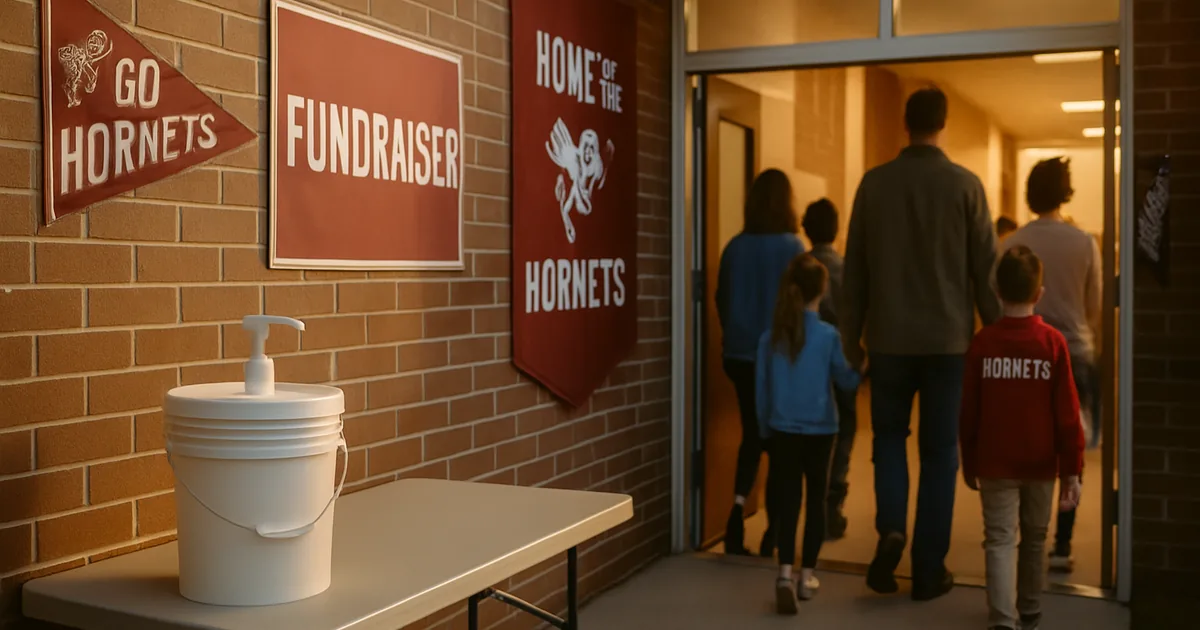
The most effective school club fundraisers share three traits: they appeal to a wide audience beyond just club members' families, they require minimal volunteer time so students and advisors can focus on the club itself, and they offer genuine value so supporters feel good about buying. Product fundraisers built around household necessities — especially laundry detergent, cleaning supplies, and consumables people already purchase — can outperform novelty items and treat sales because they reach grandparents, neighbors, and community members who want to support the club but have no use for another candle or candy bar. No-upfront-cost programs remove inventory financial risk, which matters for smaller clubs with limited budgets. The best choice depends on your club's size and reach, but programs that let supporters shift an existing purchase to support your cause rather than asking them to buy something extra tend to raise the most with the least effort.
School clubs — drama, debate, robotics, yearbook, STEM, service clubs, and dozens more — are where students find their people and build skills that matter long after graduation. But most clubs operate on budgets that barely cover the basics, and when you need money for competition travel, equipment, or a big project, the responsibility for raising it usually falls on a faculty advisor who is already stretched thin and a handful of students who have never run a fundraiser.
The good news is that school clubs have a built-in advantage most groups do not: a clear, compelling story. People want to support robotics teams heading to nationals, debate squads that teach kids to think on their feet, and theater programs that give students a stage. The challenge is finding a fundraiser that does not eat up all the time and energy your club should be spending on its actual mission.
This guide covers what makes a fundraiser work for school clubs, the best options across product sales and no-inventory programs, how to choose based on your club's size and reach, what to avoid, and how to run a campaign that raises real money without turning into a second job for your advisor and officers.
- The best school club fundraisers appeal to a wide audience, require minimal volunteer time, and offer supporters genuine value.
- Product fundraisers built around household necessities reach more buyers than novelty items or treats because everyone needs them.
- No-upfront-cost programs remove inventory financial risk, which is critical for smaller clubs with limited budgets.
- Clubs with a strong community presence can leverage that story to drive participation across multiple supporter circles.
- A short, focused two-to-three-week campaign raises more than an open-ended one that drags on for months.
- The most common mistake is choosing a fundraiser that requires more volunteer hours than the club has to give.
What makes a good fundraiser for a school club?
School clubs face a different set of constraints than PTAs or sports teams. Most clubs are smaller, so you cannot count on reaching hundreds of families. Advisors are teachers or staff members volunteering their time, so logistics need to be simple. And clubs often have specific, urgent funding needs — a robotics team needs parts for a competition in six weeks, a debate squad needs registration fees by a deadline — so the fundraiser has to deliver quickly.
The fundraisers that work best for clubs tend to score well on four factors: broad appeal, so you are not limited to a narrow buyer pool; low time commitment, so running it does not consume the advisor and officers; genuine value, so supporters feel good about the purchase; and minimal upfront cost or risk, because most clubs do not have a budget cushion to front inventory costs.
A drama club selling cookie dough reaches dessert buyers. A robotics club selling laundry detergent reaches every household in the community — and that difference in buyer breadth can decide whether a small club hits its goal or falls short.
What are the best product fundraisers for school clubs?
Product fundraisers let supporters buy something tangible, which tends to feel more concrete than a donation ask. The key is choosing a product with the widest possible appeal and the simplest possible logistics.
Household necessities: the standout category
Laundry detergent, cleaning products, paper goods, and similar staples are a category worth considering for school clubs. The reason is simple: everyone needs them, people buy them regularly, and when you offer a quality product at a better price than the store, supporters are shifting a purchase they were going to make anyway rather than spending extra money on something they do not need.
A yearbook club selling a 5-gallon bucket of laundry detergent for about half the per-ounce price of a national brand can reach parents, grandparents, neighbors, teachers, and local businesses — a far wider circle than a novelty item ever could. The product is non-perishable, so there is no timed delivery scramble, and because it is a genuine value, reorders are common.
In our editorial view, clubs that switch from candy or gift items to household necessities may see a similar shift: more people buy, and some buy multiple units or come back for the next campaign.
Specialty food and consumables
Coffee, popcorn, nuts, and similar consumables can work if your club has a strong community network and the product quality is high. The challenge is that these are often treats or extras, so the buyer pool is narrower than a true necessity. They also tend to carry lower margins unless you are buying in serious volume, which most clubs cannot do.
Custom gear and spirit wear
T-shirts, hoodies, and custom gear with your club name or logo can build identity and raise money at the same time. The upside is that buyers get something they will actually wear and it markets your club. The downside is that it is a one-time purchase, the margins are often thin unless you order in bulk, and you are usually fronting the cost of inventory.
This works best as a supplemental fundraiser or for clubs with a large, engaged membership that will buy in volume.
What are the best no-inventory fundraisers for school clubs?
No-inventory programs remove the logistics of handling product, which can be a major advantage for a busy advisor. The trade-off is that many of these feel less tangible to supporters, which can lower participation.
Direct donation and crowdfunding campaigns
Platforms that let supporters give directly online are simple to set up and require almost no volunteer time. They work well when your club has a compelling, specific story — a robotics team raising money to compete at nationals, a service club funding a community project — and a network that is willing to give without getting a product in return.
The challenge is that pure donation asks tend to reach a smaller circle than product fundraisers, and without a tangible exchange, repeat participation drops. Use this when you have a clear, urgent need and a story that resonates.
Discount card programs
Supporters buy a card that offers discounts at local businesses, and the club keeps a share of each sale. These can work in communities with strong local merchant participation, but they require upfront coordination with businesses, the value to the buyer depends entirely on whether they use the participating merchants, and cards are a one-time purchase with no repeat revenue.
Event-based fundraisers
Talent shows, trivia nights, silent auctions, and similar events can be great community-builders and raise meaningful money if your club has the volunteer capacity to plan and run them. The reality, though, is that events are time-intensive — they require weeks of planning, day-of coordination, and often upfront costs for space, food, or prizes.
For most clubs, events work best as an annual signature fundraiser, not a go-to option when you need money quickly with minimal volunteer hours.
How do you choose the right fundraiser for your club?
Start by asking four questions. First, how many active families or members can you count on to participate? A club with ten committed families needs a different strategy than one with fifty. Second, how much volunteer time can your advisor and officers realistically give? If the answer is a few hours a week, rule out anything that requires daily management or complex logistics. Third, how quickly do you need the money? Payout timing varies by program, so ask when your club will receive its funds. Fourth, what is your risk tolerance? If your club cannot afford to front money for inventory, a no-upfront-cost program is the only safe choice.
For most school clubs, a household-necessity product fundraiser with no upfront cost, a two-to-three-week selling window, and clear instructions and materials is a strong fit. It checks every box: broad appeal, minimal volunteer time, genuine value, and no inventory financial risk.
How long should a school club fundraiser run?
Two to three weeks is the sweet spot for most clubs. That is long enough for students and families to reach their networks but short enough to maintain urgency. Fundraisers that stay open for months lose momentum — participation fades, orders trickle in slowly, and the total raised can be lower than a focused two-week push would have delivered.
Set a firm end date at the kickoff, send reminders at the one-week and final-day marks, and close it when you said you would. A clear deadline drives more action than an open-ended timeline ever will.
Common mistakes school clubs make with fundraisers
Common mistakes to avoid
Choosing a fundraiser that requires more volunteer time than the club has
Advisors are teachers volunteering their time, and officers are students with homework and extracurriculars. A fundraiser that demands daily management or complex logistics will either fail or burn out the people running it.
Picking a product with narrow appeal
Novelty items, niche treats, and specialty goods limit your buyer pool to a small slice of supporters. A household necessity everyone uses can reach many more people.
Leaving the campaign open too long
Fundraisers without a firm deadline lose urgency. A focused two-to-three-week window raises more than an open-ended campaign that drags on for months.
Fronting money the club cannot afford to lose
If your club has to buy inventory upfront and the campaign underperforms, you are stuck with unsold product and a budget hole. No-upfront-cost programs remove inventory risk.
Skipping a real kickoff
When students and families start whenever they get around to it, most never start at all. A single kickoff day where everyone launches together drives the majority of early momentum.
Not telling your club's story
People want to support robotics teams heading to competition, debate squads teaching critical thinking, and theater programs giving students a stage. Lead with that story — it is your biggest asset.
- Editorial guidance: general planning advice on this page reflects the authors' editorial judgment and common school fundraising practice; it is not based on measured campaign data or a cited study.
- Good Clean Fundraising program terms — $49.95 per bucket; $13.45 profit per bucket at 100 to 299 buckets (usually $5 to $12 at 50 to 99 buckets, depending on actual shipping costs), $14.45 at 300 to 499, $15.45 at 500 or more; $0 upfront cost; free shipping at 100+ buckets; 50-bucket minimum (smaller orders are not accepted); 100% money-back guarantee under which, according to the company, any customer who is not satisfied is refunded and the group keeps its profit. — GCF pricing, GCF how it works, and GCF refund and returns.
Our recommendation for school clubs
If your club needs to raise money without consuming all your advisor's time and your officers' energy, start with a household-necessity product fundraiser that removes the logistics and the financial risk. Good Clean Fundraising runs The Good Clean Fundraiser, a bulk laundry-detergent program built specifically for groups like yours: students and families sell 5-gallon detergent buckets for $49.95 — roughly half the per-ounce price of premium national brands — and your club keeps about $13.45 to $15.45 per bucket at 100 or more buckets, depending on order volume. There is no upfront cost, free shipping on orders of 100 buckets or more, and a Getting Started packet, instructions, marketing materials, and social media strategies so your advisor is not managing logistics. It is one option for drama clubs, robotics teams, debate squads, and yearbook programs that need real money without turning fundraising into a second job. Orders under 50 buckets are not accepted.
Frequently asked questions
The best fundraiser for a small club is one with broad appeal and no upfront cost, so you are not limited by your member count or risking money you cannot afford to lose. Household-necessity products like laundry detergent reach far more buyers than novelty items because everyone needs them, and no-upfront-cost programs let you collect orders first and never front inventory costs.
Drama clubs do well with fundraisers that let them tell their story — why the program matters, what the money will fund — and reach a wide community audience. Household-necessity product sales work particularly well because they appeal to parents, grandparents, teachers, and local supporters who want to back the arts but have no use for another candle or candy bar. A short, focused campaign with a clear goal raises more than a drawn-out novelty sale.
Robotics teams often need money quickly for competition fees, parts, or travel. The fastest fundraisers are no-upfront-cost product programs with a two-to-three-week selling window and a Getting Started packet, instructions, marketing materials, and social media strategies. Household necessities like laundry detergent reach a wide buyer pool fast, and because the product offers genuine value at a good price, students find buyers easily even on a tight timeline.
Debate and academic clubs benefit from fundraisers that require minimal volunteer time, since advisors are teachers and students are busy with schoolwork and competition prep. Product fundraisers built around household staples score well because they reach a broad audience, require little day-to-day management, and offer real value so supporters feel good about buying. A program with clear instructions and materials reduces the logistical work.
It depends on how many students participate and how many buyers each reaches, so set a goal based on your club size rather than a generic number. As a concrete example, a club selling 5-gallon detergent buckets for $49.95 keeps roughly $13.45 to $15.45 per bucket at 100 or more buckets, depending on order volume. As an illustration, a club with twenty active families where each finds five buyers who each purchase one bucket would move 100 buckets and keep about $13.45 to $15.45 per bucket at 100 or more buckets, but the real lever is participation — more students selling raises the total faster than a higher per-item margin.
Most schools require clubs to get approval from an administrator or activities director before launching a fundraiser, and some districts have rules about what you can sell, when you can sell it, and how money is handled. Check with your principal or club advisor before you start — this is standard procedure, not a barrier.
The easiest fundraiser is one that requires almost no volunteer management and appeals to a wide audience. Household-necessity programs with clear instructions and materials can keep the advisor's and officers' work to the kickoff and reminders rather than daily logistics; confirm what support and delivery arrangements a program includes. Because the product is something everyone needs, students find buyers without a hard sell.
Two to three weeks is the ideal window for most clubs. It is long enough for students to reach their networks but short enough to keep urgency and momentum. Campaigns that stay open for months lose energy and raise less than a focused short push.
Yes, and many clubs run two or three campaigns a year to fund different needs — fall for competition fees, spring for equipment or travel. The key is spacing them out so you are not asking the same supporters to buy every month, and choosing fundraisers that do not burn out your volunteers. A simple, repeatable program works better than a different complex event each time.
The Good Clean Fundraiser is Good Clean Fundraising's bulk laundry-detergent program. School clubs sell 5-gallon detergent buckets for $49.95 — roughly half the per-ounce price of premium national brands — and keep about $13.45 to $15.45 per bucket at 100 or more buckets, with no upfront cost, free shipping on larger orders, and a Getting Started packet, instructions, marketing materials, and social media strategies. It is built for groups that need real money without turning fundraising into a second job for a busy advisor and student officers.
School clubs do work that matters — they teach students to build, speak, perform, lead, and serve — but most operate on budgets that barely cover the basics. When you need money for competition, equipment, or a big project, the fundraiser you choose should raise real dollars without consuming all the time and energy your club should be spending on its mission. Pick something with broad appeal, minimal volunteer burden, and zero upfront risk, and you give your club a better chance of raising more with less effort.