
Scouts, 4-H, FFA & Youth Organizations
Fundraising for Scout Camp & High-Adventure Trips
How troops raise the money for summer camp, high-adventure trips, and gear without asking families to write a check.
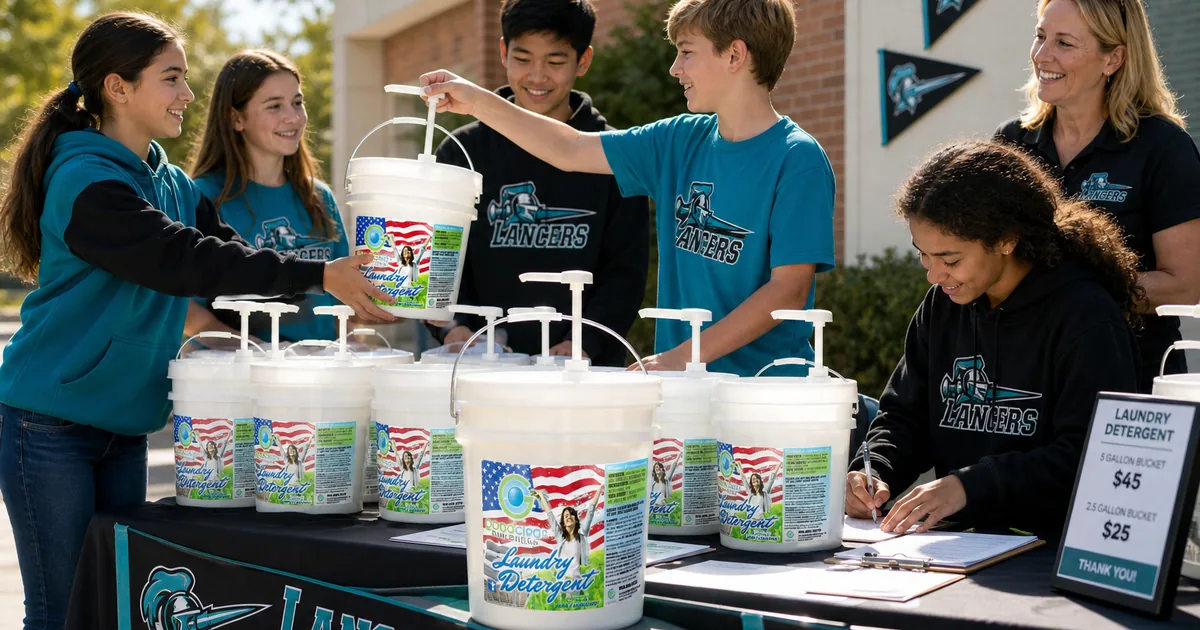
The most effective scout camp fundraisers are product programs that sell consumable household necessities people already buy — especially laundry detergent, cleaning supplies, and similar staples — because they reach a much wider buyer pool than treats or novelties, require no upfront cost, and avoid the perishability and logistics headaches of food fundraisers. Troops typically run these campaigns in the fall or early spring to fund summer camp fees, and the best programs let scouts collect orders and payment first with no upfront cost, which removes inventory risk. A well-run product fundraiser with broad participation can cover a meaningful portion of camp costs per scout, and many troops pair it with one or two smaller events throughout the year. The key is choosing something supporters genuinely need at a fair price, so scouts are not making a hard sell — they are simply offering value.
Summer camp and high-adventure trips are the experiences scouts remember for life, but the cost per scout can run into the hundreds of dollars before you add gear, travel, and everything else that comes with it. Many families can swing it, but not easily, and asking every parent to write a check at the start of the year is a fast way to lose participation.
The troops that fund camp well do it the same way: they run one or two solid fundraisers early in the year, spread the work across the whole troop, and take the financial pressure off families before camp registration opens. It is not complicated, but it does require picking the right kind of fundraiser — one that is simple to run, reaches a wide pool of buyers, and does not require the troop to front money or manage a freezer full of cookie dough.
This guide covers what works for scout camp fundraising, why some troops are moving away from traditional food sales, the best product and no-upfront-cost options, how much troops typically raise per scout, when to run your campaign, and the mistakes that quietly cost troops money every year.
- The strongest scout camp fundraisers sell consumable household necessities people already buy, not treats or novelties.
- Product programs with no upfront cost remove financial risk and let scouts collect orders before the troop pays anything.
- Food fundraisers are perishable, require timed delivery, and appeal to a narrow buyer pool compared to household staples.
- Many troops run their main fundraiser in fall or early spring to have funds ready before summer camp registration.
- A household-necessity fundraiser reaches grandparents, neighbors, and coworkers who would never buy a dessert product.
- Participation matters more than margin — a simple product that every scout can sell raises more than a high-margin item only a few families push.
- Troops that pair one strong product fundraiser with one or two smaller events throughout the year tend to cover camp costs without burnout.
Why do troops need dedicated camp fundraisers?
Summer camp fees, high-adventure trip costs, and gear add up fast. A week of resident camp can run several hundred dollars per scout, and a high-adventure trek — Philmont, Sea Base, Northern Tier — can easily cost over a thousand per participant before travel and equipment. Multiply that across a troop of twenty or thirty scouts, and you are looking at a significant financial ask for families.
Troops that rely on dues or direct family contributions often see participation drop as costs rise. The scouts whose families can afford it go to camp; the ones who cannot, do not. A strong fundraising program levels that out — it gives every scout a way to earn their camp fees through their own effort, and it takes the pressure off parents who are already stretched thin.
The goal is not to fund the entire troop budget through fundraising, but to cover the big-ticket items — camp fees, travel, and gear — so that cost is not the reason a scout misses the trip.
What makes a good scout camp fundraiser?
A good camp fundraiser is one that every scout can participate in, that reaches a wide pool of buyers, and that does not require the troop to take on financial risk or complex logistics. Judge your options on five factors: buyer breadth, ease of selling, upfront cost, profit per unit, and how much work falls on adult volunteers.
Buyer breadth is the most important. A product that only appeals to people who want a treat — popcorn, cookie dough, candy — caps how much each scout can raise because they run out of interested buyers quickly. A household necessity like laundry detergent or cleaning supplies, on the other hand, appeals to nearly every household, which means scouts can reach grandparents, neighbors, coworkers, and family friends who would never buy a novelty item.
Ease of selling matters because scouts are not professional salespeople. If the product requires a hard pitch or a long explanation, participation drops. The best fundraisers are ones where the scout can say 'we are selling detergent at about half the per-ounce price of premium national brands to raise money for camp' and the buyer immediately understands the value.
Upfront cost is where many troops get burned. Traditional fundraisers often require the troop to order inventory in advance and hope they sell it all. A no-upfront-cost program flips that — scouts collect orders first, the troop submits the order, and the troop only pays for what was actually sold. That removes inventory financial risk, which is critical for volunteer-run organizations operating on tight budgets.
What are the best fundraising ideas for scout camp?
The category that often outperforms everything else is household consumables — products people use up and repurchase. Laundry detergent, dish soap, all-purpose cleaners, and similar staples score well on every factor: wide buyer appeal, easy to sell, non-perishable, and available through no-upfront-cost programs.
Laundry detergent fundraisers are one option many troops consider because the economics work for both the buyer and the troop. A supporter pays about half the per-ounce price of premium national brands for a high-quality product they were going to buy anyway, and the troop keeps a solid margin per unit. More importantly, it is something every household needs, so scouts do not run out of buyers after hitting up their immediate family.
Other strong options include car washes, yard work days, and direct-support campaigns where supporters contribute without receiving a product. These work well as secondary fundraisers or for smaller troops, but they tend to raise less per scout than a well-run product program because they are limited by time, weather, or the number of people willing to donate without getting something in return.
What some troops are moving away from: cookie dough, candy bars, and other perishable or novelty items. These require freezer space or timed delivery, appeal to a narrow buyer pool, and often carry lower margins after the fundraising company takes its cut. They can still work as a supplementary effort, but they rarely cover camp costs on their own.
How much can a troop raise per scout for camp?
It depends on the product, the price, and how many units each scout sells, so be cautious of any program that promises a fixed dollar amount. The more useful way to think about it is in terms of units sold and profit per unit. If a scout sells ten 5-gallon buckets of detergent and the troop keeps about $13.45 to $15.45 per bucket at 100 or more buckets, that scout has raised enough to cover a meaningful portion of their camp fees. Scouts who sell twenty or thirty buckets can cover their entire cost.
Participation is the bigger lever. A troop where every scout sells a modest amount can raise more than a troop where only the top few sellers participate. That is why product choice matters — a household necessity that every scout can sell to a wide pool of buyers drives higher total participation than a niche item that only a few motivated families push.
Many troops set a goal in terms of total dollars needed — for example, a troop of twenty-five scouts heading to summer camp at three hundred dollars per scout needs to raise about seventy-five hundred dollars. Work backward from that number to figure out how many units the troop needs to sell, then divide that across your scouts to set individual goals.
When should troops run camp fundraisers?
Many troops run their main camp fundraiser in the fall or early spring — far enough ahead of summer that families have time to pay camp fees without scrambling, but close enough that the money is still tied to a clear goal. A fall fundraiser in October or November gives you funds by the end of the year, which works well if your camp registration opens in January or February. An early spring fundraiser in February or March works if your camp registration is later or if you want to avoid competing with holiday schedules.
Avoid running a camp fundraiser in the last month before camp. By that point families have either committed to paying out of pocket or decided not to go, and urgency does not translate into higher participation — it just creates stress. Give yourself and your families a comfortable runway.
Some troops run two smaller fundraisers instead of one large one — a fall product sale and a spring car wash or yard work day, for example. That can work well if your troop prefers spreading the effort, but make sure the fall campaign is the heavy lifter. A single strong product fundraiser in the fall, paired with one lighter event in the spring, is a common structure.
How do no-upfront-cost fundraisers work for scouts?
A no-upfront-cost fundraiser means the troop collects orders and payment first, then submits the final order with payment, so it does not buy inventory in advance. There is no inventory to buy in advance, no financial risk if a scout does not sell their allocation, and no leftover product sitting in a garage. For a volunteer-run troop operating on a tight budget, that structure is a significant advantage.
Here is how it typically works: the troop signs up with a program, each scout receives order forms or a simple online link, scouts collect orders from family and supporters over a two-to-four-week window, the troop collects payment and submits the final order with payment, and the group keeps its profit. The troop keeps the difference between what supporters paid and the program's per-bucket cost — that is your profit.
This model removes the two biggest risks in traditional fundraising: fronting money the troop might not have, and being stuck with unsold inventory. It also makes the math simple — you know exactly how much you raised the moment you close orders, and there are no surprises on the back end.
What is the role of adult volunteers in a scout camp fundraiser?
Adult volunteers handle the logistics — setting up the program, distributing materials, tracking orders, coordinating delivery, and managing the money. Scouts do the selling. That division of labor is important because it keeps the fundraiser scout-led without putting operational responsibility on kids who are not equipped to handle it.
The troop leader or fundraising coordinator is the main point of contact with the program provider, and they are responsible for making sure order forms get to every scout, that orders are submitted on time, and that delivery happens smoothly. If you are working with a program that provides setup materials and instructions, that can lighten the load on troop volunteers.
One common mistake is assuming the fundraiser will run itself. It will not. Even a simple, no-upfront-cost program needs an adult keeping the timeline on track, sending reminders, and making sure scouts turn in their orders. Plan for that time, and recruit one or two other parents to help with delivery day so the work does not fall on one person.
| Factor | Food Fundraiser | Household Necessity |
|---|---|---|
| Buyer pool | Dessert or snack buyers | Nearly every household |
| Ease of selling | Requires pitch, catalog | Simple value proposition |
| Perishable? | Often yes — freezer, timed delivery | No — ships and stores easily |
| Upfront cost | Often orders inventory first | No-upfront-cost options |
| Profit per unit | Moderate | Can be higher (bulk pricing) |
| Repeat buyers | Occasional treat | Repurchased regularly |
Common mistakes to avoid
Running a camp fundraiser too close to camp
By the time camp is a month away, families have already decided whether they are going and how they will pay. Run your main fundraiser in the fall or early spring so the money is there before registration pressure hits.
Choosing a product that only a few scouts can sell
High-margin novelty items sound good on paper, but if only your top sellers can move them, your total will be lower than a simpler product every scout can sell to a wide pool of buyers. Participation beats margin.
Fronting money for inventory
If your troop has to buy product in advance and hope you sell it all, you are taking on financial risk a volunteer organization should not carry. No-upfront-cost programs exist — use them.
Letting the fundraiser drag on for months
A two-to-four-week selling window with a clear deadline creates urgency and keeps scouts engaged. Open-ended campaigns lose momentum and raise less.
Not setting individual scout goals
When there is no target, participation is optional. Give every scout a clear, achievable goal — ten units, twenty units, whatever makes sense for your product — and track progress publicly so everyone knows where the troop stands.
Skipping a kickoff meeting
Scouts need to start together, understand the goal, and know exactly how to participate. A short kickoff meeting where you explain the product, hand out materials, and set the deadline is one of the biggest drivers of participation.
- Scouting America (formerly Boy Scouts of America) — Unit Money-Earning Application (No. 34427): units must obtain written council approval before non-council fundraisers, and commercial product sales must stand on their own merits. — source
- Good Clean Fundraising program terms — $49.95 per bucket; $13.45 profit per bucket at 100 to 299 buckets (usually $5 to $12 at 50 to 99 buckets, depending on actual shipping costs), $14.45 at 300 to 499, $15.45 at 500 or more; $0 upfront cost; free shipping at 100+ buckets; 50-bucket minimum (smaller orders are not accepted); 100% money-back guarantee under which, according to the company, any customer who is not satisfied is refunded and the group keeps its profit. — GCF pricing, GCF how it works, and GCF refund and returns.
- Detergent price comparison — per-ounce pricing for premium national-brand liquid laundry detergent, surveyed at major U.S. retailers September 2026 (typically 14 to 19 cents per ounce; example source: a leading national retailer). A 5-gallon (640 oz) bucket at $49.95 is about 7.8 cents per ounce. Prices vary by brand, size, store, and region; some value-tier and store brands cost less per ounce. Range reflects a market survey; individual prices will vary.
- Editorial guidance: general planning advice on this page reflects the authors' editorial judgment and common youth-group fundraising practice; it is not based on measured campaign data or a cited study.
Our recommendation for scout camp fundraising
If your troop needs to raise money for summer camp or a high-adventure trip, start with a household-necessity product fundraiser — it is a structure worth testing when your buyer network can support it. Good Clean Fundraising runs The Good Clean Fundraiser, a bulk laundry-detergent program built specifically for scout troops: scouts sell a 5-gallon pump bucket of detergent for $49.95, supporters pay roughly half the per-ounce price of premium national brands, and your troop keeps about $13.45 to $15.45 per bucket at 100 or more buckets, depending on order volume. There is no upfront cost, free shipping on orders of 100 buckets or more, and the program includes a Getting Started packet, instructions, marketing materials, and social media strategies. Good Clean Fundraising advertises a 100% money-back guarantee under which, according to the company, any unsatisfied customer is refunded and the group keeps its profit. Run it in the fall or early spring and give your scouts a two-to-four-week selling window to work toward your camp goal.
Frequently asked questions
The strongest scout camp fundraisers sell consumable household necessities people already buy — especially laundry detergent and cleaning supplies — because they reach a much wider buyer pool than treats or novelties, require no upfront cost, and avoid the perishability and logistics of food fundraisers. Troops typically pair one strong product fundraiser with one or two smaller events throughout the year.
It depends on the product, the price, and how many units each scout sells. As a concrete example, if a scout sells ten 5-gallon buckets of detergent and the troop keeps about $13.45 to $15.45 per bucket at 100 or more buckets, that scout has raised enough to cover a meaningful portion of camp fees. The bigger lever is participation — a troop where every scout sells a modest amount can raise more than a troop where only a few top sellers participate.
Many troops run their main camp fundraiser in the fall or early spring — far enough ahead of summer that families have time to pay camp fees without scrambling, but close enough that the money is still tied to a clear goal. Avoid running a fundraiser in the last month before camp; by that point families have already decided whether they are going and how they will pay.
A no-upfront-cost fundraiser means the troop collects orders and payment first, then submits the final order with payment, so it does not buy inventory in advance. There is no inventory to buy in advance, no financial risk if a scout does not sell their allocation, and no leftover product. The troop keeps the difference between what supporters paid and the program's per-bucket cost.
Popcorn and cookie dough appeal to a narrow buyer pool — people who want a snack or dessert — and they often require freezer storage or timed delivery, which creates logistics headaches. Household necessities like laundry detergent reach nearly every household, are non-perishable, and let scouts sell to grandparents, neighbors, and coworkers who would never buy a treat product. That wider buyer pool drives higher participation and higher totals.
A two-to-four-week window is common for scout fundraisers. A short, focused selling window creates urgency and keeps scouts engaged; campaigns that drag on for months tend to lose momentum and raise less. Set a clear deadline at the kickoff and hold to it.
No. Many scouts today sell to family, neighbors, coworkers of their parents, and family friends — people they already know. Many programs also offer online order forms or links that scouts can share digitally, so supporters can order without an in-person visit. Door-to-door selling is optional.
Yes, and many do. A common structure is one strong product fundraiser in the fall to cover the bulk of camp costs, paired with one or two smaller events — a car wash, yard work day, or pancake breakfast — in the spring. Just avoid running so many fundraisers that families and supporters experience fatigue.
Laundry detergent is a household necessity every family already buys, so it reaches a much wider pool of buyers than a treat or novelty item. Supporters pay about half the per-ounce price of premium national brands for a high-quality product, so they get real value, and the troop keeps a solid margin per bucket. It is non-perishable, requires no freezer, and is available through no-upfront-cost programs, which removes inventory risk. That combination of wide appeal, strong value, and simple logistics is why many troops have made it their primary camp fundraiser.
Good Clean Fundraising provides a Getting Started packet, instructions, marketing materials, and social media strategies. The program is no-upfront-cost — troops collect orders first and only pay for what was sold — and an advertised 100% money-back guarantee. Troops keep about $13.45 to $15.45 per bucket at 100 or more buckets, depending on order volume, with free shipping on orders of 100 buckets or more.
Funding scout camp does not have to mean bake sales every month or asking families to write big checks. One well-run product fundraiser in the fall or early spring, built around a household necessity that every scout can sell to a wide pool of buyers, will cover a meaningful portion of your troop's camp costs without burning out volunteers or supporters. Keep it simple, start early, and give every scout a clear goal — that is the whole playbook.