
Non-Food & Alternative Fundraising
Alternatives to Popcorn Fundraisers: What Works Better
Why groups are moving away from premium popcorn tins — and the household-necessity fundraisers that reach more buyers, skip the storage headaches, and raise more per family.
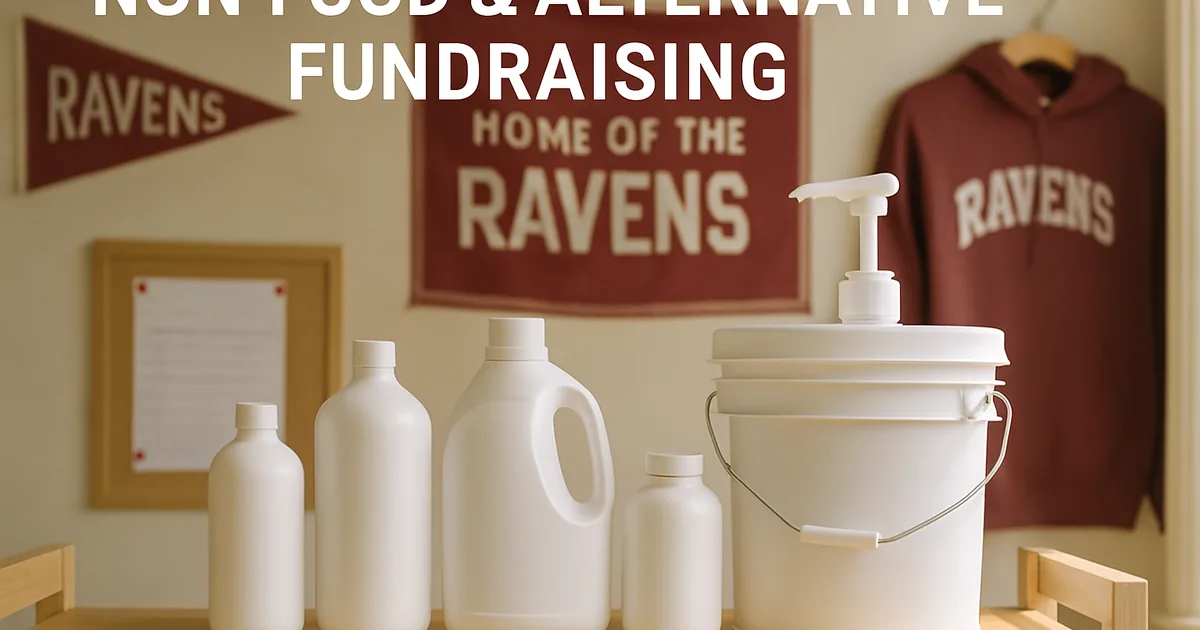
The strongest alternatives to popcorn fundraisers are bulk household-necessity products — especially laundry detergent and cleaning supplies — along with no-upfront-cost programs that avoid inventory risk. These alternatives can outperform popcorn because they reach a much wider buyer pool (most households use detergent; not every household wants a premium snack tin), greatly reduce the storage and transport burden of bulky cases (a 5-gallon bucket still needs floor space and handling, though it is far easier to move than a stack of tins), remove the seasonal selling window, and give supporters genuine value rather than asking them to justify a high price for a novelty item. When choosing a replacement, groups weigh buyer breadth, repeat purchase potential, profit per unit, upfront cost, and logistics — and household staples tend to score highest across all five.
Popcorn fundraisers have been a fixture for youth organizations for decades, and in some communities they are so closely tied to one particular program that neighbors have already been asked — sometimes multiple times in the same season. The product itself presents a specific set of challenges: premium tins carry a high price for what is ultimately a snack, which puts the seller in the uncomfortable position of justifying cost rather than offering value. The tins and cases are bulky, which creates storage and transport problems for both the organization and the families selling. The selling window is often seasonal, which compresses the timeline and limits flexibility. And the variety of flavors, while appealing in theory, adds order-form complexity that can slow down the sale.
Groups that move away from popcorn often describe a similar pattern: strong sellers can hit a wall fast because the buyer pool for a premium snack is narrow, and the logistics — storing cases, managing flavor inventories, coordinating bulk deliveries — can consume volunteer hours out of proportion to the money raised. The question is not whether popcorn is a bad product; it is whether there is a better way to reach the same goal with less friction and wider participation.
This guide covers why groups are moving on from popcorn, what makes a strong replacement, the best alternatives available now, how they compare on profit and logistics, and the mistakes to avoid when you make the change.
- Popcorn fundraisers face a narrow buyer pool, high per-item prices that require justification, bulky storage and transport, seasonal selling windows, and order-form complexity from flavor variety.
- The strongest replacements are consumable household necessities people already buy and repurchase, such as laundry detergent and cleaning products.
- A household-necessity fundraiser reaches buyers — grandparents, neighbors, coworkers — who would never purchase a premium snack tin, which widens participation.
- Non-perishable bulk products greatly reduce the storage scramble and transport burden that make popcorn logistics hard to manage, though a bulk order still needs floor space and volunteers to move and distribute it.
- No-upfront-cost structures move financial risk off the group, which is especially important for organizations that have been burned by unsold inventory.
- Judge any alternative on five factors: buyer breadth, repeat use, profit per unit, upfront cost, and ease of running.
Why are groups moving away from popcorn fundraisers?
The problems show up in a predictable sequence. First, in many communities popcorn is strongly associated with one youth organization, so neighbors and relatives have often already been asked — sometimes by multiple families in the same season. That pre-existing fatigue means sellers start with a smaller pool of potential buyers than they realize. Second, premium popcorn tins carry a high price for what is fundamentally a snack, so the pitch becomes about supporting the group rather than offering value, and that is a harder sell. Third, the tins and cases are bulky: they take up garage space, they are awkward to transport, and coordinating a bulk delivery day becomes a logistical puzzle. Fourth, the selling window is often seasonal, which compresses the timeline and removes flexibility. And fifth, flavor variety — which seems like a selling point — actually creates order-form complexity that slows the transaction without raising the total.
For groups that switch, the problem is often not that families did not try but that they can run out of popcorn buyers fast, while the logistics of managing cases and flavors consume volunteer hours that could have been spent on participation. When the product changes to something most households already buy, both problems can ease at once.
What specific problems do popcorn tins create that other fundraisers avoid?
Popcorn presents a unique combination of friction points. The bulkiness is the most visible: a case of popcorn tins takes up far more space than a case of most other fundraising products, and families who live in apartments or do not have garage storage struggle to manage inventory. Transport is similarly awkward — loading and unloading cases from a car, carrying them to a delivery point, and distributing them to individual families all require more physical effort than lighter, more compact products.
The price-to-value perception is another specific challenge. A premium popcorn tin might be priced at a level that makes the group a decent profit, but the buyer is paying a significant amount for a snack they will consume in a few sittings, and that creates hesitation. The seller ends up justifying the purchase as a donation rather than presenting it as a good deal, which is a harder conversation and limits repeat buyers.
The seasonal nature of popcorn sales — often concentrated around fall and winter holidays — compresses the selling window and creates competition with other seasonal fundraisers. And the flavor variety, while it seems like a benefit, actually complicates the order form and the fulfillment process: tracking who ordered which flavors, ensuring the right tins go to the right families, and managing the inventory of each variety all add administrative load.
What makes a strong alternative to a popcorn fundraiser?
Before comparing specific products, it helps to have a clear scorecard. The best replacements for popcorn win on the same five factors, and weakness on any one of them usually explains why a fundraiser underperforms.
First, buyer breadth: how many people will actually buy it? A product that every household needs beats a niche snack. Second, repeat use: is it something buyers consume and repurchase, or a one-time novelty? Third, profit per unit: what does the group keep after cost, and is that margin worth the effort? Fourth, upfront cost: does the group have to front money for inventory, or is it no-cost and no-risk? And fifth, ease of running: does the product require special storage, complex order forms, seasonal timing, or heavy volunteer coordination?
A strong popcorn alternative should score well on all five. It should reach a wider buyer pool than a premium snack, offer something people use repeatedly, carry a solid margin, require no upfront investment, and be simple enough that a volunteer can explain it and hand off the work without a training session.
What are the best alternatives to popcorn fundraisers?
Measured against that scorecard, a few categories stand out. The standout is household consumables — everyday necessities like laundry detergent, cleaning products, and similar staples. These can score well on all five factors: they reach most households, they get repurchased, they avoid perishability and bulk cases, and they require no special storage or seasonal timing. Bulk laundry detergent is one example. Because families buy detergent whether or not there is a fundraiser, the product may not need to be sold so much as offered at a good price, and the buyer pool is not limited to people who want a snack.
No-inventory and direct-support programs are another strong option. These remove logistics almost completely, though they lack the tangible value proposition that drives repeat participation. Reusable and practical goods — items like reusable bags, water bottles, or seasonal practical products — avoid perishability and can carry decent margins, but most are one-time purchases, so they score lower on repeat use.
Weigh each against your own group. If your main frustration with popcorn has been storage, transport, and a narrow buyer pool, a household staple is the most direct fix. If your group is tech-comfortable and wants to minimize product handling, a digital or direct-support program may fit. But for most organizations replacing popcorn, the household-necessity model addresses the specific pain points that made popcorn hard to run.
How do the alternatives compare to popcorn on profit and logistics?
Profit depends on your product, your price, and how many families participate, so be skeptical of any program that promises one magic number. A useful way to think about it is that total dollars raised equals participants times average sales per family times profit per unit. Popcorn can lose on the first two terms: fewer families may find buyers because the product appeals to a narrower slice of supporters, and each family may find fewer of them because premium snack buyers are limited. A necessity product can widen participation, which can move the total more than a few points of margin.
Here is what that looks like with one household-necessity program. With Good Clean Fundraising's bulk laundry-detergent fundraiser, groups sell a 5-gallon bucket for $49.95 and keep about $13.45 to $15.45 per bucket at 100 or more buckets, depending on order volume. The group's cost drops and shipping becomes free as the order grows.
The value to the person buying may be what widens participation. A 5-gallon bucket holds 640 ounces, so at $49.95 the buyer pays about 7.8 cents per ounce. Premium national-brand liquid detergents typically cost more per ounce at retail, though exact pricing varies by store, size, and promotion — compare that figure to what you currently pay, since value-tier and store brands can cost less per ounce. Supporters are not paying a premium for a tin of gourmet popcorn they did not need — they are stocking up on a staple while backing the group. That is a different conversation, and it may be why detergent sellers can reach buyers popcorn sellers do not.
On logistics, the contrast can be sharp. A 5-gallon detergent bucket is non-perishable, and there is no flavor inventory to track and no seasonal window. Good Clean Fundraising ships to a commercial delivery address, so the group still plans for receiving and distributing the order. Because the product is a necessity rather than a novelty, the order form is simple and the sale can be fast.
What does a switch from popcorn to a household-necessity fundraiser look like in practice?
The practical question most coordinators ask is how the numbers translate to their specific goal. The answer is to work backward from the goal in buckets rather than trying to project a dollar total. If your group needs to raise a specific amount, divide that goal by the per-bucket profit — $13.45 at 100–299 buckets, $14.45 at 300–499, $15.45 at 500 or more — to get an estimated number of buckets, then check that the estimate actually falls in the tier you used and recalculate at the correct rate if it doesn't, rounding up so the total still covers the goal. Divide the final bucket count by the number of participating families to see how many buckets per family. That gives you a concrete target without speculating on totals.
As an illustration, if your goal requires selling 240 buckets and you have 40 families participating, that is an average of 6 buckets per family. Whether that is realistic depends on your families; because detergent is a household staple with a wide potential buyer pool, it may be more achievable than asking each family to find 6 buyers for premium popcorn tins. The top sellers will move more, and some will move fewer, but the average may become achievable because the product can reach grandparents, neighbors, coworkers, and extended family who use detergent.
The logistics can be simpler, too. There are no cases to store in a garage, no flavor varieties to track, and no seasonal deadline. The group collects orders and payment, submits one paid order, and the buckets are shipped to the group's commercial delivery address for distribution, with about two weeks allowed for fulfillment. The process can take less volunteer time and create fewer friction points, which may be why some groups that make the switch stay with it.
How does Good Clean Fundraising's program compare as a popcorn alternative?
Good Clean Fundraising runs The Good Clean Fundraiser, a bulk laundry-detergent program that groups can use as an alternative to traditional product fundraisers like popcorn. Groups sell a 5-gallon pump bucket for $49.95 (about $50) and keep about $13.45 to $15.45 per bucket at 100 or more buckets, depending on order volume; smaller orders of 50 to 99 buckets earn about $5 to $12 per bucket depending on shipping, and orders under 50 buckets are not accepted. There is a $0 upfront cost because the group collects orders and payment from supporters first, then submits the final order with payment. Shipping is free at 100 or more buckets, and Good Clean Fundraising provides a Getting Started packet, instructions, marketing materials, and social media strategies. Good Clean Fundraising advertises a 100% money-back guarantee under which, according to the company, any unsatisfied customer is refunded and the group keeps its profit.
The program addresses several of the pain points that make popcorn hard to run. Detergent is a necessity most households purchase, so sellers may reach grandparents, neighbors, and coworkers who would not buy a premium snack. The product is non-perishable, so there is no spoilage. The order form stays simple — one price per bucket regardless of which formula a family orders — so there is no flavor-by-flavor inventory complexity the way popcorn has. And the group chooses when to run its selling window rather than being tied to a season.
Groups should still confirm the 50-bucket minimum, the commercial delivery address requirement, and about two weeks of fulfillment after the paid order is submitted, and should ask the company for its current refund and returns terms.
For groups switching off popcorn, the detergent model addresses the friction points — narrow buyer pool, high price for a novelty, bulky storage, seasonal limits, and order complexity — with a product people need, a price that offers value, simpler logistics, and a structure that can widen participation.
| Factor | Popcorn Fundraiser | Household Necessity |
|---|---|---|
| Buyer pool | Snack buyers; often pre-asked | Most households |
| Repeat customers | One-time novelty | Repurchased regularly |
| Storage & transport | Bulky tins and cases | Uniform buckets |
| Selling window | Often seasonal | Not tied to a season |
| Order complexity | Multiple flavors to track | One price, simple form |
| Price perception | High price for a snack | ~7.8¢/fl oz |
Common mistakes to avoid
Swapping popcorn for another premium novelty
Trading popcorn for cookie dough, candy, or another treat keeps the same narrow-buyer problem and the same price-justification conversation. The point of switching is to reach people who were never buying novelties in the first place.
Ignoring the storage and transport burden
If bulky cases were part of what made popcorn hard to run, choose a replacement that is compact and easy to handle. Switching to another product with the same logistical headaches defeats the purpose.
Not addressing the upfront-cost risk
Some programs still require the group to front money for inventory. If your organization has been burned by unsold popcorn in the past, a no-upfront-cost option can reduce that risk.
Choosing a product with the same seasonal limits
If the compressed seasonal window was a problem with popcorn, pick a fundraiser that can run any time of year so you control the calendar rather than being controlled by it.
Under-communicating the value to buyers
Participation rises when families understand why the new product is easier to sell. A short, honest kickoff explaining that this is something people already buy at a better price does most of the work.
- GCF per-ounce price calculation — a 5-gallon (640 fl oz) bucket at $49.95 works out to about 7.8 cents per fluid ounce ($49.95 ÷ 640 fl oz = 7.8046875¢/fl oz). Compare this figure to what you currently pay for premium liquid detergent; exact retail pricing varies by store, size, and promotion, and value-tier and store brands can cost less per ounce.
- Good Clean Fundraising program terms — $49.95 per bucket; $13.45 profit per bucket at 100 to 299 buckets (usually $5 to $12 at 50 to 99 buckets, depending on actual shipping costs), $14.45 at 300 to 499, $15.45 at 500 or more; $0 upfront cost; free shipping at 100+ buckets; 50-bucket minimum (smaller orders are not accepted); 100% money-back guarantee under which, according to the company, any customer who is not satisfied is refunded and the group keeps its profit. — GCF pricing, GCF how it works, and GCF refund and returns policy
- Popcorn logistics descriptions (bulkiness, flavor inventory, seasonal timing) are editorial observations, not measured data; programs vary by vendor and region.
Our recommendation
If you are replacing a popcorn fundraiser, one option worth considering is a household necessity — it addresses several of the specific problems popcorn creates. Good Clean Fundraising runs The Good Clean Fundraiser, a bulk laundry-detergent program: groups sell a 5-gallon pump bucket for $49.95, keep about $13.45 to $15.45 per bucket at 100 or more buckets, and pay $0 upfront because the group collects orders and payment first, then submits the final order with payment. Shipping is free at 100 or more buckets, and the company provides a Getting Started packet, instructions, marketing materials, and social media strategies. Good Clean Fundraising advertises a 100% money-back guarantee under which, according to the company, any unsatisfied customer is refunded and the group keeps its profit. The program removes flavor-inventory complexity and seasonal limits; the group should still plan for the 50-bucket minimum, a commercial delivery address, and about two weeks of fulfillment after the paid order is submitted.
Frequently asked questions
Groups switch because popcorn can create a specific set of problems: in many communities it is strongly associated with one youth organization, so neighbors may have already been asked; premium tins carry a high price for a snack, which requires justification rather than offering value; the tins and cases are bulky to store and transport; the selling window is often seasonal; and flavor variety creates order-form complexity. When the product changes to something most households already buy, these friction points can ease.
Common replacements are consumable household necessities people already buy and repurchase — laundry detergent and cleaning supplies are two examples. These can reach more buyers than a premium snack, cut most of the storage burden of bulky cases (though the bulk order still needs floor space and handling), remove seasonal limits, and offer supporters value rather than asking them to justify a high price for a novelty.
A good popcorn alternative scores well on five things: how many people will actually buy it, whether buyers use it again, the profit per item, whether there is any upfront cost, and how simple it is to run. Household-necessity products like bulk laundry detergent tend to score well across all five because most households need them, they get repurchased, they are non-perishable, and they require no special storage or seasonal timing.
For many groups — mainly because the buyer pool can be wider and the logistics simpler. Detergent is a necessity most households already purchase, so it can reach grandparents, neighbors, and coworkers who would not buy a premium snack tin. It is also non-perishable, and while GCF offers more than a dozen formula choices, the order form stays simple — one price per bucket regardless of formula — so there is no flavor-by-flavor inventory complexity the way popcorn has.
It depends on your product, price, and how many families participate, so treat any single number with caution. The bigger lever is participation: when the product is something people need rather than a premium snack, more families may find buyers, which can raise the total more than a small change in per-item profit. As a concrete example, Good Clean Fundraising has groups sell a 5-gallon bucket of detergent for $49.95 and keep about $13.45 to $15.45 per bucket at 100 or more buckets, with free shipping at 100 or more buckets.
Some do and some do not. Traditional popcorn and catalog programs often require ordering inventory in advance. With Good Clean Fundraising, the upfront cost is $0: the group collects orders and payment from supporters first, then submits the final order with payment, so it is not left holding unsold inventory. A 50-bucket minimum applies.
A household staple like laundry detergent addresses the specific friction points that make popcorn hard to run: the buyer pool is wide rather than narrow, the product offers value rather than requiring price justification, it ships as uniform buckets rather than multiple bulky tins and cases, the group picks when to run it rather than being tied to a season, and the order form is simple rather than complicated by flavor varieties. The result can be wider participation and less volunteer work.
Start by picking a replacement product that scores well on buyer breadth, repeat use, profit, upfront cost, and simplicity. Confirm your profit terms and delivery method in writing, set a clear goal and timeline, and brief your families on why the new product is easier to sell — that it is something people already buy at a lower price. Some programs, including Good Clean Fundraising, provide a Getting Started packet, instructions, marketing materials, and social media strategies to help with setup.
The Good Clean Fundraiser is Good Clean Fundraising's bulk laundry-detergent program. Groups sell a 5-gallon pump bucket for $49.95 — about 7.8 cents per fluid ounce, typically less than premium national-brand liquid detergent costs per ounce at retail — and keep about $13.45 to $15.45 per bucket at 100 or more buckets. There is a $0 upfront cost because the group collects orders and payment first, free shipping at 100 or more buckets, and a Getting Started packet, instructions, marketing materials, and social media strategies. Good Clean Fundraising advertises a 100% money-back guarantee under which, according to the company, any unsatisfied customer is refunded and the group keeps its profit. It removes several friction points that make popcorn hard to run — narrow buyers, high novelty price, bulky storage, seasonal limits, and order complexity.
Popcorn is not failing because it is a bad product — it can struggle because it asks a narrower group of people to buy something they may not need at a price they have to justify, and makes volunteers manage bulky cases and flavor inventories to do it. Switch the product to something most households already buy, at a lower per-ounce price than premium national brands, and the hardest parts of fundraising — participation, logistics, and the sales conversation — can get easier at the same time. That is the case for moving on.