
Sports & Athletic Team Fundraising
AAU & Club Basketball Fundraising Ideas That Actually Work
The fundraising strategies AAU and club basketball teams use to cover travel, tournaments, and gear — without burning out parents or relying on bake sales.
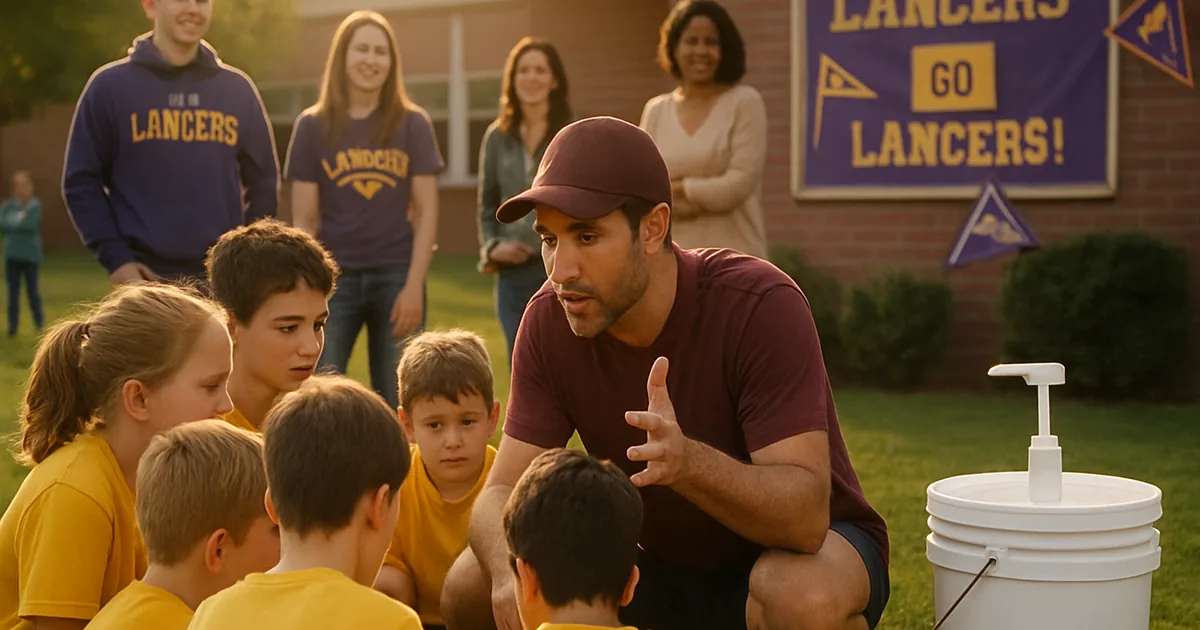
The most effective AAU and club basketball fundraisers fall into four categories: product fundraisers that sell household necessities people already buy, corporate and local sponsorships that offset specific costs like uniforms or tournament fees, team stores where supporters purchase branded gear, and hybrid models that combine multiple revenue streams. Necessity-based product fundraisers can outperform traditional treat sales because they reach a wider donor base — grandparents, neighbors, and coworkers who may not attend games but will shift a purchase they were already making. The strongest programs require no upfront cost, offer solid per-unit profit, and give supporters genuine value rather than asking them to overpay for something they don't need. Most successful AAU teams run two to three fundraisers per season, staggering them to avoid donor fatigue while covering the high costs of travel, tournament fees, uniforms, and facility rentals.
AAU and club basketball teams face a fundraising challenge most school programs never see: the costs are higher, the season runs longer, and nearly every expense — travel, tournament fees, uniforms, facility time — falls directly on families. A competitive AAU season can easily run several thousand dollars per player, and coordinators are expected to close that gap without asking the same dozen families to buy cookie dough every other month.
The teams that fund their seasons successfully are not running more fundraisers; they are running smarter ones. They have moved away from low-margin, high-effort events and toward programs that reach a wider base of supporters, require less volunteer time, and deliver value people actually want.
This guide covers the four main fundraising models AAU and club basketball teams use, why necessity-based product fundraisers can outperform traditional options, how to layer sponsorships and team stores into your revenue plan, what to avoid, and how to structure a season so you are not asking families to sell year-round.
- AAU and club basketball teams typically need to raise several thousand dollars per season to cover travel, tournaments, uniforms, and facility costs.
- The four main fundraising models are product sales, sponsorships, team stores, and hybrid approaches that combine multiple streams.
- Necessity-based product fundraisers reach more donors than treat-based sales because they appeal to people who will never buy candy or cookie dough.
- No-upfront-cost programs remove the upfront inventory risk and make it easier to run multiple fundraisers without tying up team funds.
- Corporate sponsorships work best when tied to specific, nameable costs like uniforms or a single tournament entry.
- Most successful teams run two to three fundraisers per season, spaced to avoid donor fatigue.
- The biggest mistake is choosing high-effort, low-margin fundraisers that burn out volunteers before the season is half over.
Why is fundraising harder for AAU and club basketball teams?
The cost structure is different. School teams get facility access, uniforms, and transportation through the district; AAU and club teams pay for all of it out of pocket. A single weekend tournament can cost hundreds of dollars per player when you add entry fees, travel, and lodging. Multiply that across a season and the total climbs fast.
The donor pool is also narrower. A school fundraiser can tap the whole student body and their extended families; an AAU team is working with the families of ten to fifteen players. That means each family has to sell more, ask more people, or the team has to find revenue sources beyond product sales.
The timeline compounds the problem. AAU seasons run longer than school seasons, and many teams play year-round. Asking the same families to fundraise every few months leads to fatigue — both for the sellers and the people they are asking.
What are the main fundraising models for AAU basketball teams?
Most teams use one of four approaches, or a combination of them. Each has trade-offs in effort, scalability, and how much it raises.
Product fundraisers: What sells best for basketball teams?
Product fundraisers are the default for most teams because they are repeatable, predictable, and do not require an event. The question is what to sell. Traditional options — candy, cookie dough, popcorn — have narrow appeal and thin margins. Families run out of buyers quickly because the product is a treat, not something people need.
Household-necessity fundraisers flip that dynamic. Instead of selling something supporters have to want, you sell something they already buy — laundry detergent, cleaning supplies, or similar staples. The buyer pool immediately widens: grandparents, coworkers, neighbors who would never purchase a tub of cookie dough will shift a detergent purchase to support the team, especially when the price is lower than what they pay at the store.
The other advantage is repeat participation. Treats are one-time purchases; necessities get used up and reordered. Teams that run a necessity-based fundraiser once often run it again the following season because the same supporters come back.
Sponsorships: How do you get local businesses to support your team?
Sponsorships can cover big-ticket costs — uniforms, a tournament entry, travel — but they require a clear ask and something the sponsor gets in return. The teams that land sponsorships successfully do not send a generic letter asking for money; they offer a specific package: logo on uniforms, recognition at games, social media mentions, or a banner at tournaments.
Local businesses are the most accessible sponsors. Start with companies that already have a connection to your families — a parent's employer, a business owner whose kid plays in the league, or a company that markets to families. The ask should be concrete: not 'help our team,' but 'we need $800 to cover uniforms, and in return your logo will be on every jersey and mentioned at every game.'
Corporate sponsors are harder to land but can write bigger checks. The key is demonstrating reach: how many people will see their brand, and does that audience match who they want to reach? A regional sports brand or a youth-focused business is a better fit than a random company with no connection to basketball or families.
Team stores: Do online spirit-wear stores actually raise money?
Team stores — online shops where supporters buy branded apparel and gear — can generate steady, low-effort revenue, but they rarely cover major costs on their own. The margin per item is usually modest, and participation depends on how much team pride your families and fans have.
They work best as a supplemental stream, not a primary fundraiser. Set up a store at the start of the season, promote it a few times, and let it run passively. Parents, grandparents, and alumni will buy hoodies and hats without anyone having to sell them. The key is choosing a provider that handles production and shipping so the team is not managing inventory.
Hybrid models: Should you run multiple fundraisers?
Most successful AAU teams do not rely on one fundraiser; they layer two or three across the season. A common model is one major product fundraiser early in the season to cover the bulk of costs, a sponsorship push for uniforms or a big tournament, and a passive team store that runs all year.
The mistake is running too many or spacing them poorly. If you ask families to sell every six weeks, participation drops and donor fatigue sets in. A better rhythm is one fundraiser in the fall, one in late winter or early spring, and maybe a smaller effort mid-season if a specific need comes up. Each should be distinct enough that supporters are not being asked for the same thing twice.
How much can an AAU basketball team realistically raise?
It depends on team size, what you sell, and how many families actively participate, so be skeptical of any program that promises a fixed total. A more useful way to think about it is per-player averages: if each family sells to eight to twelve supporters and the profit per item is solid, a fifteen-player team can raise several thousand dollars in a single campaign.
Participation is the biggest variable. A necessity-based product fundraiser with broad appeal may see higher participation than a treat sale because more families find buyers. The second variable is margin: a program that keeps a meaningful amount per sale raises more than one with a thin margin, even if the selling price is similar.
What mistakes do AAU teams make with fundraising?
| Factor | Treat Fundraiser | Household Necessity |
|---|---|---|
| Buyer pool | Dessert/snack buyers | Nearly every household |
| Repeat donors | Occasional purchase | Repurchased regularly |
| Upfront cost | Often requires inventory | No-cost options available |
| Profit per unit | Moderate margin | Can be higher (bulk) |
| Volunteer effort | Perishable inventory, timed delivery | Starter materials, simple logistics |
Common mistakes to avoid
Running too many fundraisers too close together
Asking families to sell every six weeks leads to participation drop-off and donor fatigue. Space fundraisers across the season and make each one count.
Choosing high-effort, low-margin options
Car washes and bake sales take hours of volunteer time and raise far less per hour than a well-run product fundraiser. Save the effort for something that moves the needle.
Picking a product with narrow appeal
If only a small slice of potential donors want the product, each family has to work harder to hit their sales. Broad appeal means more buyers per seller.
Not offering a no-upfront-cost option
Fronting money for inventory is a financial risk most teams should not take. No-upfront-cost programs let you collect orders first and eliminate that inventory risk.
Skipping sponsorships because they seem hard
A single sponsor can cover a major cost in one conversation. It takes effort to build the pitch, but the return per hour is often better than any product sale.
Treating the team store as a primary fundraiser
Team stores are great passive income, but they rarely raise enough to cover travel or tournaments. Use them as a supplement, not the main plan.
- Good Clean Fundraising program terms — $49.95 per bucket; $13.45 profit per bucket at 100 to 299 buckets (usually $5 to $12 at 50 to 99 buckets, depending on actual shipping costs), $14.45 at 300 to 499, $15.45 at 500 or more; $0 upfront cost; free shipping at 100+ buckets; 50-bucket minimum (smaller orders are not accepted); 100% money-back guarantee under which, according to the company, any customer who is not satisfied is refunded and the group keeps its profit. — GCF pricing, GCF how it works, and GCF refund and returns.
- Detergent price comparison — Good Clean Fundraising's stated comparison: retail liquid laundry detergent commonly runs about 14 to 19 cents per ounce, while a 5-gallon (640 oz) bucket at $49.95 works out to about 7.8 cents per ounce. Company-supplied figures; retail prices vary by brand, size, store, and region, and value-tier or store brands can cost less.
- Editorial guidance: general planning advice on this page reflects the authors' editorial judgment and common youth-sports fundraising practice; it is not based on measured campaign data or a cited study. Dollar figures in examples are illustrative, not sourced averages.
Our recommendation for AAU and club basketball teams
If you are looking for a repeatable, low-effort fundraiser that reaches more donors than a treat sale, a household-necessity product is the strongest option. Good Clean Fundraising runs The Good Clean Fundraiser, a bulk laundry-detergent program built for exactly this: teams sell a 5-gallon bucket of laundry detergent for $49.95 — roughly half the per-ounce price of premium national brands — and keep $13.45 to $15.45 per bucket at 100 or more buckets, depending on order volume. There is no upfront cost, a 50-bucket minimum order, free shipping on orders of 100 buckets or more, and the program includes a Getting Started packet, instructions, marketing materials, and social media strategies. It is the kind of fundraiser you can run twice a season without burning out your families, and supporters feel they got real value rather than overpaying for something they did not need. At 50 to 99 buckets, profit is usually $5 to $12 per bucket depending on actual shipping costs.
Before committing, verify four practical fit questions: Can your confirmed buyer network reach the 50-bucket program minimum? Is there local demand for a five-gallon bulk product? Does your delivery point have a commercial address with unloading capacity — the company recommends a location with a loading dock or forklift? And can you coordinate pickup and distribution of product to supporters from that point? A “yes” to all four makes this one of the most straightforward paths to your season funding goal.
Frequently asked questions
The best fundraiser is one with broad appeal, solid profit per unit, and low volunteer effort. Household-necessity product fundraisers tend to check all three boxes because they reach more donors than treat sales, offer meaningful per-unit profit, and require less logistics than events. Many teams also layer in sponsorships and a team store for additional revenue.
Costs vary widely by team and competition level, but a competitive AAU season commonly runs several thousand dollars per player when you include tournament fees, travel, lodging, uniforms, facility rentals, and coaching. Fundraising helps offset those costs so families are not covering the full amount out of pocket.
Most successful teams run two to three fundraisers spaced across the season — one major product fundraiser early on, possibly a second mid-season, and a passive revenue stream like a team store. Running more than that risks donor fatigue and lower participation.
Not always. Many product fundraisers are no-upfront-cost, meaning the team collects orders first and never fronts money for inventory. That removes the upfront inventory risk and makes it easier to run multiple campaigns without tying up team funds.
Household necessities like laundry detergent, cleaning supplies, or other consumables people already buy. These reach a much wider donor base than treats because they appeal to grandparents, neighbors, and coworkers who would never buy a dessert product but will shift a purchase they were already making.
Start with local businesses that have a connection to your families or market to a youth audience. Offer a specific package — logo on uniforms, recognition at games, social media mentions — and tie the ask to a concrete cost like uniforms or a tournament entry. A clear, specific pitch lands sponsors far more often than a generic request for support.
Team stores are worth it as a supplemental, passive revenue stream, but they rarely raise enough to cover major costs like travel or tournaments on their own. Set one up at the start of the season, promote it a few times, and let it run in the background while you focus on higher-return fundraisers.
Space your fundraisers across the season — aim for two to three total, not one every month. Make each campaign distinct so supporters are not being asked for the same thing repeatedly, and choose products or programs that deliver real value so donors feel good about participating.
A good fundraising idea scores well on three things: it reaches a wide base of potential donors, it offers solid profit per unit so the effort is worth it, and it requires minimal volunteer time so coaches and parents are not burned out. Necessity-based product fundraisers, sponsorships, and team stores all fit that profile when done well.
AAU and club basketball fundraising is not about running more campaigns — it is about running the right ones. A necessity-based product fundraiser that reaches a wide donor base, a well-pitched sponsorship that covers a specific cost, and a passive team store layered across the season will fund most teams without burning out families or asking the same people to buy cookie dough every other month. Keep it simple, space it smart, and give supporters real value, and the money will follow.