
Sports & Athletic Team Fundraising
Basketball Team Fundraising Ideas That Actually Work
The best fundraising ideas for basketball teams — from youth leagues to high school programs — that reach more supporters, skip the logistics headaches, and raise what you need for uniforms, travel, and gear.
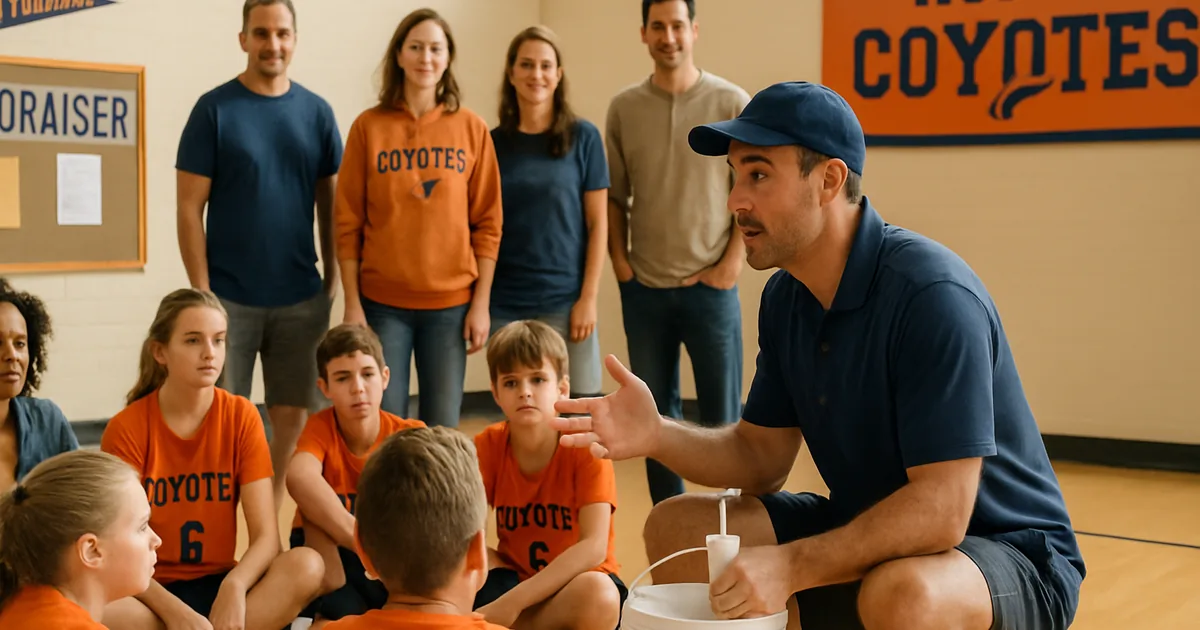
The most successful basketball team fundraisers share three traits: they sell something supporters actually want, they reach buyers beyond just the team families, and they are simple enough to run during a busy season. Product fundraisers built around household necessities — especially laundry detergent and cleaning supplies — can outperform traditional options because every household needs them, they are not perishable, and supporters get genuine value at roughly half the per-ounce price of premium national brands. Other strong options include team apparel sales, skills clinics or camps, and restaurant partnership nights. The key is choosing a fundraiser that fits your season schedule: quick product sales work well mid-season, while events and clinics are better in the off-season when families have more time.
Basketball season moves fast — practices, games, travel, and somehow you are supposed to raise money for uniforms, tournament fees, and equipment in between. Most coaches and team parents inherit the same tired fundraising playbook: sell candy bars, run a car wash, or ask families to just write a check. None of it feels like a real solution.
The good news is that basketball teams have more fundraising options now than ever, and the ones that work best are not the ones that require the most effort. The strongest fundraisers are the ones that fit into a packed season schedule, reach supporters beyond just the team families, and give people something they actually want.
This guide covers the fundraising ideas that work for basketball teams at every level — youth leagues, travel teams, and high school programs — how to pick the right one for your schedule and goals, what each option realistically raises, and the mistakes that kill participation before you even start.
- The best basketball fundraisers are the ones you can run during a busy season without adding major logistics to an already packed schedule.
- Product fundraisers built around household necessities reach far more buyers than novelty items because every supporter needs them.
- Mid-season fundraisers should be quick and simple; save events and clinics for the off-season when families have time.
- Participation matters more than profit margin — a fundraiser that gets more families involved will often raise more total dollars.
- No-upfront-cost programs remove the upfront inventory risk, which matters especially for smaller or newer teams.
- The most common mistake is choosing a fundraiser that requires too much volunteer time during the season when nobody has it.
What makes a good basketball team fundraiser?
Before comparing specific ideas, it helps to know what separates a fundraiser that works from one that fizzles. Basketball teams face a unique constraint: the season is short and intense, so any fundraiser has to fit around practices, games, and travel without becoming a second job for already-stretched volunteers.
The fundraisers that work best for basketball teams score well on five factors: they are simple enough to run mid-season, they reach buyers beyond just the team families, the product or activity has broad appeal, there is minimal or no upfront cost, and the profit per sale is worth the effort. Weakness on any one of these usually shows up as low participation or a disappointing total.
What are the best product fundraisers for basketball teams?
Product fundraisers are the default choice for most basketball teams because they can run in the background during the season — families sell on their own schedule, and there is no event to coordinate. But not all product fundraisers are created equal. The ones that raise the most are the ones that sell something people already buy.
Household necessity fundraisers (the standout)
Laundry detergent, cleaning supplies, and similar household staples have become the go-to replacement for traditional product fundraisers, and the reason is simple: they reach nearly every household, they are not perishable, and supporters get real value instead of paying a premium for something they did not need.
A bulk laundry detergent fundraiser works like this: families sell 5-gallon buckets of laundry detergent for $49.95 — roughly half the per-ounce price of premium national brands at major retailers — and the team keeps $13.45 to $15.45 per bucket at 100 or more buckets, depending on order volume. There is no upfront cost, no inventory to manage, and shipping is free on orders of 100 buckets or more.
The practical advantage for a basketball team is that the selling window can be as short as two weeks, it runs entirely during practice and game schedules without requiring a separate event, and the buyer pool is far wider than candy or cookie dough ever reaches. Grandparents, neighbors, and coworkers who would never buy a dessert fundraiser will stock up on detergent at roughly half the per-ounce price of premium national brands.
Traditional product fundraisers (candy, cookie dough, popcorn)
Candy bars, cookie dough, and popcorn are familiar, and some teams still use them. The challenge is that they appeal to a narrow buyer pool — people who want a treat — and families exhaust that list quickly. They also tend to be perishable or require timed delivery, which adds logistics during a season when nobody has extra time. Margins vary widely, and many programs require ordering inventory upfront, which puts financial risk on the team if sales fall short.
Discount cards and coupon books
Discount cards for local businesses can work in tight-knit communities where supporters recognize the merchants, but they are harder to sell in areas where families are spread out or the businesses are unfamiliar. Profit per card is usually moderate, and the value to the buyer depends entirely on whether they will actually use the discounts.
What are the best event-based basketball fundraisers?
Event fundraisers — tournaments, clinics, and community nights — can raise significant money, but they require volunteer time, planning, and often a venue. They work best in the off-season when families have bandwidth. During the season, most teams find that a simple product sale raises more with far less effort.
3-on-3 tournaments or skills competitions
A 3-on-3 tournament or skills challenge can draw a crowd and build community, but it requires securing a gym, recruiting referees or judges, managing brackets, and coordinating the day-of logistics. Entry fees typically cover costs and generate profit, but the volunteer hours add up fast. These work well as an annual signature event, not as a quick mid-season fundraiser.
Skills clinics or youth camps
Hosting a skills clinic or camp where your high school or travel team players coach younger kids can be a strong fundraiser and a community builder. Families pay a registration fee, and the team keeps the profit after covering gym rental and any materials. The challenge is that it requires significant planning, liability waivers, and volunteer supervision. It is a great off-season option but not realistic mid-season.
Restaurant partnership nights
Many restaurants will donate a share of sales on a designated night if your team promotes it. It is low-effort and risk-free, but the profit is usually modest — often a small percentage of sales — and it depends entirely on how many supporters show up. It works well as a supplemental fundraiser or a team-building night, but it rarely raises enough to be your primary funding source.
What about team apparel and spirit wear sales?
Selling team-branded hoodies, T-shirts, and gear is popular and doubles as team spirit building. Online platforms make it easy to set up a store, collect orders, and fulfill without holding inventory. Profit per item varies by markup, and participation depends on how much families want the gear. It is a solid supplemental fundraiser but usually does not raise enough on its own to cover major expenses like travel or uniforms.
How much can a basketball team realistically raise?
Total dollars raised depends on three things: how many families participate, how many items or tickets each family sells, and the profit per item. A team with strong participation selling a high-value product can often raise more than a team with weak participation and a high-margin novelty item.
As a concrete example, a basketball team selling bulk laundry detergent at $49.95 per bucket keeps $13.45 to $15.45 per bucket at 100 or more buckets. A team of 12 families where each family sells an average of 10 buckets would move 120 buckets. At that volume, the team keeps $13.45 to $15.45 per bucket at 100 or more buckets, and the total raised is driven by participation and average sales per family, not by projecting a single campaign dollar figure.
In our editorial view, the bigger lever is often participation. A fundraiser that gets more families involved — because the product is easy to sell and people actually want it — will raise more than a high-margin item that only the top two sellers can move.
How do you pick the right fundraiser for your basketball team?
Start by asking three questions: When do we need the money? How much volunteer time do we have? And how big is our supporter base? If you need money mid-season and have limited volunteer hours, a simple product fundraiser is often the right answer. If you are in the off-season and have a committed volunteer crew, an event or clinic can work well.
Also consider your team's size and reach. A large high school program with hundreds of families can make almost anything work through sheer volume. A small travel team with 10 families needs a product that reaches beyond just the parents — something grandparents, neighbors, and coworkers will buy.
| Factor | Product Fundraiser | Event Fundraiser |
|---|---|---|
| Timing | Can run mid-season | Requires off-season planning |
| Volunteer time | Minimal coordination | Significant hours required |
| Buyer reach | Family, friends, coworkers | Team families & local community |
| Upfront cost | Often none | Venue, supplies, insurance |
| Profit potential | Scales with participation | High if attendance is strong |
Common mistakes to avoid
Choosing a fundraiser that requires too much time mid-season
The season is already packed with practices, games, and travel. A fundraiser that requires multiple volunteer meetings, event setup, or day-of coordination will struggle to get participation. Save complex events for the off-season.
Picking a product with a narrow buyer pool
Candy, cookie dough, and novelty items only appeal to people who want a treat. A household necessity reaches nearly every supporter, which is why participation and totals are often higher.
Not confirming profit terms and costs in writing
Some fundraising companies bury fees, shipping costs, or minimum-order requirements in the fine print. Confirm exactly what the team keeps per item and what costs you are responsible for before you launch.
Leaving the selling window open too long
A focused two-to-three-week window creates urgency and keeps families engaged. Fundraisers that stay open for months lose momentum, and participation fades.
Skipping a real kickoff
When families start whenever they get around to it, most never start at all. A single kickoff meeting or message where everyone starts on the same day drives the majority of early sales.
- Good Clean Fundraising program terms — $49.95 per bucket; $13.45 profit per bucket at 100 to 299 buckets (usually $5 to $12 at 50 to 99 buckets, depending on actual shipping costs), $14.45 at 300 to 499, $15.45 at 500 or more; $0 upfront cost; free shipping at 100+ buckets; 50-bucket minimum (smaller orders are not accepted); 100% money-back guarantee under which, according to the company, any customer who is not satisfied is refunded and the group keeps its profit. — GCF pricing, GCF how it works, and GCF refund and returns.
- Detergent price comparison — Good Clean Fundraising's stated comparison: retail liquid laundry detergent commonly runs about 14 to 19 cents per ounce, while a 5-gallon (640 oz) bucket at $49.95 works out to about 7.8 cents per ounce. Company-supplied figures; retail prices vary by brand, size, store, and region, and value-tier or store brands can cost less.
- Editorial guidance: general planning advice on this page reflects the authors' editorial judgment and common youth-sports fundraising practice; it is not based on measured campaign data or a cited study. Dollar figures in examples are illustrative, not sourced averages.
Our recommendation for basketball teams
If you need to raise money during the season without adding major logistics to an already packed schedule, a household-necessity product fundraiser is the strongest option. Good Clean Fundraising runs The Good Clean Fundraiser, a bulk laundry-detergent program built specifically for sports teams: families sell 5-gallon buckets of laundry detergent for $49.95 — roughly half the per-ounce price of premium national brands — and your team keeps $13.45 to $15.45 per bucket at 100 or more buckets, depending on order volume. There is no upfront cost, a 50-bucket minimum order, free shipping on orders of 100 buckets or more, and the program includes a Getting Started packet, instructions, marketing materials, and social media strategies. Good Clean Fundraising advertises a 100% money-back guarantee under which, according to the company, any unsatisfied customer is refunded and the group keeps its profit. At 50 to 99 buckets, profit is usually $5 to $12 per bucket depending on actual shipping costs.
Before committing, verify four practical fit questions: Can your confirmed buyer network reach the 50-bucket program minimum? Is there local demand for a five-gallon bulk product? Does your delivery point have a commercial address with unloading capacity — the company recommends a location with a loading dock or forklift? And can you coordinate pickup and distribution of product to supporters from that point? A “yes” to all four makes this one of the most straightforward paths to your season funding goal.
Frequently asked questions
The best fundraiser is the one that fits your season schedule and reaches buyers beyond just the team families. For most basketball teams, a household-necessity product fundraiser — like bulk laundry detergent — works best because it can run mid-season without requiring an event, it reaches nearly every household, and supporters get genuine value at roughly half the per-ounce price of premium national brands.
It depends on how many families participate and what you sell, so set a realistic goal based on your team size rather than a headline number. As a concrete example, a team selling bulk detergent at $49.95 per bucket keeps $13.45 to $15.45 per bucket at 100 or more buckets. A team of 12 families where each sells 10 buckets would move 120 buckets and keep $13.45 to $15.45 per bucket at 100 or more buckets. The bigger lever is participation — more families selling can often raise more than a high margin on a product only a few can move.
During the season, choose a fundraiser that runs in the background without requiring event coordination. Product fundraisers — especially household necessities — work well because families can sell on their own schedule around practices and games. Save events and clinics for the off-season when families have more time.
It depends on timing and volunteer capacity. Product fundraisers fit better into a busy season schedule because they require minimal coordination and no event day. Events like tournaments or clinics can raise more in a single day but require significant volunteer hours and work best in the off-season. Most teams find that a simple product sale mid-season raises more with far less effort.
Not always. Many product programs are no-upfront-cost, meaning you collect orders first and never front money for inventory. Events usually require some upfront cost for venue rental, supplies, or insurance. For a team with a tight budget, a no-upfront-cost product fundraiser removes the upfront inventory risk.
Most successful fundraisers run for two to three weeks. A short, focused window creates urgency and keeps families engaged. Fundraisers that stay open for months lose momentum, and participation fades. Set a clear end date at the kickoff and hold to it.
Most basketball teams fundraise to cover uniforms, tournament entry fees, travel costs, equipment, and facility rentals. Some also raise money for team meals, end-of-season banquets, or coaching stipends. Setting a specific dollar goal tied to one of these expenses makes it easier to communicate the need to supporters.
Household products like laundry detergent reach nearly every supporter because everyone needs them, while candy and cookie dough only appeal to people who want a treat. That wider buyer pool means more families find buyers, which raises the total. Household products are also non-perishable, so there is no timed delivery or freezer logistics to manage mid-season.
The Good Clean Fundraiser is Good Clean Fundraising's bulk laundry-detergent program. Teams sell 5-gallon buckets for $49.95 — roughly half the per-ounce price of premium national brands — and keep $13.45 to $15.45 per bucket at 100 or more buckets, depending on order volume. There is no upfront cost, free shipping on orders of 100 or more buckets, and the program includes a Getting Started packet, instructions, marketing materials, and social media strategies.
Basketball season does not leave much room for a complicated fundraiser, and it does not need to. The teams that raise the most are the ones that pick something simple, start everyone on the same day, and give supporters a reason to buy that goes beyond just helping the team. A household necessity at roughly half the per-ounce price of premium national brands checks all three boxes, which is why it works.