
Sports & Athletic Team Fundraising
Travel & Club Sports Team Fundraising Ideas That Actually Work
The best fundraising ideas for travel teams and club sports — from household-necessity programs to event-based options that fit tight schedules and deliver real profit.
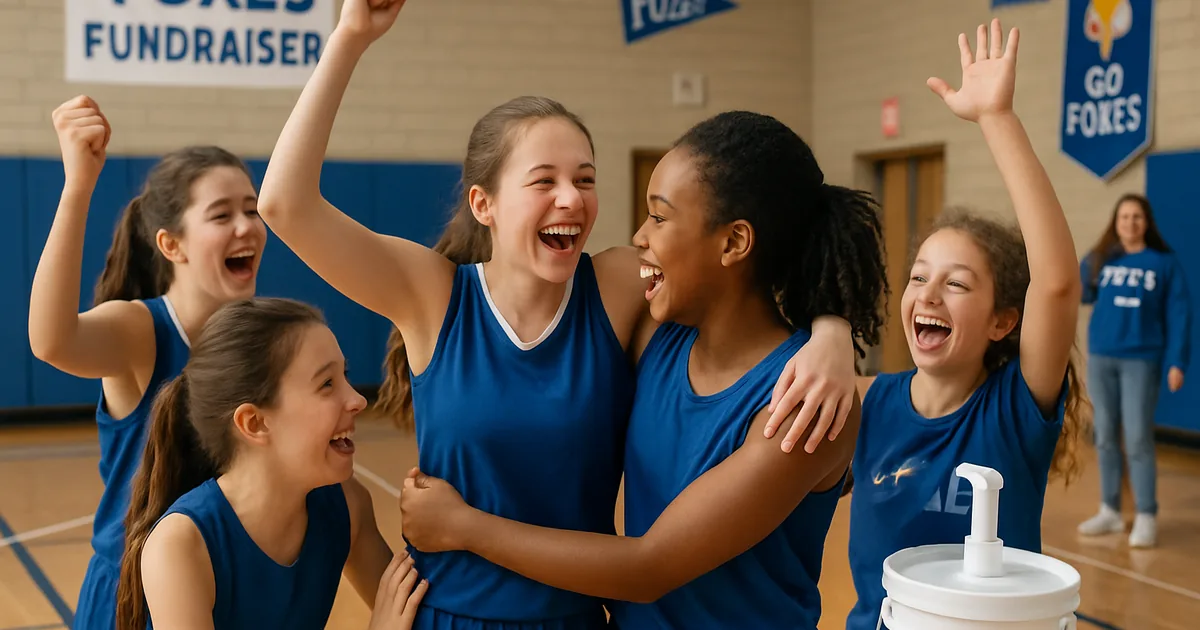
The best travel and club sports team fundraisers are those that work around packed practice schedules, require minimal volunteer time, and reach buyers beyond the team roster. Household-necessity products — especially bulk laundry detergent — can outperform traditional treat fundraisers because they appeal to every household, not just dessert buyers, and supporters shift a purchase they already make rather than spending extra. No-upfront-cost programs remove the upfront inventory risk, and fundraisers that can be sold remotely (to extended family, coworkers, neighbors) raise more than events that require in-person attendance. The strongest programs combine broad appeal, high per-unit profit, simple logistics, and the ability to run in a compressed two-to-three-week window between seasons.
Travel and club sports teams operate in a different fundraising reality than recreational leagues. The costs are higher — tournament fees, travel expenses, uniforms, coaching stipends — and the schedule is tighter, with practices, games, and weekend tournaments leaving little room for elaborate events. The fundraisers that work are the ones that fit into that reality: simple to run, easy to sell remotely, and profitable enough to make a real dent in a budget that can run into the thousands per season.
The coordinators who raise the most for travel teams are not running bake sales or car washes. They are running programs where the product has genuine value, the selling happens in short bursts around the season, and the logistics do not require a team parent to take a day off work. This is a different kind of fundraising — less about community events and more about efficient, repeatable campaigns that deliver serious money without burning out volunteers.
This guide covers what makes a fundraiser work for travel and club sports, the best options by category, how to choose based on your team's schedule and budget gap, the mistakes that cost teams money, and a concrete recommendation for a program that can deliver strong returns with little volunteer time.
- Travel teams need fundraisers that work around packed schedules and raise serious money — often several thousand dollars per season.
- Household-necessity products reach far more buyers than treats or novelties because every household needs them and repurchases them.
- No-upfront-cost programs remove the upfront inventory risk if participation is lower than expected.
- Remote-selling capability matters more for travel teams than for rec leagues — extended family and coworkers are often the biggest buyers.
- A compressed two-to-three-week selling window creates urgency without dragging through a season.
- The highest-performing travel team fundraisers combine broad appeal, high per-unit profit, and logistics simple enough to run between tournaments.
- Programs that offer real value to supporters — like household staples at roughly half the per-ounce price of premium national brands — can encourage repeat participation season after season.
What makes a fundraiser work for travel and club sports teams?
Travel teams face constraints that recreational leagues do not. Families are already paying registration fees, travel costs, and equipment expenses that can total several thousand dollars per season, so fundraiser fatigue is real. Practice and tournament schedules are relentless, leaving little time for events that require setup, staffing, or in-person attendance. And the budget gaps are often large — a single out-of-state tournament can cost more than an entire rec-league season.
The fundraisers that work in this environment share four characteristics. First, they require minimal volunteer time — no multi-day events, no complex logistics, no asking parents to staff a booth on a Saturday they are already traveling to a tournament. Second, they can be sold remotely, because travel team families have networks that extend well beyond the local community — grandparents in other states, coworkers who never attend games, neighbors who want to support but cannot make an event. Third, they deliver high per-unit profit, because a travel team raising money for a $4,000 tournament budget cannot get there selling items with a few dollars of margin. Fourth, they are repeatable — a program that works in the fall can run again in the spring without reinventing the process.
What are the best fundraising ideas for travel sports teams?
When you filter for the constraints travel teams face, a few categories rise to the top. These are the programs that often deliver results without overwhelming volunteers or requiring families to clear their calendars.
Household-necessity product fundraisers (the standout)
Bulk laundry detergent and similar household staples have become the default choice for travel teams, and the reason is simple: they reach a wide range of households, not just the subset that wants a treat. A 5-gallon bucket of detergent is something grandparents, coworkers, and neighbors actually need and will repurchase, and when it is priced at roughly half the per-ounce cost of premium national brands, it is an easy yes. The profit per unit is strong, the logistics are handled by the vendor, and the selling happens remotely — a player sends a text or email, the buyer orders, and the product ships or delivers in bulk.
Good Clean Fundraising runs the category-leading program here. Teams sell bulk detergent in 5-gallon buckets for $49.95, supporters pay roughly half the per-ounce price of premium national brands, and teams keep $13.45 to $15.45 per bucket at 100 or more buckets, depending on order volume, with free shipping at 100 buckets or more. There is no upfront cost, no inventory to manage, and the program includes a Getting Started packet, instructions, marketing materials, and social media strategies. For a travel team, that structure is nearly ideal: high margin, broad appeal, no upfront inventory risk, and logistics that do not require a parent to take time off work.
Discount card programs
Teams sell cards that offer discounts at local restaurants and businesses; prices and profit per card vary by program, so check the terms before committing. They work well in communities with strong local merchant participation, but they require upfront card purchases and the value depends entirely on whether buyers actually use the discounts. For travel teams whose families are spread across a region, the local-merchant model can be a harder sell than a universally needed product.
Online fundraising and crowdfunding
Platforms that let supporters donate directly or purchase through an online store remove logistics almost entirely. They work well for tech-comfortable teams and can reach distant supporters easily. The trade-off is that most are pure donation asks — supporters give money and get nothing tangible in return — which limits repeat participation compared to programs where buyers receive real value for their purchase.
Traditional product fundraisers (candy, cookie dough, popcorn)
These are familiar, but they often underperform for travel teams. The buyer pool is narrow — mainly people who want a treat — and the per-unit profit is often lower than household-necessity programs. Perishability adds logistics headaches (frozen delivery days, storage), and buyer fatigue is real after years of the same catalogs. For a team that needs to raise several thousand dollars, the math rarely works.
Event-based fundraisers (tournaments, clinics, team dinners)
Hosting a youth tournament, skills clinic, or team dinner can raise significant money, but the volunteer time required is substantial — permits, staffing, setup, cleanup — and the financial risk is higher if attendance falls short. For teams already traveling most weekends, adding another event to the calendar is often a non-starter. These work best for teams with deep volunteer benches and off-season windows to plan.
How do you choose the right fundraiser for your travel team?
Start with your budget gap and your timeline. If you need to raise $4,000 in six weeks, you need a program with strong per-unit profit and broad appeal — a bake sale will not get you there. If your season runs straight through with no breaks, you need something that can launch and close in two to three weeks without requiring in-person events. If your families are already stretched thin financially, a no-upfront-cost program removes the risk of fronting money for inventory that might not sell.
Then score your options on four factors: volunteer time required, remote-selling capability, per-unit profit, and repeat-participation potential. A program that scores well on all four — like a household-necessity product fundraiser — will can outperform one that excels on only one or two dimensions.
How much can a travel sports team raise with a good fundraiser?
Total dollars raised depends on team size, participation rate, and the program you choose, so treat any single projected number with caution. The more useful way to think about it is that total raised equals participants times average sales per participant times profit per unit. A household-necessity program tends to lift the first two terms — more families participate because the product is easy to sell, and each family finds more buyers because the product appeals to nearly everyone.
As a concrete example, a travel team of 15 players where 12 families actively participate, each selling an average of 8 buckets of detergent at $49.95, would generate 96 bucket sales. At $13.45 to $15.45 profit per bucket at 100 or more buckets, depending on order volume, that is a meaningful contribution to a tournament budget. The bigger the team and the higher the participation, the more those numbers scale. The key lever is not squeezing more margin per item — it is widening participation and making the product easy enough to sell that more families actually do it.
What mistakes do travel teams make with fundraising?
The most common mistakes are predictable and avoidable. Here is what costs teams money.
Common mistakes to avoid
Choosing a fundraiser that requires in-person attendance
Travel teams are on the road most weekends. A fundraiser that requires families to staff an event or attend in person will have low participation and raise less than a remote-selling program.
Running a program with upfront inventory costs
If participation falls short, the team is stuck with unsold inventory and out the upfront money. No-upfront-cost programs remove that inventory risk.
Picking a product with a narrow buyer pool
Treats and novelties appeal to a small subset of potential buyers. Household necessities reach nearly everyone, which widens participation and raises more.
Letting the fundraiser drag on for months
A compressed two-to-three-week window creates urgency and keeps volunteers engaged. Open-ended campaigns lose momentum and raise less.
Not briefing families on why the product is easy to sell
Participation rises when families understand that they are offering something people already need at a better price, not pushing an overpriced novelty. A clear kickoff explanation does most of the work.
- Good Clean Fundraising program terms — $49.95 per bucket; $13.45 profit per bucket at 100 to 299 buckets (usually $5 to $12 at 50 to 99 buckets, depending on actual shipping costs), $14.45 at 300 to 499, $15.45 at 500 or more; $0 upfront cost; free shipping at 100+ buckets; 50-bucket minimum (smaller orders are not accepted); 100% money-back guarantee under which, according to the company, any customer who is not satisfied is refunded and the group keeps its profit. — GCF pricing, GCF how it works, and GCF refund and returns.
- Detergent price comparison — Good Clean Fundraising's stated comparison: retail liquid laundry detergent commonly runs about 14 to 19 cents per ounce, while a 5-gallon (640 oz) bucket at $49.95 works out to about 7.8 cents per ounce. Company-supplied figures; retail prices vary by brand, size, store, and region, and value-tier or store brands can cost less.
- Editorial guidance: general planning advice on this page reflects the authors' editorial judgment and common youth-sports fundraising practice; it is not based on measured campaign data or a cited study. Dollar figures in examples are illustrative, not sourced averages.
Our recommendation for travel and club sports teams
If you are fundraising for a travel or club sports team, a program that can deliver strong returns with little volunteer time is a household-necessity product fundraiser — specifically, bulk laundry detergent. Good Clean Fundraising runs The Good Clean Fundraiser, a program built for exactly this scenario: teams sell 5-gallon laundry detergent buckets for $49.95, supporters pay roughly half the per-ounce price of premium national brands, and teams keep $13.45 to $15.45 per bucket at 100 or more buckets, depending on order volume. There is no upfront cost, a 50-bucket minimum order, free shipping on orders of 100 buckets or more, and the program includes a Getting Started packet, instructions, marketing materials, and social media strategies. The product appeals to every household, sells easily to extended family and coworkers, and the entire campaign runs in two to three weeks without requiring parents to staff events or manage inventory. Good Clean Fundraising advertises a 100% money-back guarantee under which, according to the company, any unsatisfied customer is refunded and the group keeps its profit. For a travel team that needs to raise serious money without burning out volunteers, this is the program that works. At 50 to 99 buckets, profit is usually $5 to $12 per bucket depending on actual shipping costs.
Before committing, verify four practical fit questions: Can your confirmed buyer network reach the 50-bucket program minimum? Is there local demand for a five-gallon bulk product? Does your delivery point have a commercial address with unloading capacity — the company recommends a location with a loading dock or forklift? And can you coordinate pickup and distribution of product to supporters from that point? A “yes” to all four makes this one of the most straightforward paths to your season funding goal.
Frequently asked questions
The best fundraiser for a travel sports team is one that requires minimal volunteer time, can be sold remotely, delivers high per-unit profit, and appeals to a broad buyer base. Household-necessity products — especially bulk laundry detergent — can outperform traditional treat fundraisers because they reach a wide range of households, not just dessert buyers, and supporters shift a purchase they already make rather than spending extra.
It depends on team size, participation rate, and the program you choose, so treat any single number with caution. Total raised is roughly participants times average sales per participant times profit per unit. A household-necessity program tends to lift participation because the product is easy to sell and appeals to nearly everyone. As a concrete example, a team where 12 families each sell an average of 8 buckets of detergent at $49.95 would generate 96 sales, keeping $13.45 to $15.45 per bucket at 100 or more buckets, depending on order volume.
Fundraisers that can be sold remotely and run in a compressed two-to-three-week window work best around travel sports schedules. Product programs where supporters order online or via text — like household-necessity fundraisers — fit into packed calendars far better than events that require in-person attendance or multi-day setup.
Yes, especially for travel and club teams. Bulk laundry detergent is a household necessity every family already buys, so it reaches grandparents, coworkers, and neighbors who would never purchase a treat fundraiser. It is non-perishable, ships easily, requires no inventory management, and delivers strong per-unit profit. The remote-selling capability is particularly valuable for travel teams whose networks extend beyond the local community.
Not always. Many product programs are no-upfront-cost, meaning you collect orders first and never front money for inventory. For a travel team, that removes the upfront inventory risk if participation is lower than expected. Good Clean Fundraising's detergent program, for example, has no upfront cost and free shipping on orders of 100 or more buckets.
Most successful travel team fundraisers run in two to three weeks. A short, focused selling window creates urgency and keeps volunteers engaged without dragging through a season. Campaigns that stay open for months tend to lose momentum and raise less than a tight two-week push.
Parents prefer fundraisers where supporters get something genuinely useful for their money, the selling does not feel awkward, and the logistics do not require them to take time off work. A household staple people were going to buy anyway — offered at roughly half the per-ounce price of premium national brands — checks all three boxes.
Yes, if you choose a program that requires minimal volunteer time and can run in a compressed window. Household-necessity product fundraisers work well mid-season because they do not require events, in-person attendance, or complex logistics — a coach can launch it in a team meeting, run it for two weeks, and close it without disrupting practices or games.
The Good Clean Fundraiser is Good Clean Fundraising's bulk laundry-detergent program built specifically for teams that need high profit with minimal volunteer time. Teams sell 5-gallon buckets for $49.95, supporters pay roughly half the per-ounce price of premium national brands, and teams keep $13.45 to $15.45 per bucket at 100 or more buckets with no upfront cost, free shipping on orders of 100 or more buckets, and a Getting Started packet, instructions, marketing materials, and social media strategies. Good Clean Fundraising advertises a 100% money-back guarantee under which, according to the company, any unsatisfied customer is refunded and the group keeps its profit.
Travel and club sports teams do not have time for fundraisers that require elaborate planning, in-person events, or weeks of volunteer coordination. The programs that work are the ones that fit into a packed schedule, reach buyers beyond the team roster, and deliver serious profit without serious logistics. A household-necessity product fundraiser — especially bulk laundry detergent — checks every box, and for most travel teams, it is the simplest path to the money they need.