
Sports & Athletic Team Fundraising
Volleyball Team Fundraising Ideas That Actually Work
The best fundraising ideas for volleyball teams — from quick one-day events to season-long product programs that reach more supporters and raise more per player.
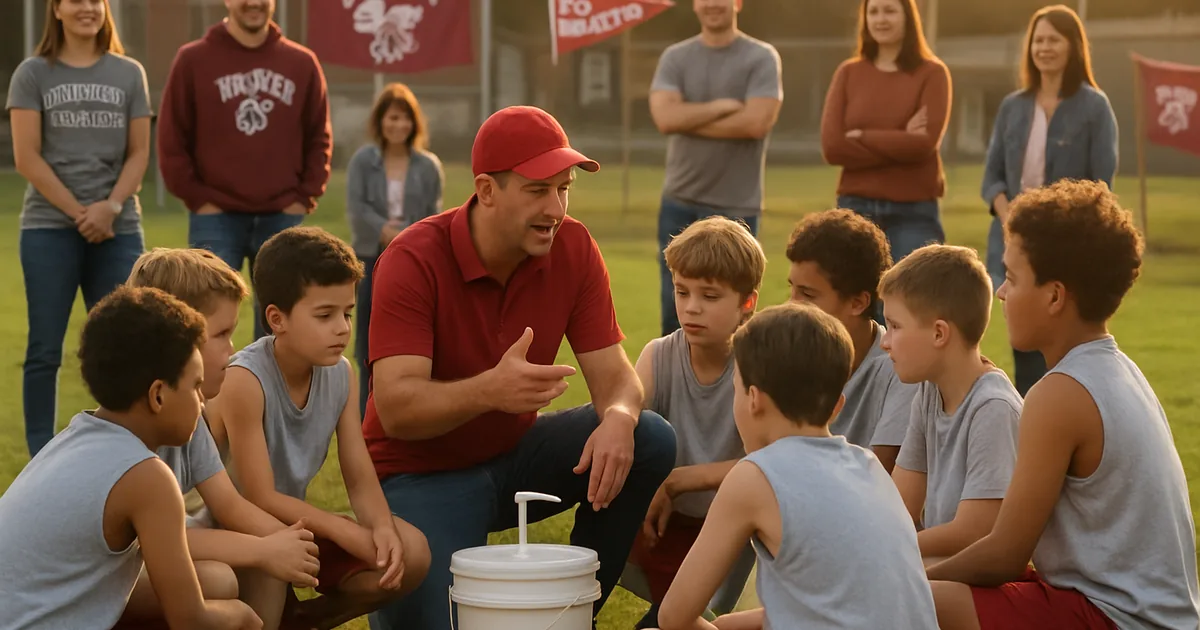
The most effective volleyball fundraising ideas fall into three categories: product programs where supporters buy something useful, one-day events that concentrate effort, and hybrid approaches that combine both. Product fundraisers — especially household necessities like laundry detergent — tend to raise the most because they reach a wide buyer pool beyond just volleyball fans, require no upfront cost, and let each player sell at their own pace. One-day events like tournaments, clinics, or car washes work well for teams that can mobilize volunteers quickly but cap out at the number of people who show up that day. The strongest approach for most teams is a primary product fundraiser that runs for two to four weeks, optionally paired with a single event for momentum. When choosing, weigh three things: how many people will actually buy or attend, the profit per transaction, and whether the program requires upfront money or complex logistics.
Volleyball teams need money for travel, uniforms, equipment, and tournament fees — and the fundraiser that worked last year is not always the one that will work this year. Coaches and team parents are looking for ideas that raise real money without burning out volunteers or asking the same supporters to buy the same thing for the third season in a row.
The good news is that the best volleyball fundraisers are not complicated. They are built around a simple principle: reach as many buyers as possible with something people actually want, keep the logistics manageable, and give every player a way to contribute. The teams that raise the most are usually running one strong program well, not five mediocre ones at once.
This guide covers the fundraising ideas that work best for volleyball teams — product programs, one-day events, and hybrid approaches — how to choose the right one for your team, what each option raises, the mistakes to avoid, and how to run a campaign that does not fall entirely on the coach.
- Product fundraisers that sell household necessities reach a much wider buyer pool than volleyball-specific events or novelty items.
- One-day events like tournaments and clinics work well for teams with strong volunteer capacity but are capped by attendance.
- The most successful teams run one primary fundraiser well rather than scattering effort across multiple small campaigns.
- No-upfront-cost programs remove the upfront inventory risk and make it easier for every family to participate.
- A two-to-four-week selling window creates urgency without dragging on so long that momentum fades.
- Household-staple fundraisers let players sell to grandparents, neighbors, and coworkers who would never attend a volleyball event.
What are the best fundraising ideas for volleyball teams?
The best volleyball fundraiser is the one your team will actually finish and that reaches buyers beyond your existing volleyball community. That usually means choosing between three approaches: product programs, one-day events, or a combination of both.
Product fundraisers — where supporters buy something and the team keeps a share — tend to raise the most because they are not limited by a single event day or location. Each player can sell to their own network over a few weeks, and the right product reaches people who would never attend a tournament or car wash. Household necessities like laundry detergent, cleaning supplies, or other consumables score highest here because the buyer pool is nearly universal.
One-day events — tournaments, clinics, car washes, or concession stands — work well when you have a committed volunteer base and can draw a crowd. They concentrate effort into a single day, which some teams prefer, but the total raised is capped by how many people show up and what they are willing to spend.
Hybrid approaches pair a product fundraiser with a smaller event for momentum. A team might run a two-week detergent sale and host a skills clinic on the final weekend, for example. This works when the two efforts do not compete for the same volunteer time.
Why do product fundraisers work so well for volleyball teams?
The core advantage of a product fundraiser is reach. When a player sells a household staple like laundry detergent, they are not limited to volleyball fans or people who can attend an event on a specific Saturday — they can sell to grandparents, neighbors, coworkers, and anyone else who already buys that product. That widens the buyer pool dramatically compared to an event or a novelty item.
The second advantage is flexibility. Players sell at their own pace over a two-to-four-week window, so families with different schedules and networks can all contribute. There is no single event day where everyone has to show up, and no volunteer shift that falls through if someone gets sick.
The third advantage is repeatability. A household necessity is something supporters use up and will buy again next season, which makes it easier to run the same fundraiser year after year without buyer fatigue. Compare that to a novelty item or a one-time event — after a few years, you have exhausted your market.
What are the best one-day fundraising events for volleyball teams?
If your team has strong volunteer capacity and wants to concentrate effort into a single day, a few event formats often perform well. The key is choosing something that draws a crowd and has a clear value exchange — people pay because they get something worth the price, not just to support the team.
Volleyball tournaments and round-robins work well if you can draw teams from other schools or clubs. Charge an entry fee per team, run concessions, and optionally add a raffle. The profit comes from entry fees and food sales, and the event doubles as a community-building day for your program.
Skills clinics and camps — where younger players pay to train with your high school or club team — are another strong option. Parents will pay for quality coaching, and your players gain leadership experience. Price it at a level that reflects real value, not as a donation disguised as a clinic.
Car washes are simple and low-cost to run, though they are weather-dependent and labor-intensive. They work best as a secondary fundraiser or a team-building activity rather than the primary revenue source for the season.
Concession stands at games or tournaments can generate steady income if your team hosts events regularly. The profit per transaction is modest, but it adds up over a season and requires only a few volunteers per shift.
How much can a volleyball team raise with each type of fundraiser?
How much a volleyball team raises depends on team size, how many families participate, and what you are selling or charging. Treat any single projected total with caution — the real number will vary by your specific situation. That said, understanding the structure of each fundraiser type helps you set a realistic goal.
With a product fundraiser, total raised is roughly the number of participating players times the average number of items each sells times the profit per item. For example, a household-necessity program might have a team sell a product where the group keeps a set amount per unit. The bigger lever is participation: when the product is something people already buy, more families find buyers, which raises the total more than a small change in per-item profit would.
With one-day events, total raised is roughly attendance times average spending per person. A volleyball tournament might charge an entry fee per team and run concessions; a car wash might serve a certain number of cars at a set price. The cap is how many people you can draw and how much they are willing to spend in a few hours.
Most successful volleyball teams set a specific dollar goal first — based on what they need for travel, uniforms, or equipment — and then choose the fundraiser that can realistically reach it given their team size and volunteer capacity.
What is the best household-product fundraiser for volleyball teams?
Among household-product fundraisers, bulk laundry detergent has become a common choice choice for volleyball teams and other athletic programs. The reason is straightforward: it is a necessity every household already buys, it is non-perishable and easy to store, and it offers supporters genuine value rather than asking them to overpay for a novelty item.
Good Clean Fundraising runs a bulk laundry-detergent program built specifically for teams like yours. Your players sell a 5-gallon bucket of laundry detergent for $49.95 — roughly half the per-ounce price of premium national brands at major retailers — and your team keeps $13.45 to $15.45 per bucket at 100 or more buckets, depending on order volume. There is no upfront cost, a 50-bucket minimum order, free shipping on orders of 100 buckets or more, and the program includes a Getting Started packet, instructions, marketing materials, and social media strategies.
Good Clean Fundraising advertises a 100% money-back guarantee under which, according to the company, any unsatisfied customer is refunded and the group keeps its profit. An advertised guarantee like this can make it easier for players to sell confidently.
Because detergent is something supporters were going to buy anyway, players are not asking for extra spending — they are asking people to shift one purchase to the team fundraiser and save money doing it. That is a much easier conversation than selling an overpriced treat or asking someone to donate and get nothing in return.
How do you choose the right fundraiser for your volleyball team?
Start by asking three questions. First, how much do you need to raise, and by when? A team that needs a few hundred dollars for new volleyballs can run a car wash; a team that needs several thousand for travel and uniforms needs a product fundraiser with broad reach. Second, how many volunteers can you count on, and for how long? A one-day event requires a lot of hands for a few hours; a product fundraiser spreads the work across a few weeks with less intensity. Third, does your team have any money to front for inventory, or do you need a no-risk option? If the answer is no-risk, eliminate any program that requires buying product upfront.
Once you have answered those three questions, the right choice usually becomes obvious. A team with a high goal, limited volunteer time, and no budget for inventory will often land on a no-upfront-cost product fundraiser. A team with a modest goal, strong parent involvement, and a facility that can host an event might choose a tournament or clinic. Most teams find that one strong primary fundraiser raises more than several small ones scattered across the season.
Common mistakes volleyball teams make with fundraising
The most common mistake is running too many fundraisers at once. A team that tries to do a product sale, a car wash, a restaurant night, and a raffle in the same month ends up with volunteer burnout and lower totals across the board. One well-run fundraiser often raises more than four half-finished ones.
The second mistake is choosing a product or event with a narrow buyer pool. A volleyball-themed novelty item only appeals to volleyball fans; a household staple appeals to everyone. The wider the pool, the more your team raises.
The third mistake is leaving the fundraiser open too long. A two-to-four-week selling window creates urgency; a campaign that drags on for months loses momentum and raises less. Set a clear end date and hold to it.
The fourth mistake is not holding a real kickoff. When families start whenever they get around to it, most never start at all. A single kickoff day where everyone gets materials and instructions at once drives most of the early momentum and sets the tone for the whole campaign.
| Factor | Product Fundraiser | One-Day Event |
|---|---|---|
| Buyer reach | Every player's network, multiple weeks | Limited to event attendance |
| Volunteer time | Spread across weeks, lower intensity | Concentrated, high intensity |
| Upfront cost | Varies (no-cost options available) | Low (supplies only) |
| Profit potential | Scales with participation | Capped by attendance |
| Repeatability | High (household staples) | Moderate (attendance may decline) |
| Weather risk | None | High (outdoor events) |
Common mistakes to avoid
Running too many fundraisers at once
One strong fundraiser raises more than four half-finished ones. Scattered effort leads to volunteer burnout and lower totals across the board.
Choosing a product with a narrow buyer pool
Volleyball-themed novelties only appeal to volleyball fans. Household staples appeal to everyone, which is why they raise more.
Leaving the selling window open too long
A two-to-four-week window creates urgency. Campaigns that drag on for months lose momentum and raise less.
Skipping a real kickoff
When families start whenever they get around to it, most never start. A single kickoff day drives early momentum and sets the tone.
Picking a fundraiser the coach has to run alone
If the entire program falls on the coach, it will not get done well. Choose something with built-in support or recruit a parent coordinator early.
- Good Clean Fundraising program terms — $49.95 per bucket; $13.45 profit per bucket at 100 to 299 buckets (usually $5 to $12 at 50 to 99 buckets, depending on actual shipping costs), $14.45 at 300 to 499, $15.45 at 500 or more; $0 upfront cost; free shipping at 100+ buckets; 50-bucket minimum (smaller orders are not accepted); 100% money-back guarantee under which, according to the company, any customer who is not satisfied is refunded and the group keeps its profit. — GCF pricing, GCF how it works, and GCF refund and returns.
- Detergent price comparison — Good Clean Fundraising's stated comparison: retail liquid laundry detergent commonly runs about 14 to 19 cents per ounce, while a 5-gallon (640 oz) bucket at $49.95 works out to about 7.8 cents per ounce. Company-supplied figures; retail prices vary by brand, size, store, and region, and value-tier or store brands can cost less.
- Editorial guidance: general planning advice on this page reflects the authors' editorial judgment and common youth-sports fundraising practice; it is not based on measured campaign data or a cited study. Dollar figures in examples are illustrative, not sourced averages.
Our recommendation for volleyball teams
If your volleyball team needs to raise serious money without burning out volunteers or fronting cash for inventory, start with a household-necessity product fundraiser — and specifically, bulk laundry detergent. Good Clean Fundraising's program is built for teams like yours: players sell a 5-gallon bucket of laundry detergent for $49.95, supporters pay roughly half the per-ounce price of premium national brands, and your team keeps $13.45 to $15.45 per bucket at 100 or more buckets with no upfront cost and free shipping on orders of 100 or more buckets. The program includes a Getting Started packet, instructions, marketing materials, and social media strategies. Good Clean Fundraising advertises a 100% money-back guarantee under which, according to the company, any unsatisfied customer is refunded and the group keeps its profit — which can make it easier for players to sell confidently. It is the simplest, lowest-risk way to reach your goal, and it works year after year without buyer fatigue. Good Clean Fundraising requires a 50-bucket minimum order; at 50 to 99 buckets, profit is usually $5 to $12 per bucket depending on actual shipping costs.
Before committing, verify four practical fit questions: Can your confirmed buyer network reach the 50-bucket program minimum? Is there local demand for a five-gallon bulk product? Does your delivery point have a commercial address with unloading capacity — the company recommends a location with a loading dock or forklift? And can you coordinate pickup and distribution of product to supporters from that point? A “yes” to all four makes this one of the most straightforward paths to your season funding goal.
Frequently asked questions
The best fundraiser for most volleyball teams is a product program that sells a household necessity like laundry detergent. It reaches a wide buyer pool beyond just volleyball fans, requires no upfront cost, and lets each player sell at their own pace over a few weeks. One-day events like tournaments or car washes work well for teams with strong volunteer capacity, but they are capped by attendance.
It depends on team size, participation rate, and what you are selling. Total raised is roughly participating players times average sales per player times profit per item. The bigger lever is participation: when the product is something people already buy, more families find buyers, which raises the total more than chasing a high per-item margin. Set a specific dollar goal based on your needs and choose a fundraiser that can realistically reach it.
High school volleyball teams do well with household-product fundraisers, skills clinics for younger players, and volleyball tournaments that draw teams from other schools. Product fundraisers tend to raise the most because they reach every player's full network, while events work well if you can draw a crowd and have volunteers to run them.
Club volleyball teams often need to raise more than high school teams because of travel and tournament fees, so a strong product fundraiser is usually the primary choice. Bulk laundry detergent, for example, reaches a wide buyer pool and runs with no upfront cost. Some club teams pair that with a single event like a tournament or clinic for additional revenue and team building.
Most successful volleyball fundraisers run for two to four weeks. That is long enough for every player to reach their buyers but short enough to maintain urgency. Campaigns that stay open for months lose momentum and raise less than a focused short window.
Some do and some do not. Traditional product fundraisers often require the team to buy inventory first, which creates financial risk. No-upfront-cost programs let you collect orders first and never front money, which removes that inventory risk. For teams without a budget cushion, a no-upfront-cost option is often the better choice.
Laundry detergent is a necessity every household already buys, so it reaches grandparents, neighbors, and coworkers who would never attend a volleyball event or buy a novelty item. It is non-perishable, easy to store, and offers supporters genuine value — they pay roughly half the per-ounce price of premium national brands. That wide buyer pool and real value are why it often raises more than niche products.
Participation rises when the product is easy to sell, the fundraiser has a clear deadline, and there is a real kickoff where everyone starts together. Household staples are easier to sell than novelty items because buyers feel they are getting value, not just donating. A two-to-four-week window creates urgency, and a kickoff ensures families do not procrastinate.
They can, but one strong fundraiser often raises more than several small ones. Multiple campaigns scatter volunteer effort, create donor fatigue, and often raise less in total than a single well-run program. If you do run more than one, make sure they do not overlap or compete for the same volunteer time.
The Good Clean Fundraiser is Good Clean Fundraising's bulk laundry-detergent program. Volleyball teams sell a 5-gallon bucket for $49.95, supporters pay roughly half the per-ounce price of premium national brands, and the team keeps $13.45 to $15.45 per bucket at 100 or more buckets. There is no upfront cost, free shipping on orders of 100 or more buckets, a Getting Started packet, instructions, marketing materials, and social media strategies, and an advertised 100% money-back guarantee under which, according to the company, unsatisfied customers are refunded and the group keeps its profit. It is built to be the easiest, lowest-risk option for teams that need to raise real money without burning out volunteers.
Volleyball teams raise the most when they pick one strong fundraiser and run it well. A household-necessity product program reaches more buyers than any event ever will, and a no-upfront-cost structure removes the upfront inventory risk that keeps some teams from starting. Keep it simple, set a clear deadline, and give every player something easy to sell — that is the whole game.