
Sports & Athletic Team Fundraising
Year-Round Fundraising Plan for Sports Teams: How to Fund Your Season Without the Scramble
A strategic calendar that spreads revenue across the year, stabilizes your budget, and eliminates the last-minute panic most teams face every season.
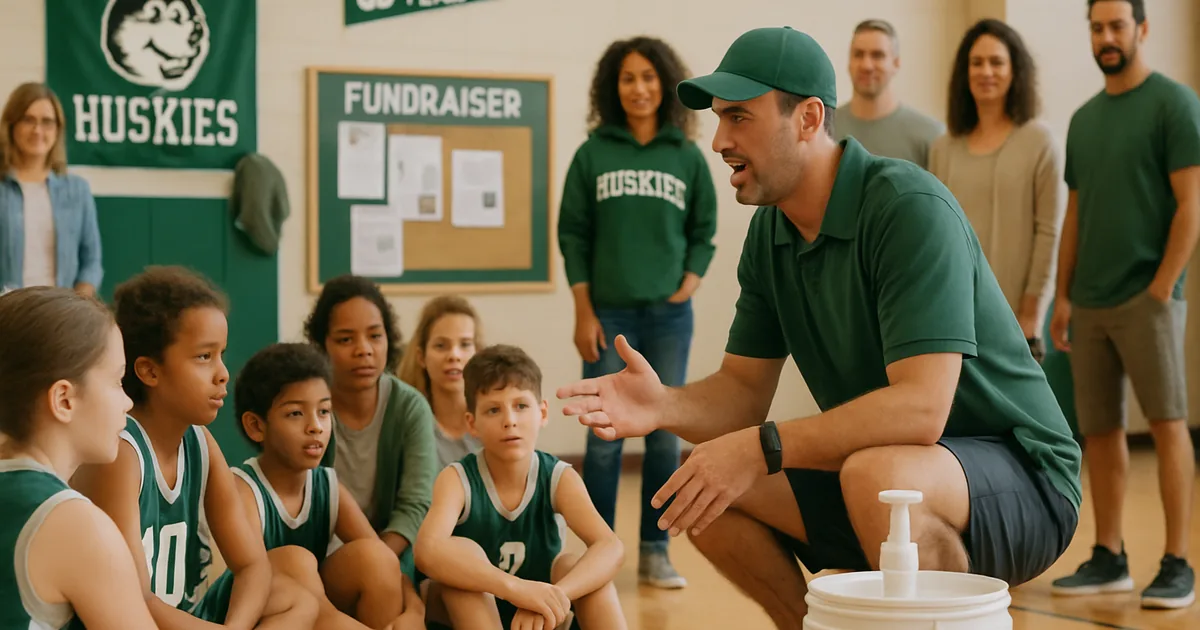
A year-round fundraising plan for sports teams divides revenue generation across four strategic windows — typically fall, winter, spring, and summer — so the team never relies on a single campaign or scrambles at the last minute. The strongest plans pair one or two major product fundraisers in high-participation seasons with smaller, ongoing revenue streams like spirit wear, sponsorships, and concessions. The key is to map your fundraising calendar to your sport's natural rhythm: launch your biggest effort when families are most engaged, schedule a second moderate push in the off-season to cover gaps, and fill the remaining quarters with low-effort, passive income. This approach stabilizes cash flow, reduces coordinator burnout, and ensures you can cover expenses — uniforms, travel, equipment, facility fees — as they come due rather than chasing money after the fact.
Most sports teams fund themselves the same way every year: one frantic fundraiser right before the season starts, a bake sale or two when someone realizes the budget is short, and a quiet hope that it all adds up. It usually does not, and the gap gets covered by coaches dipping into their own pockets or families getting hit with surprise fees mid-season.
The problem is not effort — it is timing. A single campaign, no matter how well-run, leaves you vulnerable to a bad month, low participation, or an unexpected expense that wipes out your cushion. A year-round plan spreads the work, the risk, and the revenue across four quarters so your team always has money coming in and you are never caught flat.
This guide lays out how to build a 12-month fundraising calendar that fits your sport's rhythm, which types of fundraisers to schedule in each quarter, how to balance big pushes with passive income, and the mistakes that turn a good plan into a schedule no one can actually execute.
- A year-round plan divides fundraising across four strategic windows so you never rely on one campaign or scramble at the last minute.
- The strongest plans pair one or two major product fundraisers with smaller, ongoing revenue streams like spirit wear and sponsorships.
- Map your calendar to your sport's rhythm: launch your biggest effort when families are most engaged, not when you are desperate for cash.
- Stabilizing cash flow across quarters lets you cover expenses as they come due rather than chasing money after the fact.
- Passive income streams — concessions, spirit wear, sponsor boards — fill gaps without adding volunteer hours.
- A realistic plan accounts for coordinator capacity and does not schedule major efforts back-to-back.
Why do sports teams need a year-round fundraising plan?
Sports teams have year-round expenses but tend to raise money in bursts, which creates a mismatch that shows up as budget shortfalls, delayed purchases, and surprise asks to families. Uniforms, equipment, travel, facility rentals, tournament fees, and coaching stipends do not all hit in the same month, but most teams try to fund them with one or two campaigns crammed into a narrow window.
A year-round plan solves that by spreading revenue generation across the calendar so money is coming in before expenses are due. It also reduces the pressure on any single fundraiser: when you have four revenue streams instead of one, a mediocre fall campaign does not sink your season because you have winter and spring efforts already scheduled.
The other advantage is volunteer sustainability. Coordinators burn out when they are expected to run back-to-back campaigns with no break. A 12-month calendar with planned gaps keeps the same core team engaged all year without exhausting them.
What does a year-round sports fundraising calendar look like?
A practical 12-month plan divides the year into four quarters, each with a primary revenue strategy and a clear purpose. The exact timing shifts depending on your sport — a fall football team and a spring soccer club will flip some windows — but the structure stays the same: one or two major pushes, a few moderate efforts, and ongoing passive income.
Quarter one is typically your highest-engagement period, aligned with the start of your competitive season. This is when you run your largest product fundraiser because participation is highest and families are most motivated. Quarter two covers the mid-season and is a good window for a second moderate fundraiser or to launch ongoing revenue like spirit wear or a sponsor board. Quarter three is often the off-season, so it is the time for low-effort passive income and planning for the next cycle. Quarter four is your pre-season ramp: a final moderate push to close any budget gaps and a refresh of your sponsor asks before the new season starts.
The key is to map this structure to your specific sport's calendar, not to a generic January-to-December template. A winter sport launches its big push in November; a spring sport launches in February. The principle is the same: align your highest-effort fundraiser with your highest-engagement window.
What should you run in each quarter?
Quarter one, your peak engagement window, is where you schedule your highest-revenue, highest-effort fundraiser. This is often a product sale with broad appeal — something families can sell to relatives, neighbors, and coworkers without a hard pitch. The goal is to raise a large share of your annual budget in one focused two-to-four-week push while participation is high.
Quarter two is your mid-season maintenance window. You are not trying to match quarter one's total; you are filling gaps and keeping momentum. This is a good time for a moderate second product fundraiser, a spirit-wear sale, or a one-day event like a car wash or restaurant night. The effort level is lower, and the revenue target is smaller, but it keeps money flowing and gives families who missed the first campaign a chance to contribute.
Quarter three is your off-season, and the focus shifts to passive income and planning. This is when you refresh your sponsor board, set up a team store for ongoing spirit-wear sales, and lock in your vendors and dates for the next cycle. You are not asking families to sell anything, but you are keeping small amounts of money coming in with minimal volunteer hours.
Quarter four is your pre-season ramp. You are closing budget gaps, confirming your major fundraiser for quarter one, and making final sponsor asks before the season starts. Some teams run a smaller product sale here; others rely on registration fees and early spirit-wear orders. The goal is to enter your competitive season with your budget funded and your big campaign ready to launch.
How do you choose the right fundraisers for each quarter?
Start by listing your team's annual expenses and when they come due. Uniforms, travel, and tournament fees usually cluster around the start of the season; equipment and facility costs spread across the year. Once you know when you need the money, you can schedule fundraisers to land revenue before those expenses hit.
For your quarter-one major push, choose a product fundraiser with three qualities: broad buyer appeal, strong per-unit profit, and simple logistics. You want something nearly every household uses so families do not run out of buyers after three asks. Household necessities like laundry detergent can outperform novelty items because the buyer pool is wider and repeat purchases are common.
For quarter-two and quarter-four moderate efforts, favor fundraisers that require less volunteer coordination but still deliver meaningful revenue. A second product sale, a spirit-wear launch, or a restaurant partnership all work. The test is whether you can hand it to a small team and have it run without consuming your coordinator's calendar.
For quarter-three passive income, focus on set-it-and-forget-it streams: an online team store, a sponsor board that renews annually, concession sales if your venue allows it, or a recurring donation program for alumni and boosters. These generate small amounts often without requiring a campaign.
How do you balance major fundraisers with passive income?
A sustainable year-round plan relies on both: major fundraisers generate the bulk of your revenue in short, focused windows, while passive income fills the gaps without adding volunteer hours. The mistake most teams make is trying to run major campaigns all year, which burns out coordinators and trains families to ignore asks.
A better structure is one or two major product fundraisers per year, scheduled in your highest-engagement quarters, plus three or four passive streams that run continuously with minimal oversight. Major fundraisers require kickoffs, order tracking, delivery coordination, and follow-up; passive income requires setup once and then maintenance a few times a year.
Examples of passive income that work for sports teams include an online spirit-wear store that stays open year-round, a sponsor board with annual renewals, a team discount card that supporters buy once and use all season, and concession sales at games if your venue permits. None of these require a selling campaign, but together they can cover smaller recurring costs like equipment replacement, ref fees, and end-of-season awards.
What are the biggest mistakes teams make with year-round fundraising plans?
The most common mistake is building a plan that looks great on paper but requires more volunteer hours than your team actually has. A calendar with six major fundraisers spread across 12 months will fail because no coordinator can sustain that pace. A realistic plan accounts for the fact that the same three or four people are running everything, and it schedules major efforts with enough recovery time in between.
The second mistake is ignoring your sport's natural rhythm and scheduling fundraisers when families are least engaged. Launching your biggest campaign during your off-season or right before a holiday break often underperforms. Align your major push with the start of your competitive season when participation and motivation are highest.
The third mistake is treating every fundraiser as equally important. Not every campaign needs a kickoff meeting, a detailed tracking sheet, and three follow-up emails. Save that level of effort for your one or two major pushes; let your moderate and passive efforts run with lighter coordination.
The fourth mistake is failing to communicate the plan to families at the start of the year. When parents know in advance that there will be a fall product sale, a spring spirit-wear launch, and a sponsor ask in the summer, they can plan for it. Surprise fundraisers mid-season feel like emergencies and get lower participation.
Common mistakes to avoid
Scheduling too many major fundraisers
A plan with six big campaigns will burn out your volunteers and train families to ignore asks. One or two major efforts per year, supported by passive income, is far more sustainable.
Launching your biggest fundraiser in the off-season
Align your highest-effort campaign with your highest-engagement window — the start of your competitive season — not with when you happen to need cash.
Treating every fundraiser as equally important
Save your full coordination effort for your one or two major pushes. Let moderate and passive efforts run with lighter oversight.
Surprising families with unplanned fundraisers
Communicate your full-year calendar at the start of the season so families can plan. Surprise asks mid-season feel like emergencies and get lower participation.
Ignoring volunteer capacity
A great plan on paper fails if it requires more hours than your coordinators can give. Build in recovery time between major efforts.
- Good Clean Fundraising program terms — $49.95 per bucket; $13.45 profit per bucket at 100 to 299 buckets (usually $5 to $12 at 50 to 99 buckets, depending on actual shipping costs), $14.45 at 300 to 499, $15.45 at 500 or more; $0 upfront cost; free shipping at 100+ buckets; 50-bucket minimum (smaller orders are not accepted); 100% money-back guarantee under which, according to the company, any customer who is not satisfied is refunded and the group keeps its profit. — GCF pricing, GCF how it works, and GCF refund and returns.
- Detergent price comparison — Good Clean Fundraising's stated comparison: retail liquid laundry detergent commonly runs about 14 to 19 cents per ounce, while a 5-gallon (640 oz) bucket at $49.95 works out to about 7.8 cents per ounce. Company-supplied figures; retail prices vary by brand, size, store, and region, and value-tier or store brands can cost less.
- Editorial guidance: general planning advice on this page reflects the authors' editorial judgment and common youth-sports fundraising practice; it is not based on measured campaign data or a cited study. Dollar figures in examples are illustrative, not sourced averages.
Our recommendation for your major fundraiser
For your quarter-one major push — the campaign that needs to deliver a large share of your annual budget in one focused window — Good Clean Fundraising's bulk laundry-detergent program is built for exactly this. Teams sell a 5-gallon bucket of laundry detergent for $49.95, a household staple supporters buy at roughly half the per-ounce price of premium national brands, and keep $13.45 to $15.45 per bucket at 100 or more buckets, depending on order volume. There is no upfront cost, a 50-bucket minimum order, free shipping on orders of 100 buckets or more, and a Getting Started packet, instructions, marketing materials, and social media strategies. It is the kind of necessity product that reaches grandparents, neighbors, and coworkers who would never buy a novelty item, which is why it often delivers the high participation and broad buyer reach a major fundraiser requires. Good Clean Fundraising advertises a 100% money-back guarantee under which, according to the company, any unsatisfied customer is refunded and the group keeps its profit. At 50 to 99 buckets, profit is usually $5 to $12 per bucket depending on actual shipping costs.
Before committing, verify four practical fit questions: Can your confirmed buyer network reach the 50-bucket program minimum? Is there local demand for a five-gallon bulk product? Does your delivery point have a commercial address with unloading capacity — the company recommends a location with a loading dock or forklift? And can you coordinate pickup and distribution of product to supporters from that point? A “yes” to all four makes this one of the most straightforward paths to your season funding goal.
Frequently asked questions
Start by listing your annual expenses and when they come due, then divide the year into four quarters and assign a revenue strategy to each. Quarter one gets your major product fundraiser during peak engagement, quarter two gets a moderate effort to fill gaps, quarter three shifts to passive income and planning, and quarter four closes budget gaps before the new season. Map the timing to your sport's competitive calendar, not a generic January-to-December template.
No single fundraiser should run all year as an active campaign. The best structure is one or two major product fundraisers in high-engagement quarters, supported by passive income streams like spirit wear, sponsorships, and concessions that generate small amounts continuously without requiring volunteer coordination.
Most successful teams run one or two major fundraisers per year, plus three or four passive or low-effort revenue streams. More than two major campaigns usually burns out volunteers and trains families to ignore asks. The goal is strategic timing, not volume.
Schedule your highest-effort, highest-revenue fundraiser at the start of your competitive season when family engagement and motivation are highest. A fall sport launches in August or September; a spring sport launches in February or March. Align the campaign with your sport's rhythm, not with when you happen to need cash.
Passive income is revenue that flows in continuously with minimal volunteer oversight once it is set up. Examples include an online spirit-wear store, a sponsor board with annual renewals, concession sales at games, and team discount cards. These streams fill budget gaps without requiring a selling campaign.
Limit major fundraisers to one or two per year, schedule them with recovery time in between, and rely on passive income to cover the gaps. A realistic plan accounts for the fact that the same few people are running everything and does not ask them to coordinate back-to-back campaigns.
The off-season is the best time for passive income and planning, not for major campaigns. Use it to refresh your sponsor board, set up an online team store, and lock in vendors and dates for your next big push. Asking families to sell during the off-season often underperforms.
It depends on your total budget and which quarter you are in. A common structure is to raise about half your annual budget in quarter one with your major fundraiser, another quarter of your budget in quarter two with a moderate effort, and the remaining quarter across quarters three and four with passive income and a final small push. Adjust based on your expenses and volunteer capacity.
A good major fundraiser has broad buyer appeal so families do not run out of people to ask, strong per-unit profit so you hit your goal without needing massive volume, and simple logistics so your volunteers are not drowning in coordination. Household necessities like laundry detergent can outperform novelty items because the buyer pool is wider.
A year-round fundraising plan is not about running more campaigns — it is about running the right ones at the right time so your team always has money coming in and you are never caught flat. One or two major pushes in high-engagement windows, a few passive streams to fill the gaps, and a calendar that respects your volunteers' capacity will fund your season without the scramble.