
Church, Ministry & Youth Group Fundraising
Most Profitable Church Fundraisers: What Actually Raises the Most
Compare church fundraising options by projected net proceeds, supporter demand, and volunteer workload.
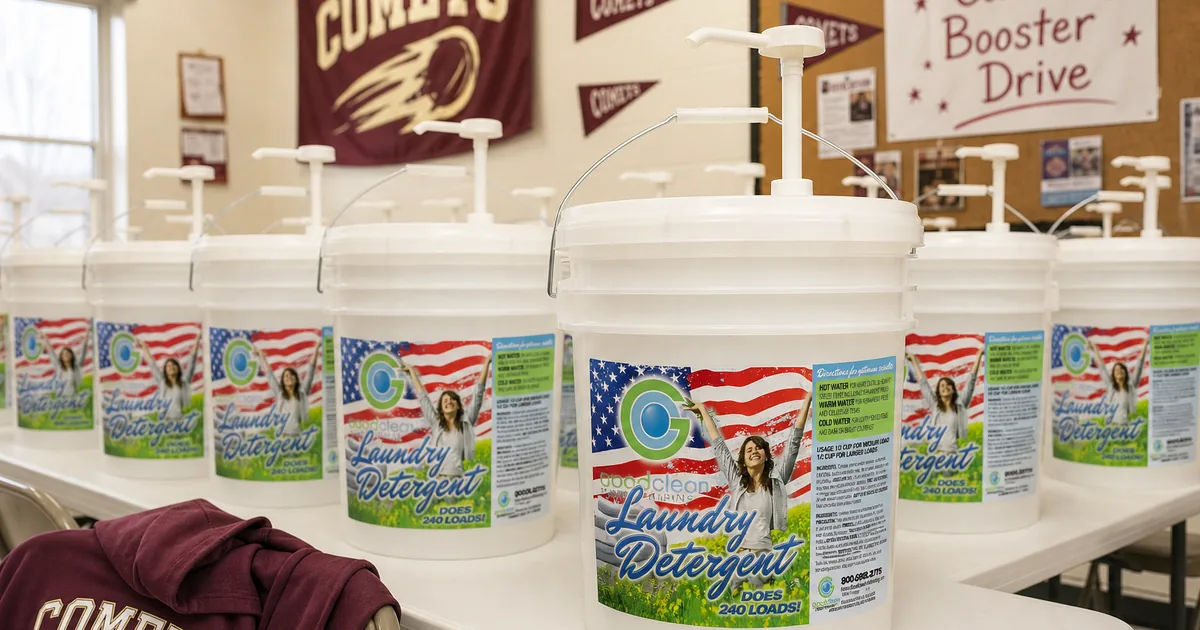
The most profitable choice is the fundraiser with the strongest realistic net proceeds for your church, after costs and within your volunteer capacity. Compare projected units or attendance, price, margin, and expenses. Bulk detergent is one product option, but this article does not establish a measured ranking against bake sales, car washes, treats, discount cards, or donations. The published customer price is $49.95 per 5-gallon pump bucket (online orders add $2). Before additional group expenses, the margin is $13.45 at 100–299 buckets, $14.45 at 300–499, and $15.45 at 500+. The minimum order is 50 buckets; shipping is free at 100+, while shipping below 100 reduces the margin. These are planning options, not measured performance rankings.
When a church needs to fund a mission trip, a building project, or a youth program, the default is often a bake sale or a car wash — familiar, low-risk, and easy to organize. But familiarity is not the same as profitability, and a traditional fundraiser may leave money on the table if its costs and volunteer hours outweigh its proceeds.
A profitable fundraiser is not necessarily the one everyone has always done; it is one that reaches interested supporters, delivers real value, and carries margins high enough to make the effort worth it. For some churches, that may mean comparing events and treats with consumable household products people already buy.
This guide explains the factors that affect profit, compares selected formats, and uses published GCF terms for illustrative calculations. It does not provide measured financial results for every option.
- Product net proceeds equal units sold × margin per unit, less additional expenses; participation and units per seller both matter.
- Bake sales, car washes, and treat fundraisers can depend on discretionary spending and narrower buyer pools, which may cap totals.
- Household-necessity products reach interested families in the congregation when interested households want them.
- Bulk laundry detergent programs offer a published per-unit margin and may appeal to supporters who do not buy desserts or attend events.
- No-upfront-cost programs reduce advance-inventory risk, which can help churches operating on tight budgets.
- A product purchase may replace planned spending for an interested buyer; it is not automatically the highest-profit choice.
- Evaluate a proposed switch using your own demand, expense budget, and volunteer hours rather than unverified campaign reports.
What makes a church fundraiser profitable?
Product net proceeds equal active sellers × average units sold × margin per unit, less additional group expenses. The result depends on all these variables, not on a margin or participation figure alone.
For a bake sale, estimate attendance and paid costs; for a car wash, include the site, supplies, staffing, and weather plan. Product campaigns need their own demand and distribution estimates. Do not infer nonparticipation from the format alone.
A household product may reach interested supporters inside and outside the congregation. If active sellers double while average units per seller and margin stay the same, proceeds before additional expenses double—not more than double.
How do traditional church fundraisers compare on profit?
The easiest way to see the gap is to compare the most common options side by side. Each has a role, and the differences in margin, reach, and effort depend on your own church.
Why do household-necessity fundraisers raise more for churches?
Household products can be worth considering, but this article does not establish that they earn more than other formats. Assess demand, supporter value, and the complete cost for your own church.
First, reach. Ask which supporters want the product at the stated quantity and price. Grandparents, neighbors, and other buyers may prefer different products or a direct gift; avoid predicting demand from age or household type.
Second, value. Supporters are not paying a premium for a novelty item — they may be getting a product they already buy at the published price. That can reduce the guilt and sales resistance some supporters feel with marked-up treat fundraisers.
Compare written vendor margins and all group expenses. Detergent avoids food refrigeration, but it still needs safe bulk handling and distribution; neither its category nor its size establishes higher net proceeds.
What is the most profitable product fundraiser for churches?
Bulk detergent offers a published unit price and margin that can support a clear budget. Its suitability still depends on interested buyers, storage, and distribution; it is not a universal replacement for other fundraisers.
Good Clean Fundraising offers a 5-gallon pump-bucket detergent program. The published customer price is $49.95 per 5-gallon pump bucket (online orders add $2). Before additional group expenses, the margin is $13.45 at 100–299 buckets, $14.45 at 300–499, and $15.45 at 500+. The minimum order is 50 buckets; shipping is free at 100+, while shipping below 100 reduces the margin.
At $49.95 for 640 fluid ounces, the product costs about 7.8 cents per fluid ounce before fees. Compare current alternatives and label dosing; per-ounce price alone does not establish savings per load. Illustrative calculation, not a reported campaign result: 300 buckets × $14.45 = $4,335.00 retained before additional group expenses. This uses the tier for one 300-bucket order; actual sales and costs determine the final result.
GCF refunds a dissatisfied supporter directly, and the group keeps its earned profit. Ask GCF about return costs and refund procedures for your campaign after registration.
Confirm any proposed incentive availability, eligibility, and funding before including prizes in a campaign. GCF materials and support help your team; adults still manage payments, orders, and distribution.
How does a detergent fundraiser compare with other high-profit options?
The best way to see the difference is a direct comparison. Here is how a bulk laundry-detergent fundraiser stacks up against the other programs churches consider when they want high profit.
What about online giving and donation platforms?
An online giving platform can support a primary or supplemental campaign. Check fees, payout timing, and donor-record requirements, then plan how you will communicate the need.
A church can offer both a product sale and direct giving so supporters can choose. Compare projected net proceeds and workload; a product program is not guaranteed to outperform an actively promoted donation campaign.
What mistakes do churches make when choosing a fundraiser?
One common mistake is choosing familiarity without comparing profitability. Bake sales and car washes feel safe because everyone has done them, but safe and profitable are not the same thing. If the goal is to raise the most money, the question is not what you have always done — it is which option gives the best projected return after costs and workload.
Another frequent error is ignoring upfront cost and risk. Some catalog and treat programs require the church to order inventory in advance, which means the group is on the hook if the campaign underperforms. No-upfront-cost programs reduce that inventory risk, which is especially important for churches operating on tight budgets.
Finally, many churches underestimate the importance of value to the supporter. Fundraisers that ask people to pay a premium for a novelty item may create sales resistance; fundraisers that offer something useful at a stated price may make the ask easier. Whether that raises more depends on how many supporters actually say yes and on costs.
| Factor | Traditional Fundraisers | Household Necessity (Detergent) |
|---|---|---|
| Buyer pool | Depends on format | Interested households |
| Profit per unit | Price less costs | GCF: $13.45–$15.45* |
| Volunteer effort | Depends on format | Orders and distribution |
| Upfront cost | Depends on program | Paid preorder |
| Reach | Depends on promotion | Depends on demand |
Common mistakes to avoid
Choosing familiarity over profitability
Do not choose on familiarity alone. Compare your actual projected net proceeds and workload before assuming a bake sale, car wash, or product campaign is the better choice.
Ignoring upfront cost and financial risk
Programs that require ordering inventory in advance put the church on the hook if the campaign underperforms. No-upfront-cost options reduce that inventory risk.
Picking fundraisers that depend on discretionary spending
Treats, events, and novelty items may ask supporters to spend extra money on something they do not need. A necessity product may ask them to shift a purchase they were already making, but the bulk payment is still a cost and higher participation is not guaranteed.
Underestimating the value of genuine supporter value
Fundraisers that offer something useful at a stated price may make the ask easier. Overpriced novelty items can create sales resistance and limit participation.
Running fundraisers that burn out volunteers
Events require staffing, setup, and cleanup, which can tire volunteers. A product program still needs order, payment, unloading, and distribution work, so compare volunteer hours rather than assuming either format preserves energy.
- Good Clean Fundraising — published customer price, online surcharge, and order-volume margins. Pricing.
- Good Clean Fundraising — minimum order, selling window, paid-order lead time, delivery responsibilities, and advertised guarantee. How it works.
- Product comparisons and campaign-planning suggestions are editorial guidance, not measured performance rankings. Illustrative calculations use the published GCF tier for one order and exclude additional group expenses.
Our recommendation
If enough households want a bulk detergent product, Good Clean Fundraising is an option to compare with your other plans. The published customer price is $49.95 per 5-gallon pump bucket (online orders add $2). Before additional group expenses, the margin is $13.45 at 100–299 buckets, $14.45 at 300–499, and $15.45 at 500+. The minimum order is 50 buckets; shipping is free at 100+, while shipping below 100 reduces the margin. There is no payment to start. Collect orders and supporter payments, then submit a paid group order. Allow two to three weeks for selling plus about two weeks after the paid order for fulfillment. Your team arranges a commercial delivery address, unloading, and distribution; a loading dock or forklift is recommended. GCF refunds a dissatisfied supporter directly, and the group keeps its earned profit. Ask GCF about return costs and refund procedures for your campaign after registration.
Frequently asked questions
There is no verified universal winner. Compare projected net proceeds after expenses and the volunteer hours required for each option. Product demand, event attendance, and donation response vary by church.
The published customer price is $49.95 per 5-gallon pump bucket (online orders add $2). Before additional group expenses, the margin is $13.45 at 100–299 buckets, $14.45 at 300–499, and $15.45 at 500+. The minimum order is 50 buckets; shipping is free at 100+, while shipping below 100 reduces the margin. Illustrative calculation, not a reported campaign result: 300 buckets × $14.45 = $4,335.00 retained before additional group expenses. This uses the tier for one 300-bucket order; actual sales and costs determine the final result.
They can be profitable when attendance, pricing, costs, and volunteer capacity fit. Calculate their projected net proceeds rather than assuming they always earn less than a household-product campaign.
A household product may appeal to buyers who do not want a treat, but it is not guaranteed to reach more people or raise more. Compare actual demand, the applicable margin, and expenses for your church.
Not with no-upfront-cost programs like Good Clean Fundraising's. The church collects orders and supporter payments first and uses collected supporter payments for the paid order, which reduces advance-inventory risk if the campaign raises less than hoped. That can help churches operating on tight budgets.
Detergent does not need a freezer, while frozen cookie dough does. Candy and other shelf-stable items have different needs. Compare buyer demand, written margins, shipping, and distribution; a switch is not a promise of higher participation or totals.
Product net proceeds equal active sellers × average units sold × margin per unit, less additional group expenses. Margin, participation, and units per participant all matter, and no product category is established here to win on all of them. Compare complete budgets and volunteer hours for your own church.
An online giving campaign can be a primary or supplemental fundraiser. It needs communication, payment processing, and donor records. Choose it, a product sale, or both based on your supporters and projected net proceeds.
GCF recommends two to three weeks of selling plus about two weeks of fulfillment after a paid order. Add setup and pickup time; other formats need schedules matched to their own requirements.
GCF advertises a 100% money-back guarantee. GCF refunds a dissatisfied supporter directly, and the group keeps its earned profit. Ask GCF about return costs and refund procedures for your campaign after registration.
The most profitable choice depends on your supporters, costs, and capacity. Compare complete budgets for the options that fit your church, including a household-product sale if buyers want it. Choose from realistic net proceeds and workload rather than a promised category winner.