
Church, Ministry & Youth Group Fundraising
Small Church Fundraising Ideas That Actually Work
Practical, low-cost fundraising ideas built for small congregations — from necessity products to community events that bring people together.
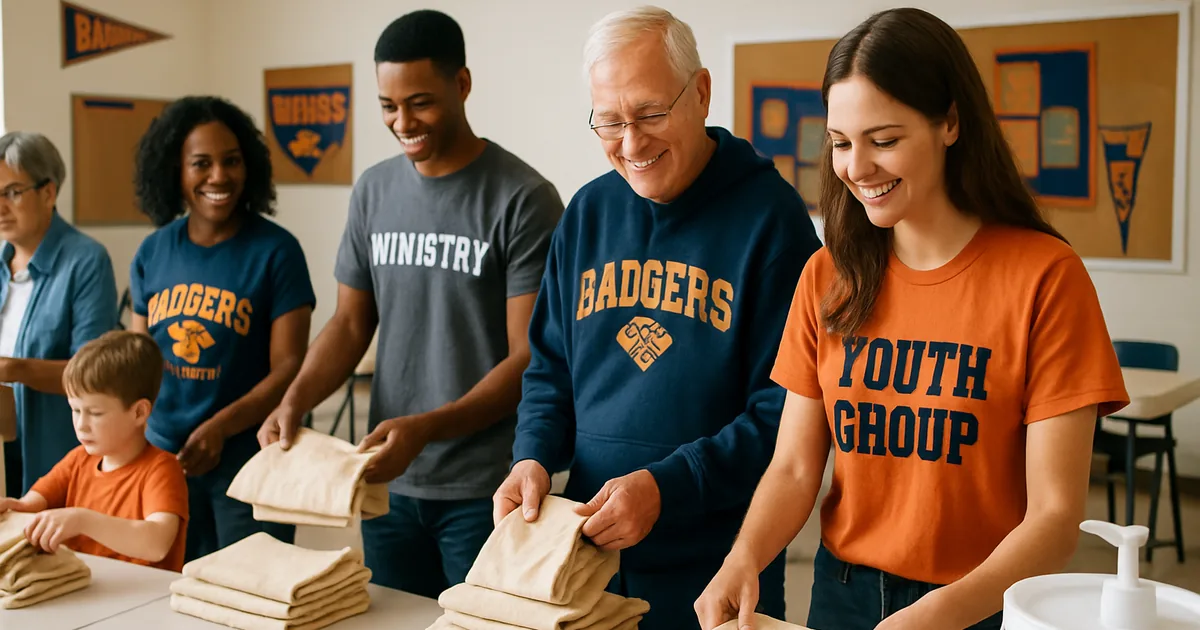
For a small church, compare fundraisers by costs, interested supporters, and the work your volunteers can manage. Household-product preorders, community meals, seasonal events, and direct giving are options. A bulk product may replace a planned purchase for some buyers, but it is not automatically more profitable or less work than another format. These are planning options, not measured performance rankings.
Small churches face a unique fundraising challenge: you need to raise real money, but you are working with a tight budget, a small volunteer base, and often a congregation that has already been asked to give multiple times. The bake sale and car wash playbook still has a place, but some small churches find that those events require significant volunteer hours for modest returns — and the same dozen families end up doing all the work.
The good news is that small congregations have more options than the bake sale playbook. Necessity-based product fundraisers, online giving tools, and community-focused events can help reach supporters beyond your membership rolls, and some may reduce volunteer burden or upfront investment. Successful small church fundraisers are not necessarily the most creative — they are the ones that make it easy for people to support you while getting something genuinely useful in return.
This guide covers the fundraising ideas that work best for small churches, how to choose the right fit for your congregation, what to expect in terms of effort and return, and the common mistakes that quietly undermine even well-intentioned campaigns.
- Small church fundraisers with low or no upfront cost reduce advance-inventory risk for congregations with tight budgets.
- Necessity-based product fundraisers can reach beyond your congregation when they sell items supporters already purchase, like laundry detergent and household goods.
- Community meals and seasonal events work well when they invite the broader community, not just members, and offer genuine value or fellowship.
- Online giving and text-to-give campaigns can lower the barrier to participation for supporters who prefer digital transactions.
- Small volunteer teams benefit most from fundraisers with simple logistics — the fewer moving parts, the more likely it is to succeed.
- Asking supporters to shift a purchase they already make is easier than asking them to buy something they do not need or make an additional donation.
What makes a fundraiser work for a small church?
Small churches operate under constraints that larger congregations do not face: fewer volunteers, smaller budgets, and a membership base that may already be stretched thin financially. That means the fundraisers that work best are the ones that minimize upfront cost, require minimal volunteer coordination, and appeal to people outside your immediate congregation.
The three factors that decide whether a small church fundraiser succeeds are cost structure, volunteer load, and buyer breadth. A fundraiser that requires buying inventory upfront puts your church at financial risk if sales fall short. One that demands a dozen volunteers for setup, execution, and cleanup will struggle if you can only rally five. And a fundraiser that only appeals to your existing members caps your total at what those families can afford to give — which is why reaching the broader community matters so much.
When you evaluate any fundraising idea, ask: Does this require money upfront? Can our small team actually run it? And will people outside our congregation want to participate? The ideas that score well on all three may suit your team with the least stress.
What are the best product fundraisers for small churches?
One category of product fundraiser is built around household necessities — items people already buy and use regularly, which may make the ask feel less like a donation request and more like practical shopping.
Laundry detergent is one product option for a small congregation. Ask whether interested buyers want the bulk size and formula at the stated price. For GCF, check that likely sales meet the 50-bucket minimum and account for shipping below 100.
Other household-staple programs — cleaning supplies, paper products, and similar consumables — work on the same principle. They may reach a wide audience, they are non-perishable so there is no food-refrigeration requirement, and they do not require elaborate sales pitches. The key is that supporters are shifting a purchase they already make, not adding a discretionary expense to their budget.
Do community meals and events still work for small churches?
Community meals — pancake breakfasts, spaghetti dinners, chili cook-offs — remain effective for small churches, but the ones to evaluate are the ones that genuinely invite the broader community, not just the congregation. When a meal is positioned as a fundraiser only for members, it becomes another ask to people who are already giving. When it is framed as a community event that happens to benefit the church, it draws new supporters and feels more like fellowship than obligation.
The logistics matter. A successful community meal needs a venue that can handle the crowd, a small team to coordinate food prep and service, and clear promotion beyond your Sunday bulletin — social media, local community boards, and word-of-mouth in the neighborhood all help. Pricing should be accessible but not so low that you are working for hours to net a modest amount. Many churches find that a freewill donation model works well: set a suggested price, but let people give what they can, which removes the barrier for families on tight budgets while allowing others to give more.
Seasonal events — fall festivals, Christmas bazaars, Easter egg hunts — work on the same principle. The event itself has to offer something the community wants to attend, and the fundraising component should feel like a natural part of the experience, not the only reason it exists. When done well, these events build goodwill and long-term support that extends beyond a single campaign.
How do online giving and digital fundraisers fit for small churches?
Ask your supporters whether digital giving would help, and compare current service fees, payout timing, and accessibility before choosing a platform. Online giving still requires communication and recordkeeping.
Text-to-give campaigns can work well for small churches because they lower the friction of participation. A supporter can text a keyword to a number and complete a donation in under a minute, which makes it easy to promote during services, events, or in social media posts. The key is to keep the ask simple and the process fast — complexity kills digital participation.
A project-specific crowdfunding page can explain the need and make sharing easier. Verify current platform availability, eligibility, fees, and payout terms rather than assuming every service is free or suitable for your church.
What about traditional fundraisers like bake sales and car washes?
Bake sales and car washes are not bad fundraisers — they can be labor-intensive for the return, so compare actual receipts, costs, and volunteer hours before deciding whether they should be primary or supplemental efforts. A bake sale might net a few hundred dollars after hours of baking, setup, and cleanup, which is meaningful but modest. A car wash requires a team of volunteers, good weather, and a high-traffic location, and the per-car profit may be small.
That said, these events have value beyond the money raised. They build community, give youth groups hands-on fundraising experience, and create visible presence in the neighborhood. If you run a bake sale or car wash, you can treat it as a community-building activity that also raises money; whether it should be your main strategy depends on your actual receipts, costs, and staffing. Consider pairing it with another campaign if your projections show the church would otherwise rely on volunteer labor alone to meet its budget.
How do you choose the right fundraiser for your small church?
Start by being honest about your constraints. How many volunteers can you realistically count on? What is your budget for upfront costs? How much do you need to raise, and by when? A fundraiser that works beautifully for a church with fifty active volunteers may be a disaster for a congregation that can rally five.
Next, consider your community. Are you in a rural area where everyone knows each other, or an urban neighborhood where you need to work harder to get noticed? Do you have families with young kids who will participate in events, or an older congregation that prefers simpler, less labor-intensive options? The best fundraiser for your church is the one that fits your people and your context, not the one that worked for someone else.
Finally, think about repeatability. A fundraiser you can run twice a year with minimal stress is often more valuable than a one-time event that exhausts your volunteers. Necessity-based product fundraisers, online giving campaigns, and simple community meals all have the advantage of being repeatable without burnout.
Our recommendation: Start with a necessity-based product fundraiser
If a bulk household product fits your interested buyers and volunteers, Good Clean Fundraising is an option. The published customer price is $49.95 per 5-gallon pump bucket (online orders add $2). Before additional group expenses, the margin is $13.45 at 100–299 buckets, $14.45 at 300–499, and $15.45 at 500+. The minimum order is 50 buckets; shipping is free at 100+, while shipping below 100 reduces the margin. There is no payment to start. Collect orders and supporter payments, then submit a paid group order. Allow two to three weeks for selling plus about two weeks after the paid order for fulfillment. Your team arranges a commercial delivery address, unloading, and distribution; a loading dock or forklift is recommended.
Ask whether potential buyers want the detergent formula, quantity, and price. Members may invite neighbors and coworkers, but buying should remain optional and no savings comparison should be promised without checking current alternatives and dosing.
Consider another campaign only when demand and volunteer capacity support it. Each GCF order qualifies for its own volume tier; running two or three sales a year does not guarantee repeat buyers or freedom from burnout.
Common mistakes to avoid
Relying only on your congregation
One common mistake small churches can make is limiting fundraising to members only. Your congregation is already giving through tithes and offerings; successful fundraisers reach the broader community and invite new supporters.
Choosing fundraisers that require upfront inventory costs
Paid preorders reduce speculative inventory buying, but shipping, minimum quantities, refunds, and other costs still matter. For GCF, collect payments before submitting the paid group order.
Overcomplicating the logistics
Elaborate events with many moving parts overwhelm small volunteer teams. The simplest fundraiser that meets your goal is a useful starting point.
Running fundraisers that burn out your volunteers
If your core volunteers are exhausted after one campaign, you will struggle to run another. Choose fundraisers that are repeatable without draining your team.
Not promoting beyond the Sunday bulletin
If the only people who know about your fundraiser are the ones already in the pews, you are missing most of your potential supporters. Use social media, community boards, and word-of-mouth to reach beyond your walls.
- Good Clean Fundraising — published customer price, online surcharge, and order-volume margins. Pricing.
- Good Clean Fundraising — minimum order, selling window, paid-order lead time, delivery responsibilities, and advertised guarantee. How it works.
- Product comparisons and campaign-planning suggestions are editorial guidance, not measured performance rankings. Illustrative calculations use the published GCF tier for one order and exclude additional group expenses.
Our recommendation
For a small church considering a household-product campaign, check demand, the minimum, costs, and volunteer capacity. The published customer price is $49.95 per 5-gallon pump bucket (online orders add $2). Before additional group expenses, the margin is $13.45 at 100–299 buckets, $14.45 at 300–499, and $15.45 at 500+. The minimum order is 50 buckets; shipping is free at 100+, while shipping below 100 reduces the margin. GCF materials and support help your own payment and distribution team.
Frequently asked questions
Good options for a small church tend to be low-cost, simple to run, and able to appeal beyond the congregation. Necessity-based product fundraisers like laundry detergent can work when interested households want them, so members can offer them to neighbors and coworkers. Community meals and seasonal events can succeed when they invite the broader community, not just members. Online giving and text-to-give campaigns can lower barriers for digital supporters. The key is choosing fundraisers that ask people to shift a purchase they already make or attend an event they genuinely want to join.
Illustrative calculation: twenty families averaging five buckets each produce a 100-bucket order. At $13.45 per bucket, that is $1,345 before additional church expenses. Actual participation and sales may differ.
Some programs require no payment to start, but that does not remove all costs. Check product minimums, shipping, refunds, and payment timing; for online giving, check service fees and settlement. Events may require supplies and other expenses.
Promote beyond your Sunday bulletin. Use social media, local community boards, neighborhood groups, and word-of-mouth to spread the word. Frame events and fundraisers as community opportunities, not members-only asks. When you sell a necessity product like laundry detergent, your members can reach their own networks — neighbors, coworkers, extended family — who may not attend a church event but might buy something useful at a stated price.
They can fit a small church when projected receipts, costs, and volunteer capacity work. Meals, bake sales, and car washes can also have fellowship value; do not assume they must be supplemental or always earn less than products.
Choose campaign frequency from your funding gap, buyers’ replenishment needs, and volunteer feedback. Two or three product sales per year is a possible plan, not a documented norm or a guarantee of manageable workload.
The easiest choice fits your actual volunteers. Product preorders need collection and distribution; online campaigns need promotion and records; meals need staffing and supplies. Compare those responsibilities before choosing.
They can fit a small church with enough interested buyers and a workable bulk delivery plan. GCF requires 50 buckets and ships free at 100+. Ask about demand and compare the price and dose with alternatives rather than assuming every household wants a bucket.
Consider your volunteer capacity, your budget, and your timeline. Product fundraisers and community events each need volunteer time: orders, payments, and distribution for one; staffing, supplies, and promotion for the other. Events can build visibility and fellowship. Compare projected net proceeds and workload; some small churches do both, for example a product fundraiser plus one or two community events per year for engagement and outreach.
GCF can fit a small group with enough interested buyers and a workable delivery plan. The published customer price is $49.95 per 5-gallon pump bucket (online orders add $2). Before additional group expenses, the margin is $13.45 at 100–299 buckets, $14.45 at 300–499, and $15.45 at 500+. The minimum order is 50 buckets; shipping is free at 100+, while shipping below 100 reduces the margin. There is no payment to start. Collect orders and supporter payments, then submit a paid group order. Allow two to three weeks for selling plus about two weeks after the paid order for fulfillment. Your team arranges a commercial delivery address, unloading, and distribution; a loading dock or forklift is recommended.
Small churches do not need elaborate fundraising strategies — they need simple, repeatable campaigns that reach beyond the congregation and do not exhaust the volunteers. A necessity-based product fundraiser, an online giving option, and one or two well-run community events may raise more and stress your team less than a calendar packed with labor-intensive activities. Start with what works, repeat it, and build from there.