
Laundry Detergent Fundraising
Detergent Fundraiser for Sports Teams: Why It Works and How to Run One
Why some sports teams consider bulk laundry detergent fundraisers — and how a household-necessity product may raise more with less effort than traditional team fundraisers.
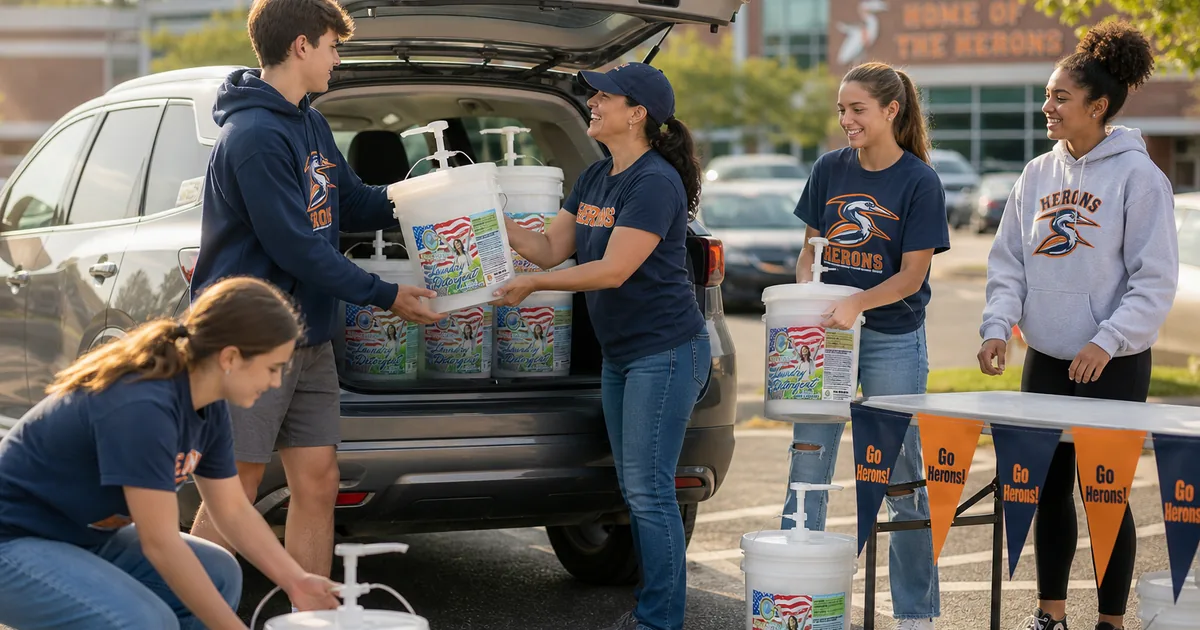
A bulk laundry detergent fundraiser may work well for sports teams because it sells a household necessity most families already buy, which can widen the buyer pool beyond the parents and relatives who support traditional team fundraisers. With Good Clean Fundraising, teams sell 5-gallon buckets for $49.95 (about $50) and keep $13.45 to $15.45 per bucket at 100 or more buckets, depending on order volume: $13.45 at 100 to 299 buckets, $14.45 at 300 to 499, and $15.45 at 500 or more; at 50 to 99 buckets, profit is usually about $5 to $12 per bucket depending on actual shipping costs, and orders under 50 buckets are not accepted. There is no upfront cost — the group collects payment first and submits a paid order — and shipping is free at 100 buckets or more. The product may appeal to grandparents, neighbors, coworkers, and anyone who does laundry, and supporters pay roughly half the per-ounce price of premium national brands based on a September 2026 retailer price check. It avoids the perishability and delivery logistics of cookie dough and candy, and because detergent is a consumable staple, teams may be able to run it more than once a year; this guide has no repeat-purchase data.
Sports teams have been running the same fundraisers for decades — cookie dough, candy bars, discount cards, car washes — and for a while they worked well enough. But some coordinators run into the same ceiling: a narrow pool of buyers, thin margins, perishable products that complicate delivery, and families who have been asked to sell the same things repeatedly.
Some teams have switched to a different kind of product. Instead of a treat or a novelty, they sell a household necessity people already buy — specifically, bulk laundry detergent. The possible benefits are wider participation and fewer logistics headaches, though this guide has no measured results.
This guide explains why detergent fundraisers work so well for sports teams, how the per-bucket economics work, how the economics compare to traditional team fundraisers, and how to set one up and run it from kickoff to the paid order and distribution.
- Detergent may reach more households than a treat or novelty item because it is a product most households buy, not just people who want a treat.
- Good Clean Fundraising teams sell 5-gallon buckets for $49.95 (about $50) and keep $13.45 to $15.45 per bucket at 100 or more buckets, with a $0 upfront cost and free shipping at 100 buckets or more.
- Supporters pay roughly half the per-ounce price of premium national brands, based on a September 2026 retailer price check.
- Detergent is non-perishable, which avoids the frozen-delivery logistics and spoilage risk that come with food fundraisers.
- Because it is a consumable staple, teams may be able to run detergent fundraisers more than once a year; this guide has no repeat-purchase data.
- A household-necessity fundraiser may widen the buyer pool to include grandparents, neighbors, coworkers, and anyone who does laundry.
- Good Clean Fundraising provides a Getting Started packet, instructions, marketing materials, and social media strategies; the team runs the campaign.
Why do sports teams need fundraisers in the first place?
Most youth and school sports programs operate on tight budgets. Registration fees cover only part of the cost, and teams are left to fund uniforms, equipment, travel, tournament fees, facility rentals, and end-of-season events on their own. A successful season can easily require several thousand dollars beyond what families pay upfront, and that gap has to come from somewhere.
Fundraising is how teams close it. But the traditional options — bake sales, car washes, candy bars, cookie dough — can raise less than teams need, require significant volunteer labor, or rely on a narrow group of buyers. The result is that many teams run multiple fundraisers a year, which burns out families and supporters alike.
Why are sports teams switching to detergent fundraisers?
The case for detergent comes down to three things: buyer breadth, value, and logistics. Traditional team fundraisers — cookie dough, candy, popcorn, discount cards — appeal to a limited audience. Cookie dough reaches dessert buyers, candy reaches people with a sweet tooth, and discount cards only work for families who shop at the participating stores. A household necessity like laundry detergent, by contrast, may reach more households because most people do laundry.
That wider pool changes the math. In a cookie dough fundraiser, a handful of high-selling families may carry the total while others sell little because they run out of interested buyers. In a detergent fundraiser, participation may spread more evenly because the product can appeal to grandparents, neighbors, coworkers, and anyone who does laundry — not just people who want a treat.
The second reason is value. Many traditional fundraisers price the product above its everyday worth because both the team and the fundraising company profit from that sale. With a detergent fundraiser, supporters pay roughly half the per-ounce price of premium national brands for a product they already buy, based on a September 2026 retailer price check, so they may see value while backing the team. That may make the ask easier.
The third reason is logistics. Food fundraisers are perishable — cookie dough has to stay frozen, candy melts in heat, baked goods spoil — which creates delivery-day scrambles and waste. Bulk detergent is shelf-stable and ships and stores easily, without the frozen-food pickup window a perishable item requires. For a volunteer coordinator juggling practices and games, that difference may matter.
How much do sports teams raise with a detergent fundraiser?
The amount a team raises depends on how many families participate and how many buckets each family sells, so no single number applies to every team. With Good Clean Fundraising's bulk laundry-detergent program, teams sell a 5-gallon bucket for $49.95 (about $50) and keep $13.45 to $15.45 per bucket at 100 or more buckets, depending on order volume: $13.45 at 100 to 299 buckets, $14.45 at 300 to 499, and $15.45 at 500 or more; at 50 to 99 buckets, profit is usually about $5 to $12 per bucket depending on actual shipping costs, and orders under 50 buckets are not accepted. Shipping is free at 100 buckets or more. For example, 100 buckets at $13.45 is $1,345, and 300 buckets at $14.45 is $4,335.
A 5-gallon bucket holds 640 ounces, so at $49.95 the buyer pays about 7.8 cents per ounce. Premium national-brand liquid detergents at major retailers commonly run about 13 to 16 cents per ounce (value-tier and store brands can cost less), so supporters pay roughly half the per-ounce store price based on a September 2026 retailer price check. That value proposition may make the fundraiser easier to sell.
The bigger lever may be participation. When the product is a necessity rather than a novelty, more families may find buyers. A team with strong participation could reach the 300-bucket tier in a two-to-three-week campaign, though this guide has no measured results, and because detergent is a consumable staple, a team may be able to run it again later.
How does a detergent fundraiser compare to traditional sports team fundraisers?
The most useful way to compare fundraisers is not by a single profit percentage — which varies by product, price, and participation — but by the practical differences that may decide how much a team raises and how hard it is to run. Here is how a detergent fundraiser stacks up against the traditional options sports teams rely on.
What makes a detergent fundraiser easier to run than other team fundraisers?
Ease of running comes down to upfront cost, logistics, and support. Many traditional fundraisers require the team to order inventory in advance, which puts the financial risk on the team if the campaign raises less than hoped. With Good Clean Fundraising the group collects payment first and submits a paid order, so it does not front money for inventory; the minimum order is 50 buckets.
Logistics are simpler because detergent is shelf-stable. There is no frozen delivery day, no spoilage, no melting, and no frozen-food pickup deadline to race against. Buckets ship to the team's commercial delivery address (a loading dock or forklift is recommended), and families pick them up on a schedule that works for the team. For a coach or parent coordinator managing practices, games, and travel, that simplicity matters.
Good Clean Fundraising provides a Getting Started packet, instructions, marketing materials, and social media strategies. The team runs the campaign — kickoff, order collection, the paid final order, and distribution. Clear instructions can make a material difference for first-time or busy coordinators.
How do you run a detergent fundraiser for a sports team?
Running a detergent fundraiser follows the same basic structure as any product fundraiser. Here is the process most teams follow.
First, set a clear goal and timeline. Decide how much the team needs to raise and by when, then work backward to set your selling window — which Good Clean Fundraising recommends at two to three weeks. A short, focused campaign can create urgency and keep families engaged; open-ended fundraisers can lose momentum.
Second, hold a kickoff. Gather the team and families together — in person or via a group message — and explain the goal, the product, and how to participate. Emphasize the value: supporters pay roughly half the per-ounce price of premium national brands, based on a September 2026 retailer price check, for a household staple they already buy. That framing may make the ask easier.
Third, distribute order forms or set up online ordering. Most programs provide both options. Families take the forms to relatives, neighbors, coworkers, and friends, or share a link. Because detergent may appeal to many households, families may find buyers more easily.
Fourth, collect orders and payment. The team submits the consolidated order with payment to the program, and the detergent ships to the team's commercial delivery address about two weeks later. Families pick up their orders, and the team keeps its profit. Allow roughly two weeks of fulfillment on top of the selling window; this guide has no measured end-to-end timeline.
Finally, thank your supporters. A short thank-you message or note to buyers and families reinforces goodwill and makes the next fundraiser easier to run.
What should sports teams look for in a detergent fundraiser program?
Not all detergent fundraisers are structured the same way, so it pays to compare before committing. Useful factors include upfront cost, profit per bucket, shipping terms, minimum order, and support.
Upfront cost matters. If a program requires the team to buy inventory in advance, the financial risk sits with the team. Good Clean Fundraising has a $0 upfront cost: the team collects payment first and submits a paid order, subject to the 50-bucket minimum.
Profit per bucket should be clear and in writing. Confirm exactly what the team keeps per bucket at your expected order volume, and whether shipping is included. Good Clean Fundraising offers free shipping at 100 buckets or more; at 50 to 99 buckets, shipping is charged and profit is usually about $5 to $12 per bucket.
Product quality and guarantees matter because unhappy supporters are less likely to buy again. Good Clean Fundraising advertises a 100% money-back guarantee under which, according to the company, any customer who is not satisfied is refunded and the group keeps its profit. Ask what the guarantee covers and how refunds affect the team's profit.
Support is the final factor. A program that provides instructions, materials, and marketing help can be easier to run than one that hands the team a box of forms. Good Clean Fundraising provides a Getting Started packet, instructions, marketing materials, and social media strategies.
Can sports teams run a detergent fundraiser more than once a year?
It may be possible. Because laundry detergent is a consumable staple, a team may be able to run detergent fundraisers more than once a year, though this guide has no repeat-purchase data. A family that buys a bucket in the fall may need more detergent later, so a second campaign could reach the same supporters without asking them to buy something they do not need.
This may be an advantage over novelty and treat fundraisers, which can saturate their buyer pool. Whether detergent buyers reorder depends on how quickly they use a bucket and on the program's terms; confirm the campaign schedule with Good Clean Fundraising.
| Factor | Traditional Team Fundraisers | Detergent Fundraiser |
|---|---|---|
| Buyer pool | Narrower — dessert buyers, candy buyers, or cardholders | Most households (most people do laundry) |
| Value to supporter | Often marked up so team & company both profit | ~½ per-ounce price of national brands (retailer price check) |
| Perishability & logistics | Food items may be perishable; frozen delivery, spoilage risk (varies by product) | Shelf-stable; ships & stores easily |
| Upfront cost | Often requires ordering inventory first | $0 upfront cost (50-bucket minimum) |
| Repeat participation | May saturate buyer pool | Consumable staple; may repeat |
| Support & ease | Varies by program | Getting Started packet, instructions, marketing materials |
Common mistakes to avoid
Choosing a fundraiser with upfront cost and financial risk
If the program requires the team to buy inventory in advance, the financial risk sits with the team. A $0-upfront-cost program such as Good Clean Fundraising's reduces that risk — the team collects payment first and submits a paid order.
Running a fundraiser with a narrow buyer pool
Treat and novelty fundraisers appeal to a limited audience, which caps how much each family can sell. A household necessity may reach more households, which can widen participation.
Skipping a real kickoff
When families start whenever they get around to it, many never start at all. A single kickoff day where everyone begins together drives most of the early momentum and keeps the campaign focused.
Leaving the selling window open too long
Campaigns that drag on for months lose urgency and raise less than a tight two-to-three-week push. Set a clear end date at the kickoff and hold to it.
Not confirming profit and shipping terms in writing
Verbal promises about profit per item or free shipping can change or be misunderstood. Get the terms in writing before the team commits, and confirm what the team keeps per bucket at your expected order volume.
Ignoring product quality and guarantees
If supporters feel the product did not deliver value, they will not buy again and the team burns that relationship. Ask what any guarantee covers and how refunds are handled.
- Detergent price comparison — premium national-brand liquid laundry detergent at a major U.S. retailer, price-checked September 2026 (about 13 to 16 cents per ounce across common sizes). Retail prices vary by size, store, and region; based on a single online retailer's listings for premium brands; some value-tier and store brands cost less per ounce.
- Good Clean Fundraising program terms — $49.95 per bucket; $13.45 profit per bucket at 100 to 299 buckets (usually $5 to $12 at 50 to 99 buckets, depending on actual shipping costs), $14.45 at 300 to 499, $15.45 at 500 or more; $0 upfront cost; free shipping at 100+ buckets; 50-bucket minimum (smaller orders are not accepted); 100% money-back guarantee under which, according to the company, any customer who is not satisfied is refunded and the group keeps its profit. — GCF pricing, GCF how it works, and GCF refund and returns policy
- Youth sports funding gap — general observation that families often face out-of-pocket costs for uniforms, travel, and equipment, and that fundraising commonly helps close that gap; not attributed to a specific external survey.
Our recommendation
If your sports team is ready to look beyond traditional fundraisers, Good Clean Fundraising's bulk laundry-detergent program is one option. Teams sell a 5-gallon pump bucket of detergent for $49.95 (about $50) — supporters pay roughly half the per-ounce price of premium national brands, based on a September 2026 retailer price check — and keep $13.45 to $15.45 per bucket at 100 or more buckets, depending on order volume, with a $0 upfront cost and free shipping at 100 buckets or more. Good Clean Fundraising advertises a 100% money-back guarantee under which, according to the company, any customer who is not satisfied is refunded and the group keeps its profit. Good Clean Fundraising provides a Getting Started packet, instructions, marketing materials, and social media strategies. The group arranges a commercial delivery address (a loading dock or forklift is recommended), plans for a 50-bucket minimum, and allows about two weeks for fulfillment after submitting the paid order.
Frequently asked questions
A detergent fundraiser may work well for sports teams because it sells a household necessity most families already buy, which can widen the buyer pool beyond the parents and relatives who support traditional team fundraisers. It may reach grandparents, neighbors, coworkers, and anyone who does laundry, and supporters pay roughly half the per-ounce price of premium national brands based on a September 2026 retailer price check. Results vary by team.
It depends on how many families participate and how many buckets each family sells, so no single number applies to every team. With Good Clean Fundraising, teams sell a 5-gallon bucket for $49.95 (about $50) and keep $13.45 to $15.45 per bucket at 100 or more buckets, depending on order volume — for example, 100 buckets at $13.45 is $1,345. The bigger lever may be participation: when the product is a necessity rather than a novelty, more families may find buyers.
A detergent fundraiser may reach a wider buyer pool because laundry detergent is a household necessity, while cookie dough and candy mainly appeal to people who want a treat. Detergent is also non-perishable, which avoids the frozen-delivery logistics and spoilage risk of food fundraisers, and because it is a consumable staple, teams may be able to run it more than once a year. This guide has no measured comparison of totals.
Not with Good Clean Fundraising, which has a $0 upfront cost. The team collects payment first, then submits a paid order, so it does not front money for inventory; the minimum order is 50 buckets. Other programs vary, so confirm the terms before you commit.
Good Clean Fundraising recommends a two-to-three-week selling window, and fulfillment takes about two weeks after the paid order is submitted. A short, focused campaign can create urgency and keep families engaged, while an open-ended one can lose momentum.
It may be possible. Because laundry detergent is a consumable staple, a team may be able to run detergent fundraisers more than once a year, though this guide has no repeat-purchase data. Confirm the schedule and any order requirements with Good Clean Fundraising.
Useful factors are upfront cost, clear profit per bucket in writing, shipping terms, the minimum order, what any guarantee covers, and the instructions and materials provided. Good Clean Fundraising provides a Getting Started packet, instructions, marketing materials, and social media strategies.
Good Clean Fundraising sells its 5-gallon bucket for $49.95 (about $50), which works out to about 7.8 cents per ounce. Premium national-brand liquid detergents at major retailers commonly run about 13 to 16 cents per ounce (value-tier and store brands can cost less), so supporters pay roughly half the per-ounce store price based on a September 2026 retailer price check.
The Good Clean Fundraiser is Good Clean Fundraising's bulk laundry-detergent program for teams and groups. Teams sell a 5-gallon pump bucket for $49.95 and keep $13.45 to $15.45 per bucket at 100 or more buckets, with a $0 upfront cost and free shipping at 100 buckets or more. Good Clean Fundraising advertises a 100% money-back guarantee under which, according to the company, any customer who is not satisfied is refunded and the group keeps its profit. Confirm any refund details on the refund and returns page.
Sports teams that consider a detergent fundraiser are looking to address common limits of traditional team fundraisers: narrow buyer pools, thin value for supporters, perishability, upfront cost, and buyer fatigue. A household-necessity product that many households buy, priced below typical per-ounce retail, may be a better fit for some teams. Results vary by team.