School Fundraising
School Fundraisers Parents Actually Like
The fundraisers that parents support year after year — and why they work when traditional programs don't.
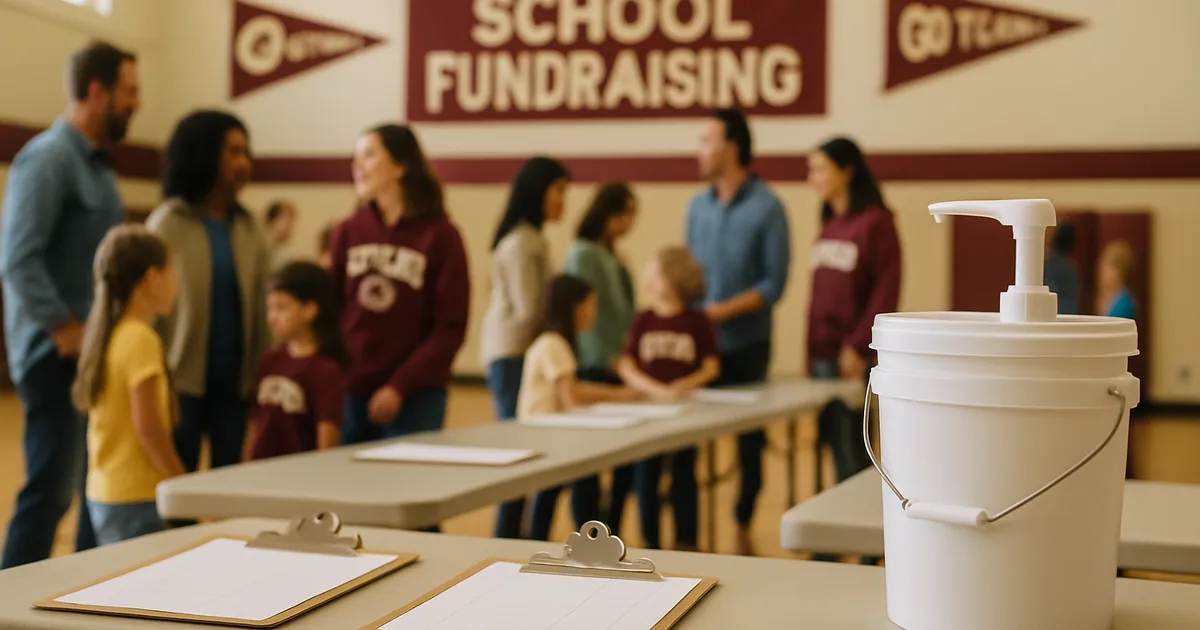
Parents are more likely to support school fundraisers that offer genuine value rather than overpriced novelties, require minimal effort to participate, and avoid the guilt-driven ask. The programs parents like best share four traits: they sell household necessities people already buy (so supporters simply shift a purchase rather than spend extra), they offer products at or below normal retail prices (real value, not marked-up treats), they skip door-to-door selling in favor of easy online or workplace sharing, and they come with no pressure or guilt. Laundry detergent, cleaning supplies, and similar staples often outperform candy and cookie dough because parents can reach grandparents, neighbors, and coworkers who would never buy a dessert item but always need detergent — especially when a bulk bucket runs about half the per-ounce price of premium national brands. The fundraisers parents dislike most are the opposite: high-pressure, overpriced products nobody needs, complicated logistics, and repeated asks for the same tired catalog.
In our editorial view, one of the biggest factors in a successful fundraiser is parent buy-in. When parents believe in the program, they participate. When they don't, the whole campaign stalls no matter how good the profit margin looks on paper.
The problem is that most schools keep running the same fundraisers parents have learned to dread — overpriced cookie dough, candy bars marked up beyond reason, and catalogs full of items nobody asked for. Parents participate out of obligation, not enthusiasm, and it shows in the results.
But some school fundraisers tend to keep parent support from year to year. They are not flashier or more complicated — they are simpler, more honest, and built around what parents actually want: real value for supporters, minimal hassle, and no guilt. This guide breaks down what makes those fundraisers work, why parents like them, and how your school can run one.
- Parents support fundraisers that offer real value to supporters, not overpriced novelties marked up so the school and vendor both profit.
- Household necessities like laundry detergent tend to reach a wider range of buyers than treat-based fundraisers — most households use laundry detergent regularly and repurchase it.
- The best parent-approved programs require minimal effort — no door-to-door selling, no complicated order forms, and easy online or workplace sharing.
- Parents dislike guilt-driven fundraisers where supporters get nothing of value; they prefer programs where buyers feel they got a fair deal.
- A product priced at or below retail makes the ask easier because parents are offering value, not asking for a favor.
- Fundraisers that respect parent time and avoid high-pressure tactics get better long-term participation than aggressive campaigns.
- When supporters pay about half the per-ounce price of premium national brands for a household staple, parents can reach buyers who would never purchase a dessert fundraiser.
What do parents actually want in a school fundraiser?
Parents want three things: a product their supporters will genuinely value, a process that does not consume their evenings and weekends, and an ask that feels fair rather than guilt-driven. When a fundraiser delivers all three, participation rises and parents come back the next year. When it misses on any one of them, you get reluctant volunteers and mediocre results.
In our editorial view, the fundraisers parents tend to praise share a few common traits. They sell something useful rather than a novelty. They make sharing easy — a quick text, an email to coworkers, or a post in a neighborhood group rather than knocking on doors. They offer supporters a genuinely good deal, so parents feel they are providing value rather than asking for a handout. And they respect parent time by keeping logistics simple and timelines short.
Why do parents dislike most traditional school fundraisers?
The complaints tend to be similar. First, the products are overpriced — a tub of cookie dough or a box of candy that costs far more than the grocery-store equivalent, marked up so both the school and the fundraising company can take a cut. Parents know their friends and family are paying a premium for something they did not really want, which makes the ask uncomfortable.
Second, the logistics are a burden. Catalogs with fifty pages of items nobody needs. Order forms that have to be collected, checked, and submitted. Delivery days that require sorting hundreds of boxes in a school gym. Frozen products that need a freezer and a timed handoff. For a volunteer parent, it is hours of unpaid work.
Third, there is buyer fatigue. When every school, team, and troop in the neighborhood is selling the same cookie dough and candy bars, supporters tune out. Parents exhaust their buyer pool fast, which caps participation and total dollars raised. The fundraiser becomes something families endure rather than support.
What types of fundraisers do parents consistently support?
The standout category is household necessities — laundry detergent, cleaning products, and similar staples. Parents like them because they solve the three core problems at once: the product is genuinely useful, the logistics are simple (non-perishable, easy to ship and store), and the value proposition is strong. A supporter is not buying a novelty; they are stocking up on something they were going to purchase anyway, often at a better price than they would pay at the store.
A bulk laundry detergent fundraiser is the clearest example. A 5-gallon bucket holds 640 ounces and typically sells for $49.95, which works out to about 7.8 cents per ounce. Premium national-brand liquid detergents at major retailers ran about 13 to 16 cents per ounce in a September 2026 price check of one online retailer's listings, so the supporter is paying roughly half the per-ounce price of premium national brands for a product every household uses. Parents can reach grandparents, neighbors, and coworkers who would never buy cookie dough but always need detergent. The buyer pool is wider, which can raise participation and total dollars.
Beyond household staples, parents also respond well to no-inventory digital fundraisers and community events that double as social gatherings — but those work best when paired with a tangible product program, not as a replacement. The key is that parents can participate without it feeling like a second job.
How does real value change the parent experience?
When parents can honestly say their supporters are getting a good deal, the entire dynamic shifts. They are no longer asking friends and family to overpay for something they do not need out of obligation — they are offering a household staple at about half the per-ounce price of premium national brands. That changes the conversation from guilt to value, and it shows in how many people parents are willing to reach out to.
A parent selling cookie dough typically exhausts their buyer list after a few relatives and close friends — the people who will buy out of loyalty even though they know it is overpriced. A parent selling a necessity at a fair price can comfortably reach coworkers, neighbors, and extended family because the product stands on its own merits. The ask is easier, the buyer pool is wider, and participation rises as a result.
This is why programs that offer supporters genuine value can outperform novelty fundraisers, even when the per-item profit is similar. The bottleneck is not the margin — it is how many people each family is willing to ask. Real value removes that bottleneck.
What makes a fundraiser easy for parents to run?
Simplicity is the lever most schools underestimate. Parents are volunteering their time on top of jobs, kids, and everything else — if a fundraiser feels like a part-time job, participation drops. The programs parents like best are the ones they can explain in one sentence, share in under a minute, and hand off without a training session.
Practically, that means a few things. First, no door-to-door selling — parents want to share via text, email, or a quick post in a neighborhood group. Second, minimal paperwork — a simple order form or an online link, not a multi-page catalog. Third, easy delivery — non-perishable products that can be handed out in one quick pickup, not frozen items that require a coordinated delivery day and freezer space. Fourth, a short timeline — two to four weeks of active selling, not a campaign that drags on for months.
When a program checks all four boxes, parents are more likely to participate and the school is likely to raise more. When it misses on even one, the coordinator ends up doing most of the work alone.
How do household-necessity fundraisers compare to cookie dough and candy?
The comparison comes down to buyer breadth, repeat use, logistics, and value. Cookie dough and candy appeal mainly to people who want a treat, which is a narrow slice of any parent's contact list. A household necessity appeals to nearly everyone because it is something people already buy and use regularly. That wider buyer pool is a major reason necessity fundraisers can outperform treat-based programs.
On logistics, treats are perishable and require timed delivery and storage; necessities are not and do not. On value, treats are typically marked well above their grocery-store equivalents; a necessity sold at about half the per-ounce price of premium national brands offers supporters a genuinely good deal. On repeat use, a treat is consumed once; a necessity is repurchased, which means parents can reach the same buyers in future campaigns without fatigue.
The result is that a well-run household-necessity fundraiser tends to raise more total dollars than a cookie dough or candy program, even when the per-item profit is in the same range, because more families participate and each family reaches more buyers.
| Factor | What Parents Like | What Parents Avoid |
|---|---|---|
| Product type | Household necessities people already buy | Overpriced novelties & treats |
| Value to supporter | Priced at or below retail — real value | Marked up so school & vendor both profit |
| How parents share | Easy: text, email, workplace — no door-to-door | Door-to-door selling & complicated forms |
| Logistics | Non-perishable, simple delivery, short timeline | Perishable, freezer storage, timed delivery |
| The ask | No guilt — product stands on its own | Guilt-driven — supporters get little value |
Common mistakes to avoid
Running the same tired fundraiser every year
If parents are not participating, it is often because they have learned the program is not worth their time. Switching to a necessity-based fundraiser can reset participation and bring back families who opted out of previous campaigns.
Choosing a product based on margin alone
A high per-item profit means nothing if parents cannot find buyers. Total dollars raised is participants times average sales per family times profit per item — the first two terms matter more than the third.
Overcomplicating the process
Multi-page catalogs, complicated order forms, and elaborate delivery logistics kill participation. If you cannot explain the fundraiser in one sentence, it is too complex.
Ignoring the supporter's perspective
Parents participate when they can offer something their supporters actually want at a fair price. If the product is overpriced or unnecessary, the ask feels like begging, and parents stop reaching out.
Letting the campaign drag on too long
A focused two-to-four-week window creates urgency and keeps parents engaged. Open-ended campaigns lose momentum and raise less than a tight, well-promoted sprint.
- Detergent price comparison — per-ounce pricing for premium national-brand liquid laundry detergent at major U.S. retailers, price-checked September 2026 (about 13 to 16 cents per ounce across common sizes). A 5-gallon (640 oz) bucket at $49.95 is about 7.8 cents per ounce. Retail prices vary by size, store, and region; based on a single online retailer's listings for premium brands; some value-tier and store brands cost less per ounce.
- Good Clean Fundraising program terms — $49.95 per bucket; $13.45 profit per bucket at 100 to 299 buckets (usually $5 to $12 at 50 to 99 buckets, depending on actual shipping costs), $14.45 at 300 to 499, $15.45 at 500 or more; $0 upfront cost; free shipping at 100+ buckets; 50-bucket minimum (smaller orders are not accepted); 100% money-back guarantee under which, according to the company, any customer who is not satisfied is refunded and the group keeps its profit. — GCF pricing, GCF how it works, and GCF refund and returns.
Our recommendation
If your school wants a fundraiser parents will actually support, start with a household necessity they can sell with confidence. Good Clean Fundraising runs The Good Clean Fundraiser, a bulk laundry-detergent program designed specifically for schools and parent groups. Families sell a 5-gallon pump bucket of detergent for $49.95 — roughly half the per-ounce price of premium national brands — and the school keeps about $13.45 to $15.45 per bucket at 100 or more buckets, depending on order volume. There is no upfront cost, free shipping on orders of 100 buckets or more, and a Getting Started packet, instructions, marketing materials, and social media strategies so parent volunteers are not figuring it out alone. Good Clean Fundraising advertises a 100% money-back guarantee under which, according to the company, any unsatisfied customer is refunded and the group keeps its profit. Parents can reach grandparents, neighbors, and coworkers who would never buy cookie dough but always need detergent, which can widen participation and raise the total. Orders under 50 buckets are not accepted.
Frequently asked questions
Parents are more likely to support fundraisers that sell household necessities like laundry detergent and cleaning products at or below retail prices, require minimal effort to share (no door-to-door selling), and offer supporters genuine value rather than overpriced novelties. The programs parents like best are simple to explain, easy to participate in, and built around products people already buy.
Parents dislike them because the products are overpriced, appeal only to a narrow group of dessert buyers, require complicated logistics (frozen delivery, freezer storage), and make the ask uncomfortable since supporters know they are paying a premium for something they did not really need. Buyer fatigue is also high because every school runs the same programs.
The easiest fundraisers are ones parents can explain in one sentence, share via text or email in under a minute, and hand off without training. Practically, that means no door-to-door selling, minimal paperwork, non-perishable products with simple delivery, and a short two-to-four-week timeline. When logistics are simple, more parents participate.
When parents can offer a household staple at about half the per-ounce price of premium national brands, the ask shifts from guilt to value. They are no longer asking supporters to overpay out of obligation — they are sharing a genuinely good deal on something people already buy. That makes the ask easier and widens the buyer pool to include coworkers, neighbors, and extended family who would never purchase a treat fundraiser.
Often, yes. Detergent reaches a much wider buyer pool because it is a necessity every household already purchases, not a treat only some people want. It is also non-perishable, which removes the frozen-delivery logistics that make cookie dough hard to run. When supporters pay about half the per-ounce price of premium national brands, parents can reach buyers who would never purchase a dessert product, which can raise participation and total dollars.
Total dollars raised depends on how many families participate and how many buyers each family reaches, so there is no single fixed number. The lever is participation: when the product is something people need and the price is fair, more families take part and each family reaches more buyers. Groups that switch from a treat fundraiser to a household-necessity program may see higher participation and larger totals, even when per-item profit is similar.
Most parents prefer a mix: a tangible product people actually need, shared easily online or via text rather than door-to-door. Pure donation or pledge fundraisers can work but often feel more like asking for a handout, while a product fundraiser where supporters get real value feels like a fair exchange. The best programs combine a useful product with easy digital sharing.
Choosing based on per-item profit alone rather than how many parents will actually participate. A high-margin product that only a few families can sell raises less than a lower-margin product that every family can sell confidently. Total raised is participants times average sales per family times profit per item — the first two terms matter more than the third.
The Good Clean Fundraiser is Good Clean Fundraising's bulk laundry-detergent program for schools and parent groups. Families sell a 5-gallon pump bucket for $49.95, supporters pay roughly half the per-ounce price of premium national brands, and the school keeps about $13.45 to $15.45 per bucket at 100 or more buckets, depending on order volume. There is no upfront cost, free shipping on larger orders, a Getting Started packet, instructions, marketing materials, and social media strategies. Good Clean Fundraising advertises a 100% money-back guarantee under which, according to the company, any unsatisfied customer is refunded and the group keeps its profit.
Most successful school fundraisers run for two to four weeks. A short, focused window creates urgency and keeps parents engaged, while campaigns that stay open for months tend to lose momentum and raise less. Set a clear start date, promote it well at kickoff, send a couple of reminders, and hold a firm end date.
Parents support fundraisers that respect their time, offer their supporters real value, and make participation simple. When a school switches from an overpriced novelty to a household necessity sold at a fair price, the entire dynamic can change — which is why the ask tends to feel different when the product delivers real value.