Non-Food & Alternative Fundraising
Alternatives to Cookie Dough Fundraisers: What Works Better
Why groups are moving on from cookie dough — and the replacement fundraisers that can reach more buyers, skip the freezer, and raise more per family.
The best alternatives to cookie dough fundraisers are bulk household-necessity programs — especially laundry detergent and cleaning supplies — along with no-upfront-cost product fundraisers and practical non-food items. These alternatives avoid the frozen-delivery logistics that make cookie dough difficult, reach a wider buyer pool than a dessert product, and margins depend on the program. Cookie dough requires freezer space at pickup and in every buyer's home, creates a narrow cold-chain delivery window that commonly requires everyone to collect within a single evening, and appeals mainly to households that bake occasionally. A household staple like detergent, by contrast, is non-perishable, ships and stores easily, and reaches most households because it is something people already buy and use regularly.
Cookie dough fundraisers have been around for decades, and for a while they worked: a recognizable treat with a decent margin. But the coordinators running these campaigns today keep hitting the same walls — frozen product that demands freezer space and a timed delivery day, a narrow pool of buyers who want dessert, and families who have simply been asked to buy cookie dough one too many times.
The good news is that the alternatives have gotten much better. You are no longer choosing between cookie dough and a worse version of the same idea. A new generation of fundraisers is built around products people genuinely need — which changes who buys, how much a group raises, and how much work it takes to run.
This guide covers why the frozen-delivery model is failing, what makes cookie dough hard to sell in the first place, the strongest alternatives available now, how they compare on profit and logistics, and the mistakes to avoid when you make the switch.
- Cookie dough requires freezer space at pickup and in every buyer's home, creating a cold-chain delivery problem most groups underestimate.
- The narrow pickup window — often one evening — means volunteers need coolers or borrowed freezers, and families who miss it can lose their orders unless the group has a backup plan.
- Cookie dough appeals mainly to dessert buyers, so families quickly exhaust the relatives and neighbors who are interested.
- Common allergens in cookie dough — egg, wheat, dairy, and nuts — rule out buyers with dietary restrictions.
- Household-necessity fundraisers avoid perishability, reach most households, and remove the frozen-delivery logistics.
- Non-perishable products ship and store easily, widening the delivery window and reducing volunteer workload.
- A bulk laundry detergent fundraiser offers a product supporters buy at well below premium national brands' typical per-ounce retail price, with no freezer required and no upfront cost to the group.
Why is cookie dough so hard to keep frozen during a fundraiser?
The single biggest logistical problem with cookie dough is the cold chain. The product arrives frozen, has to stay frozen, and must be distributed to families within a narrow window — often a single evening — or it thaws. That means the group needs freezer space at the pickup location, volunteers need coolers or access to a borrowed freezer, and every buyer needs room in their home freezer the moment they pick up.
Groups that run cookie dough drives can face the same scramble: borrowing a church freezer or a restaurant walk-in, volunteers shuttling orders in coolers packed with ice, and families who show up late or miss the window losing their product. If the delivery day is warm or the pickup runs long, some orders may start to thaw before families even get home.
The cold-chain problem is not just inconvenient — it can also limit participation. Families without freezer space, or who cannot make the pickup window, may decide not to order, which can lower how much the group raises before a single order form goes out.
Why do fewer people buy cookie dough than they used to?
Cookie dough has a narrower buyer pool: it mainly appeals to people who want dessert, have freezer space, and bake occasionally. That rules out some potential supporters before price even enters the conversation. Grandparents who do not bake, neighbors watching their sugar intake, coworkers with small apartment freezers, and anyone with an egg, wheat, dairy, or nut allergy may all be out.
Another problem may be buyer fatigue. After years of the same catalogs and the same tubs, supporters may be less willing to pay a premium for a product they did not really need. Families are being asked to spend money on a novelty treat that takes up freezer space, when they could buy a similar product at the grocery store without the fundraiser markup.
When the product changes to something people already buy and use regularly — a household necessity rather than an occasional indulgence — the buyer pool can widen. A detergent fundraiser can reach the grandparents, neighbors, and coworkers who would not buy a dessert product, because most households do laundry and need detergent.
What are the best alternatives to cookie dough fundraisers?
The strongest replacements fall into three categories, and all of them solve the problems cookie dough creates: perishability, narrow buyer appeal, and upfront cost or risk.
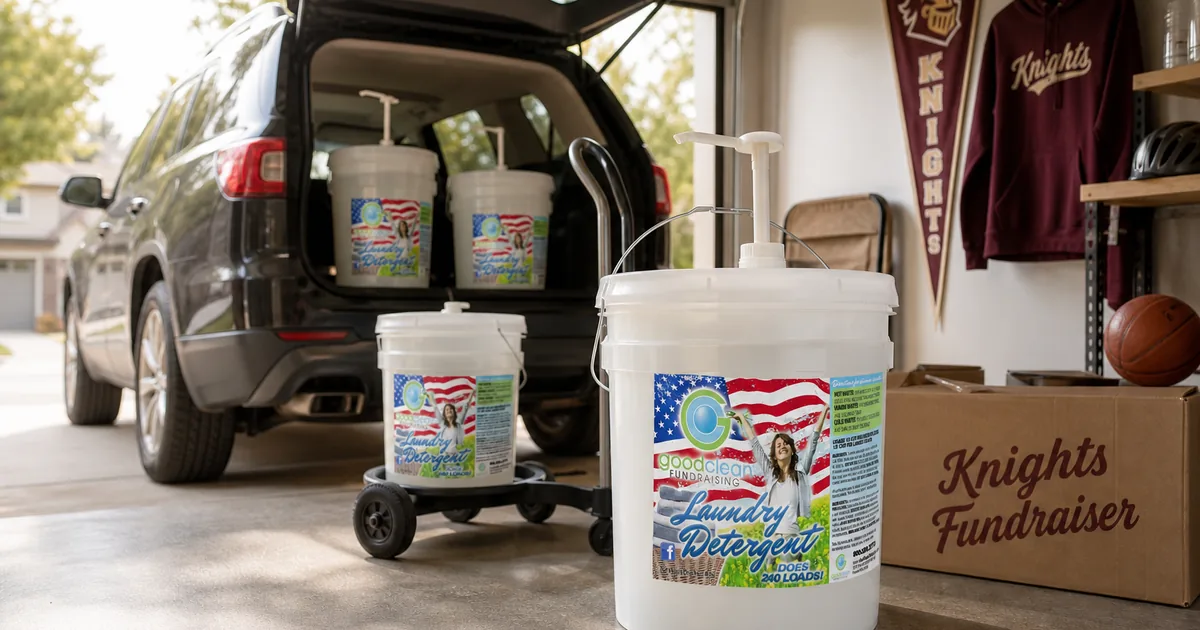
Bulk household-necessity programs — especially laundry detergent and cleaning supplies — are a strong alternative. They can reach most households because they sell a product people already purchase and use regularly, and they are non-perishable so there is no freezer or cold-chain problem. Good Clean Fundraising runs a bulk laundry-detergent program built for this switch. Groups sell a 5-gallon pump bucket for $49.95 (about $50) and keep about $13.45 to $15.45 per bucket at 100 or more buckets, depending on order volume; smaller orders of 50 to 99 buckets earn about $5 to $12 per bucket depending on shipping, and orders under 50 buckets are not accepted. There is a $0 upfront cost because the group collects orders and payment from supporters first, then submits the final order with payment. Shipping is free at 100 or more buckets, and Good Clean Fundraising provides a Getting Started packet, instructions, marketing materials, and social media strategies. Good Clean Fundraising advertises a 100% money-back guarantee under which, according to the company, any unsatisfied customer is refunded and the group keeps its profit.
No-upfront-cost product fundraisers in other categories — reusable practical goods, seasonal items, or consumable non-food products — also work well. They remove the financial risk if the campaign raises less than hoped, and they avoid perishability.
Practical non-food items like reusable bags, water bottles, or gear can carry decent margins and appeal broadly, though most are one-time purchases rather than repeat buys, so they score lower on long-term supporter value.
How does a detergent fundraiser compare to cookie dough on profit?
Profit depends on your product, your price, and how many families participate, so be skeptical of any fundraiser that promises one magic number. A useful way to think about it is that total dollars raised comes down to participants, average sales per family, and profit per unit. Cookie dough can lose on the first two: fewer families may find buyers because the product has narrower appeal, and each family may find fewer of them because the buyer pool is limited to dessert buyers with freezer space.
A household-necessity product can widen participation, which can move the total more than a few points of margin. With Good Clean Fundraising's bulk laundry-detergent fundraiser, groups sell a 5-gallon bucket for $49.95 and keep about $13.45 to $15.45 per bucket at 100 or more buckets, depending on order volume. The group's per-bucket cost drops as the order grows, and shipping is free at 100 buckets or more.
The value to the person buying may make the difference. A 5-gallon bucket holds 640 ounces, so at $49.95 the buyer pays about 7.8 cents per ounce. Premium national-brand liquid detergents typically cost more per ounce at retail, though exact pricing varies by store, size, and promotion — compare that figure to what you currently pay, since value-tier and store brands can cost less per ounce. Supporters are not paying a premium for a tub of cookie dough they did not need and have to find room for in the freezer — they are stocking up on a staple while backing the group.
What about the delivery and storage problem?
This is where non-perishable products win decisively. Cookie dough creates a narrow delivery window — often one evening — because the product cannot sit out. Volunteers scramble to coordinate pickup times, families who miss the window lose their orders, and the whole operation requires freezer space the group may not have.
A non-perishable household product like laundry detergent can be stored at room temperature, so the delivery window can be wider than a cookie dough pickup night. Families can pick up when it is convenient, volunteers are not racing a thawing clock, and the group does not need to borrow a walk-in freezer or pack coolers with ice. The group still arranges a commercial delivery address for the bulk shipment. The logistical load can drop considerably, which is a common reason groups switch.
The storage problem also changes on the buyer side. A 5-gallon detergent bucket still needs floor space and someone to carry it — it is not weightless — but it sits in a laundry room or garage rather than competing for freezer space the way a case of cookie dough tubs does. For buyers short on freezer room, that difference can make them more willing to buy.
How do you figure out how many buckets your group needs to sell?
Start with your dollar goal and work backward. If your group needs to raise a specific amount, divide that goal by the per-bucket profit to get the bucket count, then divide the bucket count by the number of participating families to see how many buckets each family needs to sell on average.
For example, if your goal is to raise funds and you are keeping about $13.45 to $15.45 per bucket at 100 or more buckets (Good Clean Fundraising's range at 100 or more buckets), you can estimate the number of buckets needed by dividing your goal by that per-bucket range, then check which tier the estimate actually falls into — $13.45 at 100–299 buckets, $14.45 at 300–499, $15.45 at 500 or more — and recalculate at the matching rate, rounding up so the total still covers your goal. Then divide that final bucket count across your participating families to set a realistic per-family target. A group with strong participation may find that a modest per-family average — a few buckets each — gets it to the goal, because the buyer pool for a household necessity can be wider than for a dessert product.
The key lever is participation. When the product is something people need rather than a treat, more families find buyers, and the group reaches its goal with less pressure on each individual seller.
What makes supporters trust a new fundraiser after years of cookie dough?
Trust comes down to value and risk. Supporters are more willing to buy when they feel they are getting something genuinely useful for their money, and when there is little risk if they are unhappy. A household staple they were going to purchase anyway, offered below the price of premium national brands, addresses the first. A product guarantee addresses the second.
Good Clean Fundraising advertises a 100% money-back guarantee under which, according to the company, any unsatisfied customer is refunded and the group keeps its profit. See its refund and returns page for the current terms. A guarantee can lower the buyer's perceived risk, which may help families feel comfortable switching their detergent purchase to the group's drive.
The other trust factor is simplicity. When the ask is clear — shift this one purchase from your usual store to our fundraiser and back our group — supporters can understand the value quickly. There is no novelty pitch, no freezer space to find, and no guilt about buying something they did not need.
| Factor | Cookie Dough | Household Necessity |
|---|---|---|
| Perishability | Frozen — requires cold chain | Non-perishable |
| Delivery window | Narrow (often one evening) | Flexible (days or a week) |
| Buyer pool | Dessert buyers with freezer space | Most households |
| Volunteer logistics | Freezers, coolers, ice, tight timing | Minimal — no special storage |
| Repeat customers | Occasional treat | Repurchased regularly |
| Upfront cost | Often orders inventory first | No-upfront-cost options |
| Profit per unit | Moderate | About $13.45–$15.45 per bucket (100+ buckets) |
Common mistakes to avoid
Underestimating the freezer logistics
The cold-chain problem is bigger than most first-timers expect. If you do not have a clear plan for freezer space at pickup and a tight delivery window, some orders will thaw and families will be unhappy.
Swapping one novelty for another
Trading cookie dough for a different one-time treat keeps the same narrow-buyer problem. The point of switching is to reach people who were never buying a dessert product in the first place.
Ignoring upfront cost and risk
Some catalog and cookie dough programs still require the group to front money for inventory. If a no-upfront-cost option exists, there is rarely a reason to take on that risk.
Not confirming delivery terms in writing
Profit split, delivery method, cold-chain responsibility, and what happens to unsold or thawed product should all be confirmed before you launch — not discovered on delivery day.
Under-briefing your families on why the switch matters
Participation rises when families understand why the new product is easier to sell. A short, honest kickoff explaining that this is something people already buy, with no freezer required, does a lot of the work.
- U.S. Food & Drug Administration — Outbreak Investigation of Salmonella: Raw Cookie Dough (May 2023). The FDA advises never eating raw dough that is meant to be cooked or baked and describes a Salmonella outbreak linked to raw cookie dough; raw dough is a perishable food that needs careful handling. — source
- GCF per-ounce price calculation — a 5-gallon (640 fl oz) bucket at $49.95 works out to about 7.8 cents per fluid ounce ($49.95 ÷ 640 fl oz = 7.8046875¢/fl oz). Compare this figure to what you currently pay for premium liquid detergent; exact retail pricing varies by store, size, and promotion, and value-tier and store brands can cost less per ounce.
- Good Clean Fundraising program terms — $49.95 per bucket; $13.45 profit per bucket at 100 to 299 buckets (usually $5 to $12 at 50 to 99 buckets, depending on actual shipping costs), $14.45 at 300 to 499, $15.45 at 500 or more; $0 upfront cost; free shipping at 100+ buckets; 50-bucket minimum (smaller orders are not accepted); 100% money-back guarantee under which, according to the company, any customer who is not satisfied is refunded and the group keeps its profit. — GCF pricing, GCF how it works, and GCF refund and returns policy
Our recommendation
If you are replacing a cookie dough fundraiser, one option worth considering is a bulk household-necessity program — it can eliminate the frozen-delivery problem and widen participation. Good Clean Fundraising runs The Good Clean Fundraiser, a bulk laundry-detergent program: groups sell a 5-gallon pump bucket for $49.95, keep about $13.45 to $15.45 per bucket at 100 or more buckets, and pay $0 upfront because the group collects orders and payment first, then submits the final order with payment. Shipping is free at 100 or more buckets, and the company provides a Getting Started packet, instructions, marketing materials, and social media strategies. Good Clean Fundraising advertises a 100% money-back guarantee under which, according to the company, any unsatisfied customer is refunded and the group keeps its profit. No freezer, no cold chain, and no narrow pickup window; the group still plans for the 50-bucket minimum, a commercial delivery address, and about two weeks of fulfillment after the paid order is submitted.
Frequently asked questions
Frustration often comes down to logistics and buyer fatigue. Cookie dough is perishable, so it has to be delivered frozen on a set day and stored in a freezer, and it mainly appeals to people who want dessert. Families can run out of dessert buyers quickly, which caps how much the group can raise.
Common replacements are consumable products people already buy — household staples like laundry detergent and cleaning supplies — plus no-inventory options. These can reach more buyers than a dessert product and are not perishable, so there is no freezer or delivery-day scramble.
A good non-food fundraiser scores well on five things: how many people will actually buy it, whether buyers use it again, the profit per item, whether there is any upfront cost, and how simple it is to run. Household-necessity products can score well across all five because most households need them and repurchase them.
For many groups — mainly because the buyer pool can be wider. Detergent is a necessity most households already purchase, so it can reach grandparents, neighbors, and coworkers who would not buy a dessert product. It is also non-perishable, which removes the frozen-delivery logistics that make cookie dough hard to run.
It depends on your product, price, and how many families participate, so treat any single number with caution. As a concrete example, Good Clean Fundraising has groups sell a 5-gallon bucket of detergent for $49.95 and keep about $13.45 to $15.45 per bucket at 100 or more buckets, with free shipping at 100 or more buckets. The bigger lever is participation: when the product is something people need rather than a treat, more families may find buyers, which can raise the total more than a small change in per-item profit.
Some do and some do not. Traditional catalog and cookie dough programs often require ordering inventory in advance. With Good Clean Fundraising, the upfront cost is $0: the group collects orders and payment from supporters first, then submits the final order with payment. A 50-bucket minimum applies.
Parents may prefer fundraisers where supporters get something useful for their money and where selling does not feel awkward. A household staple people were going to buy anyway can meet both tests — buyers may feel they got real value, and sellers are not pushing an overpriced novelty item.
Start by picking a replacement product that scores well on buyer breadth, repeat use, profit, upfront cost, and simplicity. Confirm your profit terms and delivery method in writing, set a clear goal and timeline, and brief your families on why the new product is easier to sell. Some programs, including Good Clean Fundraising, provide a Getting Started packet, instructions, marketing materials, and social media strategies to help with setup.
Cookie dough creates a cold-chain problem: it arrives frozen, must stay frozen, and has to be distributed within a narrow window — often one evening — or it thaws. That means the group needs freezer space at pickup, volunteers need coolers or a borrowed freezer, and every buyer needs room in their home freezer immediately. Families who miss the pickup window or lack freezer space simply cannot participate.
The Good Clean Fundraiser is Good Clean Fundraising's bulk laundry-detergent program. Groups sell a 5-gallon pump bucket for $49.95 — about 7.8 cents per fluid ounce, typically less than premium national-brand liquid detergent costs per ounce at retail — and keep about $13.45 to $15.45 per bucket at 100 or more buckets. There is a $0 upfront cost because the group collects orders and payment first, free shipping at 100 or more buckets, and a Getting Started packet, instructions, marketing materials, and social media strategies. Good Clean Fundraising advertises a 100% money-back guarantee under which, according to the company, any unsatisfied customer is refunded and the group keeps its profit. It is not perishable, so there is no freezer requirement.
Cookie dough is not failing because it is a bad product — it can struggle because it asks a narrower group of people to buy something they may not need, and makes volunteers manage a freezer to do it. Switch the product to something most households already buy, and two of the hardest parts of fundraising — participation and logistics — can get easier at the same time. That is the case for moving on.