
Scouts, 4-H, FFA & Youth Organizations
Alternatives to Popcorn Fundraisers for Scouts: What Troops Are Running Alongside or Instead
Why scout units are adding or switching fundraisers — and the household-necessity programs that fit the scouting calendar, reach more buyers, and fund camp, gear, and activities without competing with council popcorn.
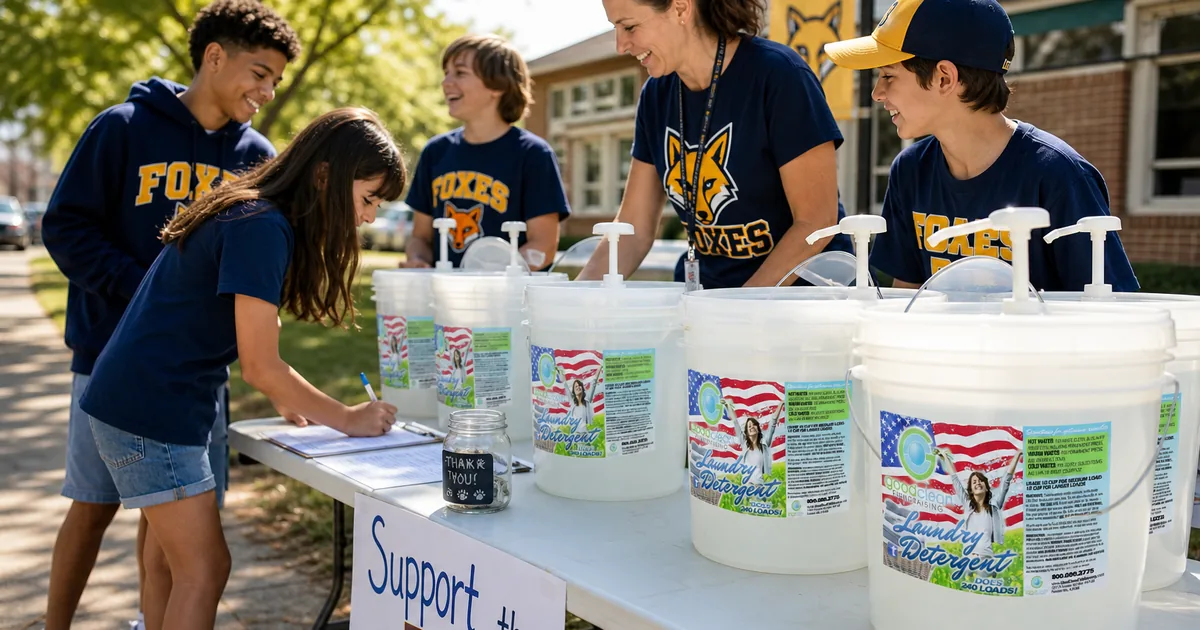
The strongest alternatives to popcorn fundraisers for scout troops are bulk household-necessity programs — especially laundry detergent and cleaning products — that reach nearly every household, avoid the seasonal crowding of fall popcorn, and give units a second fundraiser to cover camp fees, gear, uniforms, and activity costs that council popcorn proceeds don't fully fund. These programs work well alongside council popcorn (run in a different season) or as a replacement when a unit wants full control of timing and profit. They appeal to supporters who were never going to buy popcorn but already purchase detergent, they're non-perishable and easy to store, and they typically carry no upfront cost. The best fit depends on whether your unit needs to supplement council popcorn or replace it entirely, and whether you want a spring or off-season drive that doesn't compete with other troops in your neighborhood.
If you lead a scout troop, you already know the popcorn fundraiser: it's the big council-organized fall drive that every unit in your area runs at the same time, with proceeds split between the council and your unit. For many troops it works, but many troop leaders run into the same friction points — neighbors are asked by multiple units in the same few weeks, the fall calendar is crowded with school fundraisers, the split means your unit keeps only a portion of each sale, and the money that does come back often isn't enough to cover camp fees, new gear, uniforms, and the activity costs that pile up through the year.
That's why more units are either running a second fundraiser in a different season or switching to something they control entirely. The programs that work best are the ones that reach buyers popcorn never did, fit a quieter part of the calendar, and let the unit keep a larger share — or all — of the profit.
This guide covers why scout troops are moving on from popcorn-only fundraising, what makes a good alternative for a unit's structure and budget needs, the programs that many troops find reach more buyers, how to run one alongside or instead of council popcorn, and the mistakes to avoid when you make the switch.
- Council popcorn splits proceeds between the council and your unit, and the unit's share often doesn't cover camp, gear, uniforms, and activity fees for the year.
- Fall popcorn season means neighbors are asked by multiple troops in the same neighborhood, which caps how much any one unit can raise.
- The strongest alternatives are household-necessity products like laundry detergent that reach buyers who never purchase popcorn and can run in spring or off-season without competing with council drives.
- A second fundraiser in a different season lets units keep council popcorn and add revenue; a replacement gives the unit full control of timing and profit.
- Non-perishable bulk products avoid the storage and delivery logistics that make food fundraisers hard for volunteer-run troops.
- No-upfront-cost programs remove financial risk, which matters when a unit is run by parent volunteers with no budget cushion.
- Household staples appeal to grandparents, neighbors, and coworkers who support the scout but would never buy a treat product.
Why are scout troops looking for alternatives to popcorn fundraisers?
The problems cluster around timing, control, and money. Council popcorn runs in the fall, which means every troop in your area is selling at once — and so are the schools. Neighbors who want to support scouting are often asked by two or three different units in the same few weeks, which caps participation and creates awkward overlap. The fall calendar is also the busiest time for families, so getting scouts to prioritize selling is harder than it looks on paper.
Then there's the split. Council popcorn divides proceeds between the council (which funds broader programs and camps) and your unit. The portion your troop keeps varies by council, but it's rarely enough to cover a full year of expenses — camp fees, new tents and cooking gear, uniforms for scouts who need them, activity and outing costs, and advancement materials. Units that rely only on popcorn often come up short and either scale back activities or ask families to pay out of pocket, which defeats the point of fundraising in the first place.
The third issue is the buyer pool. Popcorn is a treat product, so it mainly appeals to people who want a snack. Grandparents, neighbors, and coworkers who genuinely want to support the scout often pass because they don't need popcorn, which means a lot of potential buyers never convert. When a troop switches to or adds a product people actually use — something they were going to buy anyway — the number of people willing to purchase goes up sharply.
What does a scout unit actually need to fund, and how much does popcorn cover?
A typical troop's annual budget includes camp fees for summer camp and weekend outings, gear replacement and new equipment as the troop grows, uniforms and handbooks for scouts who can't afford them, activity fees for hikes and service projects, advancement materials and awards, and transportation costs for trips. Depending on troop size and activity level, that can add up fast — and council popcorn proceeds often cover only a fraction of it.
The gap is what drives units to look for a second fundraiser or a replacement. If your troop keeps a modest amount per scout from fall popcorn and you have expenses that run higher, you either scale back what you offer, ask families to pay more out of pocket, or find another revenue source. Many units that add or switch fundraisers are doing it to close that gap so they can say yes to more activities and keep costs down for families.
Should your troop run an alternative alongside popcorn or instead of it?
It depends on your council's rules, your unit's budget needs, and whether you want to keep the council relationship. Running both — council popcorn in fall and a unit-controlled fundraiser in spring or another off-season window — is a common approach. It lets you keep the council support and structure while adding revenue your unit controls entirely. Scouting America units are generally expected to submit a Unit Money-Earning Application (No. 34427) to their council for approval before running a fundraiser, so confirm your council's process first. The key is to pick a different season so you're not competing with yourself or exhausting your supporters.
Replacing popcorn entirely makes sense if your council allows it, if the split leaves your unit with too little, or if you want full control over timing, product, and profit. The tradeoff is that you lose any council support or incentives tied to popcorn participation, so you'll need to handle the whole campaign yourself or work with a program that provides setup materials and instructions.
Either way, the alternative you choose should reach a different buyer pool than popcorn does, fit a quieter part of the calendar, and carry no upfront cost so your unit isn't fronting money for inventory.
What makes a good popcorn alternative for a scout troop?
Judge any replacement on six factors that matter specifically to volunteer-run units. First, buyer breadth: does it appeal to nearly everyone, or just a niche? Popcorn is a treat, so it loses grandparents, neighbors, and coworkers who don't want snacks; a household necessity reaches all of them. Second, calendar fit: can you run it in spring or off-season without competing with fall council drives and school fundraisers? Third, profit and control: does your unit keep all or most of the proceeds, and is the per-item margin high enough to make the effort worth it?
Fourth, upfront cost and risk: do you have to buy inventory first, or is it no-cost until orders come in? A troop run by parent volunteers with no budget cushion can't afford to front money and hope it sells. Fifth, logistics: is it perishable, does it require special storage or a timed delivery day, or does it ship and store easily? Troops meet in church basements and garages, not warehouses. Sixth, repeat use: is it something supporters use up and would buy again, or a one-time novelty? Repeat buyers mean you can run the same fundraiser next year without starting from scratch.
What are the best alternatives to popcorn fundraisers for scout troops?
Measured against those six factors, a few categories rise to the top. Bulk household consumables — laundry detergent, cleaning products, and similar staples — score well across all six. They reach nearly every household, they're non-perishable and easy to store, they fit any calendar window, and they're products people repurchase. One category many troops consider as a popcorn alternative: bulk laundry detergent fundraisers.
Good Clean Fundraising runs a program built specifically for this use case. Troops sell a 5-gallon pump bucket of laundry detergent for $49.95 — a household staple supporters buy at roughly half the per-ounce price of premium national brands — and keep about $13.45 to $15.45 per bucket at 100 or more buckets, depending on order volume, with no upfront cost, free shipping at 100 buckets or more, and a Getting Started packet, instructions, marketing materials, and social media strategies. Good Clean Fundraising advertises a 100% money-back guarantee under which, according to the company, any unsatisfied customer is refunded and the group keeps its profit.
The buyer pool is what makes it work. A neighbor who says no to popcorn in October will often say yes to detergent in March because they need it, they're getting it at about half the per-ounce price of premium national brands, and they're supporting the scout. Grandparents and coworkers who never buy treat fundraisers will buy a bucket because it's genuinely useful. That wider reach can translate to more participants and a stronger total, depending on the troop's buyer network.
Other strong alternatives include no-inventory direct-support programs where supporters give online, reusable practical goods like water bottles or bags, and seasonal items that fit a specific calendar window. Each has tradeoffs — digital programs lack the tangible value appeal, reusable goods are one-time purchases — but they avoid the perishability and storage issues that make food fundraisers hard for troops to run.
How does a household-necessity fundraiser compare to popcorn for a scout troop?
The practical differences come down to who buys, when you run it, and what the troop keeps. Popcorn is a treat that appeals mainly to people who want a snack, runs in the fall when every unit and school is fundraising, and splits proceeds between council and unit. A household-necessity program sells a staple every household already purchases, can run in spring or any off-season window, and lets the unit keep the full per-item profit.
Popcorn is a food product, so storage and timing matter; bulk detergent is non-perishable and ships and stores easily in a troop's usual meeting space. Popcorn asks supporters to buy something extra they don't need; a household staple asks them to shift a purchase they were already making, at about half the per-ounce price of premium national brands. Popcorn reaches treat buyers; detergent reaches nearly everyone. And because a necessity fundraiser can run in a different season, it doesn't compete with council popcorn or exhaust the same supporters — it's a second revenue stream, not a replacement for the first unless your unit chooses to make it one.
How much can a scout troop raise with an alternative to popcorn?
The answer is a bucket-count question, not a dollar projection, because the math depends on how many scouts participate and how many buckets each sells. At about $13.45 to $15.45 per bucket at 100 or more buckets, a troop working toward a specific goal can work backward: if you need to fund camp and gear and you know your target amount, divide by the per-bucket profit to get the bucket count, then divide by participating scouts to see how many each needs to sell.
The bigger lever is participation. When the product is something people need rather than a treat, more scouts find buyers, and each finds more of them. A scout who sells a handful of popcorn tins to family may find more buyers for detergent because the buyer pool is wider and the value is real. That's what moves the total — not a few points of margin, but more scouts selling to more people.
How do you run an alternative fundraiser for a scout troop?
Start by confirming your council's policy on additional or replacement fundraisers — some allow them freely, others require approval. Once you're clear to proceed, pick your season: spring is a common choice because it's far from fall popcorn and school drives, but any off-season window works. Set a clear goal tied to what you're funding — camp fees, new gear, uniforms — and a two-to-four-week selling window.
Recruit a small team of parent volunteers to help with communication, order tracking, and delivery so the work doesn't fall on one person. Hold a troop meeting kickoff where you explain the goal, the product, and how to participate, and give every scout their materials on the same day. Track orders as they come in, send a couple of reminders during the selling window, then collect the money, coordinate delivery, and thank every supporter and scout. If you're working with a program that provides setup materials and instructions, some of this is easier.
| Factor | Council Popcorn | Household Necessity |
|---|---|---|
| Timing | Fall (crowded season) | Spring or off-season |
| Buyer pool | Treat buyers only | Nearly every household |
| Proceeds split | Council + unit share | Unit keeps full profit |
| Perishable? | Food product — storage and timing matter | No — ships & stores easily |
| Upfront cost | Varies by council | No-cost options available |
| Repeat buyers | Occasional treat | Repurchased regularly |
| Neighborhood competition | Multiple troops, same season | Off-season avoids overlap |
Common mistakes to avoid
Running a second fundraiser in the same season as popcorn
If you're adding a fundraiser alongside council popcorn, pick a different season — spring is a common choice. Running both in fall exhausts your supporters and pits your unit against itself.
Choosing a product with the same narrow buyer pool as popcorn
Swapping popcorn for cookie dough or candy keeps the same treat-buyer problem. The point of switching is to reach people who were never going to buy a snack product in the first place.
Picking a program with upfront inventory cost
A troop run by parent volunteers with no budget cushion can't afford to front money and hope it sells. No-upfront-cost programs remove inventory risk.
Skipping council policy check
Some councils allow additional fundraisers freely; others require approval or have restrictions. Confirm the rules before you launch so you're not surprised later.
Not explaining why the new fundraiser is easier to sell
Scouts and parents need to understand that a household staple reaches more buyers than a treat does. A short, clear explanation at the kickoff makes the difference between strong participation and confusion.
- Editorial guidance: general planning advice on this page reflects the authors' editorial judgment and common youth-group fundraising practice; it is not based on measured campaign data or a cited study.
- Detergent price comparison — per-ounce pricing for premium national-brand liquid laundry detergent, surveyed at major U.S. retailers September 2026 (typically 14 to 19 cents per ounce; example source: a leading national retailer). A 5-gallon (640 oz) bucket at $49.95 is about 7.8 cents per ounce. Prices vary by brand, size, store, and region; some value-tier and store brands cost less per ounce. Range reflects a market survey; individual prices will vary.
- Good Clean Fundraising program terms — $49.95 per bucket; $13.45 profit per bucket at 100 to 299 buckets (usually $5 to $12 at 50 to 99 buckets, depending on actual shipping costs), $14.45 at 300 to 499, $15.45 at 500 or more; $0 upfront cost; free shipping at 100+ buckets; 50-bucket minimum (smaller orders are not accepted); 100% money-back guarantee under which, according to the company, any customer who is not satisfied is refunded and the group keeps its profit. — GCF pricing, GCF how it works, and GCF refund and returns.
Our recommendation
If your scout troop is looking for an alternative to popcorn — either to run alongside it in a different season or to replace it entirely — start with a bulk household-necessity fundraiser, and specifically laundry detergent. Good Clean Fundraising's program is built for exactly this: troops sell a 5-gallon pump bucket of detergent for $49.95, a household staple supporters buy at roughly half the per-ounce price of premium national brands, and keep about $13.45 to $15.45 per bucket at 100 or more buckets, depending on order volume. There's no upfront cost, free shipping on orders of 100 buckets or more, and the program includes a Getting Started packet, instructions, marketing materials, and social media strategies. Good Clean Fundraising advertises a 100% money-back guarantee under which, according to the company, any unsatisfied customer is refunded and the group keeps its profit. It fits a spring or off-season calendar window, reaches buyers popcorn never did, and gives your unit full control of the profit so you can fund camp, gear, and activities without asking families to cover the gap.
Frequently asked questions
Three main reasons: timing, control, and money. Council popcorn runs in fall when every unit in the area is selling at once and neighbors are asked by multiple troops, the proceeds are split between council and unit so the troop's share often doesn't cover camp and gear costs for the year, and popcorn only appeals to treat buyers so a lot of potential supporters never purchase.
It depends on your council's rules and your unit's needs. Running both — council popcorn in fall and a unit-controlled fundraiser in spring — is a common approach because it adds revenue without losing council support. Replacing popcorn entirely makes sense if your council allows it and you want full control of timing and profit, but you lose any council incentives tied to popcorn participation.
The strongest alternative is a bulk household-necessity fundraiser, especially laundry detergent. It reaches nearly every household including buyers who never purchase treats, it's non-perishable and easy to store, it can run in spring or off-season without competing with fall popcorn, and it typically carries no upfront cost. Supporters get a genuinely useful product at about half the per-ounce price of premium national brands, which makes it easy to sell.
It's a bucket-count question, not a dollar projection. At about $13.45 to $15.45 per bucket at 100 or more buckets, work backward from your goal: divide your target amount by the per-bucket profit to get the bucket count, then divide by participating scouts. The bigger factor is participation — when the product is a necessity rather than a treat, more scouts find buyers and each finds more of them, which raises the total more than margin alone ever could.
In most cases yes, but check your council's policy first — some allow additional fundraisers freely, others require approval or have restrictions. If you're running both, pick a different season so you're not competing with yourself or exhausting supporters. Spring is a common choice because it's far from fall popcorn and school drives.
Not always. Many household-necessity programs are no-upfront-cost, meaning you collect orders first and never front money for inventory. For a troop run by parent volunteers with no budget cushion, that removes the financial risk if the campaign raises less than hoped.
A typical troop's annual budget includes camp fees for summer camp and weekend outings, gear replacement and new equipment, uniforms and handbooks for scouts who need them, activity fees for hikes and service projects, advancement materials and awards, and transportation costs. The unit's share of council popcorn proceeds often covers only a portion of that, which is why troops look for a second fundraiser or a replacement.
Good Clean Fundraising is a bulk laundry-detergent fundraiser that scout troops run independently, usually in spring or off-season. Troops sell a 5-gallon bucket for $49.95 and keep about $13.45 to $15.45 per bucket at 100 or more buckets — the full profit, not a split. Good Clean Fundraising advertises a 100% money-back guarantee under which, according to the company, any unsatisfied customer is refunded and the group keeps its profit. It reaches buyers who never purchase popcorn and fits a calendar window that doesn't compete with council drives.
First, confirm your council's policy on additional fundraisers. Pick your season — spring is most common — and set a clear goal and a two-to-four-week selling window. Recruit a small team of parent volunteers to help, hold a troop meeting kickoff where you explain the goal and product and hand out materials, track orders during the selling window, then collect the money, coordinate delivery, and thank supporters. If you work with a program that provides setup materials and instructions, some of this is easier.
Council popcorn works for some troops, but it's not the only option — and for many units it's not enough. A household-necessity fundraiser in a different season reaches the buyers popcorn never did, gives your troop full control of the profit, and funds the camp fees, gear, and activities that make scouting worth doing. You don't have to choose between supporting your council and funding your unit; you can do both, one in fall and one in spring. Confirm approval through your council (units generally submit a Unit Money-Earning Application) before you start. One approach is to give supporters two chances to help, with two different products, in two different seasons.