
Scouts, 4-H, FFA & Youth Organizations
Boy Scout / Scouting America Troop Fundraising Ideas That Actually Work
The best fundraising ideas for Scout troops — from no-upfront-cost product sales to events that fit your troop's schedule and raise real money for campouts, gear, and activities.
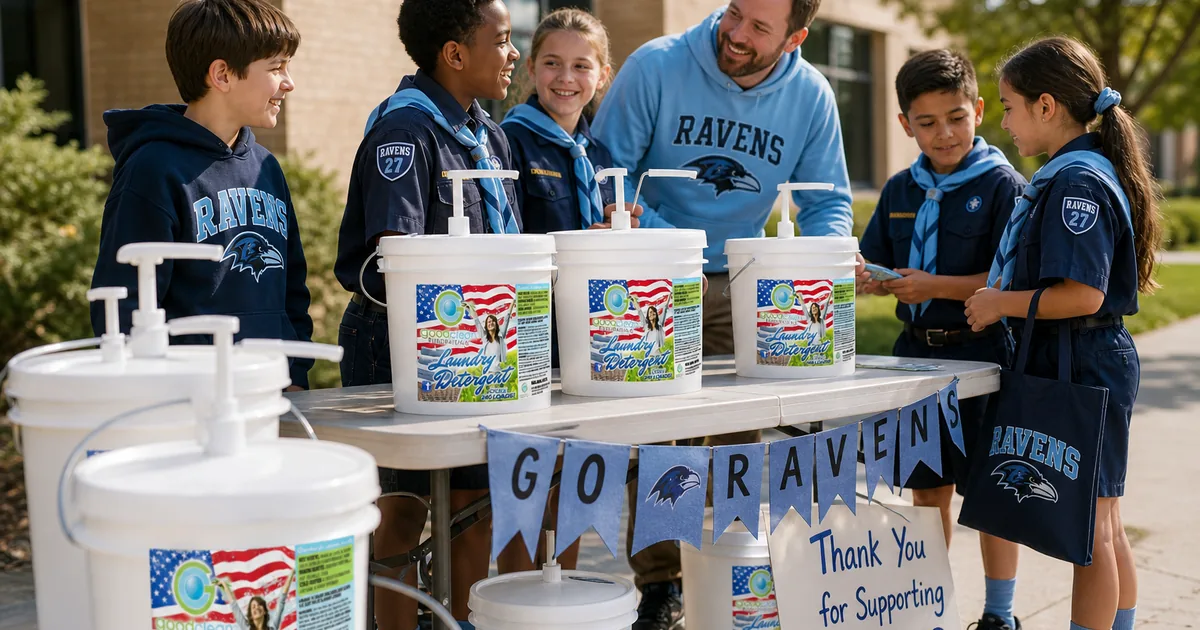
The most successful Scout troop fundraisers fall into three categories: product sales with no upfront cost (especially household necessities like laundry detergent that reach every family), seasonal events that leverage Scout skills (car washes, pancake breakfasts, community service days), and hybrid approaches that combine both. The strongest performers share four traits: they require minimal adult supervision so Scouts do the work, they fit around the troop's existing meeting and activity schedule, they teach real skills that align with Scout values, and they reach buyers beyond just Scout families. Household-necessity product fundraisers often outperform novelty items because they appeal to a wider buyer base — grandparents, neighbors, and coworkers who need detergent or cleaning supplies are more likely to buy than those interested in popcorn or candy. Many troops find it works to run one major product fundraiser in fall or spring and one or two smaller events throughout the year.
Scout troops need money for campouts, gear, advancement materials, and the dozen other costs that add up over a year. But the fundraisers that worked a decade ago — the same catalog sales, the same popcorn drives — are hitting diminishing returns as families face more asks and supporters grow tired of overpriced novelty items.
The good news is that the best troop fundraisers today are actually easier to run than the old standbys. They require less adult supervision, fit around your existing meeting schedule, and sell products people genuinely want at prices that make sense. The Scouts do the real work, learn practical skills in the process, and the troop raises more with less volunteer burnout.
This guide covers the fundraising ideas that work best for Scout troops right now: which product fundraisers reach the most buyers, which events fit a troop schedule, how to balance teaching moments with dollars raised, what mistakes sink troop campaigns, and how to pick the right mix for your troop's goals and calendar.
- The strongest Scout troop fundraisers require minimal adult supervision and let Scouts do the selling, planning, and execution.
- Household-necessity products like laundry detergent can reach more buyers than novelty items because every family needs them.
- No-upfront-cost programs remove financial risk and avoid the problem of unsold inventory sitting in a leader's garage.
- Seasonal events like car washes and pancake breakfasts work well as secondary fundraisers but rarely raise enough to be your only campaign.
- Many troops find it works to run one major product fundraiser and one or two smaller skill-building events per year.
- The best fundraisers teach real skills — communication, goal-setting, money handling — that align with Scout advancement requirements.
- Reaching buyers beyond Scout families is the key to growing your total; supporters who are not parents buy necessities, not treats.
What are the best product fundraisers for Scout troops?
Product fundraisers are the backbone of many troop budgets because they scale with participation and run on a predictable timeline. Scouting America units are generally expected to submit a Unit Money-Earning Application (No. 34427) to their council for approval before running a fundraiser, so confirm your council's process first. The question is which products actually sell in 2026, when families are asked constantly and supporters have seen every catalog.
The answer comes down to buyer breadth. A product that appeals to a narrow slice of people — dessert lovers, candle buyers, gift-wrap shoppers — caps how much each Scout can sell because they run out of interested buyers fast. A household necessity that every family already purchases reaches grandparents, neighbors, coworkers, and community members who would never buy a novelty item but will happily shift a purchase they were making anyway to support the troop.
Laundry detergent is one product worth considering in this category. It is non-perishable, ships and stores easily, and every household uses it. A Scout selling a 5-gallon bucket of detergent at about half the per-ounce price of premium national brands is offering genuine value, not asking for a favor. That is the dynamic that can widen participation and support a whole troop's goal.
Which events work best for Scout troops?
Events are where Scouts learn the most — planning, logistics, teamwork, customer service — but they may raise less per hour of effort than a well-run product sale. The best troop events are the ones that leverage Scout skills, require minimal adult takeover, and fit into your existing calendar without adding a dozen extra meetings.
Car washes are the classic for a reason: they are simple to organize, Scouts do all the work, and the troop can run one in a single Saturday morning. Pancake breakfasts and spaghetti dinners work well if you have a chartered organization with a kitchen and a troop culture that enjoys cooking together. Community service days where the troop does yard work, raking, or snow shoveling for donations teach service while raising money, and they align directly with Scout values.
The mistake troops make is trying to turn an event into the primary fundraiser. A car wash that raises a few hundred dollars is a great secondary campaign and a solid teaching moment; expecting it to fund your whole year leads to burnout and disappointment. Use events to supplement a product fundraiser, not replace it.
What about popcorn and other traditional Scout fundraisers?
Popcorn has been the default Scout fundraiser for decades, and many troops still run it successfully. But some leaders are moving away from it for three reasons: the price point is high relative to the product's everyday value, the buyer pool is narrow (popcorn is a treat, not a necessity), and participation can decline when families face popcorn fatigue from multiple troops in the same community.
The same dynamic applies to candy, cookie dough, and other novelty food items. They work for some troops, especially those with highly motivated Scouts and strong community ties, but they are no longer the automatic choice they once were. If your troop has run the same catalog fundraiser for years and seen participation or totals decline, that may be a signal to try something different.
The replacement does not have to be radical. It just has to be something more people will actually buy.
How do you balance fundraising with teaching Scout skills?
The best troop fundraisers are the ones where the Scouts do the work and learn something in the process. That means setting clear roles — who tracks orders, who handles money, who communicates with buyers, who coordinates delivery — and then stepping back and letting the Scouts run it, even if it is not perfect.
A product fundraiser teaches goal-setting (each Scout sets a sales target), communication (they have to explain the product and ask for the sale), responsibility (tracking their own orders and money), and follow-through (delivering on time and thanking buyers). Those are all skills that map directly to Scout advancement requirements, and they are far more valuable than the dollar total.
The mistake is when adults take over to 'make it run smoothly.' If the troop leader is doing all the selling and the Scouts are just handing out order forms, the fundraiser might raise money but it is not teaching anything. Let the Scouts lead, even if it means a few bumps along the way.
Should your troop do one big fundraiser or several small ones?
Many troops find it works to run one major product fundraiser — fall or spring — and one or two smaller events throughout the year. The big campaign funds the bulk of your budget; the smaller efforts cover specific needs (a new tent, a special trip) and give Scouts more leadership opportunities.
The logic is simple: a focused, well-promoted product sale with a clear goal and a short timeline creates urgency and drives participation. Spreading your fundraising across four or five campaigns dilutes attention, burns out volunteers, and trains families to ignore the asks. One focused push with a clear goal and timeline may outperform three half-hearted ones.
If your troop needs to raise a significant amount — say, for a high-adventure trip or new camping gear — a single household-necessity product fundraiser with broad appeal will get you there faster and with less volunteer fatigue than a string of bake sales and car washes.
What makes a Scout fundraiser 'no upfront cost' and why does it matter?
A no-upfront-cost fundraiser means the troop collects orders and money first, then submits the final order with payment — you never buy inventory in advance and hope it sells. This removes inventory financial risk: if participation is lower than expected, the troop is not stuck with unsold product and a bill to pay.
For Scout troops, this structure is especially important because participation can be unpredictable. A troop might have 20 registered Scouts but only 12 who actively sell, and only 8 of those who hit their goals. With a no-upfront-cost program, that variability does not cost the troop anything. With a traditional inventory-based fundraiser, the troop (or the leader's garage) absorbs the loss.
Most household-necessity product fundraisers, including detergent programs, are structured this way. The troop collects orders and payment, then submits the final order. It is one of the most effective ways to reduce risk.
How do you get more Scouts to actually participate?
Participation is one of the biggest levers in a troop fundraiser, and it comes down to three things: a product Scouts feel good about selling, a clear and achievable goal, and a kickoff that makes it easy to start.
When the product is a household necessity at a genuinely good price, Scouts are not asking for a favor — they are offering value. That removes the awkwardness that keeps reluctant sellers on the sidelines. When the goal is specific and broken down by Scout ('if each of us sells 10 buckets, we fund the entire summer camp'), it is easier to commit than a vague 'let's raise some money.' And when the kickoff includes a short training on how to ask, where to start, and what to say, Scouts who have never sold anything before know exactly what to do.
The other key is peer momentum. When the first few Scouts turn in orders and hit their goals, others follow. Start strong, celebrate early wins publicly, and the middle of the pack will pick up the pace.
| Factor | Product Fundraiser | Event Fundraiser |
|---|---|---|
| $ raised per hour | Higher — scales with participation | Lower — intensive volunteer hours |
| Upfront cost/risk | None (no-upfront-cost programs) | Often requires supply purchases |
| Participation breadth | Every Scout, any schedule | Only Scouts available that day |
| Teaching opportunities | Goal-setting, communication, follow-through | Teamwork, planning, customer service |
| Volunteer burnout | Low — Scouts do the work | High — adults coordinate heavily |
Common mistakes to avoid
Choosing a product Scouts feel awkward selling
If the product is overpriced or feels like a novelty, Scouts sense it and participation drops. A household necessity at a fair price removes that friction entirely.
Letting adults take over the selling
When parents or leaders do the work, the troop might raise money but the Scouts learn nothing. Let them lead, even if it is messier.
Running too many small fundraisers instead of one strong one
Spreading effort across four or five campaigns burns out volunteers and trains families to ignore the asks. One focused push raises more.
Skipping a real kickoff
Handing out order forms at the end of a meeting and hoping Scouts figure it out does not work. A short, clear kickoff with a goal and a how-to makes all the difference.
Not tracking progress visibly
When Scouts do not see who is selling and how close the troop is to the goal, momentum fades. A simple visual tracker at meetings keeps energy high.
Ignoring the teaching moment
Fundraising is a chance to teach real skills that align with Scout advancement. If you are only focused on the dollar total, you are missing half the value.
- Scouting America (formerly Boy Scouts of America) — Unit Money-Earning Application (No. 34427): units must obtain written council approval before non-council fundraisers, and commercial product sales must stand on their own merits. — source
- Good Clean Fundraising program terms — $49.95 per bucket; $13.45 profit per bucket at 100 to 299 buckets (usually $5 to $12 at 50 to 99 buckets, depending on actual shipping costs), $14.45 at 300 to 499, $15.45 at 500 or more; $0 upfront cost; free shipping at 100+ buckets; 50-bucket minimum (smaller orders are not accepted); 100% money-back guarantee under which, according to the company, any customer who is not satisfied is refunded and the group keeps its profit. — GCF pricing, GCF how it works, and GCF refund and returns.
- Editorial guidance: general planning advice on this page reflects the authors' editorial judgment and common youth-group fundraising practice; it is not based on measured campaign data or a cited study.
Our recommendation for Scout troops
If your troop is looking for a product fundraiser that requires minimal adult supervision, teaches real skills, and reaches buyers beyond Scout families, Good Clean Fundraising's bulk laundry-detergent program is built for exactly this. Scouts sell a 5-gallon pump bucket of detergent for $49.95 — roughly half the per-ounce price of premium national brands — and the troop keeps about $13.45 to $15.45 per bucket at 100 or more buckets, depending on order volume. There is no upfront cost, free shipping on orders of 100 buckets or more, and the program includes a Getting Started packet, instructions, marketing materials, and social media strategies. Good Clean Fundraising advertises a 100% money-back guarantee under which, according to the company, any unsatisfied customer is refunded and the group keeps its profit. It is a household necessity people were buying anyway, which makes it easy for Scouts to sell and easy for supporters to say yes.
Frequently asked questions
The best Scout troop fundraisers are product sales with no upfront cost — especially household necessities like laundry detergent that reach every family — combined with one or two smaller skill-building events like car washes or pancake breakfasts. The product sale funds the bulk of your budget; the events provide concentrated teaching moments.
It depends on how many Scouts participate and what they sell, so set a goal based on your troop's size rather than a headline number. As a concrete example, a troop selling 5-gallon detergent buckets for $49.95 keeps roughly $13.45 to $15.45 per bucket at 100 or more buckets, depending on order volume. The bigger lever is participation: when the product is a necessity, more Scouts find buyers.
Popcorn still works for some troops, but some leaders are moving away from it because the price is high relative to everyday value, the buyer pool is narrow (it is a treat, not a necessity), and participation can decline when families face popcorn fatigue. If your troop has seen totals drop, a household-necessity product may reach more buyers.
A no-upfront-cost fundraiser means the troop collects orders and money first, then submits the final order with payment — you never buy inventory in advance and hope it sells. This removes inventory financial risk: if participation is lower than expected, the troop is not stuck with unsold product and a bill to pay.
Participation rises when the product is something Scouts feel good about selling (a necessity at a fair price, not an overpriced novelty), the goal is clear and broken down by Scout, and the kickoff includes a short training on how to ask and where to start. Visible progress tracking at meetings and celebrating early wins also drive momentum.
Many troops find it works to run one major product fundraiser in fall or spring and one or two smaller events throughout the year. A focused campaign with a clear goal and short timeline drives participation; spreading effort across many small fundraisers burns out volunteers and trains families to ignore the asks.
A well-run troop fundraiser teaches goal-setting (each Scout sets a sales target), communication (explaining the product and asking for the sale), responsibility (tracking orders and money), follow-through (delivering on time), and teamwork (coordinating with the troop). These map directly to Scout advancement requirements and are more valuable than the dollar total.
A two-to-four-week window is common for troop fundraisers. A short, focused selling window creates urgency and keeps Scouts engaged; campaigns that drag on for months lose momentum and raise less. Set a clear end date at the kickoff and hold to it.
The best Scout fundraisers let the Scouts do the work and teach skills that align with Scout values — leadership, communication, service, responsibility. A school fundraiser might be run entirely by parents; a Scout fundraiser should be Scout-led with adults coaching from the sidelines. The teaching moment is as important as the money raised.
The Good Clean Fundraiser is Good Clean Fundraising's bulk laundry-detergent program. Scout troops sell a 5-gallon pump bucket for $49.95, a household staple supporters buy at roughly half the per-ounce price of premium national brands, and keep about $13.45 to $15.45 per bucket at 100 or more buckets. There is no upfront cost, free shipping on larger orders, and the program includes a Getting Started packet, instructions, marketing materials, and social media strategies.
The best Scout troop fundraiser is the one where the Scouts do the work, learn real skills, and the troop raises enough to fund the year without burning out volunteers. That usually means one strong product sale built around a household necessity people actually want, plus one or two smaller events that teach teamwork and service. Keep it simple, let the Scouts lead, and the money and the learning both follow.