
Scouts, 4-H, FFA & Youth Organizations
Cub Scout Pack Fundraising Ideas That Actually Work
Practical fundraising ideas for Cub Scout packs — from product sales that reach every family to no-upfront-cost programs that make hitting your goal simple.
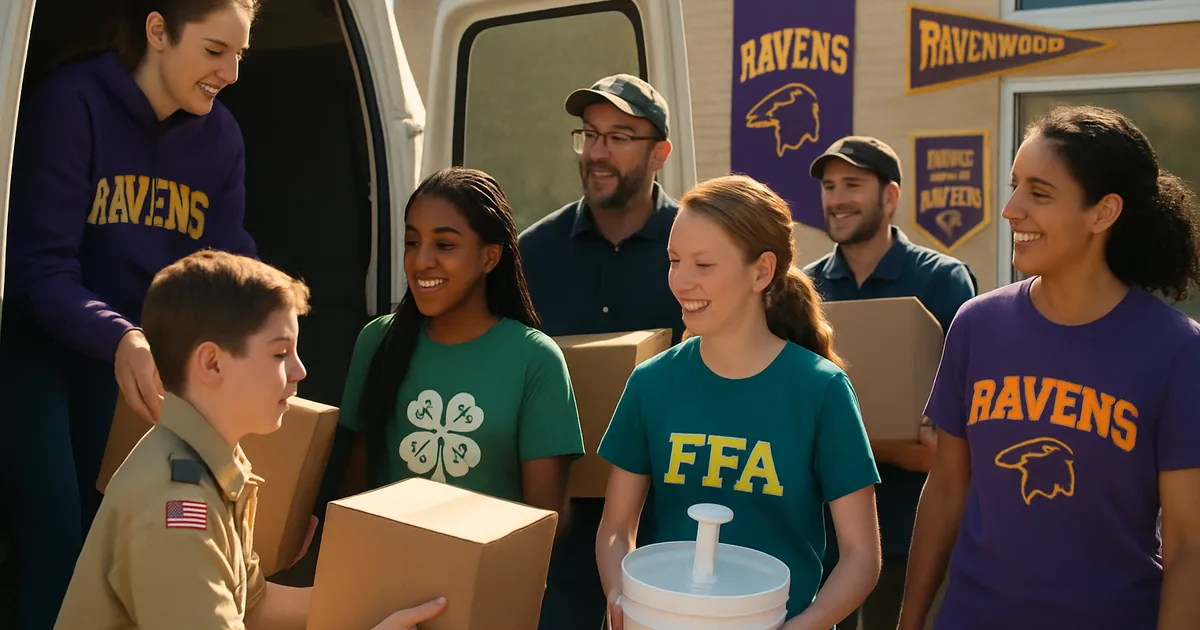
The most effective Cub Scout pack fundraisers are product-based programs that sell consumable household necessities — items families already buy and use regularly — because they reach a much wider pool of supporters than novelty or treat products. The strongest options combine no upfront cost, broad appeal across all age groups, simple logistics that do not require door-to-door selling, and a profit structure that rewards participation. Laundry detergent, cleaning supplies, and similar staples often outperform traditional candy and popcorn fundraisers because supporters get genuine value at a lower price than retail, and scouts can sell to grandparents, neighbors, and coworkers who would never buy a snack item. When choosing a fundraiser, Cub Scout leaders should prioritize ease of running, safety, and whether the product is something people actually need, then layer in incentives and a clear goal to drive participation.
Cub Scout packs need fundraisers that work for young kids — simple to explain, safe to run, and easy enough that a second-grader can tell a neighbor what they are selling. The traditional popcorn and candy programs have been the default for decades, but many packs are finding that the high prices, narrow buyer pool, and logistics are harder to manage than they used to be.
The good news is that a new generation of fundraisers is built around products people genuinely use, with no door-to-door requirement, no upfront cost, and profit margins that make hitting your pack goal realistic. These programs work because they widen the pool of who will buy — turning every scout into a seller, not just the most outgoing ones.
This guide covers the fundraising ideas that work best for Cub Scout packs today, how to choose one that fits your group, what to look for in a program, the mistakes that trip up most packs, and how to run a campaign that hits your goal without burning out your volunteers.
- The best Cub Scout fundraisers sell consumable household necessities that families already buy, not novelty treats or one-time items.
- No-upfront-cost programs remove financial risk and make it easier for smaller packs to participate.
- Door-to-door selling raises safety concerns for young scouts; modern programs use order forms, online sharing, and workplace sales instead.
- Younger scouts need fundraisers they can explain in one sentence and sell without a hard pitch.
- Incentives and prizes motivate participation, but the product itself has to be something supporters actually want.
- A two-to-three-week selling window with a clear goal keeps momentum high and prevents the campaign from dragging on.
- Household-staple fundraisers reach grandparents, neighbors, and coworkers who would never buy popcorn or candy, which widens participation across the whole pack.
What makes a good fundraiser for a Cub Scout pack?
Cub Scouts are younger — typically kindergarten through fifth grade — so the fundraiser has to work for kids who are still learning to sell. That means the product needs to be simple to explain, broadly appealing, and easy to hand off without a complicated pitch. The best programs also remove the safety concerns that come with door-to-door selling, which many packs avoid.
A good Cub Scout fundraiser scores well on five factors: it is something a wide range of people will actually buy, it carries a profit margin that makes your goal realistic, it requires no upfront cost or financial risk, it is safe and age-appropriate for young scouts, and it is simple enough that a parent volunteer can run it without it becoming a second job.
Programs that check all five boxes tend to be consumable household products — items families use up and repurchase — sold through order forms, online links, and workplace sharing rather than door-to-door. These widen the buyer pool, reduce logistics, and give supporters real value for their money, which is what drives repeat participation year after year.
What are the best Cub Scout pack fundraising ideas?
The fundraisers that often work best for Cub Scout packs fall into a few clear categories, each with strengths depending on your pack size, goal, and volunteer capacity.
Household-necessity product fundraisers
Selling consumable household staples — laundry detergent, cleaning products, paper goods — is one option for Cub Scout packs that want broad participation and strong margins. These products reach nearly every household, they get repurchased, and they avoid the narrow buyer pool that limits treat-based fundraisers. A scout selling detergent can approach grandparents, neighbors, teachers, and coworkers who would never buy a tub of popcorn, which means more families may hit their goals and the pack's total can be higher.
The structure is simple: scouts take orders using a form or online link, the pack collects payment and submits the final order, and the pack keeps the profit. There is no door-to-door requirement, no perishable product to manage, and no upfront cost. For Cub Scouts specifically, the appeal is that the product sells itself — supporters are shifting a purchase they were already going to make, so the scout does not have to pitch or persuade, just offer.
One program that has become a go-to for Cub Scout packs is bulk laundry detergent fundraising. Scouts sell a 5-gallon bucket of detergent for about half the per-ounce price of premium national brands, supporters get genuine value, and the pack keeps a strong margin per bucket. It is easy to explain, safe to run, and reaches buyers across every age group.
Traditional popcorn and candy fundraisers
Popcorn has been the default Cub Scout fundraiser for decades, and it still works for some packs — especially those with strong participation and a loyal buyer base. The challenge is that the prices have climbed, the buyer pool is narrow (mainly people who want a snack), and the logistics of managing tins and delivery can be heavy for a volunteer-run pack. Families may struggle to find enough buyers, which caps how much the pack can raise.
Candy and chocolate fundraisers face similar limits: they appeal to dessert buyers, they are often perishable or melt in shipping, and the profit margin may be lower than household-product programs. They can work as a secondary or seasonal fundraiser, but as a primary campaign they tend to underperform compared to necessity-based options.
No-inventory and direct-support fundraisers
Programs where supporters donate directly or purchase through an online platform remove logistics almost entirely. These work well for tech-comfortable packs and can be layered on top of a product sale, but they lack the tangible value exchange that drives repeat participation. Supporters are more likely to buy again when they receive something useful, which is why product fundraisers tend to raise more over time.
Event-based fundraisers
Car washes, pancake breakfasts, and similar events can build community and raise money, but they require significant volunteer time, upfront costs for supplies, and coordination that can overwhelm a small pack. They work best as supplemental fundraisers or when the pack has a strong volunteer base and wants a one-day push rather than a multi-week campaign.
How do you choose the right fundraiser for your Cub Scout pack?
Start by asking four questions: How many scouts will actively participate? What is your dollar goal and timeline? How much volunteer time can you realistically dedicate? And what has worked or failed in the past? A pack of fifteen scouts with a modest goal can run a simple product sale; a pack of sixty with an ambitious goal needs a program with broad appeal and strong per-unit profit.
Next, evaluate your options against the five factors: buyer breadth, profit margin, upfront cost, safety and age-appropriateness, and ease of running. A program that scores well across all five will often outperform one that excels in only one or two areas. For Cub Scouts specifically, prioritize simplicity and safety — if a second-grader cannot explain it or if it requires door-to-door selling, it is probably not the right fit.
Finally, confirm the terms in writing before you commit: profit split, delivery method, whether there are minimums or fees, and what support the company provides. A program that provides a Getting Started packet, instructions, marketing materials, and social media strategies can make the difference between a manageable campaign and a burnout for your volunteers.
How much can a Cub Scout pack raise with a fundraiser?
Total dollars raised depends on three variables: how many scouts participate, how many items each scout sells on average, and the profit per item. A pack where half the scouts sell a few items will raise far less than a pack where most scouts reach five to ten buyers, even if the per-item profit is the same.
The bigger lever is participation, which is why the product matters so much. When the item is a household necessity rather than a novelty, more families find buyers, and the pack total climbs. Incentives and prizes help, but they cannot fix a product that only appeals to a narrow slice of supporters. Choose something people actually need, set a clear goal, and give scouts an easy way to share it — that combination drives the total more than any single tactic.
What mistakes do Cub Scout packs make with fundraisers?
The most common mistakes are predictable and avoidable. Here are the ones that trip up packs most often.
Common mistakes to avoid
Choosing a product only adults want
If the item appeals to parents but a seven-year-old cannot explain it, participation will be low. Pick something simple and universally needed.
Requiring door-to-door selling
Many packs avoid door-to-door for safety reasons. Modern programs use order forms, online links, and workplace sharing instead.
Running the campaign too long
A fundraiser that drags on for months loses momentum. A focused two-to-three-week window with a clear deadline raises more.
Not setting a clear pack goal
Scouts need to know what they are raising money for and how much the pack needs. A specific goal tends to drive participation more than a vague ask.
Skipping a kickoff
When scouts start whenever they get around to it, many never start at all. A single kickoff meeting where everyone begins together creates momentum.
Ignoring the profit terms
Confirm in writing what the pack keeps per item, how delivery works, and whether there are minimums or fees. Surprises on payout day sink morale.
- Scouting America — Cub Scouts program (kindergarten through fifth grade) — source
- Good Clean Fundraising program terms — $49.95 per bucket; $13.45 profit per bucket at 100 to 299 buckets (usually $5 to $12 at 50 to 99 buckets, depending on actual shipping costs), $14.45 at 300 to 499, $15.45 at 500 or more; $0 upfront cost; free shipping at 100+ buckets; 50-bucket minimum (smaller orders are not accepted); 100% money-back guarantee under which, according to the company, any customer who is not satisfied is refunded and the group keeps its profit. — GCF pricing, GCF how it works, and GCF refund and returns.
- Editorial guidance: general planning advice on this page reflects the authors' editorial judgment and common youth-group fundraising practice; it is not based on measured campaign data or a cited study.
Our recommendation for Cub Scout packs
If your pack is looking for a fundraiser that works for young scouts, reaches a wide pool of supporters, and removes the logistics headaches of traditional programs, a household-necessity product sale is the strongest option. Good Clean Fundraising runs The Good Clean Fundraiser, a bulk laundry-detergent program built specifically for youth groups like Cub Scout packs: scouts sell a 5-gallon pump bucket of detergent for about half the per-ounce price of premium national brands, supporters get genuine value, and the pack keeps about $13.45 to $15.45 per bucket at 100 or more buckets, depending on order volume. There is no upfront cost, no door-to-door requirement, free shipping on orders of 100 buckets or more, and the program includes a Getting Started packet, instructions, marketing materials, and social media strategies. Good Clean Fundraising advertises a 100% money-back guarantee under which, according to the company, any unsatisfied customer is refunded and the group keeps its profit. It is simple enough for a second-grader to explain, safe to run, and reaches buyers across every age group, which is exactly what a Cub Scout pack needs.
Frequently asked questions
The best Cub Scout fundraisers sell consumable household necessities — laundry detergent, cleaning products, paper goods — because they reach a much wider pool of supporters than treats or novelty items. These products appeal to grandparents, neighbors, and coworkers, they get repurchased, and they are simple enough for young scouts to explain and sell without a hard pitch.
It depends on how many scouts participate and how many items each scout sells, so set a realistic goal based on your pack size rather than a headline number. The bigger lever is participation: when the product is something people need rather than a novelty, more families find buyers, which raises the total more than a small change in per-item profit would.
The easiest fundraiser for young scouts is one they can explain in one sentence and that sells something people already want, so they are not pitching or persuading. Household staples like laundry detergent work well because supporters are simply shifting a purchase they were going to make anyway, and the scout just has to offer it.
Popcorn can still work for packs with strong participation and a loyal buyer base, but the high prices and narrow buyer pool (mainly people who want a snack) make it harder to hit goals than it used to be. Household-necessity fundraisers tend to reach more supporters because the product appeals to nearly everyone, not just treat buyers.
Many packs avoid door-to-door selling for safety reasons, and any in-person selling should follow Scouting America's youth protection guidelines, including adult supervision. Follow Scouting America's youth protection guidance and your council's rules. Modern fundraisers use order forms, online sharing links, and workplace sales instead, which are safer and often more effective because they reach a wider audience.
A focused two-to-three-week selling window with a clear deadline can raise more than a campaign that drags on for months. A short timeline creates urgency, keeps scouts engaged, and prevents the fundraiser from losing momentum.
Not always. Many product programs are no-upfront-cost, meaning the pack collects orders first and never fronts money for inventory. For smaller packs or those with tight budgets, that removes the financial risk if the campaign raises less than hoped.
Laundry detergent is a household necessity every family already buys, so it reaches a much wider pool of supporters than treats or novelty items. It is simple for young scouts to explain, it is non-perishable so there is no delivery-day scramble, and supporters get genuine value — typically about half the per-ounce price of premium national brands — which makes them more likely to buy and to buy again next year.
Participation rises when the product is easy to sell, the goal is clear, and the kickoff gets everyone started on the same day. Incentives and prizes help, but the product itself has to be something supporters actually want — a household staple people were going to buy anyway is far easier for scouts to sell than an overpriced novelty item.
The Good Clean Fundraiser is Good Clean Fundraising's bulk laundry-detergent program designed for youth groups like Cub Scout packs. Scouts sell a 5-gallon pump bucket of detergent for about half the per-ounce price of premium national brands, and the pack keeps about $13.45 to $15.45 per bucket at 100 or more buckets, depending on order volume. There is no upfront cost, no door-to-door requirement, free shipping on larger orders, and the program includes a Getting Started packet, instructions, marketing materials, and social media strategies, which makes it simple and safe for young scouts to run.
Cub Scout packs need fundraisers that work for young kids — simple to explain, safe to run, and broad enough that every scout can find buyers. The programs that check those boxes are the ones built around household necessities, not novelty treats, because they reach supporters across every age group and give people something they were going to buy anyway. Pick a product people need, set a clear goal, and give your scouts an easy way to share it — that is the whole game.