
Scouts, 4-H, FFA & Youth Organizations
How Scout Troops Can Raise Money Fast
The fastest fundraisers for scout troops are the ones people actually want to buy — and the strategies that turn a two-week window into real momentum.
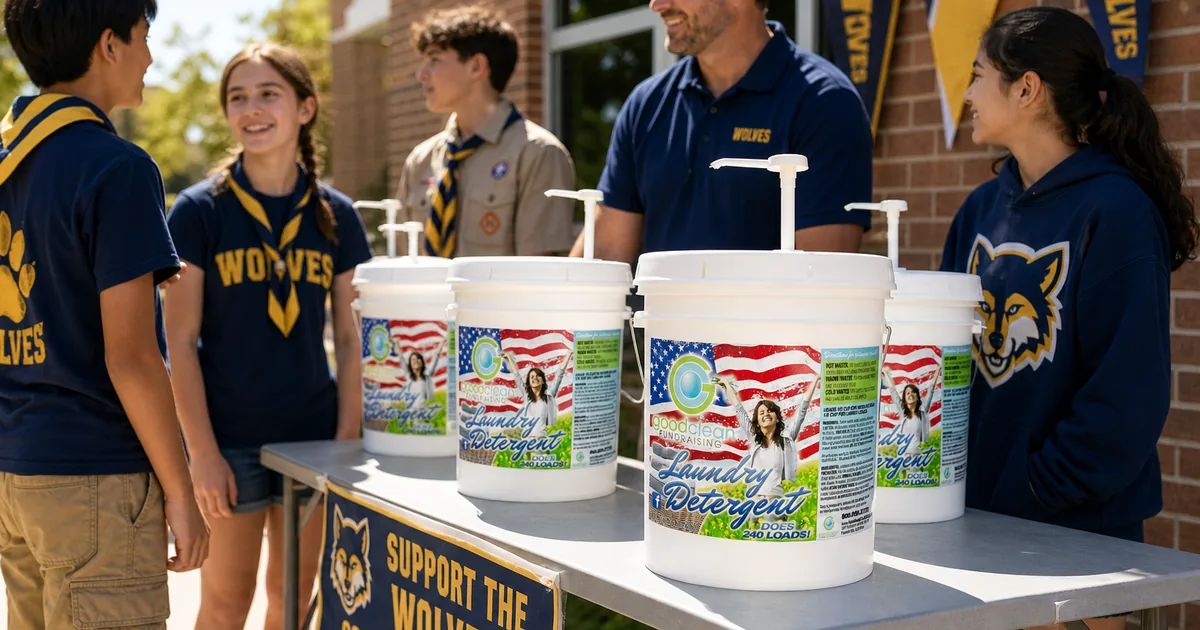
Scout troops raise money fastest with product fundraisers that sell household necessities people already buy, combined with a tight two-to-three-week timeline and a strong kickoff. Speed comes from three things: choosing a product with broad appeal so families find buyers quickly, setting a firm deadline to create urgency, and making participation easy so more scouts take part. Necessity-based fundraisers — laundry detergent, cleaning products, or similar staples — often outperform novelty items because the buyer pool is wider and supporters feel they are getting real value. The timeline matters as much as the product: a focused two-week push with clear milestones raises more than a month-long campaign that loses momentum.
When a scout troop needs money fast, the instinct is often to pick the first fundraiser that promises quick cash. But speed is not just about the calendar — it is about how many scouts participate, how fast they find buyers, and whether the product is something people actually want.
The troops that raise money quickly are not necessarily running the flashiest campaigns. They are running simple, focused drives with products that have broad appeal, tight deadlines that create urgency, and clear communication that gets everyone moving on the same day.
This guide covers what makes a fundraiser genuinely fast, the best quick-turnaround options for scout troops, realistic timelines for each, how to structure a two-to-three-week campaign for maximum momentum, and the mistakes that slow troops down when speed matters most.
- Speed in fundraising comes from broad participation and fast buyer conversion, not just a short timeline.
- Household-necessity products reach more buyers faster than novelty items because nearly every household needs them.
- A focused two-to-three-week campaign with a firm deadline raises more than a longer, open-ended one.
- A strong kickoff where all scouts start on the same day drives most of the early momentum.
- No-upfront-cost programs remove financial risk and let troops start immediately.
- The fastest fundraisers are the simplest to explain and the easiest for scouts to sell.
What does 'fast' actually mean for a scout troop fundraiser?
Fast has two meanings: how quickly you can launch, and how quickly you raise the money once you start. A truly fast fundraiser scores well on both. It requires no upfront inventory purchase or long lead time, and once it launches, scouts find buyers quickly because the product has wide appeal.
The mistake troops make is confusing a short timeline with speed. A one-week campaign sounds fast, but if only a handful of scouts participate or they struggle to find buyers, the total comes in low. Real speed comes from high participation and fast conversion — more scouts selling, and each finding buyers without a hard pitch.
What are the fastest fundraisers for scout troops?
The fundraisers that move fastest share three traits: no upfront cost or inventory to manage, a product or activity with broad appeal, and simple logistics that do not require weeks of planning. Here are the options that often deliver quick results for scout troops.
Household-necessity product fundraisers
Selling a consumable household staple — laundry detergent, cleaning supplies, or similar necessities — is one of the fastest options because the buyer pool is nearly universal. Every household needs these products, so scouts are not hunting for a niche buyer; they are offering something supporters were going to purchase anyway, often at a better price than retail.
Good Clean Fundraising's program has no upfront cost and includes a Getting Started packet, instructions, marketing materials, and social media strategies. A troop can start as soon as it is ready, run for two to three weeks, and collect orders without managing inventory. The speed comes from ease of selling: scouts are not making a pitch, they are offering a practical swap.
Car washes and service events
A well-organized car wash can raise money in a single day, but speed depends entirely on location, weather, and volunteer turnout. The advantage is immediacy — cash in hand the same day. The downside is that total dollars raised are capped by how many cars you can wash in a few hours, and a rainy Saturday kills the whole event.
Service events work best as a supplement to a product fundraiser, not a replacement. They are fast if everything aligns, but they carry more risk and usually raise less per hour of volunteer effort than a well-run product campaign.
Direct-ask and online giving campaigns
A straightforward ask — via email, social media, or an online donation page — can bring in money within days. The setup is minimal, and supporters who want to help can give immediately. The challenge is that many direct-ask campaigns may raise less per supporter than a product fundraiser because there is no tangible value exchange, and donor fatigue sets in quickly if a troop asks too often.
These work well for small, urgent gaps or as a secondary channel alongside a product drive, but they rarely match the total a necessity-based product fundraiser delivers over the same two-week window.
Why household-necessity fundraisers are usually the fastest
When speed is the priority, necessity-based product fundraisers often outperform other options because they remove the two biggest bottlenecks: finding buyers and making the sale. A scout selling detergent reaches grandparents, neighbors, coworkers, and friends — nearly everyone — because everyone needs it. A scout selling a novelty item or treat reaches only the subset of people who want that specific thing.
The sale itself is faster, too. There is no convincing required when the product is something the buyer already purchases and the price is better than the store. Supporters are not doing the troop a favor by overpaying for something they do not need; they are getting genuine value while backing the troop. That difference in buyer psychology is what makes these campaigns move quickly.
How long does a fast scout troop fundraiser actually take?
A realistic fast fundraiser for a scout troop runs two to three weeks from kickoff to order collection. That is long enough for every scout to reach their network but short enough to maintain urgency. Troops that try to compress it into one week often see lower participation because families need a few days to connect with buyers; troops that let it drift past three weeks lose momentum and raise less than a tighter window would have delivered.
The timeline breaks down roughly like this: a kickoff meeting or communication to launch everyone on the same day, a two-to-three-week selling window with one or two reminders, and a firm collection deadline. Add a few days on either end for setup and delivery, and the whole campaign runs three to four weeks start to finish.
How do you structure a two-to-three-week campaign for speed?
The structure is simple: set a clear goal, pick a firm start and end date, hold a real kickoff, and send two reminders during the selling window. The kickoff is the most important piece — when all scouts start on the same day with a clear explanation of the goal and the product, participation is higher and orders come in faster. Troops that skip the kickoff and let families start whenever they get around to it see far lower engagement.
Reminders matter, too. A mid-campaign check-in and a final few-days-left push keep the fundraiser visible without nagging. The key is to make both reminders action-focused: share a progress update, recognize top sellers, and restate the deadline. Urgency drives speed, and a deadline only works if you hold to it.
How many buckets does a troop need to sell to hit a dollar goal?
If your troop has a specific dollar goal, the question becomes a bucket-count question. At about $13.45 to $15.45 profit per bucket, work backward: divide your goal by the per-bucket profit to find how many buckets you need, then divide that by the number of active scouts to see how many each scout should aim for.
For example, if your troop wants to raise a certain amount and you have twenty active scouts, you can calculate how many buckets each scout needs to sell to reach the goal. Many scouts may be able to sell a handful of buckets in two weeks when the product is a household necessity and the price is roughly half the per-ounce price of premium national brands — the math becomes manageable when the buyer pool is wide.
What slows scout troops down when they need money fast?
The most common speed killers are choosing a product with narrow appeal, skipping a real kickoff, leaving the timeline open-ended, and requiring upfront payment for inventory. A novelty product limits who will buy, which means scouts spend more time hunting for the few interested buyers. No kickoff means scouts trickle in over days or weeks instead of launching together, and an open-ended timeline kills urgency. Upfront inventory cost adds a financial barrier and delays launch while the troop scrambles to front the money.
The other mistake is overcomplicating the process. If a scout cannot explain the fundraiser in one sentence, it is too complex to move fast. Simple, clear, and focused always beats elaborate when speed is the goal.
Common mistakes to avoid
Choosing a product with narrow appeal
A novelty item or niche product limits the buyer pool, which slows sales and caps participation. Broad appeal is the foundation of speed.
Skipping a real kickoff
When scouts start whenever they get around to it, momentum never builds. A single kickoff day where everyone launches together drives the early wave of orders.
Leaving the timeline open-ended
A fundraiser without a firm deadline loses urgency, and participation fades. A two-to-three-week window with a hard end date raises more than a month-long campaign.
Requiring upfront inventory payment
Fronting money for inventory adds financial risk and delays launch. No-upfront-cost programs let troops start immediately and remove the risk if the campaign raises less than hoped.
Overcomplicating the process
If a scout cannot explain the fundraiser in one sentence, it is too complex to move fast. Simple, clear, and focused always wins when speed matters.
- Good Clean Fundraising program terms — $49.95 per bucket; $13.45 profit per bucket at 100 to 299 buckets (usually $5 to $12 at 50 to 99 buckets, depending on actual shipping costs), $14.45 at 300 to 499, $15.45 at 500 or more; $0 upfront cost; free shipping at 100+ buckets; 50-bucket minimum (smaller orders are not accepted); 100% money-back guarantee under which, according to the company, any customer who is not satisfied is refunded and the group keeps its profit. — GCF pricing, GCF how it works, and GCF refund and returns.
- Detergent price comparison — per-ounce pricing for premium national-brand liquid laundry detergent, surveyed at major U.S. retailers September 2026 (typically 14 to 19 cents per ounce; example source: a leading national retailer). A 5-gallon (640 oz) bucket at $49.95 is about 7.8 cents per ounce. Prices vary by brand, size, store, and region; some value-tier and store brands cost less per ounce. Range reflects a market survey; individual prices will vary.
- Editorial guidance: timelines and general planning advice on this page reflect the authors' editorial judgment and common youth-group fundraising practice; they are not based on measured campaign data or a cited study. Per-bucket profit figures reflect Good Clean Fundraising program terms; actual results depend on troop size, participation, and local conditions.
Our recommendation for scout troops that need money fast
If your troop needs to raise money quickly, start with a household-necessity product fundraiser — it is an option designed for short windows when broad buyer appeal is important. Good Clean Fundraising's bulk laundry-detergent program is built for exactly this: troops sell 5-gallon pump buckets of detergent for $49.95, supporters pay roughly half the per-ounce price of premium national brands, and your troop keeps about $13.45 to $15.45 per bucket at 100 or more buckets, depending on order volume. There is no upfront cost, free shipping on orders of 100 buckets or more, and the program includes a Getting Started packet, instructions, marketing materials, and social media strategies. A troop can run the campaign in two to three weeks, and because the product is a household necessity, scouts may find buyers more quickly. Good Clean Fundraising advertises a 100% money-back guarantee under which, according to the company, any unsatisfied customer is refunded and the group keeps its profit.
Frequently asked questions
The fastest way for a scout troop to raise money is to sell a household-necessity product like laundry detergent with a tight two-to-three-week timeline and a strong kickoff. Speed comes from broad appeal — nearly every household needs the product — and ease of selling, so scouts find buyers quickly without a hard pitch. A focused timeline with a firm deadline creates urgency and keeps participation high.
Household-necessity product fundraisers can be among the fastest because they can reach a wide buyer pool and require no upfront cost or inventory management. A troop can start as soon as it is ready, run for two to three weeks, and collect orders without the logistics that slow other fundraisers down. The product sells itself because supporters are buying something they already need at a better price.
A realistic fast fundraiser runs two to three weeks from kickoff to order collection. That is long enough for every scout to reach their network but short enough to maintain urgency. Add a few days on either end for setup and delivery, and the whole campaign takes three to four weeks start to finish.
It depends on your troop's goal and how many scouts are participating. At about $13.45 to $15.45 profit per bucket, divide your dollar goal by the per-bucket profit to find the total bucket count, then divide by the number of active scouts. Many scouts may be able to sell several buckets in two weeks when the product is a household necessity priced at roughly half the per-ounce price of premium national brands.
Not with no-upfront-cost programs. Many household-necessity fundraisers, including Good Clean Fundraising's detergent program, let troops collect orders first and never front money for inventory. That removes financial risk and lets troops start immediately, which is critical when speed matters.
The biggest speed killers are choosing a product with narrow appeal, skipping a real kickoff so scouts never start together, leaving the timeline open-ended, and requiring upfront payment for inventory. Overcomplicating the process also slows things down — if a scout cannot explain the fundraiser in one sentence, it is too complex to move fast.
Necessity products reach a much wider buyer pool because nearly every household needs them, so scouts find buyers quickly. The sale is easier, too — supporters are not doing the troop a favor by overpaying for something they do not need; they are getting real value at a better price than retail. That removes the friction that slows novelty-item sales.
Hold a strong kickoff so all scouts start on the same day, set a firm two-to-three-week deadline, and send two reminders during the selling window — one at the midpoint and one a few days before the deadline. Urgency drives speed, and a deadline only works if you hold to it. Troops that let campaigns drift past three weeks often raise less than a tighter window delivers.
A one-week campaign is possible but usually raises less than a two-to-three-week window because families need a few days to connect with buyers. If you absolutely need a one-week turnaround, focus on a product with the broadest possible appeal, hold a strong kickoff, and communicate the urgency clearly. But adding one more week can give more families time to respond without losing much speed.
The Good Clean Fundraiser is Good Clean Fundraising's bulk laundry-detergent program. Scout troops sell 5-gallon pump buckets for $49.95, supporters pay roughly half the per-ounce price of premium national brands, and troops keep about $13.45 to $15.45 per bucket at 100 or more buckets. There is no upfront cost, free shipping on larger orders, a Getting Started packet, instructions, marketing materials, and social media strategies, and an advertised 100% money-back guarantee. It is designed to be simple to start — troops can start as soon as they are ready and run the whole campaign in two to three weeks.
Speed in fundraising is not about cutting corners — it is about removing friction. Choose a product people already want, set a tight timeline with a real deadline, and make it easy for every scout to participate. Do that, and your troop can make real progress in two weeks.