
Sports & Athletic Team Fundraising
High School Athletic Program Fundraising Ideas That Actually Work
The fundraising strategies high school coaches and athletic directors use to fund teams, travel, equipment, and facilities — without burning out volunteers or asking families to sell door-to-door.
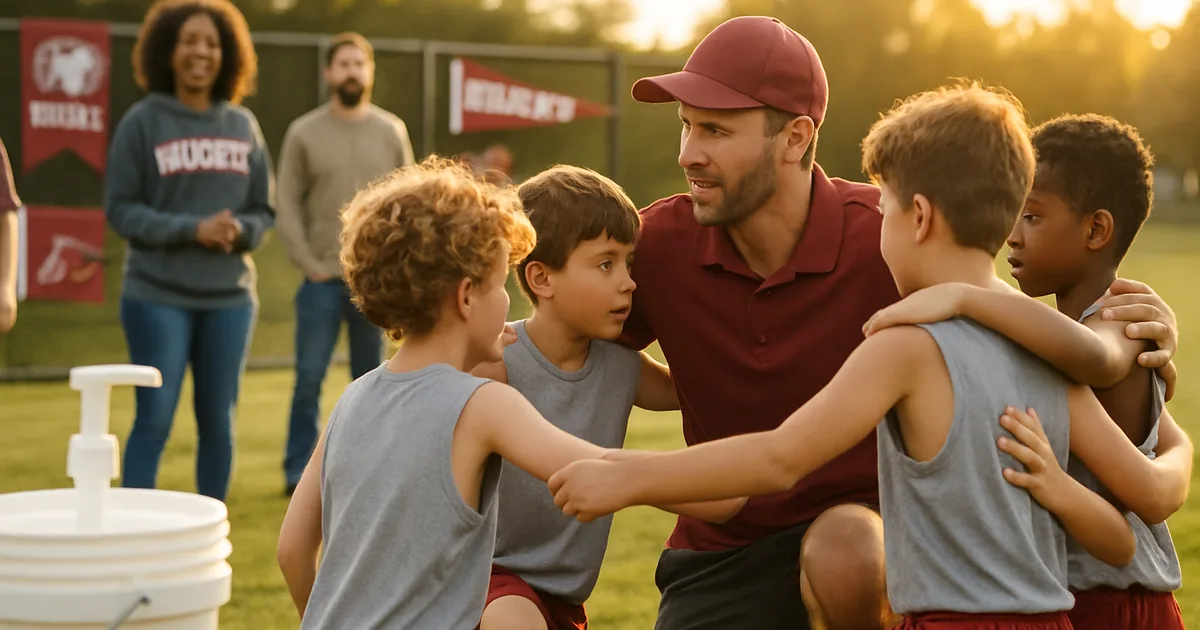
The most effective high school athletic fundraisers share three traits: they sell products or services people already need rather than novelty items, they require no upfront investment from the program, and they reach a wide base of supporters beyond just team families. Household-necessity fundraisers — especially bulk laundry detergent programs — can outperform traditional product sales because every supporter already buys detergent, the per-unit profit is strong, and athletes can sell to extended family, neighbors, and coworkers without the awkwardness of door-to-door pitches. Other high-performing options include sponsorship campaigns, team-branded apparel with pre-orders, and community events that deliver value to attendees. The programs that raise the most combine a genuinely useful product with a short, focused campaign window and clear communication of how the funds will be used.
High school athletic programs run on tight budgets, and the gap between what schools fund and what teams actually need keeps widening. Uniforms, travel, facility improvements, and equipment upgrades all fall to coaches, athletic directors, and booster clubs to figure out — which usually means fundraising.
The challenge is that the old playbook is not working the way it used to. Cookie dough and candy bar sales hit buyer fatigue years ago, car washes depend on weather and location, and anything that requires athletes to go door-to-door creates safety concerns and low participation. The programs raising serious money today have shifted to a different model: they sell things people genuinely need, they remove the upfront inventory risk from the athletic department, and they make it easy for athletes to reach supporters digitally.
This guide covers what works now for high school sports fundraising — the products and strategies that often raise more, how to structure a campaign that does not burn out your volunteers, the profit models that make sense at scale, and the mistakes athletic programs make that cost them money every season.
- The highest-grossing high school sports fundraisers sell household necessities rather than treats or novelty items, because the buyer pool is dramatically wider.
- No-upfront-cost programs eliminate the upfront inventory risk for the athletic department and remove a major barrier to trying a new fundraiser.
- Household-necessity products like bulk laundry detergent reach grandparents, neighbors, and coworkers who would never buy a dessert item, which multiplies participation.
- Sponsorship campaigns work well when paired with visibility — banners, programs, social media — but require dedicated outreach to local businesses.
- Team apparel fundraisers succeed when structured as pre-orders with no leftover inventory risk.
- Short, focused campaign windows of two to three weeks outperform open-ended fundraisers that drag on for months.
- Clear communication about how funds will be used — specific goals like new uniforms or tournament travel — drives higher participation and larger individual contributions.
Why do traditional high school sports fundraisers raise less than they used to?
Three forces have eroded the effectiveness of the fundraisers athletic programs relied on for decades. First, buyer fatigue: families are asked to purchase cookie dough, candy, popcorn, and discount cards multiple times per year across siblings and community groups, and supporters have simply stopped buying. Second, the door-to-door model has fallen out of favor for safety reasons, and digital alternatives have not replaced the reach it once provided. Third, the products themselves often deliver poor value — a marked-up novelty item where most of the price goes to the fundraising company, leaving supporters feeling like they overpaid for something they did not need.
In our editorial view, programs that run the same traditional fundraiser year after year often see the same pattern: participation drops, average sales per athlete decline, and the total raised plateaus or falls even as the program's needs grow. The programs that have reversed this trend made one key change — they switched from selling what the fundraising industry wanted to sell to selling what supporters actually want to buy.
What are the best fundraising ideas for high school sports teams?
The strongest options fall into three categories, each with different strengths depending on your program's size, volunteer capacity, and goals.
Household-necessity product fundraisers
This category has become the default replacement for traditional product sales, and the reason is straightforward: everyone needs household staples, so the buyer pool is not limited to people who want a treat. Bulk laundry detergent fundraisers are the standout here. Programs sell 5-gallon buckets of laundry detergent for $49.95 — roughly half the per-ounce cost of premium national brands at retail — and athletic programs keep $13.45 to $15.45 per bucket at 100 or more buckets, depending on order volume, with free shipping on orders of 100 buckets or more.
The practical advantages are significant. Detergent is non-perishable, so there is no timed delivery scramble or spoilage risk. It ships and stores easily. Athletes can sell to extended family, neighbors, and coworkers without the awkwardness of pushing an overpriced novelty — they are offering a product people already buy at a genuinely better price. And because it is a consumable item households repurchase regularly, programs can run the same fundraiser multiple times without exhausting their supporter base.
Athletic programs that switch from cookie dough or candy to a household-necessity model may see participation rise — more athletes find buyers, and each athlete may sell more units — because a household staple is easier to sell. Supporters are not doing the team a favor by overpaying for something they do not need; they are stocking up on something they use every week and saving money while supporting the program.
Sponsorship and business partnership campaigns
Sponsorships work well for programs that can offer visibility in return — banners at games, logos in programs, social media recognition, or naming rights for events. The key is treating it as a business transaction rather than a donation request: companies sponsor because they get exposure to your audience, not out of charity.
Successful sponsorship campaigns segment asks into tiers — a few high-dollar anchor sponsors and a larger number of smaller contributors — and assign specific volunteers to handle outreach. The programs that raise the most from sponsorships are the ones that make it easy: they provide a one-page overview of sponsorship benefits, follow up promptly, and deliver on visibility promises. Local businesses that sponsor once will often renew if the program communicates results and acknowledges them visibly.
Team apparel and spirit wear
Apparel fundraisers succeed when structured as pre-orders with no leftover inventory. The program partners with a supplier, opens an online store for a set window, collects orders and payment upfront, and the supplier produces and ships only what was ordered. This removes the risk of unsold inventory sitting in a coach's garage.
The profit margin is typically moderate, but the appeal is broad — team families, alumni, students, and community supporters all buy. The key is offering quality items people will actually wear, not the cheapest option available. Programs that treat this as an annual tradition and build anticipation around the launch tend to see strong repeat participation.
How much can a high school sports team raise with a product fundraiser?
Total dollars raised depends on three variables: how many athletes actively participate, how many units each athlete sells on average, and the profit per unit. A team of 30 athletes where 25 participate and each sells an average of 10 units at $13.45 to $15.45 profit per bucket (at 100 or more buckets) will raise meaningfully more than a team of 50 athletes where only 15 participate and average 5 units each, even if the second team has a higher per-unit margin.
This is why the product itself matters so much. A household necessity that appeals to nearly every supporter will naturally drive higher participation and higher average sales per athlete than a niche treat product. Athletic programs that track these metrics year-over-year often find that switching to a necessity-based fundraiser raises the total not by improving the margin, but by widening the base of people who buy.
What fundraising mistakes do high school athletic programs make?
The most expensive mistakes are the ones that look like safe, traditional choices.
Choosing a fundraiser with upfront inventory costs
Programs that front money for inventory take on financial risk if the campaign underperforms. No-upfront-cost programs — where the athletic department collects orders first and never pays for unsold product — eliminate that inventory risk. For a high school program operating on a tight budget, this is not a minor detail.
Running campaigns that drag on for months
Open-ended fundraisers lose momentum. A focused two-to-three-week campaign with a clear deadline creates urgency and keeps athletes engaged. Programs that leave fundraisers open indefinitely often raise less than those that set a firm end date and communicate it from the start.
Failing to communicate how funds will be used
Supporters give more when they know exactly what they are funding. A vague ask for 'the team' raises less than a specific goal like 'new uniforms for the varsity squad' or 'tournament travel to state finals.' Athletic programs that set a clear, visible goal and update progress publicly tend to see higher participation and larger individual contributions.
Sticking with a low-performing fundraiser out of habit
Many programs run the same fundraiser every year because it is familiar, even when results have declined. The switching cost is low — most new programs provide all materials and support — and the upside of moving to a higher-performing model can be substantial. If your current fundraiser is not hitting your goals, the problem is usually the product, not your athletes or supporters.
| Factor | Traditional (Treat) Fundraiser | Necessity-Based Fundraiser |
|---|---|---|
| Buyer pool | People who want a treat | Nearly every household |
| Repeat potential | One-time purchase | Repurchased regularly |
| Upfront cost | Often requires inventory order | No upfront cost options |
| Logistics | Can be perishable, timed delivery | Non-perishable, ships easily |
| Profit per unit | Moderate | $13.45–$15.45 per bucket |
Common mistakes to avoid
Choosing a fundraiser with upfront inventory costs
Programs that pay for inventory before collecting orders take on financial risk if participation is lower than expected. No-upfront-cost programs eliminate that risk.
Running open-ended campaigns with no deadline
Fundraisers without a firm end date lose momentum and raise less. A focused two-to-three-week window creates urgency and drives participation.
Selling products supporters do not actually need
Novelty and treat items appeal to a narrow buyer pool. Household necessities reach far more supporters and drive higher per-athlete sales.
Failing to communicate a specific funding goal
Vague asks raise less than specific goals. Supporters give more when they know exactly what their purchase funds — new uniforms, travel, equipment.
Sticking with a low-performing fundraiser out of habit
Many programs repeat the same fundraiser every year even as results decline. Switching to a higher-performing model is low-risk and can substantially increase what you raise.
- Good Clean Fundraising program terms — $49.95 per bucket; $13.45 profit per bucket at 100 to 299 buckets (usually $5 to $12 at 50 to 99 buckets, depending on actual shipping costs), $14.45 at 300 to 499, $15.45 at 500 or more; $0 upfront cost; free shipping at 100+ buckets; 50-bucket minimum (smaller orders are not accepted); 100% money-back guarantee under which, according to the company, any customer who is not satisfied is refunded and the group keeps its profit. — GCF pricing, GCF how it works, and GCF refund and returns.
- Detergent price comparison — Good Clean Fundraising's stated comparison: retail liquid laundry detergent commonly runs about 14 to 19 cents per ounce, while a 5-gallon (640 oz) bucket at $49.95 works out to about 7.8 cents per ounce. Company-supplied figures; retail prices vary by brand, size, store, and region, and value-tier or store brands can cost less.
- Editorial guidance: general planning advice on this page reflects the authors' editorial judgment and common youth-sports fundraising practice; it is not based on measured campaign data or a cited study. Dollar figures in examples are illustrative, not sourced averages.
Our recommendation for high school athletic programs
If your program needs to raise serious money without upfront cost or complex logistics, a household-necessity fundraiser is the strongest option available. Good Clean Fundraising runs The Good Clean Fundraiser, a bulk laundry-detergent program built specifically for teams and athletic departments: athletes sell 5-gallon buckets of laundry detergent for $49.95 — roughly half the per-ounce price of premium national brands — and your program keeps $13.45 to $15.45 per bucket at 100 or more buckets, depending on order volume, with no money down, free shipping on orders of 100 or more, and a Getting Started packet, instructions, marketing materials, and social media strategies. Good Clean Fundraising advertises a 100% money-back guarantee under which, according to the company, any unsatisfied customer is refunded and the group keeps its profit. This is the fundraiser athletic directors and coaches switch to when they need a program that works, raises more, and does not burn out volunteers. Good Clean Fundraising requires a 50-bucket minimum order; at 50 to 99 buckets, profit is usually $5 to $12 per bucket depending on actual shipping costs.
Before committing, verify four practical fit questions: Can your confirmed buyer network reach the 50-bucket program minimum? Is there local demand for a five-gallon bulk product? Does your delivery point have a commercial address with unloading capacity — the company recommends a location with a loading dock or forklift? And can you coordinate pickup and distribution of product to supporters from that point? A “yes” to all four makes this one of the most straightforward paths to your season funding goal.
Frequently asked questions
The best fundraiser for most high school athletic programs is one that sells a household necessity like bulk laundry detergent, because it reaches a far wider base of supporters than treat or novelty products, requires no upfront cost, and delivers strong per-unit profit. Programs typically keep $13.45 to $15.45 per bucket at 100 or more buckets, and athletes can sell to extended family, neighbors, and coworkers without the awkwardness of pushing an overpriced item.
Total raised depends on how many athletes participate, how many units each sells, and profit per unit, so there is no single answer. A team of 30 athletes where 25 actively participate and each sells 10 units at $13.45 to $15.45 profit per bucket (at 100 or more buckets) will raise substantially more than a larger team with lower participation. The product matters because necessity items naturally drive higher participation and sales per athlete than novelty products.
No-upfront-cost product fundraisers — especially household-necessity programs like bulk laundry detergent — are ideal for athletic departments that cannot front money for inventory. The group collects orders and payment first, then submits the final order with payment, so the athletic department never pays for unsold product. Sponsorship campaigns and pre-order apparel fundraisers also require no upfront investment.
Yes, and they have become one of the most popular replacements for traditional product sales. High school teams sell 5-gallon buckets of detergent for $49.95 — roughly half the per-ounce price of premium national brands — and keep $13.45 to $15.45 per bucket at 100 or more buckets. The buyer pool is much wider than treat products because every household needs detergent, and athletes can sell digitally to extended networks without going door-to-door.
Two to three weeks is the sweet spot for most high school athletic fundraisers. A short, focused campaign creates urgency and keeps athletes engaged, while open-ended fundraisers that drag on for months lose momentum and raise less. Set a clear end date at the kickoff and communicate it often.
The most common and costly mistakes are choosing a fundraiser that requires upfront inventory costs, running campaigns with no firm deadline, selling products supporters do not actually need, failing to communicate a specific funding goal, and repeating the same low-performing fundraiser year after year out of habit. Each of these costs programs thousands of dollars per season.
Yes, and most successful programs today do not rely on door-to-door selling at all. Athletes share order forms or links digitally with extended family, neighbors, and their parents' coworkers. When the product is a household necessity offered at a genuinely good price, supporters buy because they want the product, not because they feel obligated. This approach is safer, more comfortable for athletes, and often raises more.
Sponsorships work best when structured as a business transaction: local companies pay for visibility — banners at games, logos in programs, social media recognition — in exchange for exposure to your audience. Successful programs segment sponsorship tiers, assign volunteers to handle outreach, and deliver on visibility promises. Companies that sponsor once often renew if the program communicates results and acknowledges them publicly.
The Good Clean Fundraiser is Good Clean Fundraising's bulk laundry-detergent program designed for athletic programs. Teams sell 5-gallon buckets for $49.95, supporters pay roughly half the per-ounce price of premium national brands, and programs keep $13.45 to $15.45 per bucket at 100 or more buckets with no upfront cost, free shipping on orders of 100 or more buckets, a Getting Started packet, instructions, marketing materials, and social media strategies, and an advertised 100% money-back guarantee under which, according to the company, unsatisfied customers are refunded and the group keeps its profit.
High school athletic programs that raise the most money are not the ones with the biggest budgets or the most experienced volunteers — they are the ones that picked a fundraiser people actually want to buy, removed the upfront inventory risk, and ran a focused campaign with a clear goal. Switch the product to a household necessity, give it a firm deadline, and communicate exactly what the funds will pay for, and your program will raise more this season than it has in years.