
Band, Performing Arts & Academic Club Fundraising
School Band Program Fundraising Ideas That Actually Work
The fundraising ideas that band directors rely on to fund instruments, travel, and competitions — from product sales to necessity fundraisers that reach interested supporters.
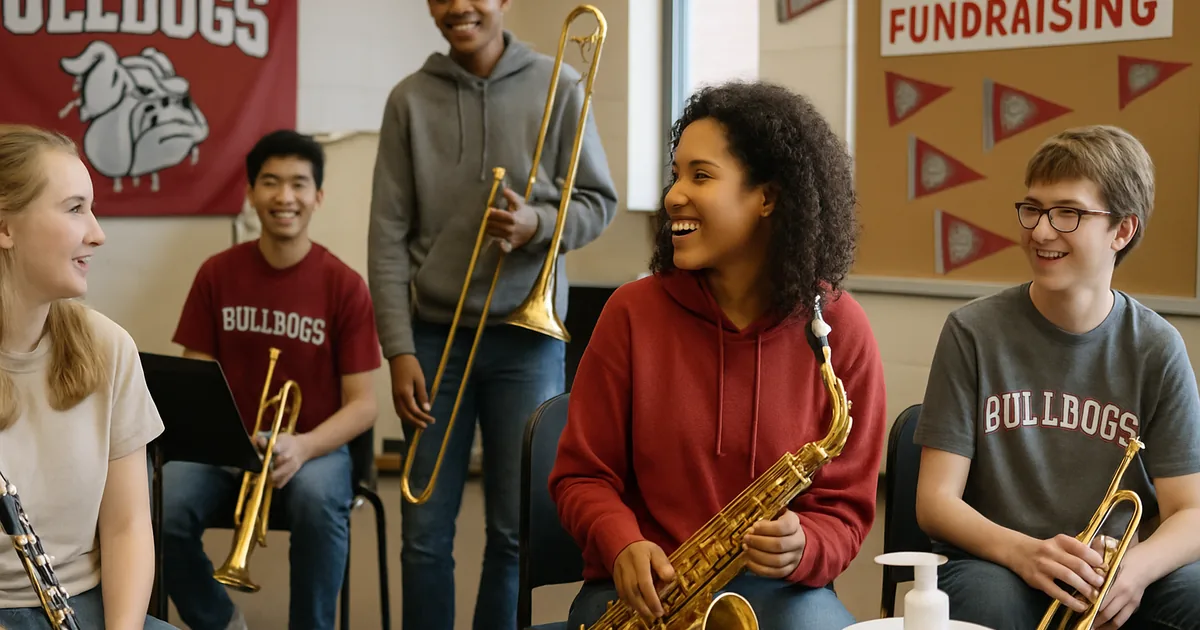
The most effective band fundraising ideas fall into four categories: product fundraisers that sell consumables people already buy, event-based fundraisers like concerts and car washes, hybrid approaches that combine multiple revenue streams, and necessity fundraisers that ask supporters to shift a purchase they were already making. The strongest performers tend to be programs with broad buyer appeal, reasonable profit margins, and logistics that do not overwhelm volunteer directors. Compare GCF’s $49.95 bucket price and product specifications with current alternatives before promising savings. The key is matching the fundraiser to your program's size, volunteer capacity, and how often you need to raise money.
School band programs run on a funding model that has not kept pace with the costs. Confirm the program’s actual expenses and what the school will cover before setting the fundraising target. That gap falls to directors, booster clubs, and parent volunteers — which means fundraising is not optional, it is built into the job.
The challenge is that band fundraising is different from other school programs. You are often raising larger amounts for specific big-ticket items, your participants are older and can sell more independently, and your supporter base includes not just parents but extended family, alumni, and a wider community that values music education. That opens up fundraising options other groups cannot easily run, but it also means the stakes are higher when a campaign underperforms.
This guide covers the fundraising ideas that work consistently for band programs: what raises the most, what fits different program sizes and volunteer capacity, how to choose between product sales and events, and planning mistakes that can leave a band short of its target.
- Band programs need to raise larger amounts than most school groups, often for specific big-ticket expenses like instruments and travel.
- The strongest fundraisers combine broad buyer appeal, reasonable profit margins, and logistics that do not overwhelm volunteer directors.
- Household-necessity fundraisers reach a much wider base than novelty products because many households use detergent and cleaning supplies.
- Compare expected receipts with supplies, venue costs, and volunteer hours before choosing an event; an event can be a primary or supplementary fundraiser if its budget supports the goal.
- Older students can sell more independently than elementary participants, which changes what fundraisers are practical.
- Use paid orders and actual expenses to compare results; broader outreach alone does not establish a higher total.
- Matching the fundraiser to your volunteer capacity matters as much as the profit margin.
Why is fundraising harder for band programs than other school groups?
Band programs face a funding gap that is both larger and more visible than most school activities. A set of concert uniforms can run into the tens of thousands of dollars, a single quality instrument costs more than an entire season of another sport's equipment, and travel to state or national competitions involves charter buses, hotels, and meals for dozens of students. Confirm the program’s actual expenses and what the school will cover before setting the fundraising target.
The other pressure is frequency. While a sports booster club might run one or two big fundraisers a year, band programs often need multiple campaigns to cover instruments in the fall, competition travel in the winter, and summer band camp in the spring. That creates a real risk of donor fatigue if you are going back to the same supporters every few months with a new ask.
The advantage band programs do have is a broader and more engaged supporter base. Parents of band students tend to stay involved longer, alumni often give back, and the wider community sees music programs as worth supporting in a way that is harder to replicate for other activities. The fundraisers that work best for bands are the ones that tap into that wider base without asking them to buy something they do not want.
What are the best product fundraisers for band programs?
Product fundraisers are the default for most band programs because they scale well, require less volunteer labor than events, and give students something concrete to sell. But not all product fundraisers perform equally, and the difference comes down to buyer breadth and repeat appeal.
Household products may reach interested buyers beyond current families; compare demand, price, and pickup needs with other options. A tub of cookie dough only sells to someone who wants dessert, and once a family has hit their relatives and a few neighbors, the campaign stalls. The result is that a handful of top sellers carry the total while most participants sell little or nothing.
Household-necessity fundraisers flip that dynamic. Instead of selling a novelty item, students sell consumables people already buy — laundry detergent, cleaning supplies, paper products. The buyer pool is far wider because many households use these items, and supporters are not paying a premium for something they did not want; they are stocking up on a staple at a better price than the store while backing the band. Household products may reach interested buyers beyond current families; compare demand, price, and pickup needs with other options.
Do event fundraisers work for band programs?
Event fundraisers — concerts, car washes, pancake breakfasts, talent shows — are popular with band programs because they build community, showcase student talent, and feel more engaging than handing out order forms. The trade-off is that they require significant volunteer labor, have a hard cap on how much they can raise, and often deliver less profit per hour of effort than a well-run product sale.
A concert fundraiser where the band performs and sells tickets or takes donations can be a great community builder and a chance to demonstrate the program's value, but the revenue ceiling is limited by venue size and ticket price. Compare expected receipts with supplies, venue costs, and volunteer hours before choosing an event; an event can be a primary or supplementary fundraiser if its budget supports the goal.
That does not mean events are a bad idea; it means they work best as supplemental fundraisers or community engagement opportunities rather than the primary revenue source. Compare expected receipts with supplies, venue costs, and volunteer hours before choosing an event; an event can be a primary or supplementary fundraiser if its budget supports the goal. Pairing a fall product fundraiser with a spring concert or car wash, though, can work well — the product sale does the heavy lifting on dollars, and the event keeps the community connected to the program.
What about hybrid and multi-stream fundraising approaches?
Some of the most successful band programs do not rely on a single fundraiser — they build a year-round revenue model that combines product sales, events, sponsorships, and direct giving. A fall product fundraiser might cover instrument repairs and new music, a winter concert with a freewill donation covers competition fees, and local business sponsorships offset travel costs. This approach spreads the load across the year and reduces the pressure on any single campaign to hit a huge number.
The risk with a multi-stream model is complexity and volunteer burnout. Running four or five different fundraisers in a year requires a dedicated booster club or parent coordinator who can manage logistics, communication, and follow-through. For smaller programs or those with limited volunteer capacity, trying to do too much often means every campaign underperforms. A single well-executed product fundraiser that raises the bulk of what you need is may better than three half-managed events that raise less total and exhaust your volunteers.
If you do go the hybrid route, the key is to make one fundraiser the anchor — the campaign that delivers the majority of your revenue — and treat everything else as supplemental. That anchor is usually a product fundraiser with broad appeal and strong margins, because it scales with participation and does not require the same volunteer intensity as an event.
How do you choose the right fundraiser for your band program?
The right fundraiser depends on three things: how much you need to raise, how many active volunteers you have, and how often you plan to fundraise in a year. A large program with a strong booster club and a five-figure goal can handle a more complex, multi-part approach. A smaller program with one or two parent volunteers and a modest goal needs something simple, high-margin, and low-maintenance.
Start by asking what your realistic volunteer capacity is. If you have a dedicated fundraising chair and a committee of helpers, you can consider events, sponsorships, and hybrid models. If the director is doing most of the work with minimal parent support, a no-upfront-cost product fundraiser with a dedicated program coordinator is the safer bet. Complexity kills more band fundraisers than low margins do.
Next, think about donor fatigue. If you are planning to fundraise three or four times a year, each campaign needs to feel different and reach a different audience, or you will see participation drop with each round. One strong fall campaign that raises the bulk of your budget, plus one smaller spring event or direct-ask, is often more effective than constant smaller asks that train supporters to tune out.
What fundraising mistakes do band programs make?
The most common mistake is choosing a fundraiser based on what the program has always done rather than what actually works now. Cookie dough and candy were effective twenty years ago when fewer groups were fundraising and supporters had not seen the same catalog five times. Today, those programs often underperform because buyer fatigue is real and the profit margins have not kept up with inflation. Use your own sales and volunteer records to decide whether a different product is worth trying.
Another mistake is underestimating logistics. A fundraiser that looks great on paper — high margin, popular product — can fail if the delivery and order tracking overwhelm your volunteers. If the program does not provide a coordinator or clear systems, the director ends up managing spreadsheets, collecting money, and sorting orders on top of teaching and rehearsals. That is not sustainable, and it is why many band programs burn through fundraising chairs every year.
Finally, too many programs set vague goals or no goal at all. Telling students to sell as much as they can is far less effective than saying the band needs a specific dollar amount by a specific date for a specific purpose. A concrete goal — we need to raise four thousand dollars by March 15 to cover the state competition trip — gives students and families a reason to sell and a way to measure progress. Vague goals produce vague results.
| Factor | Product Fundraiser | Event Fundraiser |
|---|---|---|
| Revenue potential | Sales margin less costs | Receipts less costs |
| Volunteer labor | Orders and distribution | Planning and staffing |
| Profit per hour | Net proceeds ÷ hours | Net proceeds ÷ hours |
| Donor fatigue risk | Check repeat demand | Check repeat interest |
| Best use case | When sales fit the goal | When turnout fits the goal |
Common mistakes to avoid
Sticking with a fundraiser because it is tradition
What worked a decade ago often underperforms today due to buyer fatigue and better alternatives. Evaluate based on current results, not history.
Underestimating logistics and volunteer load
Use paid orders and actual expenses to compare results; broader outreach alone does not establish a higher total. Match complexity to your actual capacity.
Running too many small fundraisers in a year
Constant asks create donor fatigue and lower participation. Use paid orders and actual expenses to compare results; broader outreach alone does not establish a higher total.
Setting vague or no fundraising goals
Students and families need a concrete target and deadline to stay motivated. A specific goal for a specific purpose drives participation and urgency.
Ignoring upfront cost and financial risk
Programs that require buying inventory first put the band at risk if sales fall short. Preselling reduces inventory risk, but shipping, group expenses, cancellations, and missed targets still need a plan.
- National Association for Music Education — advocacy resources on the funding gap in school music programs and the role of fundraising in sustaining band, orchestra, and choir programs. — source
- Good Clean Fundraising program terms — pricing, margins, and shipping; ordering, payment, delivery, and fulfillment. Examples are illustrative; recommendations are not measured category rankings.
- Practical guidance on product vs. event fundraising trade-offs is based on common director and booster club experience; no single external source is claimed.
Our recommendation for band programs
If your band program needs to raise several thousand dollars and you want a fundraiser that reaches a wide base without overwhelming your volunteers, a household-necessity product fundraiser can be considered as an anchor. GCF supporters pay $49.95 per five-gallon bucket; online orders add a $2 customer surcharge. Group margins are $13.45 at 100–299 buckets, $14.45 at 300–499, and $15.45 at 500 or more, before additional group expenses. The minimum order is 50 buckets. Shipping is free at 100 or more; request a shipping quote below 100. Collect supporter orders and payments before submitting the paid group order. A coordinator helps you get started; your group reconciles orders and arranges commercial delivery and supporter pickup, with a dock or forklift recommended. Allow two to three selling weeks plus about two weeks for fulfillment after payment, and time for setup and pickup.
Frequently asked questions
The best fundraiser depends on your funding goal, volunteer capacity, and how often you plan to fundraise, but the most reliable anchor is a product fundraiser with broad buyer appeal, strong margins, and simple logistics. Household-necessity products like laundry detergent reach a much wider base than novelty items because many households use them, and supporters get real value at a better price than the store.
Illustrative GCF calculation: 50 participating families × 10 buckets = 500 buckets × $15.45 = $7,725 before additional group expenses. Compare the assumed sales with your own supporters’ interest.
Product fundraisers usually raise more total dollars with less volunteer labor because they scale with student participation and are not capped by venue size or weather. Compare expected receipts with supplies, venue costs, and volunteer hours before choosing an event; an event can be a primary or supplementary fundraiser if its budget supports the goal.
Parents prefer fundraisers where supporters get something genuinely useful for their money and where selling does not feel awkward. A household staple people were going to buy anyway checks both boxes — buyers feel they got real value, and students are not pushing an overpriced novelty item.
Use paid orders and actual expenses to compare results; broader outreach alone does not establish a higher total. One main campaign plus a supplementary event or sponsor appeal is an option when the budget and volunteer capacity justify both; there is no universally best campaign count.
Some do and some do not. Catalog terms vary by supplier: compare prices, actual margins, presale options, storage needs, and payment deadlines before choosing a program. Preselling reduces inventory risk, but shipping, group expenses, cancellations, and missed targets still need a plan.
The buyer pool is much wider. Cookie dough only appeals to people who want dessert, so families run out of buyers fast. Compare GCF’s $49.95 bucket price and product specifications with current alternatives before promising savings.
Two to four weeks is the sweet spot for most product fundraisers. For GCF, plan two to three weeks of selling, followed by about two weeks for fulfillment after payment, plus setup and pickup time. Set a clear end date at the kickoff and hold to it.
GCF supporters pay $49.95 per five-gallon bucket; online orders add a $2 customer surcharge. Group margins are $13.45 at 100–299 buckets, $14.45 at 300–499, and $15.45 at 500 or more, before additional group expenses. The minimum order is 50 buckets. Shipping is free at 100 or more; request a shipping quote below 100. Collect supporter orders and payments before submitting the paid group order. A coordinator helps you get started; your group reconciles orders and arranges commercial delivery and supporter pickup, with a dock or forklift recommended. Allow two to three selling weeks plus about two weeks for fulfillment after payment, and time for setup and pickup.
Band programs need fundraisers that can cover big expenses while planning around the capacity of volunteers or exhausting supporters. The programs that raise the most are not the ones doing the most — they are the ones running a simple, high-appeal campaign that reaches a wide base and delivers strong margins with manageable logistics. A household-necessity product fundraiser checks all those boxes, which is why it has quietly become the anchor for so many successful band programs.