
Booster Club Fundraising
Cheer Booster Club Fundraising Ideas That Actually Work
The best fundraising ideas for cheer booster clubs — from high-profit product sales to no-upfront-cost programs that reach more supporters and raise more per family.
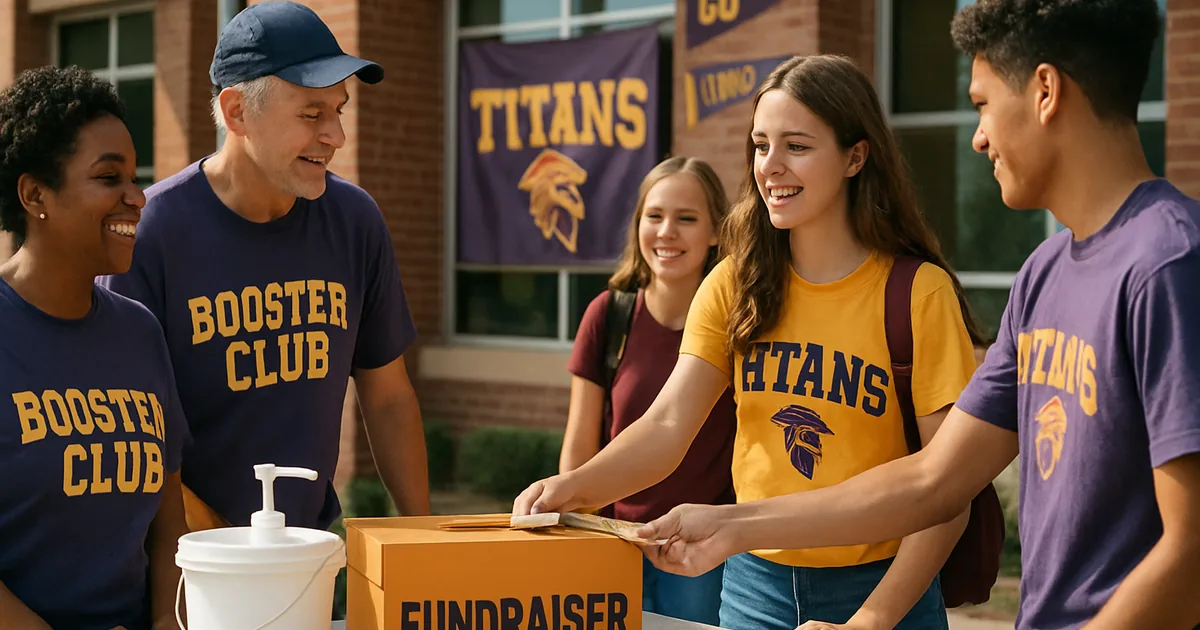
Cheer booster clubs need a fundraiser that fits their roster, expense deadlines, and volunteer capacity. Compare product sales, showcases or clinics, and sponsorships on expected net proceeds and workload. Household necessities such as detergent are one product option, not a proven winner over treats. Pre-orders reduce advance-inventory exposure, while minimums, delivery, and other costs still need a budget. Choose around actual supporter interest and repeat only when demand supports another campaign.
Cheer booster clubs face a unique fundraising challenge: the costs are high — uniforms, competition fees, travel, coaching, and facility rentals add up fast — but the pool of active participants is often smaller than a football or basketball program, so fewer families are doing the selling. That means every fundraiser has to work harder: reach more people, raise more per family, and take less time to run.
Hitting a goal does not necessarily require more fundraisers; it can mean choosing better-fitting ones. Some coordinators shift from low-margin, high-effort events toward programs that sell products people want, carry acceptable profit margins, and take less volunteer labor. The shift is less about creativity and more about choosing fundraisers that match how busy families actually participate.
This guide covers fundraising options for cheer booster clubs: how product fundraisers compare with events, how to compare projected net proceeds, how to choose between traditional and necessity-based programs, what to avoid, and a clear recommendation for clubs that want a simple, high-profit option they can run multiple times a year.
- Use your actual cheer roster and expected participation to set the workload; program sizes vary.
- Compare product campaigns and events using estimated net proceeds and volunteer hours; neither format always wins.
- Household staples may interest some supporters beyond cheer families; confirm bulk-product demand.
- No-upfront-cost programs reduce advance-inventory exposure, which is critical for booster clubs operating on limited budgets.
- The strongest fundraisers give supporters real value rather than asking them to overpay for a novelty item.
- Compare the combined net proceeds and workload of repeat campaigns with a single event before choosing a calendar.
- Participation, units per family, margin, and additional costs jointly determine proceeds.
Why do cheer booster clubs need different fundraising strategies than other sports?
Cheer programs carry costs comparable to football or basketball — uniforms, competition entry fees, choreography, travel, and coaching — but the roster is usually smaller, which means fewer families sharing the fundraising load. A football booster club might have sixty families selling; a cheer club might have twenty. That smaller base means each family has to raise more, and the fundraiser has to reach well beyond the participant families to hit the goal.
The other difference is timing. Cheer seasons vary — some squads compete in fall, some in winter, some year-round — so booster clubs often need fundraisers they can run multiple times without burning out supporters. A single big event might work once, but it is hard to repeat. A simple product sale, on the other hand, can run two or three times a year if the product is something people actually use and repurchase.
What are the best types of fundraisers for cheer booster clubs?
The fundraisers that work best for cheer clubs fall into a few clear categories, each with trade-offs around profit, effort, and how often you can run them.
Product fundraisers: the reliable backbone
Product sales are one repeatable option; confirm volunteer duties and expected demand before choosing. The key is choosing a product with broad appeal and a strong margin. Traditional options like cookie dough, candy, and popcorn still work, but they share the same limitation: they only appeal to people who want a treat, which caps how many buyers each family can find. Household-necessity products — laundry detergent, cleaning supplies, paper goods — may interest different buyers, but still depend on price, quantity, and preferences.
The profit structure matters as much as the product. Look for programs where the group keeps a meaningful share per item and where there is no upfront cost, so the club is not fronting money for inventory that might not sell. A pre-order structure may be especially useful for cheer clubs operating on thin margins that cannot absorb unsold stock.
Events and activities: high effort, high variability
Cheer showcases, car washes, pancake breakfasts, and similar events can raise solid money, but they come with trade-offs. They require significant volunteer labor, depend heavily on weather and timing, and are hard to repeat more than once or twice a year without participation fatigue. For clubs with strong parent engagement and time to organize, an annual showcase or clinic can work well as a supplementary fundraiser. As the primary strategy, though, events need an attendance, expense, and staffing estimate before comparison with a product sale.
If you run an event, keep it manageable and use appropriate supervision. A cheer clinic for younger children needs qualified adult instruction, age-appropriate activities, school approval, and a review of venue, safeguarding, and insurance requirements before advertising.
Sponsorships and donations: valuable but limited
Local business sponsorships and direct donation campaigns can bring in meaningful dollars with minimal logistics, but they are hard to scale and difficult to repeat frequently. Most businesses have annual sponsorship budgets, so once you have secured a sponsor, you are unlikely to go back to them multiple times in the same year. Sponsorships can work as a supplement to product fundraisers; compare their net proceeds with your other options.
How do you choose the right fundraiser for your cheer booster club?
Start by asking four questions. First, how much do you need to raise, and by when? A club that needs a few thousand dollars in two months has different needs than one building toward a ten-thousand-dollar goal over a season. Second, how many active families do you have, and how much can you realistically expect each to sell? If you have twenty families and need four thousand dollars, each family needs to generate about two hundred dollars in profit — work backward from there to see what product and price point gets you there. Third, do you have the volunteer capacity to run an event, or do you need something families can do on their own time? And fourth, is there any upfront cost or financial risk?
The answers to those four questions will narrow your options quickly. For some cheer clubs, the answers point to a no-upfront-cost product sale with broad appeal and strong per-item profit; others may prefer events or sponsorships.
What makes a household-necessity fundraiser work so well for cheer clubs?
Household-necessity fundraisers — selling laundry detergent, cleaning products, or similar staples — are options to evaluate for buyer interest and repeat potential. Because the product is something many households purchase, it may interest supporters who prefer that product to treats. Families are not asking supporters to buy something extra; they are asking them to shift one purchase from the store to the fundraiser, at a price they can compare. That is an easier sell, and it works with grandparents, neighbors, coworkers, and community members who would never buy cookie dough.
The repeat factor is just as important. A household staple gets used up and repurchased, so some supporters may want another purchase later. That may support repeat campaigns, but survey demand and compare the workload before scheduling them.
For detergent, compare the published price and group margin with expected demand and all other costs. At the published $49.95 price (online orders add $2), GCF lists $13.45 per bucket for 100–299, $14.45 for 300–499, and $15.45 for 500+, before additional group expenses. A $49.95, 640-fluid-ounce bucket costs about 7.8 cents per fluid ounce before any surcharge. Compare current prices and label dosage; a per-ounce comparison alone does not establish equal cost per load.
What is a realistic profit goal for a cheer booster club fundraiser?
For an illustrative GCF campaign, 20 participating families averaging 10 buckets sell 200 buckets. At the 100–299 tier, 200 × $13.45 = $2,690 retained before additional expenses. That is a calculation, not a typical result; estimate participation and demand from your own group.
Set your goal based on your actual roster size and a conservative estimate of participation. If half your families typically engage in fundraisers, plan around that number, not the full roster. You can always exceed the goal; planning around optimistic participation is how clubs come up short.
How often should a cheer booster club run fundraisers?
One option for cheer clubs is two to three fundraisers per year, spaced a few months apart. Running the same simple, high-profit product sale multiple times should be compared with the net budget for one larger event, and it spreads the work across the calendar instead of concentrating it in a single high-stress window. The key is choosing a fundraiser that does not feel repetitive — a household necessity people repurchase anyway works; asking supporters to buy the same novelty item three times does not.
| Factor | Treat Fundraiser | Household Necessity |
|---|---|---|
| Buyer pool | Product-specific demand | Bulk-product demand |
| Repeat potential | Repeat demand varies | Repeat demand varies |
| Volunteer effort | Product-specific storage | Bulk storage and pickup |
| Upfront cost | Vendor terms vary | Paid pre-orders; check minimum |
| Profit per item | Obtain vendor quote | GCF order-tier dependent |
Common mistakes to avoid
Choosing a fundraiser because it is creative, not because it works
Novelty does not raise money; participation and profit do. A simple, proven product sale can outperform an elaborate event that sounds fun but requires massive volunteer coordination.
Running too many small fundraisers instead of fewer strong ones
Fundraising fatigue is real. Compare two or three focused campaigns with a busier calendar using realistic proceeds and volunteer hours.
Picking a product with a narrow buyer base
If only people with a sweet tooth will buy it, you have capped your potential before you start. Broad appeal is one relevant factor in estimates of total dollars raised.
Fronting money for inventory without knowing demand
Upfront-cost programs put the financial risk on the club. If participation is lower than expected, the booster club is stuck with unsold product and out the money. No-upfront-cost programs reduce that inventory exposure.
Underestimating the logistics of events
A car wash or pancake breakfast sounds simple until you are coordinating volunteers, permits, supplies, weather contingencies, and cleanup. Events take far more work per dollar raised than most coordinators expect.
Not communicating the goal clearly to families
Families participate more when they know exactly what the money is for and how much the club needs. Vague goals produce vague effort.
- GCF pricing — published price, online surcharge, and order-volume margins; figures are before additional group expenses.
- GCF how it works — minimum order, shipping threshold, selling window, paid-order lead time, commercial delivery, and advertised guarantee.
- Planning method: estimate units from your own supporter demand, apply the vendor tier to each order separately, and subtract shipping, fees, supplies, refunds, and other group expenses. Examples are illustrations, not observed campaign results.
Our recommendation for cheer booster clubs
If your supporters want bulk detergent, consider GCF alongside your other product, event, and sponsorship options. At the published $49.95 price (online orders add $2), GCF lists $13.45 per bucket for 100–299, $14.45 for 300–499, and $15.45 for 500+, before additional group expenses. Collect orders and supporter payments, then submit one paid group order. The minimum is 50 buckets; shipping is free at 100+, with shipping charges below 100. Allow two to three weeks for selling plus about two weeks after the paid order for fulfillment. Arrange a commercial delivery address and a volunteer pickup team; a loading dock or forklift is recommended. GCF advertises a 100% money-back guarantee: GCF refunds a dissatisfied supporter directly, and the group keeps its earned profit. Ask GCF about return costs and refund procedures for your campaign after registration. Repeat campaigns only when demand and volunteer availability support them.
Frequently asked questions
The best choice depends on your cheer club’s supporters, budget, and volunteers. Compare product campaigns with clinics, showcases, and sponsorships on likely net proceeds and workload. Detergent may fit buyers who want a bulk household purchase, but it does not automatically outperform treats or events.
For illustration, 20 families averaging 10 GCF buckets sell 200; at $13.45 each, that retains $2,690 before extra expenses. At the published $49.95 price (online orders add $2), GCF lists $13.45 per bucket for 100–299, $14.45 for 300–499, and $15.45 for 500+, before additional group expenses. Use your own participation and demand estimate.
Ideas to compare include product fundraisers with broad appeal, no upfront cost, and strong margins — household necessities like laundry detergent may reach different supporters than treats. Other options include sponsorships, cheer clinics, and showcases; product sales may be repeatable, but compare net proceeds and workload.
Consider one or two main campaigns, with other activities only as the budget and volunteer capacity require. Repeat product sales when supporters are ready to buy again; no particular campaign count guarantees higher annual proceeds.
Not for every club. Compare actual supporter interest, prices, vendor margins, fees, and handling. A household staple can appeal to different buyers than treats, but its category does not prove that participation or proceeds will be higher.
Not always. Some vendors require advance inventory purchases, which puts financial risk on the booster club if the product does not sell. Others take pre-orders. No-upfront-cost programs let you collect orders and supporter payments first and pay the vendor from collected supporter funds, which reduces that inventory exposure — a major reason clubs switch.
A household-necessity product sale like laundry detergent can work for repeat campaigns because supporters may use it up and repurchase it. Repeat the fundraiser only when demand supports it, which can be harder with novelty items or events.
Build a budget for uniforms and competition fees, then compare product sales, sponsorships, clinics, and donations. Use realistic net proceeds for each and assign volunteers. A mix can spread the work, but it is not a universally proven strategy.
At the published $49.95 price (online orders add $2), GCF lists $13.45 per bucket for 100–299, $14.45 for 300–499, and $15.45 for 500+, before additional group expenses. Collect orders and supporter payments, then submit one paid group order. The minimum is 50 buckets; shipping is free at 100+, with shipping charges below 100. Allow two to three weeks for selling plus about two weeks after the paid order for fulfillment. Arrange a commercial delivery address and a volunteer pickup team; a loading dock or forklift is recommended. Coordinator support helps, but club volunteers still track payments and distribute orders.
Detergent is an alternative for buyers who want bulk household supplies, while treats may suit other supporters. It avoids freezer storage but needs a planned commercial delivery and pickup. Compare actual prices and demand rather than assuming guaranteed savings or increased participation.
Cheer booster clubs need a plan their supporters and volunteers can sustain. Compare a repeatable product campaign with events and sponsorships using realistic net proceeds. Communicate the goal, check demand before repeating, and review actual results afterward.