
Booster Club Fundraising
How Booster Clubs Raise Money Without Constant Selling
Compare a focused household-necessity campaign with repeated selling, using your budget, supporter demand, and volunteer capacity.
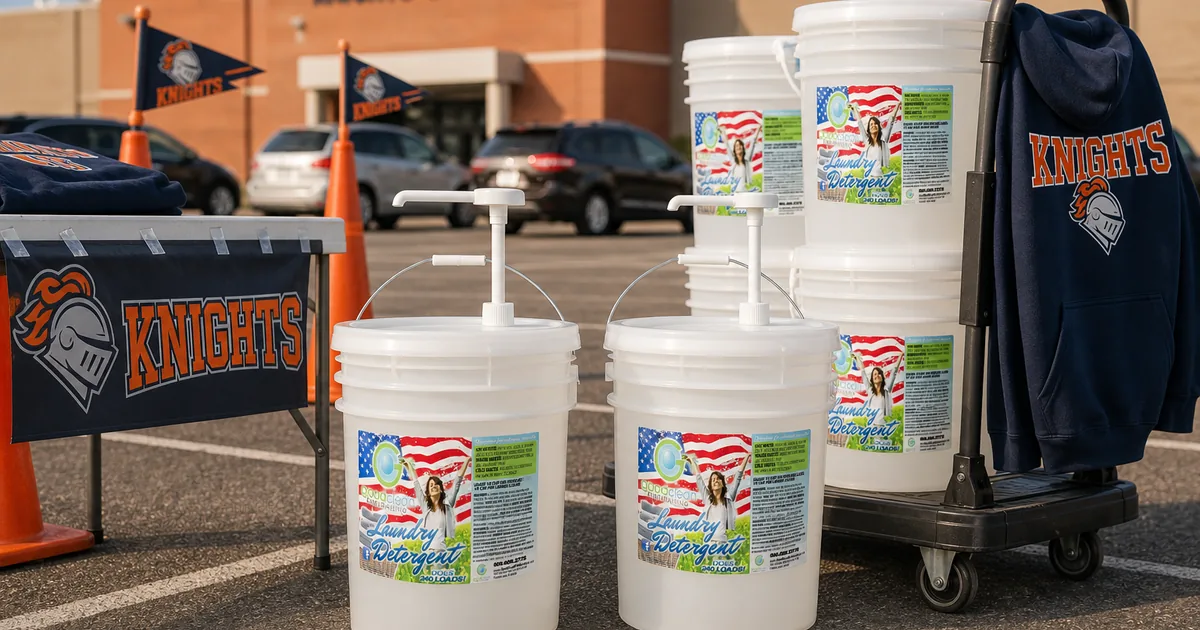
One way to reduce repeated selling is to plan a single campaign with enough realistic net proceeds to meet the budget. A household necessity such as detergent may fit interested supporters, but one campaign does not automatically earn more than several. Compare expected units, order margins, costs, and volunteer hours. If one sale cannot meet the target, sponsorships, donations, or selected events can fill the gap without asking every family to sell throughout the year.
If you coordinate a booster club, you know the pattern: candy in the fall, cookie dough before the holidays, popcorn in the spring, and a car wash somewhere in between. Each one raises a little, burns out a few more volunteers, and trains your supporters to avoid eye contact when they see you coming. Constant selling may not raise more — it can spread the same pool of buyers across more asks.
Some clubs try to break this cycle by changing the model rather than looking for a magic product or a better sales pitch. Instead of asking supporters to buy things they do not need over and over, they may run one focused campaign around something many households purchase — structured so supporters get genuine value while the club keeps its published margin.
This guide explains how that shift works, why it may reduce repeated coordination work, what a household-necessity fundraiser actually looks like in practice, and how to make the switch without losing momentum or support.
- Constant selling can train supporters to say no and burn out the volunteers doing the asking.
- A focused campaign can replace smaller drives only if its realistic net proceeds meet the same funding need.
- Detergent may interest supporters who want bulk household supplies; demand depends on price, preferences, and storage space.
- Supporters may respond better when they receive real value rather than being asked to overpay for something they did not need.
- Running one campaign per year instead of three or four may reduce coordinator workload and volunteer fatigue, if that one campaign can cover the budget.
- Compare actual vendor margins and likely units; product category alone does not establish higher proceeds.
- A short, focused campaign with a clear goal creates urgency; year-round or overlapping campaigns can lose momentum.
Why does constant selling stop working?
The problem is not that your supporters do not care — it is that you have trained them to tune out. When a booster club runs three, four, or five fundraisers a year, each one competes with the last for the same small group of buyers. Families who bought cookie dough in November are less likely to buy popcorn in March, not because they are unsupportive but because they already gave. You are not expanding the pool; you are just asking the same people more often.
The second issue is volunteer burnout. Coordinators and parent volunteers are not paid staff — they are doing this on top of jobs, families, and everything else. Running multiple campaigns means multiple kickoffs, multiple order collections, multiple delivery days, and multiple reconciliations. Each one is manageable alone, but stacked together they become the reason people stop volunteering.
The third problem is value perception. Some traditional fundraising products carry markups so both the group and the vendor can profit from a single sale. Supporters may feel they are overpaying for cookie dough or candles, and after a few asks they may start to feel like a wallet rather than a partner. That can reduce participation.
What does a household-necessity fundraiser look like?
A household-necessity fundraiser is built around a consumable product many households already buy — most commonly bulk laundry detergent, though some programs offer cleaning supplies or other staples. The structure is simple: supporters purchase the product at the published campaign price, the group keeps a strong per-unit profit, and because it is something people use and repurchase, demand may differ from a novelty campaign.
Here is how it works in practice. A booster club runs one campaign, typically two to three selling weeks long. Families reach out to their usual network — relatives, neighbors, coworkers — but instead of asking them to buy something extra, they are offering a product those people already purchase at a price to compare with current alternatives. Supporters are not being asked to overpay for a treat; they are buying a necessity they may already use, and should compare the price with current alternatives before assuming any saving.
The profit structure is straightforward. With a program like Good Clean Fundraising, groups sell a 5-gallon bucket of premium laundry detergent for $49.95 and keep $13.45 at 100–299 buckets, $14.45 at 300–499, or $15.45 at 500+, before extra group expenses, with free shipping at 100 buckets or more. There is no upfront cost — the group collects orders and supporter payments first and pays for the group order from collected funds. Because the product is non-perishable, freezer storage is unnecessary, but commercial delivery and pickup still need scheduling, and because it is a genuine necessity, the buyer pool includes people who would never purchase a dessert or novelty fundraiser.
Why does one focused campaign raise more than multiple small ones?
The math is straightforward: estimated units × the applicable margin minus extra costs. Add net proceeds across campaigns when comparing a yearly plan. Multiple campaigns can reach different supporters or times of need, so do not assume they merely repeat the same sales.
A focused campaign may simplify communication and concentrate volunteer effort. Whether it increases participation or average sales depends on demand, price, and timing. Survey likely buyers and use your own records to set the sales target.
At the published $49.95 price (online orders add $2), GCF lists $13.45 per bucket for 100–299, $14.45 for 300–499, and $15.45 for 500+, before additional group expenses. Additional group expenses still reduce what the club can spend. Each separate order uses its own volume tier; annual totals do not automatically qualify every campaign for the highest margin.
How do you make the switch without losing momentum?
Frame a proposed change as a plan to test: “We want to replace several smaller drives with one focused campaign if it can meet our budget.” Set a realistic target and explain the actual price and pickup duties. For GCF, allow two to three selling weeks plus about two fulfillment weeks after the paid order.
Collect orders and supporter payments, then submit one paid group order. The minimum is 50 buckets; shipping is free at 100+, with shipping charges below 100. Allow two to three weeks for selling plus about two weeks after the paid order for fulfillment. Arrange a commercial delivery address and a volunteer pickup team; a loading dock or forklift is recommended. Coordinator support helps with questions and planning. The club still reconciles payments and distributes purchases; no payment to start does not eliminate every cost or obligation.
The other advantage is that a household-necessity program is repeatable. Supporters use up the product and may need more, so a club can run the same campaign the following year if supporters are ready to reorder. Novelty fundraisers, by contrast, may ask the same families to buy the same items year after year, and participation can decline.
What makes a household-necessity fundraiser different from traditional product fundraisers?
Traditional and necessity-product vendors both have product costs and group margins. Neither label proves that buyers are overpaying or receiving a better deal. Compare the actual price, quantity, quality, and current alternatives before making a value claim.
A $49.95, 640-fluid-ounce bucket costs about 7.8 cents per fluid ounce before any surcharge. Compare current prices and label dosage; a per-ounce comparison alone does not establish equal cost per load. Explain the purchase honestly: supporters can choose a product they want while contributing to the group’s proceeds. Do not promise a fixed retailer saving without a current, comparable price check.
The other major difference is buyer breadth. Cookie dough, candy, popcorn, and candles all appeal to narrow slices of the population — people who want dessert, people who like scented candles, and so on. A household necessity like laundry detergent appeals to interested households, which may reach different buyers, depending on preferences and price. Check whether that interest produces more units in your own campaign.
What about trust and standing behind the product?
One reason supporters hesitate with fundraising products is that they have been burned before — low-quality items, late deliveries, or no recourse if something goes wrong. A household-necessity fundraiser only works if the product is genuinely good and the program stands behind it.
GCF advertises a 100% money-back guarantee: GCF refunds a dissatisfied supporter directly, and the group keeps its earned profit. Ask GCF about return costs and refund procedures for your campaign after registration. Publish the confirmed procedure so supporters know whom to contact. Do not describe the guarantee as eliminating every risk for the buyer or club.
Ask whether any prizes or seller incentives are currently offered, what the conditions are, and who pays. Budget only confirmed benefits. Clear terms and accurate expectations matter more than promises the program has not substantiated.
| Factor | Several campaigns | One focused campaign |
|---|---|---|
| Buyer pool | Demand depends on products | Demand depends on product |
| Volunteer workload | Multiple kickoffs, collections, deliveries | One focused effort |
| Supporter fatigue | Repeated asks; check fatigue | One ask; check funding target |
| Value to buyer | Compare actual prices | Compare actual prices |
| Profit per campaign | Add each drive’s net | Check net against goal |
| Repeatability | Check repeat demand | Check repeat demand |
Common mistakes to avoid
Running overlapping campaigns
Overlapping campaigns may compete for attention. Compare schedules and net budgets before consolidating them; one focused campaign is only an adequate replacement if it can cover the funding need.
Choosing products with narrow appeal
If only a small slice of your supporter base wants the product, participation caps early. A household necessity may reach different buyers, which is one useful lever for raising more.
Leaving the campaign open too long
A fundraiser without a firm deadline loses urgency. A tight two-to-three-week selling window creates momentum; an open-ended campaign can fade and raise less.
Not emphasizing the value to the supporter
Explain the product, price, and purpose so supporters can make an informed choice. A clear value proposition may help, but do not promise half-price savings or a measured participation increase without evidence.
Ignoring upfront cost and financial risk
Programs that require the booster club to front money for inventory put the group at financial risk if the campaign underperforms. No-upfront-cost models reduce that inventory exposure.
- GCF pricing — published price, online surcharge, and order-volume margins; figures are before additional group expenses.
- GCF how it works — minimum order, shipping threshold, selling window, paid-order lead time, commercial delivery, and advertised guarantee.
- Planning method: estimate units from your own supporter demand, apply the vendor tier to each order separately, and subtract shipping, fees, supplies, refunds, and other group expenses. Examples are illustrations, not observed campaign results.
Our recommendation
If repeated campaigns strain volunteers, compare a focused GCF campaign with the combined net proceeds of your current plan. At the published $49.95 price (online orders add $2), GCF lists $13.45 per bucket for 100–299, $14.45 for 300–499, and $15.45 for 500+, before additional group expenses. Collect orders and supporter payments, then submit one paid group order. The minimum is 50 buckets; shipping is free at 100+, with shipping charges below 100. Allow two to three weeks for selling plus about two weeks after the paid order for fulfillment. Arrange a commercial delivery address and a volunteer pickup team; a loading dock or forklift is recommended. GCF advertises a 100% money-back guarantee: GCF refunds a dissatisfied supporter directly, and the group keeps its earned profit. Ask GCF about return costs and refund procedures for your campaign after registration. Confirm any incentive offer separately; do not count on automatic free prizes.
Frequently asked questions
Compare the annual budget with what one realistic campaign could retain after costs. A detergent campaign is one option if supporters want the product. Add sponsorships, donations, or selected events if one sale cannot meet the need. Fewer campaigns may reduce repeated administration, but do not automatically raise more.
It may not. Compare total units and the applicable margin, then subtract expenses for every campaign. A single drive can simplify work, while several may reach different audiences or timing windows. Use your own demand estimates and net budget rather than assuming one model earns more.
A household-necessity fundraiser is built around a consumable product many households already buy — most commonly bulk laundry detergent or cleaning supplies. Supporters purchase the product at the published campaign price, the group keeps a strong per-unit profit, and because it is something people use and repurchase, demand may differ from novelty items. The structure is simple, the logistics are easier than perishable products, and there is typically no upfront cost to the group.
For illustration, 200 GCF buckets retain $2,690 at the $13.45 tier before extra expenses. A 320-bucket order retains $4,624 at $14.45 each. At the published $49.95 price (online orders add $2), GCF lists $13.45 per bucket for 100–299, $14.45 for 300–499, and $15.45 for 500+, before additional group expenses. These are arithmetic examples, not typical campaign results.
Some supporters may want a bulk purchase; others may prefer smaller quantities or another product. A $49.95, 640-fluid-ounce bucket costs about 7.8 cents per fluid ounce before any surcharge. Compare current prices and label dosage; a per-ounce comparison alone does not establish equal cost per load. Confirm actual interest rather than assuming every household will buy.
Present the change as a plan to test: fewer campaigns if the projected net proceeds cover the budget. Explain the actual price, duties, and deadline. For GCF, allow two to three selling weeks plus about two weeks after the paid order for fulfillment.
A common mistake is replacing campaigns without checking whether the new plan covers the budget. Another is overlapping asks without coordination. Compare net proceeds, timing, demand, and workload; neither a single campaign nor several is always best.
GCF requires no payment to start: collect orders and supporter payments, then submit a paid group order. The minimum is 50 buckets, with free shipping at 100+. Fees, shipping below 100, and other obligations can still affect proceeds.
At the published $49.95 price (online orders add $2), GCF lists $13.45 per bucket for 100–299, $14.45 for 300–499, and $15.45 for 500+, before additional group expenses. Collect orders and supporter payments, then submit one paid group order. The minimum is 50 buckets; shipping is free at 100+, with shipping charges below 100. Allow two to three weeks for selling plus about two weeks after the paid order for fulfillment. Arrange a commercial delivery address and a volunteer pickup team; a loading dock or forklift is recommended. GCF advertises a 100% money-back guarantee: GCF refunds a dissatisfied supporter directly, and the group keeps its earned profit. Ask GCF about return costs and refund procedures for your campaign after registration. Confirm any incentives before offering them.
Constant selling can strain volunteers and supporters. A focused campaign may reduce repeated administrative work, but its demand estimate and net budget must justify replacing other revenue. Make the switch when those numbers work for your club.