
Church, Ministry & Youth Group Fundraising
Sunday School & Kids Ministry Fundraising Ideas That Actually Work
The best fundraising ideas for children's ministry — from no-upfront-cost product programs to family-friendly events that engage parents and raise real money.
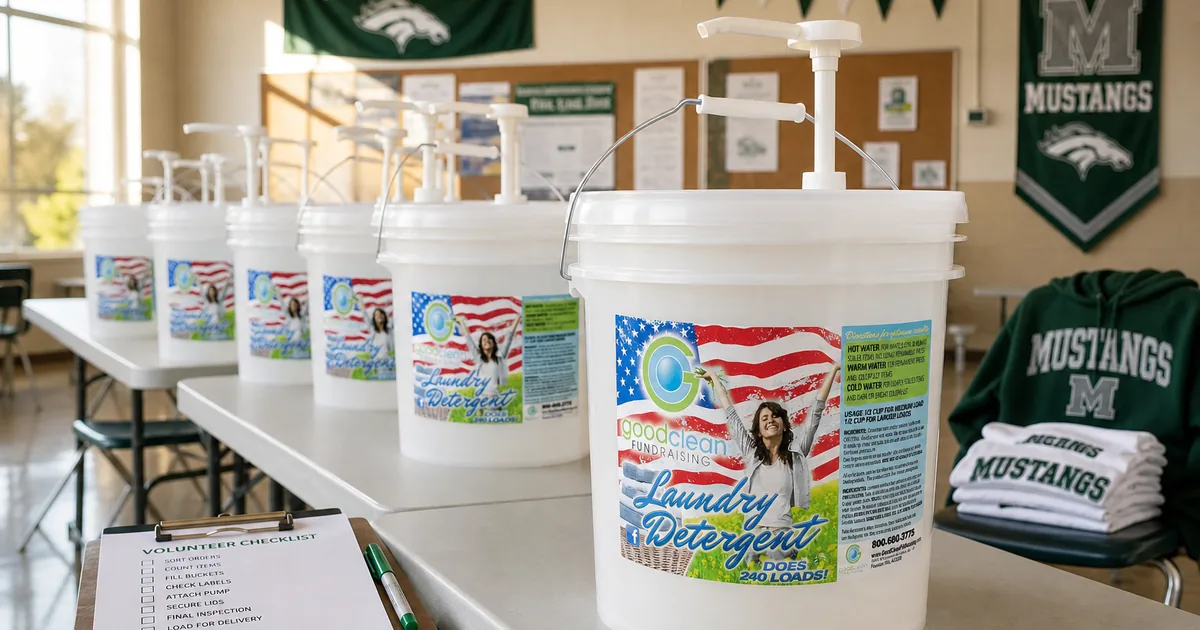
For Sunday school and kids ministry, choose a campaign that gives children voluntary, age-appropriate roles while adults manage money and logistics. Product sales, supervised events, and direct giving can each fit. Compare interested buyers, costs, and duties; no product category is established here as the highest-earning or easiest choice. These are planning options, not measured performance rankings.
Raising money for kids ministry sits in an unusual spot: the children are excited to help, but they are not the ones writing the checks. The parents are the actual buyers, which means a successful kids ministry fundraiser has to work on two levels at once — it has to be something children can participate in and feel ownership over, and it has to be something their parents, grandparents, and church community will actually purchase.
The fundraisers that work best are the ones that make that dynamic easy rather than awkward. When the product is a genuine household necessity or the event creates real value and fellowship, parents do not feel like they are being sold to — they feel like they are supporting the ministry while getting something useful in return. That shift in framing may help a program reach its goal.
This guide covers the fundraising ideas to consider for Sunday school and children's ministry, why traditional approaches can underperform for some ministries, how to choose a program that fits your volunteer capacity, how to compare proceeds, and the mistakes that can hurt participation.
- Kids ministry fundraisers can engage parents as the primary buyers while giving children meaningful participation.
- Household products can suit parents who want the size, formula, and price; check demand before choosing.
- No-upfront-cost programs reduce advance-inventory risk and are easier for volunteer leaders to manage alongside ministry duties.
- Family-friendly events that double as fellowship opportunities offer another way for families to participate.
- The buyer pool for a kids ministry fundraiser can extend beyond your congregation when the product has broad appeal.
- Programs that require minimal volunteer coordination time are more sustainable for ministry leaders with full schedules.
- Supporters may respond better when they receive genuine value rather than being asked to overpay for a novelty item as a donation.
Why do traditional kids ministry fundraisers often underperform?
The classic Sunday school fundraiser — cookie dough, candy bars, wrapping paper — may rest on older assumptions. These programs can assume families have time for door-to-door selling, that neighbors and coworkers have not been asked to buy the same products by other groups this year, and that parents are willing to push items that are marked up well above retail value. Check whether those assumptions hold for your own families.
The other problem is volunteer bandwidth. Ministry leaders are already stretched thin with lesson planning, event coordination, and pastoral care. A fundraiser that requires managing inventory, coordinating delivery days, and chasing down order forms becomes one more thing competing for time that does not exist. The programs that fail are often not bad ideas — they are just too complicated for the reality of how volunteer-led ministries actually operate.
One approach is programs that respect both the buyer's intelligence and the coordinator's time: products people genuinely need at fair prices, or events that create real fellowship value, with logistics simple enough that a busy youth pastor can manage them without it becoming a second job.
What are the best product fundraisers for kids ministry?
Product fundraisers can work for kids ministry because children can participate in a tangible way — they can hand out order forms, talk about the cause, and feel ownership over the results. The key is choosing a product that parents can sell without embarrassment and that buyers actually want.
Household necessity products (the standout category)
Household products are one option when supporters want the formula, quantity, and price. A bulk purchase still costs money, so it should be voluntary and should not be presented as right for every family.
Parents can invite interested grandparents, neighbors, coworkers, and church members, but should not assume that every household wants a bulk bucket. Ask about preference, quantity, price, and pickup.
Good Clean Fundraising is one product option to consider. The published customer price is $49.95 per 5-gallon pump bucket (online orders add $2). Before additional group expenses, the margin is $13.45 at 100–299 buckets, $14.45 at 300–499, and $15.45 at 500+. The minimum order is 50 buckets; shipping is free at 100+, while shipping below 100 reduces the margin. Adults should manage payments, orders, unloading, and distribution. GCF refunds a dissatisfied supporter directly, and the group keeps its earned profit. Ask GCF about return costs and refund procedures for your campaign after registration.
Consumable treats and snacks
Cookie dough, popcorn, and candy are still common, and they can work if your congregation has not been asked repeatedly in recent years. The challenge is that these are discretionary purchases — people buy them because they want a treat, not because they need them — so the buyer pool may be narrower and some families may reach a ceiling sooner. Margins are often moderate, and perishable items add delivery complexity. If you go this route, choose a program with no upfront cost and a product that is not widely available at retail, so supporters feel they are getting something special rather than overpaying for a grocery-store item.
What are the best event-based fundraisers for kids ministry?
Events can work well when they create real fellowship value and give families a reason to participate beyond just the fundraising ask. An event may succeed when people leave feeling like they got something — connection, fun, service — not just that they donated to a cause.
Fun runs and walk-a-thons
A fun run gives children a clear, achievable goal — finish the course — and parents an easy way to ask for pledges or flat donations. These work best when framed as a family event rather than a pure fundraiser, with music, refreshments, and a celebratory atmosphere. The logistics are manageable: secure a route, recruit a few volunteers for registration and water stations, and promote it as a community-building day. Online pledge platforms make collection easier and reduce the cash-handling burden on volunteers.
Family game nights and movie nights
A game night or properly licensed movie screening can be a fellowship fundraiser. Check screening permission and admission terms before selling tickets, budget supplies and staffing, and keep prices accessible. Children can help with age-appropriate tasks under adult supervision.
Service auctions and talent shows
A service auction — where church members bid on donated services like a home-cooked meal, yard work, or babysitting — raises money while strengthening community ties. Pair it with a potluck or dessert social to make it a fellowship event. A kids ministry talent show works similarly: children perform, families buy tickets, and the evening becomes a celebration of the ministry rather than a transactional fundraiser. Both require minimal upfront cost and leverage the skills and generosity already present in your congregation.
What raises the most money for kids ministry?
For product sales, estimate active sellers × average units sold × the order-tier margin, then subtract additional expenses. For events and donations, use receipts less costs; do not multiply a monetary amount per family by a second profit amount.
Compare product campaigns and events using actual interest, projected net proceeds, and adult volunteer hours. A household product may fit your buyers, but it is not a demonstrated highest-earning or easiest-to-scale choice.
Illustrative calculation, not a reported campaign result: 200 buckets × $13.45 = $2,690.00 retained before additional ministry expenses. This uses the tier for one 200-bucket order; actual sales and costs determine the final result.
How do you choose a fundraiser that fits your volunteer capacity?
Ministry leaders are not professional fundraisers — they are pastors, teachers, and volunteers with full plates. The right fundraiser is one you can run well without it consuming your schedule. Ask three questions: Does this require upfront money or financial risk? How many volunteer hours will it take to coordinate? Can I hand this off to a parent helper without extensive training?
Preorders can reduce speculative inventory buying, but your team still manages payments, orders, and distribution. GCF requires 50 buckets and ships free at 100+. Compare those duties with event staffing and costs before choosing.
Common mistakes kids ministry fundraisers make
Choosing a product children cannot explain
If a child cannot tell a supporter what they are selling and why in one sentence, the product is too complicated. Simple, recognizable items — detergent, popcorn, tickets to an event — work because kids can participate meaningfully. Catalog programs with dozens of SKUs put all the work on parents and leave children feeling disconnected from the effort.
Asking families to sell overpriced novelty items
When parents know the product is marked up far above retail and offers no real value, they feel like they are asking supporters for a donation disguised as a purchase. That discomfort kills participation. Choose something supporters would genuinely want to buy even if there were no fundraiser attached.
Running a fundraiser with no clear goal or deadline
A vague ask — raise some money for the ministry — makes planning harder. Set a specific dollar target, explain exactly what it will fund, and give families a firm deadline. Urgency and clarity drive participation; open-ended campaigns quietly fade.
Underestimating the logistics of delivery and collection
Confirm who handles each step. GCF sends a bulk shipment to a commercial address; adults in the group arrange unloading and distribution. GCF materials and support do not remove those local responsibilities.
| Factor | Novelty Product | Household Necessity |
|---|---|---|
| Buyer pool | Treat buyers / gift shoppers | Interested households |
| Parent comfort selling | Ask parents about fit | Ask parents about fit |
| Repeat potential | May buy again | May need replenishment |
| Logistics | Check handling needs | Bulk pickup needed |
| Upfront cost | Some require inventory purchase | No-upfront-cost options |
| Profit per unit | Check vendor margin | GCF: $13.45–$15.45* |
Common mistakes to avoid
Choosing a product children cannot explain
If a child cannot tell a supporter what they are selling and why in one sentence, the product is too complicated. Simple, recognizable items work because kids can participate meaningfully.
Asking families to sell overpriced novelty items
When parents know the product is marked up far above retail and offers no real value, they feel like they are asking for a donation disguised as a purchase. That discomfort kills participation.
Running a fundraiser with no clear goal or deadline
A vague ask makes planning harder. Set a specific dollar target, explain exactly what it will fund, and give families a firm deadline.
Underestimating the logistics of delivery and collection
Assign adults to payment reconciliation, order submission, unloading, and distribution; confirm how GCF supports each step.
- Good Clean Fundraising — published customer price, online surcharge, and order-volume margins. Pricing.
- Good Clean Fundraising — minimum order, selling window, paid-order lead time, delivery responsibilities, and advertised guarantee. How it works.
- Movie screening arrangements: Swank licensing for religious organizations. Confirm the title, date, and admission terms before promotion.
Our recommendation for kids ministry fundraising
If a household-staple campaign fits your ministry, Good Clean Fundraising is an option. Children can help with thank-you notes and supervised, age-appropriate activities; adults handle sales records, money, and heavy products. The published customer price is $49.95 per 5-gallon pump bucket (online orders add $2). Before additional group expenses, the margin is $13.45 at 100–299 buckets, $14.45 at 300–499, and $15.45 at 500+. The minimum order is 50 buckets; shipping is free at 100+, while shipping below 100 reduces the margin. There is no payment to start. Collect orders and supporter payments, then submit a paid group order. Allow two to three weeks for selling plus about two weeks after the paid order for fulfillment. Your team arranges a commercial delivery address, unloading, and distribution; a loading dock or forklift is recommended. GCF refunds a dissatisfied supporter directly, and the group keeps its earned profit. Ask GCF about return costs and refund procedures for your campaign after registration.
Frequently asked questions
Choose a manageable campaign with voluntary, supervised roles for children and clear adult responsibility for money and distribution. Compare products, events, and direct giving using your supporters’ preferences and actual costs.
Illustrative calculation, not a reported campaign result: 200 buckets × $13.45 = $2,690.00 retained before additional ministry expenses. This uses the tier for one 200-bucket order; actual sales and costs determine the final result.
Choose simple, age-appropriate roles with adult supervision. Children can explain the cause to trusted contacts, make thank-you notes, or take part in a supervised event. Adults should handle money, online sharing, and heavy products; participation should be voluntary.
Some programs require no payment to start, but costs and responsibilities remain. GCF uses paid preorders, requires 50 buckets, and charges shipping below 100. Events also need a budget for supplies and other requirements. Compare the complete plan before choosing.
Ask your own parents. Many may prefer to sell something they can feel good about — a product supporters want at a stated price rather than an overpriced novelty item. Household staples like laundry detergent can reduce awkwardness when supporters were already planning to buy such a product, but a bulk purchase is still a cost and participation is not guaranteed.
GCF recommends two to three weeks of selling plus about two weeks of fulfillment after a paid order, with setup and pickup time added. Set dates around the ministry’s needs and volunteers rather than a universal success window.
They can fit a ministry with interested buyers and an adult team able to handle bulk distribution. Check the formula, quantity, price, and pickup needs. Children can help with supervised activities and thank-you notes; participation and savings are not guaranteed.
Choose from your volunteers, interested buyers, and deadline. A GCF product campaign needs a 50-bucket minimum, payment collection, and local distribution; shipping below 100 affects proceeds. A donation or small event may fit a different situation.
Good Clean Fundraising offers a bulk detergent program. The published customer price is $49.95 per 5-gallon pump bucket (online orders add $2). Before additional group expenses, the margin is $13.45 at 100–299 buckets, $14.45 at 300–499, and $15.45 at 500+. The minimum order is 50 buckets; shipping is free at 100+, while shipping below 100 reduces the margin. There is no payment to start. Collect orders and supporter payments, then submit a paid group order. Allow two to three weeks for selling plus about two weeks after the paid order for fulfillment. Your team arranges a commercial delivery address, unloading, and distribution; a loading dock or forklift is recommended. GCF refunds a dissatisfied supporter directly, and the group keeps its earned profit. Ask GCF about return costs and refund procedures for your campaign after registration.
Kids ministry fundraisers may work best when they make it easy for parents to say yes — because the product is something supporters want, because children can participate in a meaningful way, and because the logistics do not consume the ministry leader's schedule. When you get those three things right, review the results against your goal.