
Clubs, Nonprofits & Community Organizations
Fundraising Ideas for Groups of 20: What Works at Small Scale
Fundraising ideas sized for a 20-person group — compare product sales and events by expected proceeds and the volunteers you actually have, rather than the logistics a 100-person group would need.
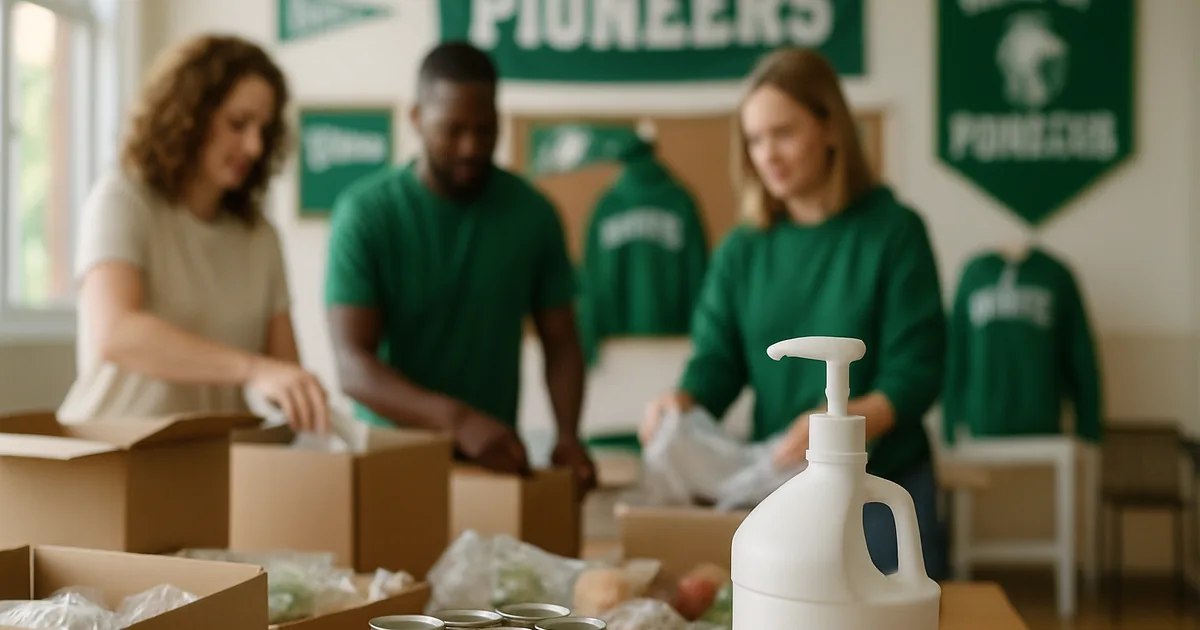
For a group of 20, compare a preorder product sale, a small ticketed event, and a service project with a clear budget. The right choice depends on active participants, buyer interest, costs, and staffing. Estimate each person's contribution, but do not treat membership as guaranteed participation or a target of 10–15 buyers as a proven result.
A group of 20 can be large enough to divide jobs yet small enough that a few absences matter. That makes a realistic staffing and sales plan more useful than picking a fundraiser simply because a larger group ran it.
A group of twenty can work toward a meaningful goal when each active member has a manageable role. Whether the result is hundreds or thousands depends on sales, donations, pricing, and costs; headcount alone does not establish the total.
This guide covers models to compare for a twenty-person group, how to calculate goals, and how to match the work to available volunteers.
- A group of 20 works best with fundraisers built around high per-person output, not high volunteer count.
- Use buyers or units per active seller as a planning assumption, then test it with your members.
- Concentrated-effort events — auctions, dinners, service days — can suit a small volunteer pool when the shifts, costs, and attendance work.
- Check staffing before choosing an event that depends on foot traffic or several simultaneous shifts.
- Evaluate total retained funds alongside funds per active participant and volunteer hours.
- Household staples may interest your network; test demand alongside other products.
- A short selling campaign can fit a small team's calendar, but it does not guarantee a better result than a larger group's campaign.
What makes a fundraiser work for a group of 20?
For a product sale, estimate active sellers × average units sold × per-unit margin, less group expenses. Twenty members is not automatically twenty sellers. For an event, estimate ticket income, donations, and sponsorships, then subtract all costs.
A car wash, neighborhood sale, or small carnival may work if its shifts and costs fit the volunteers you have. List the jobs and available hours before ruling a format in or out.
The ideas that do work fall into three categories: product programs with broad buyer appeal, concentrated-effort events where a small team is enough, and hybrid models that combine the two. Within each category, the key is making sure every participant has a clear, achievable role that contributes meaningfully to the total.
What are the best product fundraisers for 20 people?
Product fundraisers work well for small groups because the selling happens individually and asynchronously — your 20 people do not need to be in the same place at the same time, and each one can reach buyers the others cannot. The constraint is that you need a product with genuinely broad appeal, because you are asking a small team to generate a lot of transactions.
A household-staple preorder sale lets members approach their own networks. As an illustration, twenty active sellers averaging ten buckets would generate 200 buckets, not necessarily 200 distinct buyers. Check local demand and delivery arrangements.
Compare food, catalog, and household-staple programs by actual unit margin, demand, storage instructions, and order requirements. Some foods need refrigeration; candy and other shelf-stable items may not.
What events work well with only 20 volunteers?
An auction, dinner, or sponsored service event can fit a small team if the jobs and budget are manageable. Deduct venue, food, supplies, and other costs from receipts; donated items do not make every event cost-free. Confirm local eligibility and rules before adding a raffle.
For a ticketed or service event, estimate the number of paid tickets or jobs your team can actually deliver. Price, costs, and workload determine whether that volume meets the goal; there is no standard ticket or client count for twenty people.
What does not work is trying to run a large-scale public event with 20 people. A carnival, a festival, a fun run with hundreds of participants — these need staffing for registration, multiple activity stations, safety, cleanup, and logistics. A small group can pull off a scaled-down version, but a group that tries to do too much can end up with volunteers working double shifts and an event that feels thin. If you have 20 people, run an event that is designed for 20 people, not one that needs 60 and makes do.
How much can a group of 20 people realistically raise?
For products, calculate active sellers × average units sold × unit margin, then subtract extra expenses. For events, estimate ticket income, sponsorships, and donations separately from costs. Use likely participation rather than membership alone.
As an illustration, twenty active GCF sellers averaging ten buckets would sell 200 buckets and retain 200 × $13.45 = $2,690 before additional expenses. A dinner or service project needs its own ticket or job price and cost estimate; headcount alone cannot establish its return.
The mistake small groups make is setting a goal without checking whether the per-person math works. If your goal requires each volunteer to sell 40 items or recruit 10 ticket buyers, and that has never happened before, test it against confirmed supporters, pricing, and your offer before committing; an untested target may be the problem, not the group.
Should a small group run multiple small fundraisers or one big one?
One focused campaign may be easier to coordinate than several overlapping efforts. Compare the expected net proceeds and workload of each plan; fewer campaigns do not automatically raise more.
The exception is if you are fundraising year-round for operating expenses and need recurring revenue. In that case, spacing out two or three distinct campaigns — a spring product sale, a fall event, a year-end appeal — makes sense, but each one should still be treated as a focused effort with a start and end date, not an always-on ask.
Use your volunteers' availability and supporters' interest to decide whether another campaign fits. Monthly or quarterly fundraising is not automatically too much, but it needs its own staffing and demand check.
What should a group of 20 avoid?
Avoid committing to a foot-traffic event before checking attendance, hours, and costs. A small bake sale or car wash can be viable when it fits the team's capacity; a large event may not.
If considering door-to-door outreach, check geographic coverage, time, permissions, and member comfort. Sharing with existing networks is another option; neither approach has a guaranteed higher return.
Avoid ideas that require dozens of simultaneous roles. A festival, a large auction with live and silent components, a multi-station carnival — these need more hands than you have, and the result is either burned-out volunteers or a visibly understaffed event. If the setup and execution require more than 20 people working at once, it is the wrong idea for your group.
| Factor | Potential fit | Check capacity |
|---|---|---|
| Model type | Independent selling | Multiple simultaneous jobs |
| Product fundraisers | Preorders; test demand | Canvassing coverage |
| Events | Dinner or auction shifts | Large event staffing |
| Service models | Jobs the crew can complete | Walk-up sales and hours |
| Revenue driver | Receipts less all costs | Attendance assumptions |
| Staffing need | Confirmed available hours | Unfilled overlapping shifts |
Common mistakes to avoid
Choosing a fundraiser designed for 100 people
Most small groups pick an idea they have seen a large organization run, then wonder why it feels understaffed. If the model needs constant shifts, wide coverage, or dozens of roles, it is the wrong fit for 20 volunteers.
Setting a total goal without checking per-person math
A goal is only useful if the per-person target is achievable. If hitting your number requires each volunteer to do something that has never happened before, test demand and resources before committing; new supporters or a different offer may make it workable.
Running multiple small fundraisers instead of one strong one
Compare a focused campaign with several smaller ones using projected receipts, costs, and volunteer availability. Avoid overlapping asks if members cannot support them.
Picking a product with narrow appeal
Household staples are worth considering alongside treats, apparel, and direct giving. Ask your own supporters about price, product preferences, storage, and pickup: familiarity with detergent does not mean everyone wants a 5-gallon bucket.
Trying to staff a location-dependent event with 20 people
Check opening hours, expected foot traffic, staffing, and costs before selecting a location-based fundraiser. Scale it to the people who have committed to help.
- Editorial scope — fundraiser comparisons and scheduling suggestions are planning judgments, not measured rankings or campaign results. Illustrative calculations do not predict participation.
- GCF pricing — customer price, online surcharge, order tiers, and shipping. Calculations use the tier for a single group order and exclude additional group expenses. GCF how it works — 50-bucket minimum, selling period, paid-order lead time, commercial delivery and distribution, and advertised guarantee.
Our recommendation for groups of 20
For a group of twenty considering a household-staple sale, check whether expected orders meet the minimum and whether the team can handle distribution. GCF's 5-gallon pump bucket sells for $49.95 (online orders add $2). The published margin is $13.45 per bucket at 100–299 buckets, $14.45 at 300–499, and $15.45 at 500+, before additional group expenses. The minimum order is 50 buckets; shipping is free at 100+, while shipping charges below 100 reduce the margin. There is no payment to start: collect supporter orders and payments, then submit the paid group order. GCF recommends 2–3 weeks of selling, followed by about two weeks after the paid order for fulfillment. Allow extra time for setup and distribution. A coordinator provides guidance; your group arranges a commercial delivery address, unloading, and supporter pickup. GCF advertises a 100% money-back guarantee: GCF refunds dissatisfied supporters directly, and the group keeps its earned profit. Contact GCF for any remaining refund details.
Frequently asked questions
Consider a preorder product sale, small dinner or auction, or service project. Pick the format that fits your volunteers, audience, and budget; there is no proven best format based only on having twenty members.
Estimate retained funds as active sellers × average units sold × the applicable per-unit margin, less additional group expenses. For an illustrative GCF order of 200 buckets, 200 × $13.45 = $2,690 before those expenses. This is a calculation, not a campaign result or forecast.
Avoid formats whose staffing or upfront costs exceed your capacity. A car wash or bake sale is not automatically unsuitable; budget its likely receipts and hours before deciding.
Product sales and events can both work. Compare expected receipts minus all costs, volunteer hours, and your audience's interest. A small event with donated resources may be easier to run than a large product delivery; there is no universal winner.
One well-planned campaign may be easier to manage than several overlapping ones. Compare costs, demand, and available hours rather than assuming one always earns more.
Set an individual target from the total goal and active participants. Twenty people averaging eight GCF buckets would sell 160 and retain $2,152 before expenses, but eight is an illustrative assumption to check with your network, not a realistic-sales benchmark for every group.
Household staples are worth considering alongside treats, apparel, and direct giving. Ask your own supporters about price, product preferences, storage, and pickup: familiarity with detergent does not mean everyone wants a 5-gallon bucket.
Yes, if the event's jobs, hours, and costs fit the volunteers who commit. Make a staffing plan and attendance budget first; twenty members alone do not guarantee enough help.
For GCF, plan 2–3 weeks for selling and about two weeks for fulfillment after submitting the paid group order, plus setup and distribution. Set dates around your own calendar; the selling window is not the full campaign timeline.
Household staples are worth considering alongside treats, apparel, and direct giving. Ask your own supporters about price, product preferences, storage, and pickup: familiarity with detergent does not mean everyone wants a 5-gallon bucket.
A group of twenty can choose a fundraiser by working backward from the goal and the volunteers available. Confirm demand, keep jobs manageable, and track receipts and expenses so the next campaign has a stronger starting point.