Scouts, 4-H, FFA & Youth Organizations
4-H Club Fundraising Ideas That Actually Work
Practical fundraising ideas for 4-H clubs — from product sales and community events to necessity fundraisers that reach more supporters and raise more per family.
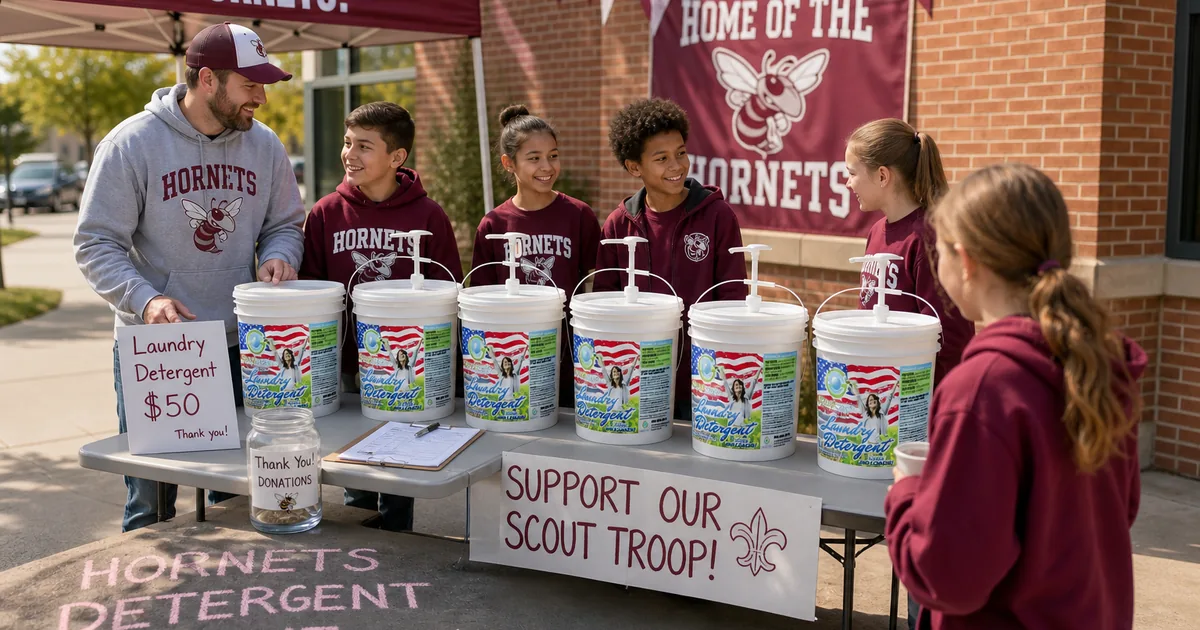
The most successful 4-H club fundraisers fall into three categories: product sales (especially household necessities like laundry detergent that every family already buys), community events (dinners, auctions, and service activities that bring people together), and direct-support programs (online giving and sponsorships). Necessity-based product fundraisers tend to outperform novelty items because they reach a much wider buyer pool — grandparents, neighbors, and coworkers who need the product anyway — and supporters get genuine value rather than paying a premium for something they don't need. The strongest programs combine no upfront cost, broad appeal, and simple logistics so volunteers can focus on participation rather than managing inventory or complex event planning.
4-H clubs operate on tight budgets, and the fundraisers that worked a decade ago — the same cookie dough catalogs, the same car washes — may no longer raise what they once did. Families are stretched thin, supporters are tired of overpriced novelty items, and volunteers need programs that don't require a logistics degree to manage.
The good news is that a new generation of fundraisers is built around what actually works: products people genuinely use, events that bring communities together, and programs that make it easy for supporters to say yes. In our editorial view, one approach that can help is offering something supporters were going to purchase anyway rather than something they don't need.
This guide covers the fundraising ideas that work best for 4-H clubs right now — product sales that reach more buyers, community events that build connection, direct-support options, how to choose the right fit for your club, and the mistakes that quietly cap how much you raise.
- The strongest 4-H fundraisers are product sales with broad appeal, community events that bring people together, and direct-support programs.
- Necessity-based products like laundry detergent can reach more buyers than novelty items because every household needs them.
- No-upfront-cost programs remove financial risk and make it easier for small clubs to participate.
- Community events work best when they offer real value or entertainment, not just an ask for donations.
- Participation matters more than profit margin — a necessity product that more families can sell can raise more total dollars.
- The most common mistake is choosing a fundraiser that's too complicated for your volunteer capacity.
- Combining two complementary fundraisers — one product-based, one event-based — can work if you have the volunteer bandwidth.
What are the best product fundraisers for 4-H clubs?
Product fundraisers are the backbone of 4-H club budgets because they scale with participation — more families selling means more raised — and they don't require the upfront planning and day-of coordination that events demand. But not all product fundraisers perform equally. The ones that raise the most share three traits: broad appeal, real value to the buyer, and simple logistics.
Household-necessity products are one category worth considering. Laundry detergent, cleaning supplies, and similar staples reach nearly every household, not just the narrow slice that wants a dessert or novelty item. When a 4-H family sells a 5-gallon bucket of detergent at roughly half the per-ounce price of premium national brands, they're not asking supporters to go out of their way — they're offering a product people already buy at a genuinely good price. That shifts the conversation from 'Will you support us?' to 'Would you like to save money on something you need?'
Traditional catalog fundraisers — cookie dough, popcorn, gift wrap — still work for some clubs, but they face two headwinds: buyer fatigue (most people have been asked to buy these items dozens of times) and narrow appeal (only dessert buyers want cookie dough, only certain households want popcorn). The result is that fewer families find buyers, which caps the total raised.
Non-perishable, practical items like reusable bags, water bottles, or seasonal products avoid some of the novelty-item problems, but most are one-time purchases, so they score lower on repeat-buyer potential. If your club runs the same fundraiser twice a year, a consumable product that supporters use up and repurchase will outperform a durable good they already own.
What community events work well for 4-H fundraising?
Community events can raise significant money and build visibility for your club, but they require more volunteer hours and upfront planning than product sales. The events that succeed are the ones that offer real value or entertainment, not just an ask for donations.
Dinners and food events — pancake breakfasts, spaghetti dinners, barbecues — are 4-H staples because they're straightforward to organize and appeal to families. The key is pricing them so supporters feel they're getting a good meal, not just making a donation. A $10 pancake breakfast that feeds a family of four is an easy yes; a $25 spaghetti dinner for two feels like a stretch unless the food and atmosphere deliver.
Auctions and raffles leverage donated items and services, so they can raise money without inventory costs. Silent auctions work well at other events (pair a dinner with an auction), while raffles are simple to run and can be sold over several weeks. The challenge is securing enough high-value donations to make the event worth the effort — a raffle with only small-ticket items rarely raises enough to justify the volunteer hours.
Service-based events — car washes, yard work days, babysitting nights — let 4-H members provide labor in exchange for donations. They build community goodwill and teach work ethic, but they're labor-intensive and weather-dependent. A car wash on a rainy Saturday raises nothing, so always have a rain date or backup plan.
Seasonal and themed events — fall festivals, holiday craft fairs, spring plant sales — tap into existing community rhythms. They work best when your club has a venue (a farm, a school gym, a community center) and enough volunteers to staff the event without burning out your core families.
Should 4-H clubs use direct-support or online fundraising?
Direct-support programs — online giving platforms, sponsorship asks, crowdfunding campaigns — remove the product and event logistics entirely. Supporters donate directly, often with a few clicks, and the club keeps most or all of the contribution, less any platform or payment-processing fees. They work well as a supplement to a main fundraiser, especially for reaching distant relatives or alumni who want to support the club but can't attend an event or buy a product.
The challenge with direct-support fundraising is that it relies entirely on goodwill. Supporters get nothing tangible in return, so participation tends to be lower than with a product or event where they receive value. For most 4-H clubs, direct support works best as a secondary option — 'If you can't buy a bucket of detergent, you can also donate here' — rather than the primary strategy.
Sponsorships from local businesses can bring in larger single contributions, but they require a clear value proposition: What does the business get in return? Visibility at an event, a logo on a banner, a mention in club communications, or goodwill in the community. The clubs that succeed with sponsorships are the ones that make it easy for businesses to say yes — a one-page sponsorship packet with clear tiers and benefits, delivered in person by a 4-H member, works far better than a mass email.
How do you choose the right fundraiser for your 4-H club?
The right fundraiser for your club depends on four factors: your volunteer capacity, your club's size and reach, your budget timeline, and what your community has already been asked to support. A large club with active parent volunteers can handle a complex event; a small club with a handful of families should favor a simple product sale.
Start by asking: How many volunteer hours can we realistically commit? As a rough editorial estimate (not measured data), a product fundraiser with clear support materials might take 10 to 15 total volunteer hours over three weeks. As a rough editorial estimate, a community dinner might take 40 to 60 hours of planning, setup, and execution. Be honest about capacity — an ambitious event that burns out your volunteers will hurt next year's fundraiser.
Next, consider your buyer pool. If your club draws from a small rural community, you need a product or event with broad appeal because you'll be reaching the same people repeatedly. If your club is in a larger town or draws from multiple schools, you have more flexibility. Either way, necessity products and well-priced events tend to reach more supporters than niche items.
Finally, think about timing. If you need money in six weeks for a specific expense, a product sale with a tight two-to-three-week selling window is more reliable than an event that requires months of planning. If you're building a fund for next year, you have time to plan a larger event or run multiple smaller fundraisers.
Can you run more than one fundraiser a year?
Many 4-H clubs can run two fundraisers a year if they're spaced out and serve different purposes. The key is to avoid donor fatigue — asking the same supporters for money too often — and volunteer burnout. A fall product sale and a spring community event, for example, give your supporters six months between asks and let your volunteers recover between campaigns.
The best two-fundraiser strategy pairs a high-participation product sale (something every family can sell) with a smaller, targeted event or direct-support campaign. The product sale builds your base budget; the event or online campaign raises additional funds for a specific project or trip. This approach spreads the work and gives supporters multiple ways to help.
What doesn't work is running three or four fundraisers in a year, or running the same fundraiser twice. Supporters tune out, families stop participating, and your per-fundraiser totals drop. If you need to raise more, focus on increasing participation in one or two strong fundraisers rather than adding more campaigns.
| Factor | Product Sale | Community Event |
|---|---|---|
| Volunteer hours | 10–15 hrs over 3 weeks | 40–60 hrs planning + execution |
| Upfront cost | $0 (no-upfront-cost programs) | Often requires upfront $ |
| Scalability | Scales with families | Capped by venue/volunteers |
| Weather/logistics risk | Minimal | Weather-dependent |
| Participation breadth | Every family can sell | Core volunteers + attendees |
Common mistakes to avoid
Choosing a fundraiser that's too complex for your volunteer capacity
The most common mistake is picking an ambitious event or multi-part fundraiser that requires more volunteer hours than your club can realistically provide. A simple product sale with strong participation will often raise more than a complex event that exhausts your core families.
Running the same tired fundraiser because it's what you've always done
If your cookie dough or popcorn sale raised less this year than last year, it's a signal that supporters are fatigued. Switching to a necessity product or a new event format can re-engage families and supporters who had tuned out.
Failing to set a clear goal and deadline
Fundraisers without a specific dollar goal and firm end date tend to drift. Families don't know what success looks like, and the campaign loses urgency. Set a number, set a date, and communicate both at the kickoff.
Underestimating the importance of a strong kickoff
Most of your participation and early momentum comes from the kickoff meeting. If families leave unclear about what to do or when to start, participation drops. A short, energetic kickoff that explains the goal, the product, and the timeline is one of the biggest levers you have.
Ignoring the buyer's perspective
Supporters are more likely to buy when they feel they're getting real value, not just making a donation. A household staple at half the per-ounce price of premium national brands is an easy yes; an overpriced novelty item is a hard sell. Always ask: Would I buy this if I weren't supporting the club?
Not tracking participation and following up
The families who don't turn in orders in the first week often need a gentle reminder. A quick follow-up call or text can help lift your participation rate. Track who's participated and who hasn't, and reach out personally.
- National 4-H Council — official overview of 4-H youth programs — source
- USDA National Institute of Food and Agriculture — 4-H Youth Development Programs overview, including program structure, funding, and community impact. — source
- Detergent price comparison — per-ounce pricing for premium national-brand liquid laundry detergent, surveyed at major U.S. retailers September 2026 (typically 14 to 19 cents per ounce; example source: a leading national retailer). A 5-gallon (640 oz) bucket at $49.95 is about 7.8 cents per ounce. Prices vary by brand, size, store, and region; some value-tier and store brands cost less per ounce. Range reflects a market survey; individual prices will vary.
- Good Clean Fundraising program terms — $49.95 per bucket; $13.45 profit per bucket at 100 to 299 buckets (usually $5 to $12 at 50 to 99 buckets, depending on actual shipping costs), $14.45 at 300 to 499, $15.45 at 500 or more; $0 upfront cost; free shipping at 100+ buckets; 50-bucket minimum (smaller orders are not accepted); 100% money-back guarantee under which, according to the company, any customer who is not satisfied is refunded and the group keeps its profit. — GCF pricing, GCF how it works, and GCF refund and returns.
- Editorial guidance: general planning advice on this page reflects the authors' editorial judgment and common youth-group fundraising practice; it is not based on measured campaign data or a cited study.
Our recommendation for 4-H clubs
If your club is looking for a fundraiser that's simple to run, reaches a wide pool of supporters, and gives families something they actually need, Good Clean Fundraising's bulk laundry-detergent program is built for exactly that. 4-H families sell a 5-gallon pump bucket of detergent for $49.95 — roughly half the per-ounce price of premium national brands — and the club keeps about $13.45 to $15.45 per bucket at 100 or more buckets, depending on order volume. There's no upfront cost, free shipping on orders of 100 buckets or more, and the program includes a Getting Started packet, instructions, marketing materials, and social media strategies. Good Clean Fundraising advertises a 100% money-back guarantee under which, according to the company, any unsatisfied customer is refunded and the group keeps its profit. It's the kind of fundraiser where supporters feel good about the value they're getting, families find it easy to sell, and clubs may reach a wider pool of buyers because the product is a household necessity, not limited to treat buyers.
Frequently asked questions
The best 4-H fundraisers are product sales with broad appeal (especially household necessities like laundry detergent), community events that offer real value (dinners, auctions, service activities), and direct-support options for distant supporters. Necessity-based products tend to reach a wider buyer pool because every household uses them, not just those looking for a treat or novelty item.
It depends on how many families participate and what you sell, so focus on realistic goals based on your club's size. As a concrete example, clubs selling 5-gallon detergent buckets for $49.95 keep roughly $13.45 to $15.45 per bucket at 100 or more buckets, depending on order volume. The bigger lever is participation — when the product is a necessity, more families find buyers, which raises the total more than a higher per-item margin would.
For most clubs, yes — mainly because the buyer pool is much wider. Detergent is something every household already purchases, so it reaches grandparents, neighbors, and coworkers who would never buy a dessert or snack product. It's also non-perishable and ships easily, which removes the logistics headaches that come with frozen or perishable items.
Small clubs should favor simple, no-upfront-cost product sales over complex events. A necessity-based fundraiser where every family can participate can raise more with less volunteer burden than an event that requires dozens of planning hours. If you want to run an event, choose something simple like a pancake breakfast or car wash that doesn't require months of coordination.
Most clubs can successfully run two fundraisers a year if they're spaced out — typically a fall product sale and a spring event, or two product sales six months apart. Running more than two risks donor fatigue and volunteer burnout. If you need to raise more, focus on increasing participation in one or two strong fundraisers rather than adding more campaigns.
Not always. Many product programs are no-upfront-cost, meaning you collect orders first and never front money for inventory. This removes financial risk for small clubs or those with tight budgets. Community events, on the other hand, often require upfront costs for food, supplies, or venue rental.
Choosing a fundraiser that's too complicated for the volunteer capacity available. A simple product sale with strong participation will often raise more than an ambitious event that exhausts your core families. The other common mistake is running the same tired fundraiser year after year even as totals decline — if participation is dropping, it's time to try something new.
Two to three weeks is a common window for product fundraisers. A short, focused selling window creates urgency and keeps families engaged. Campaigns that drag on for months lose momentum, and participation drops. Set a clear end date at the kickoff and stick to it.
Yes, and many clubs do this successfully — a fall product sale and a spring dinner or auction, for example. The key is spacing them out so you're not asking supporters for money too often, and making sure you have the volunteer capacity to run both well. A product sale is lower-effort, so it pairs well with a more labor-intensive event.
The Good Clean Fundraiser is Good Clean Fundraising's bulk laundry-detergent program. 4-H families sell a 5-gallon pump bucket for $49.95 — a household staple supporters buy at roughly half the per-ounce price of premium national brands — and clubs keep about $13.45 to $15.45 per bucket at 100 or more buckets. There's no upfront cost, free shipping on larger orders, a Getting Started packet, instructions, marketing materials, and social media strategies, and an advertised 100% money-back guarantee. It's simple to run, reaches a wide buyer pool, and gives supporters real value.
One approach that can help is to stop asking supporters to buy things they don't need and start offering things they were going to purchase anyway. A necessity-based product fundraiser with no upfront cost and simple logistics can reach more families, engage more supporters, and reach more families than a complex event or a tired novelty-item sale typically does — and it won't burn out your volunteers in the process.