Fundraising Glossary & Definitions
What Is a Detergent Fundraiser?
A detergent fundraiser sells bulk laundry detergent to raise money — a household-necessity product that reaches more buyers than traditional treats and delivers real value at about half the store price.
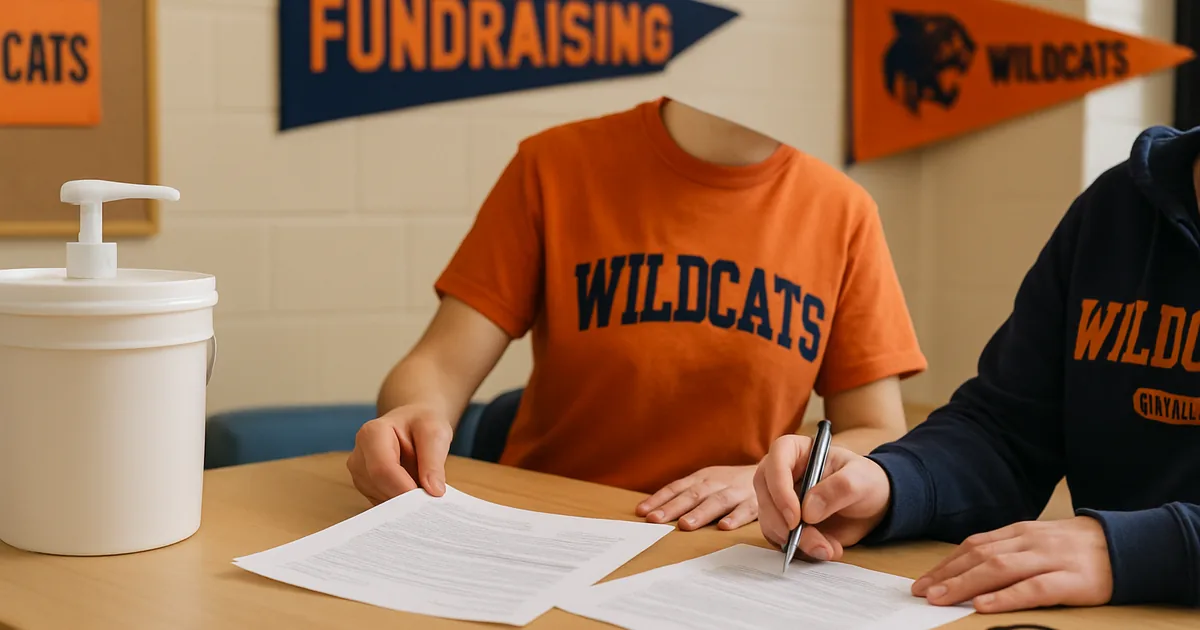
A detergent fundraiser is a product-based fundraiser where groups sell bulk laundry detergent — typically in 5-gallon buckets — to raise money. Unlike traditional treat fundraisers that rely on novelty purchases, a detergent fundraiser sells a household necessity people already buy, which widens the buyer pool and makes selling easier. Supporters pay about half the per-ounce price of leading national brands while the group keeps a profit on each bucket sold. The model works because it asks supporters to shift a purchase they were already going to make rather than spend extra money on something they do not need, and because detergent is non-perishable, it avoids the logistics headaches of frozen or perishable products.
If you are researching fundraising options, you have probably noticed that most product fundraisers follow the same pattern: sell an overpriced novelty item, hope enough people buy it out of obligation, and split a thin margin with the fundraising company. A detergent fundraiser flips that model by selling something every household actually needs.
The concept is straightforward: instead of cookie dough or wrapping paper, groups sell bulk laundry detergent — usually in large 5-gallon buckets — at a price well below retail. Supporters get a product they were going to buy anyway at about half the cost, and the group keeps a solid profit per unit. The shift from novelty to necessity changes who buys, how much families sell, and how the whole campaign feels to run.
This guide explains what a detergent fundraiser is, how it works, why groups are choosing it over traditional product fundraisers, what the economics look like, and whether it is the right fit for your organization.
- A detergent fundraiser sells bulk laundry detergent — a household necessity rather than a novelty treat — to raise money for schools, teams, and nonprofits.
- Groups typically sell 5-gallon buckets for about $50, and supporters pay roughly half the per-ounce price of leading national brands.
- The buyer pool is much wider than traditional fundraisers because detergent is something every household already purchases.
- Detergent is non-perishable, which eliminates the frozen-delivery logistics and storage issues that come with food fundraisers.
- The model asks supporters to shift a purchase they were already making, not spend extra money on something they do not need.
- Most detergent fundraisers are no-upfront-cost, meaning groups collect orders first and never front money for inventory.
How does a detergent fundraiser work?
The mechanics are simple. A group partners with a detergent fundraising company, sets a goal and timeline, and distributes order forms or links to families. Participants sell 5-gallon buckets of laundry detergent to friends, family, neighbors, and coworkers at a set price — typically about $50 per bucket. Supporters place orders and pay upfront, the group submits the order to the company, and the detergent is delivered in bulk. The group then distributes the buckets to buyers and keeps the profit.
Most programs are structured as no-upfront-cost, meaning the group never fronts money for inventory. Orders are collected first, payment is submitted, and the product ships only after the campaign closes. This removes the financial risk that comes with traditional catalog fundraisers where groups have to buy inventory in advance and hope it sells.
The detergent itself is usually a high-quality product in a large format — 5-gallon buckets holding 640 ounces are common — with a pump dispenser for easy use. The per-ounce cost to the buyer is about half what they would pay for a leading national brand at a major retailer, so supporters feel they are getting genuine value rather than paying a premium to support the group.
Why do groups choose detergent fundraisers over traditional product fundraisers?
The shift comes down to three things: buyer breadth, perceived value, and logistics. Traditional product fundraisers — cookie dough, candy, popcorn, wrapping paper — sell novelty items that appeal to a narrow slice of potential buyers. Detergent, by contrast, is a necessity every household purchases, which means nearly every person a participant approaches is a potential buyer. That wider pool tends to translate into higher participation and more sales per family.
Perceived value is the second lever. When a supporter pays a premium for cookie dough or a candle, they know most of the price is markup to fund the group and the company. With a detergent fundraiser, supporters pay about half the retail price for a product they genuinely need, so the transaction feels like a deal rather than a donation disguised as a purchase. That makes selling easier and repeat participation more likely.
Logistics seal it. Food fundraisers are perishable — cookie dough has to stay frozen, candy can melt, popcorn has a shelf life — which creates delivery-day scrambles and storage headaches. Detergent is non-perishable, ships and stores easily, and does not require special handling. For a volunteer coordinator, that difference is the gap between a manageable project and a logistical nightmare.
What are the economics of a detergent fundraiser?
Profit depends on the program, but the structure is straightforward. Groups sell each 5-gallon bucket for a set price — about $50 is standard — and per-bucket profit depends on the program. Under Good Clean Fundraising's published pricing, the customer price is $49.95 (online orders add $2) and groups keep $13.45 to $15.45 per bucket at 100 or more buckets, depending on order volume. Orders of 100 or more ship free; smaller orders (the minimum is 50 buckets) pay shipping and keep about $5 to $12 per bucket.
From the supporter's perspective, a 5-gallon bucket holds 640 ounces and costs about $50, which works out to roughly 7 to 8 cents per ounce. Good Clean Fundraising states that price is roughly half the per-ounce store price of leading national-brand detergents. That is real savings on a product they were going to buy anyway, which is why the value proposition resonates.
The total a group raises is a function of participation and sales per participant. A group with strong participation — where most families sell a handful of buckets each — will raise significantly more than a group with weak participation and a high per-item margin. A necessity product can help drive broader participation because the buyer pool is wider than for a novelty item.
Who is a detergent fundraiser best for?
Detergent fundraisers work well for any group that wants broad participation, simple logistics, and a product with genuine value. Schools, PTAs, booster clubs, sports teams, youth groups, churches, and nonprofits all run them successfully. The model is particularly strong for organizations that have tried traditional product fundraisers and hit a ceiling — groups where families are tired of selling overpriced novelties and supporters are tired of buying them.
It is also a good fit for groups that want to avoid upfront costs and financial risk. Because most detergent programs are no-upfront-cost, there is no inventory money at stake if participation is lower than hoped. That makes it a safer choice for first-time coordinators or organizations with limited budgets.
The one group it may not suit is an organization that needs a very high per-item margin and has a small, highly committed participant base. In that case, a high-margin novelty or event might raise more. But for most groups — especially those that want to reach a wide audience and make selling easy — a household-necessity model can outperform traditional product fundraisers.
What should you look for in a detergent fundraising program?
Not all detergent fundraisers are structured the same way, so it pays to ask the right questions before you commit. Start with cost structure: is it no-upfront-cost, or does the group have to buy inventory in advance? No-upfront-cost removes financial risk and is almost always the better choice for schools and nonprofits.
Next, confirm the profit terms in writing. What does the group keep per bucket, and does that number change with order volume? Are there minimum order requirements, and is shipping free or does it eat into your profit? A program that offers free shipping on larger orders and clear volume-based pricing is easier to plan around.
Product quality matters, too. Ask for a sample bucket or check reviews — if the detergent is low-quality, supporters will not reorder and your reputation takes a hit. The best programs use a high-quality product that performs as well as or better than national brands, so buyers feel they got real value.
Finally, ask about support. Does the company assign a dedicated coordinator to help you plan and run the campaign, or are you figuring it out alone? A program that provides setup help, materials, tracking tools, and delivery coordination makes the whole process dramatically easier, especially for first-time organizers.
How does a detergent fundraiser compare to other necessity fundraisers?
Detergent is part of a broader category of household-necessity fundraisers, which also includes things like trash bags, paper towels, and cleaning supplies. All of these share the same core advantage: they sell products people already buy, which widens the buyer pool and makes selling easier. The question is which necessity product works best.
Detergent tends to outperform other household items for a few reasons. First, it has universal appeal — every household does laundry, but not every household uses the same cleaning products or buys trash bags in bulk. Second, the per-unit value is high: a 5-gallon bucket lasts months for most families, so the savings are substantial and obvious. Third, the format is simple — one SKU, one price, no catalog to flip through.
Other necessity fundraisers can work well, but they often involve more complexity. A multi-product catalog gives buyers choice, but it also makes the selling process harder and the logistics more complicated. For most groups, a single high-value necessity product like detergent strikes the best balance between simplicity and broad appeal.
| Factor | Detergent Fundraiser | Traditional Product Fundraiser |
|---|---|---|
| Product type | Household necessity | Novelty treat or item |
| Buyer pool | Nearly every household | People who want that specific item |
| Perceived value | About half retail for a staple | Marked up well above everyday value |
| Logistics | Non-perishable, easy to store | Often perishable, special handling |
| Upfront cost | Typically no-upfront-cost | Often requires inventory purchase |
Common mistakes to avoid
Choosing a program with upfront inventory costs
If a detergent program requires you to buy inventory before you collect orders, you are taking on unnecessary financial risk. Stick with no-upfront-cost programs that let you collect orders first.
Not confirming profit terms in writing
Verbal promises about profit per bucket or free shipping are not enough. Get the terms in writing before you launch so there are no surprises when the campaign closes.
Skipping a product sample
If you have never used the detergent yourself, ask for a sample bucket before you commit. Low-quality product will hurt participation and damage your group's reputation.
Pricing too high to maximize margin
If your program allows it, selling buckets for significantly more than the standard price may increase your per-unit profit, but it can also shrink your buyer pool. Keeping the price at about $50 keeps the value comparison with store brands easy to explain.
Running the campaign too long
A short, focused selling window keeps urgency high, and Good Clean Fundraising recommends a 2–3 week selling period. Campaigns that drag on for months can lose momentum.
- Detergent price comparison — Good Clean Fundraising states its price works out to roughly half the per-ounce store price of leading national-brand liquid detergent; GCF has not published the specific retailers, sizes, or dates compared.
- GCF pricing — customer price, volume-based margins, and shipping threshold. GCF how it works — minimum order, selling period, lead time, delivery arrangements, and advertised guarantee. GCF return and refund policy — 30-day return window for unhappy customers.
- Household necessity fundraising — general category overview and comparison to novelty-product fundraisers. — source
Our recommendation
If you are considering a detergent fundraiser, Good Clean Fundraising runs The Good Clean Fundraiser — a bulk laundry-detergent program built specifically for schools, teams, and nonprofits. Groups sell premium 5-gallon pump buckets for about $50, supporters pay roughly half the per-ounce price of leading national brands, and groups keep about $13.45 to $15.45 per bucket at 100 or more buckets, depending on order volume. The program is no-upfront-cost, has a 50-bucket minimum order, and includes free shipping on orders of 100 buckets or more (smaller orders pay shipping and keep about $5 to $12 per bucket). A coordinator provides guidance, and your group arranges a commercial delivery address, unloading, and supporter pickup. Good Clean Fundraising advertises a 100% money-back guarantee, and its return and refund policy lets an unhappy customer contact support and return the product within 30 days of purchase; the refund goes to the supporter directly and does not reduce your group's earned profit; confirm eligibility and return costs with GCF before describing specific terms to supporters.
Frequently asked questions
A detergent fundraiser is a product-based fundraiser where groups sell bulk laundry detergent — typically in 5-gallon buckets — to raise money. Unlike traditional fundraisers that sell novelty treats, a detergent fundraiser sells a household necessity people already buy, which widens the buyer pool and makes selling easier.
It depends on participation and order volume, so treat any single number with caution. As a concrete example, groups using one household-necessity program sell 5-gallon buckets for about $50 and keep roughly $13.45 to $15.45 per bucket at 100 or more buckets. The bigger lever is participation: when the product is something people need, more families find buyers, which raises the total more than a small change in per-item profit would.
For many groups, yes — mainly because the buyer pool is much wider. Detergent is a necessity every household already purchases, so it reaches grandparents, neighbors, and coworkers who would never buy a dessert product. It is also non-perishable, which removes the frozen-delivery logistics that make food fundraisers hard to run.
Not with most programs. The best detergent fundraisers are no-upfront-cost, meaning you collect orders first and never front money for inventory. That removes the risk of paying for unsold inventory if participation is lower than hoped.
Supporters typically pay about $50 for a 5-gallon bucket, which works out to roughly 7 to 8 cents per ounce. Good Clean Fundraising states that price works out to roughly half the per-ounce store price of leading national-brand detergents, so supporters get real savings on a product they were going to buy anyway.
Detergent fundraisers work well for schools, PTAs, booster clubs, sports teams, youth groups, churches, and nonprofits — any group that wants broad participation, simple logistics, and a product with genuine value. They are particularly strong for organizations that have tried traditional product fundraisers and hit a ceiling.
Good Clean Fundraising recommends a 2–3 week selling period, followed by about two weeks of lead time once the paid order is submitted. A short, focused selling window creates urgency and keeps volunteers engaged, while campaigns that drag on for months can lose momentum.
Look for a program that is no-upfront-cost, offers clear volume-based pricing with free shipping on larger orders, uses high-quality detergent, and offers clear support to help you plan and run the campaign. Get the profit terms in writing and ask for a product sample before you commit.
The Good Clean Fundraiser is Good Clean Fundraising's bulk laundry-detergent program. Groups sell a 5-gallon pump bucket for about $50, supporters buy at roughly half the per-ounce price of leading national brands, and groups keep about $13.45 to $15.45 per bucket at 100 or more buckets, with no upfront cost, free shipping on larger orders, and coordinator guidance. Good Clean Fundraising advertises a 100% money-back guarantee, and its return and refund policy lets an unhappy customer contact support and return the product within 30 days of purchase.
A detergent fundraiser works because it sells something people were already going to buy, at a price that saves them money, with logistics simple enough that a volunteer can manage it. That combination — necessity, value, and simplicity — is why groups that switch from traditional product fundraisers consistently raise more and hear fewer complaints. If you are tired of selling overpriced novelties, this is the model worth trying.