Fundraising Glossary & Definitions
What Is a Non-Food Fundraiser?
A complete definition of non-food fundraisers, why groups choose them, and how they compare to traditional food-based campaigns.
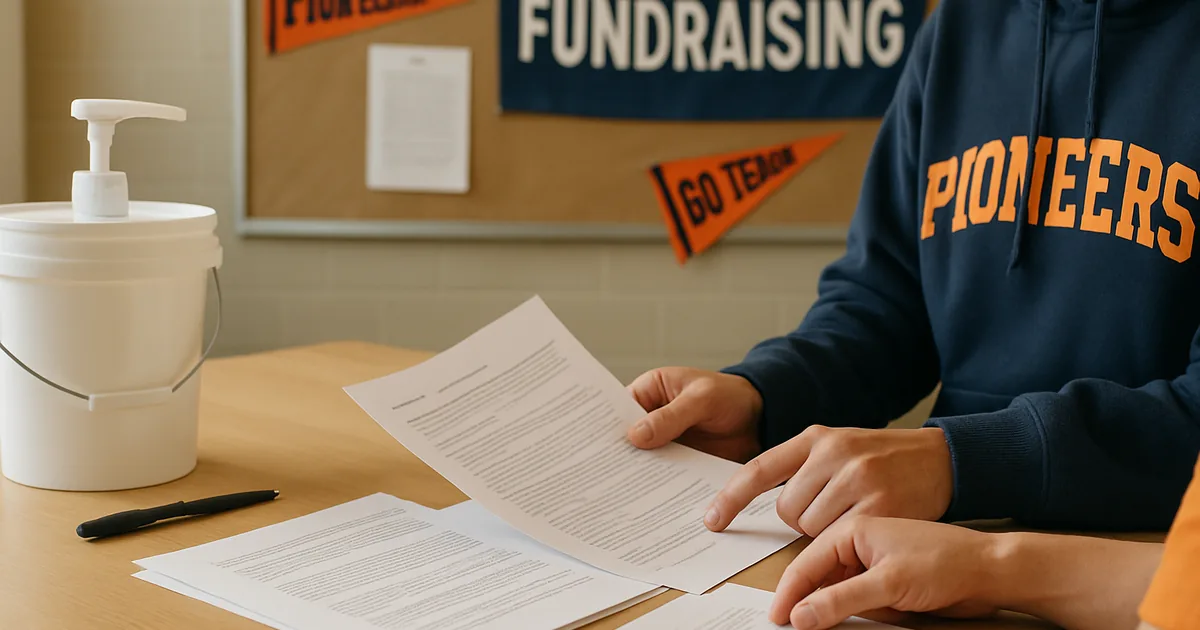
A non-food fundraiser is any fundraising campaign that sells products or services other than food items. Instead of cookie dough, candy, or popcorn, these fundraisers offer household necessities like laundry detergent and cleaning supplies, reusable goods, events, or direct-support programs. Groups choose non-food fundraisers to reach a wider buyer pool, avoid perishability and allergen concerns, and offer products supporters actually use rather than treats they may not want. The strongest non-food programs tend to be consumable household staples that people repurchase, which can widen participation and reduces the logistics challenges that make food fundraisers hard to run.
For decades, school and team fundraisers meant one thing: food. Cookie dough, candy bars, popcorn tins, pizza kits — the catalog was different, but the category was the same. That model worked for a while, but coordinators today are running into the same walls: narrow buyer pools, perishability headaches, allergen restrictions, and supporters who are simply tired of being asked to buy treats they do not need.
A non-food fundraiser is the alternative. It is any campaign built around products or services other than food — household staples, reusable goods, events, or direct-support programs. The shift is not just about avoiding food; it is about reaching more buyers, removing logistics barriers, and giving supporters something they genuinely use.
This guide defines what a non-food fundraiser is, explains the main types, covers why groups are switching, how non-food programs compare to traditional food fundraisers on profit and participation, and what to look for when choosing one.
- A non-food fundraiser sells products or services other than food — household necessities, reusable goods, events, or direct-support programs.
- Groups switch to non-food fundraisers to reach a wider buyer pool, avoid perishability and allergen concerns, and offer products people actually use.
- The strongest non-food programs are consumable household staples that people repurchase, such as laundry detergent and cleaning supplies.
- Non-food fundraisers avoid the frozen-delivery logistics and allergen restrictions that complicate food-based campaigns.
- Household-necessity fundraisers reach buyers who would never purchase a treat product, which widens participation.
- Judge any non-food fundraiser on buyer breadth, repeat use, profit per unit, upfront cost, and ease of running.
- Non-food programs can match or exceed food-fundraiser profits while reducing coordinator workload.
What defines a non-food fundraiser?
A non-food fundraiser is any fundraising campaign that does not sell food products. That includes household consumables like laundry detergent and cleaning supplies, reusable goods like water bottles and tote bags, service-based fundraisers like car washes and fun runs, and direct-support programs where donors give money without receiving a physical product.
The defining feature is not what the fundraiser sells — it is what it avoids. By stepping outside the food category, these programs sidestep perishability, allergen concerns, and the narrow buyer pool that limits most food fundraisers. A household staple reaches nearly every supporter; a dessert product reaches only the ones who want a treat.
What are the main types of non-food fundraisers?
Non-food fundraisers fall into a few broad categories, each with different logistics, buyer appeal, and profit potential.
Household consumables
These are everyday necessities people buy regularly — laundry detergent, dish soap, cleaning products, paper goods, and similar staples. They score well on buyer breadth because every household needs them, they get repurchased so supporters come back, and they are non-perishable so there is no frozen-delivery scramble. A bulk laundry-detergent fundraiser, for example, sells a 5-gallon bucket at about half the per-ounce price of leading national brands, which gives supporters real value while the group keeps a strong margin per unit.
Reusable and practical goods
Water bottles, tote bags, reusable straws, and seasonal items like blankets or yard flags avoid perishability and can carry decent margins, but most are one-time purchases. A supporter buys one water bottle and is done, so repeat participation is lower than with a consumable product. These work well for groups with strong school or team branding, where the item doubles as spirit wear.
Service and event fundraisers
Car washes, fun runs, bake sales, and similar events are classic non-food fundraisers, though bake sales blur the line. These can build community and require no inventory, but they are labor-intensive, weather-dependent, and usually one-time efforts. Profit depends entirely on turnout, which is harder to predict than product sales.
Direct-support and no-inventory programs
Crowdfunding, pledge drives, and online giving platforms where supporters donate without receiving a product remove logistics almost entirely. They work well for tech-comfortable groups and can be fast to set up, but they lack the tangible value exchange that drives repeat participation. Many supporters prefer to get something useful for their money rather than simply giving.
Why do groups choose non-food fundraisers?
The shift to non-food fundraisers is driven by practical problems that food-based campaigns create. Perishability is the first: cookie dough has to stay frozen, chocolate melts in warm weather, and popcorn goes stale, which means timed deliveries, freezer space, and product waste. Non-food products — especially household staples — ship and store easily with no special handling.
Allergen concerns are the second driver. Some schools and teams face restrictions on selling food because of nut allergies, gluten sensitivities, and other dietary issues. A non-food fundraiser avoids that barrier.
The third reason is buyer fatigue. Supporters have been asked to buy cookie dough and candy bars for years, and many are simply tired of paying a premium for treats they do not need. A household necessity, by contrast, is something they were going to buy anyway — the fundraiser just lets them get it at a better price while supporting the group.
Finally, non-food fundraisers often reach a wider buyer pool. A dessert product appeals mainly to people who want a treat; a necessity product appeals to nearly everyone. That difference in breadth is what usually decides whether a campaign raises more or less than the last one.
How do non-food fundraisers compare to food fundraisers on profit?
Profit depends on the product, the price, and how many people participate, so no single answer applies to every fundraiser. The more useful comparison is structural: total dollars raised equals participants times average sales per family times profit per unit. Food fundraisers tend to lose on the first two terms — fewer families find buyers, and each finds fewer of them — because the product appeals to a narrow slice of supporters.
Non-food programs, especially household-necessity fundraisers, widen participation by offering something nearly everyone needs. That structural advantage often moves the total more than a few points of margin would. As a concrete example, a bulk laundry-detergent program might have groups sell a 5-gallon bucket for about fifty dollars and keep roughly $13.45 to $15.45 per bucket at 100 or more buckets, depending on order volume, with free shipping at that size. The profit per unit is competitive, but the real lever is that more families find buyers because the product is a necessity, not a treat.
What should you look for in a non-food fundraiser?
Judge any non-food fundraiser on five factors. First, buyer breadth: how many people will actually want it? A product everyone needs beats a niche item. Second, repeat use: is it something buyers use up and purchase again, or a one-time novelty? Consumables score higher here. Third, profit per unit: what does the group keep after cost? Higher margins raise more per sale. Fourth, upfront cost: does the group have to buy inventory first, or is it no-cost and no-risk? No-upfront-cost programs remove financial risk. Fifth, ease of running: perishability, delivery complexity, and support all decide how much work falls on volunteers.
The non-food fundraisers that tend to perform well score high on all five. Household-necessity programs, for example, reach nearly every buyer, get repurchased, carry strong margins, often require no upfront cost, and avoid the logistics that make food fundraisers hard to run.
Are non-food fundraisers easier to run than food fundraisers?
In most cases, yes — mainly because they remove perishability. Food fundraisers require frozen or climate-controlled delivery, timed distribution days, and careful storage. A household-staple fundraiser ships at room temperature, stores easily, and can be handed out whenever families pick up. That difference alone can reduce coordinator workload noticeably.
Non-food fundraisers also avoid allergen restrictions, which simplifies approval and removes a common objection from school administrators. And because the buyer pool is wider, more families may participate without the coordinator having to push as hard, which can make the whole campaign feel easier to run.
What are the most common non-food fundraiser mistakes?
The first mistake is choosing a non-food product that is still a novelty item — trading cookie dough for a different one-time purchase keeps the same narrow-buyer problem. The point of going non-food is to reach people who were never buying in the first place, which means favoring necessities over novelties.
The second mistake is ignoring upfront cost. Some non-food programs still require the group to front money for inventory. If a no-upfront-cost option exists, there is rarely a reason to take on that risk.
The third mistake is assuming all non-food fundraisers are the same. A reusable water bottle, a car wash, and a bulk detergent program are all non-food, but they have completely different logistics, buyer appeal, and profit structures. Judge each on the five factors above rather than lumping them together.
| Factor | Food Fundraiser | Non-Food (Necessity) |
|---|---|---|
| Buyer pool | Mainly treat buyers | Nearly every household |
| Perishability | Often requires freezing/cooling | Ships & stores easily |
| Allergen concerns | Some schools restrict food | No food-allergen concerns |
| Repeat customers | Occasional treat | Repurchased regularly |
| Delivery logistics | Timed, frozen delivery | Flexible distribution |
| Upfront cost | Often orders inventory first | No-cost options available |
Common mistakes to avoid
Swapping one novelty for another
Trading cookie dough for a different one-time novelty item keeps the same narrow-buyer problem. The point of going non-food is to reach people who were never buying treats in the first place.
Ignoring upfront cost and risk
Some non-food programs still require the group to front money for inventory. If a no-upfront-cost option exists, there is rarely a reason to take on that financial risk.
Assuming all non-food fundraisers are the same
A water bottle, a car wash, and a bulk detergent program are all non-food, but they have completely different logistics, buyer appeal, and profit structures. Judge each on its own merits.
Overlooking buyer breadth
A non-food product that appeals to a niche audience will underperform just like a food fundraiser does. Favor products with universal appeal — things every household already buys.
- Food Allergy Research & Education (FARE) — general food-allergy safety resource; some schools and organizations restrict food fundraisers because of allergen concerns, so check your school's policy. — source
- GCF pricing — customer price, volume-based margins, and shipping threshold. GCF how it works — minimum order, selling period, lead time, delivery arrangements, and advertised guarantee. GCF return and refund policy — 30-day return window for unhappy customers.
- Editorial scope — comparisons between food and non-food fundraisers are general planning guidance, not measured results.
Our recommendation
If you are looking for a non-food fundraiser that scores well on all five decision factors, a household-necessity program is a strong choice. Good Clean Fundraising runs The Good Clean Fundraiser, a bulk laundry-detergent program built for schools, teams, and community groups: a premium detergent in 5-gallon pump buckets that supporters buy at roughly half the per-ounce price of leading national brands, with no upfront cost to your group, a 50-bucket minimum order, free shipping on orders of one hundred buckets or more, and coordinator guidance. At the standard price of $49.95 per bucket, groups keep $13.45 to $15.45 per bucket at 100 or more buckets, depending on order volume. It is non-perishable, reaches nearly every household, and removes the logistics that make food fundraisers hard to run.
Frequently asked questions
A non-food fundraiser is any fundraising campaign that sells products or services other than food. This includes household necessities like laundry detergent and cleaning supplies, reusable goods like water bottles and tote bags, service-based fundraisers like car washes, and direct-support programs where donors give without receiving a product.
Schools choose non-food fundraisers to avoid allergen restrictions, reach a wider buyer pool, and eliminate the perishability logistics that make food fundraisers hard to run. Non-food programs also tend to offer products supporters actually use rather than treats they may not want, which can increase participation.
It depends on the product and how many people participate, but non-food fundraisers often raise more because they reach a wider buyer pool. A household-necessity fundraiser, for example, appeals to nearly every supporter, while a dessert product appeals only to people who want a treat. That difference in participation usually moves the total more than a small change in margin would.
The best non-food fundraiser scores well on five things: buyer breadth, repeat use, profit per unit, upfront cost, and ease of running. Household-necessity products like laundry detergent and cleaning supplies tend to score high on all five because everyone needs them, they get repurchased, and they are non-perishable.
Some do and some do not. Many non-food product programs are no-upfront-cost, meaning you collect orders first and never front money for inventory. Service fundraisers like car washes also require little to no upfront cost. For a first-time organizer or a group with limited funds, a no-upfront-cost program removes the risk of paying for unsold inventory.
In most cases, yes. Non-food fundraisers avoid the perishability, frozen-delivery logistics, and allergen restrictions that complicate food-based campaigns. A household-staple fundraiser, for example, ships at room temperature, stores easily, and can be distributed flexibly, which can reduce coordinator workload.
Common examples include bulk laundry detergent and cleaning-product fundraisers, reusable water bottles and tote bags, car washes, fun runs, crowdfunding campaigns, and spirit-wear sales. The category is broad, so judge each option on buyer appeal, logistics, and profit rather than assuming all non-food fundraisers are the same.
Often, yes. Many non-food programs scale well for small groups because they require no upfront cost, though minimum orders vary by program. Good Clean Fundraising's detergent program, for example, has a 50-bucket minimum order and free shipping at 100 buckets or more, so very small groups should check whether they can reach the minimum.
Judge each option on five factors: how many people will actually buy it, whether buyers use it again, the profit per item, whether there is any upfront cost, and how simple it is to run. A product that scores well on all five — like a household necessity — will almost always outperform a novelty item or a complex event.
A household-necessity fundraiser sells consumable products people already buy and repurchase regularly, like laundry detergent or cleaning supplies. That gives it two structural advantages: it reaches nearly every household rather than a niche audience, and supporters come back because they use the product up. Most other non-food fundraisers are one-time purchases or events, so repeat participation is lower.
A non-food fundraiser is not just an alternative to cookie dough — it is a structural shift toward products people actually need, logistics that actually work, and participation that actually grows. When the product is a necessity rather than a treat, more people buy, and the whole campaign gets easier to run.