
Most Profitable & High-Profit Fundraising
How Much Money Can You Make With a Fundraiser?
What groups actually raise, what drives the total, and how to estimate your own campaign before you start.
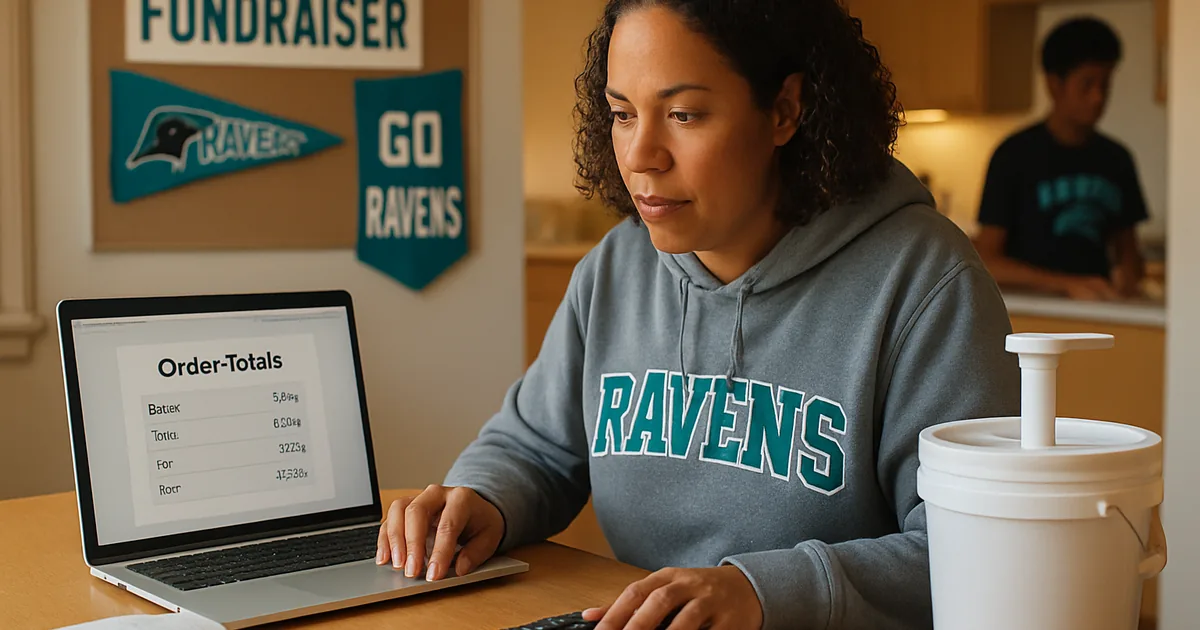
How much a group raises depends on three factors: how many people participate, how many units each participant sells, and the profit per unit. Total raised equals participants times average sales per participant times profit per unit. Most successful campaigns focus on widening participation rather than chasing a high margin, because a product with broad appeal that more families can sell often raises more than a high-margin item only a few people move. Bulk household-necessity fundraisers can perform well because they can reach buyers who would not purchase a novelty item, and the product is something supporters already use. At Good Clean Fundraising's $13.45 to $15.45 profit per bucket (at 100 or more buckets), a group working backward from a dollar goal can calculate how many buckets it needs and how that divides across participants.
The question every coordinator asks before launching a fundraiser is the same: how much can we actually make? It is a reasonable thing to want to know, and also one of the hardest to answer honestly, because the number depends less on the fundraiser itself than on how many people in your group take part and how many buyers each one reaches.
That said, there is a formula, and once you understand it you can estimate your own total with reasonable accuracy. This guide walks through what drives the number, how to calculate it for your group, what realistic totals look like across different fundraiser types, and why participation often matters more than margin.
We will also cover the single biggest mistake groups make when estimating how much they can raise, and how to avoid building a budget around a number that was never going to happen.
- Total raised equals participants times average sales per participant times profit per unit — all three factors matter.
- Widening participation often raises more than chasing a higher per-unit margin.
- A product with broad appeal that more families can sell can outperform a high-margin item only a few people move.
- Working backward from a dollar goal to bucket count and participant count gives a realistic estimate.
- The biggest estimating mistake is assuming every family will participate and sell at the same level.
- Household-necessity fundraisers may raise more because they can reach buyers who would not purchase a novelty or treat item.
- No-upfront-cost programs remove the risk of paying for unsold inventory if the campaign raises less than projected.
What determines how much money a fundraiser makes?
Three factors multiply together to produce your total: how many people participate, how many units each participant sells on average, and the profit your group keeps per unit. Change any one of those numbers and the total moves. The mistake most groups make is focusing only on the third factor — profit per unit — when the first two often have more leverage.
A fundraiser where half your families participate and each sells a modest number of a broadly appealing product will often raise more than a fundraiser where only a handful of your strongest sellers move a high-margin specialty item. Participation is one of the biggest levers you have, and participation is driven by whether the product is something a wide range of buyers actually want.
How do you calculate what your group can raise?
Start with your goal and work backward. If you need a specific dollar amount, divide that by your profit per unit to get the number of units you need to sell, then divide that by a realistic average sales per participant to estimate how many participants you need. This gives you a target you can check against your group size.
For example, if your goal is to fund new equipment and you are running a bulk detergent fundraiser where the group keeps $13.45 per bucket at 100 to 299 buckets ($14.45 at 300 to 499; $15.45 at 500 or more), you can calculate how many buckets you need and how that divides across your participant base. As an illustration, moving 240 buckets at $13.45 raises $3,228, and with 60 families that is an average of 4 buckets per family. Whether 4 per family is realistic depends on your group; it is a planning assumption, not a measured average.
The key is to be honest about participation. Not every family will take part, and among those who do, sales will vary widely. A conservative planning assumption is that around half your families participate, with a few strong sellers, a solid middle, and some who sell only one or two units. Build your budget around the conservative number, not the best-case scenario.
What do realistic fundraiser totals look like?
The honest answer is that it varies widely by group size, product, and how well the campaign is run. A small team of 20 families running a focused two-week campaign with a product people need can raise a meaningful amount; a large school with low participation and a product few want can raise less. The product and the participation rate matter more than the size of the organization.
Rather than give you a single number that may not apply to your situation, the better approach is to think in terms of units and profit per unit. A group selling a 5-gallon bucket of detergent at $49.95 and keeping $13.45 to $15.45 per bucket (by volume tier) knows what each sale is worth. As an illustration, if 50 families participate and each sells an average of 4 buckets, that is 200 buckets, and 200 buckets at $13.45 is $2,690. These numbers are an example, not a projection for your group.
The groups that raise the most are not necessarily the ones with the highest per-unit profit; they are the ones that move the most units because more families found it easy to sell. A household necessity with broad appeal and a decent margin will outperform a high-margin novelty item that only a few families can move.
Why does participation matter more than profit margin?
Because total raised is a multiplication problem, and participation is often the factor with the most room to grow, though this varies by campaign. A product that lets you go from 30 participating families to 50 can raise more than a product that increases your per-unit profit by a few dollars but only 20 families can sell.
This is why household-necessity fundraisers tend to raise more than novelty or treat fundraisers. A bucket of laundry detergent can reach grandparents, neighbors, coworkers, and extended family who may not buy cookie dough or a candle, which can mean more families find buyers and more units move. The per-bucket profit does not have to be dramatically higher if the participation and average sales per family both increase.
Editorial observation: when the product is something people already use and can purchase at a lower per-ounce price than many premium national brands, selling it may feel less like a favor and more like offering a deal, which can help participation.
How do different fundraiser types compare on what you can raise?
Comparing fundraiser types honestly means comparing them on the three factors that drive totals: how many people will participate, how many units each participant can sell, and the profit per unit. A high per-unit profit does not help if only a handful of families can move the product.
Traditional product fundraisers like cookie dough, candy, and popcorn often have moderate per-unit profit and narrower buyer appeal, which caps participation and average sales per family. Event fundraisers like car washes or dinners can raise a decent amount but require significant volunteer labor and are limited by attendance. Pledge or donation fundraisers ask supporters to give without receiving value, which works for some causes but not all.
Bulk household-necessity fundraisers score well across all three factors. The buyer pool can be broad because most households use the product, which can widen participation. The product is consumable, so supporters are shifting a purchase they already make rather than spending extra money. And because the item is sold at a lower per-ounce price than many premium national brands, supporters may feel they are getting real value, not paying a premium to support the group.
What is the most realistic way to estimate your total before you start?
Use conservative assumptions and work backward from your goal. As a planning assumption, assume around half your families will participate — not all of them. Among those who do, choose an average based on your own group's experience; this guide does not cite measured per-family averages. Multiply participants by average sales per participant by profit per unit, and that is your conservative estimate.
If the conservative estimate does not hit your goal, you have three levers: increase participation by choosing a product with broader appeal, increase average sales per participant by making the product easier to sell, or increase profit per unit by choosing a higher-margin program. The first lever often has the most room to move.
Once you have a conservative estimate, add a stretch goal that assumes slightly higher participation or average sales, but build your budget around the conservative number.
Our recommendation: a bulk household-necessity fundraiser
If you are asking how much you can raise because you need to hit a specific goal, a useful approach is a product that scores well on all three factors: broad participation, strong average sales per family, and solid per-unit profit. Good Clean Fundraising runs The Good Clean Fundraiser, a bulk laundry-detergent program built for this.
Groups sell a 5-gallon bucket of detergent for $49.95 — a lower per-ounce price than many premium national brands at major retailers — and keep $13.45 per bucket at 100 to 299 buckets, $14.45 at 300 to 499, and $15.45 at 500 or more, with free shipping at 100 buckets or more. There is no upfront cost because the group collects payment first and submits a paid order. Good Clean Fundraising provides a Getting Started packet, instructions, marketing materials, and social media strategies.
The product is a household necessity most families already buy, which means it can reach buyers who would not purchase a treat or novelty item — grandparents, neighbors, coworkers, extended family. Supporters are not spending extra money or doing the group a favor; they are shifting a purchase they were going to make anyway at a lower per-ounce price than many premium national brands. That can widen participation and lift average sales per family.
Good Clean Fundraising advertises a 100% money-back guarantee; according to the company, any customer who is not satisfied is refunded and the group keeps its profit.
To estimate what your group can raise, use the calculator on the site or work backward from your goal: at $13.45 per bucket (100 to 299 buckets), divide your dollar goal by the profit per bucket to get the bucket count you need, then divide by a realistic average sales per participating family. As an illustration, a $2,690 goal at $13.45 per bucket needs 200 buckets, which with 50 families is an average of 4 buckets per family.
Common mistakes to avoid
Assuming every family will participate
Not every family takes part, and building a budget around full participation can set you up to miss your goal. Plan conservatively.
Focusing only on per-unit profit
A high margin does not help if only a few families can sell the product. Participation and average sales per family often matter more.
Picking a product with narrow appeal
A novelty or treat item reaches a small buyer pool, which caps how much each family can sell and how many families participate.
Letting the campaign drag on too long
Fundraisers without a clear deadline lose momentum. A focused two-to-three-week window with urgency can raise more than an open-ended campaign.
Building a budget around the best-case scenario
Plan for the realistic case and be pleasantly surprised, not the other way around. The groups that hit their goals are the ones who estimated conservatively.
- Good Clean Fundraising program terms — $49.95 per bucket; $13.45 profit per bucket at 100 to 299 buckets (usually $5 to $12 at 50 to 99 buckets, depending on actual shipping costs), $14.45 at 300 to 499, $15.45 at 500 or more; $0 upfront cost because the group collects payment first and submits a paid order; free shipping at 100+ buckets; 50-bucket minimum; 100% money-back guarantee under which, according to the company, any customer who is not satisfied is refunded and the group keeps its profit. — GCF pricing, GCF how it works, and GCF refund and returns policy
- GCF per-ounce math — $49.95 for a 640-ounce bucket works out to about 7.8¢ per ounce, calculated directly from GCF's published pricing rather than an independent retail survey. Premium national-brand liquid detergents are commonly priced higher per ounce, but exact prices vary by size, store, and date; compare using your own regularly purchased detergent's per-ounce price, and note that some value-tier and store brands may cost less per ounce than GCF's price.
- Fundraising participation and sales averages — the 50% participation and 4-buckets-per-family figures are illustrative planning assumptions, not measured or statistical claims. Actual participation and per-family sales vary by group, product, and how the campaign is run.
- Comparisons of event, treat, and household-necessity fundraisers (buyer pool, repeat purchases, volunteer time, participation effects) — editorial reasoning; this guide does not cite measured data for them.
Our recommendation
If you need to hit a specific dollar goal, the most reliable path is a product that widens participation, lifts average sales per family, and carries a solid per-unit profit. Good Clean Fundraising's bulk laundry-detergent program is designed around all three: groups sell a 5-gallon bucket for $49.95 and keep $13.45 to $15.45 per bucket by volume tier (at 100 or more buckets), supporters pay a lower per-ounce price than many premium national brands, there is no upfront cost, and the company provides a Getting Started packet, instructions, marketing materials, and social media strategies. Good Clean Fundraising advertises a 100% money-back guarantee; according to the company, any customer who is not satisfied is refunded and the group keeps its profit. Use the earnings calculator to estimate your total, or work backward from your goal: at about $13.45 to $15.45 per bucket, divide your dollar target by that range to get the bucket count you need.
Frequently asked questions
It depends on three factors: how many people participate, how many units each participant sells, and the profit per unit. Total raised equals participants times average sales per participant times profit per unit. Groups often raise more by widening participation with a broadly appealing product than by chasing a higher per-unit margin on a product only a few families can sell.
Work backward from your goal. Divide your dollar target by your profit per unit to get the number of units you need to sell, then divide that by a realistic average sales per participant to estimate how many participants you need. Use conservative assumptions — not every family will participate, and sales per family will vary.
It depends on your group size, product, and participation rate, so treat any single number with caution. A better approach is to think in units and profit per unit. As an illustration only, if 50 families participate and each sells an average of 4 buckets, that is 200 buckets, and at $13.45 profit per bucket (100 to 299 buckets) that is $2,690.
Because total raised is a multiplication problem, and participation is often the factor with the most room to grow, though this varies by campaign. A product that lets you go from 30 participating families to 50 can raise more than a product that increases per-unit profit by a few dollars but only 20 families can sell.
The fundraiser that scores well on all three factors: broad participation, strong average sales per family, and solid per-unit profit. Household-necessity fundraisers can perform well because they can reach buyers who would not purchase a novelty or treat item, which can widen participation and lift average sales per family.
It varies by group and how the campaign is run, and this guide does not have measured data on the average. For planning, many coordinators use an assumption such as 3 to 5 buckets per participating family — an illustrative assumption, not a Good Clean Fundraising statistic. The key is that more families can participate and find buyers because the product is something people already use.
Not with a no-upfront-cost program. Some product fundraisers, including Good Clean Fundraising's detergent program, require no money up front — the group collects payment first and then submits a paid order. That removes the risk of paying for unsold inventory if the campaign raises less than projected.
Good Clean Fundraising's program assumes a selling window of about two to three weeks. A short, focused window creates urgency and helps keep volunteers engaged, while campaigns that drag on for months can lose momentum.
Assuming every family will participate and sell at the same level, then building a budget around that inflated number. Planning conservatively — for example, assuming around half your families will participate and using a realistic average sales per family — leaves room to be pleasantly surprised if you exceed it.
Groups sell a 5-gallon bucket for $49.95 and keep $13.45 to $15.45 per bucket by volume tier, with no upfront cost and free shipping at 100 buckets or more. Because the product is a household necessity sold at a lower per-ounce price than many premium national brands, it may widen participation and lift average sales per family, which can be two of the biggest levers for raising more.
How much you raise is not a mystery — it is a multiplication problem. Participants times average sales per participant times profit per unit. Groups that raise the most are often not the ones chasing the highest margin; they are the ones that widen participation by picking a product more families can sell.