
Non-Food & Alternative Fundraising
Alternatives to Candy Fundraisers: What Works Better
Why schools and teams are moving away from candy sales — and the fundraisers that avoid sugar pushback, wellness-policy conflicts, and the logistical headaches that come with selling chocolate.
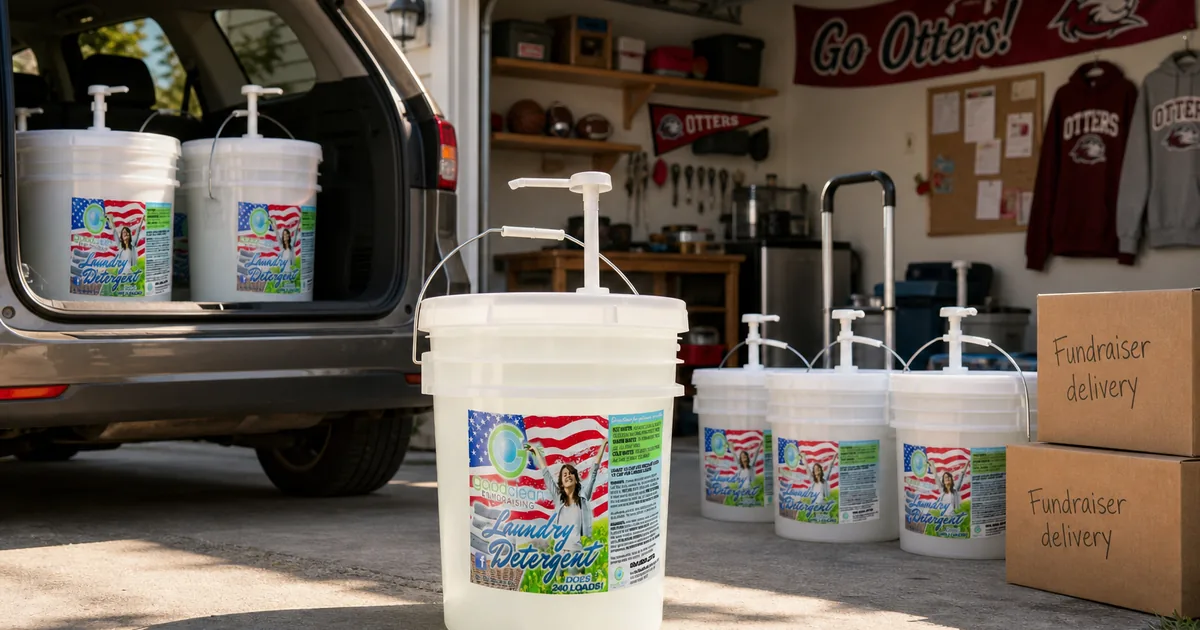
The strongest alternatives to candy fundraisers are bulk household-necessity products — especially laundry detergent and cleaning supplies — along with no-inventory digital programs and practical non-food items. These avoid the problems that make candy hard to run: school food rules (USDA Smart Snacks standards apply to foods sold to students on campus during the school day, including fundraisers, and many candy products do not meet them), some parents' objections to sugar-based fundraisers, chocolate melting in warm weather or cars, the very low unit price that can require hundreds of individual sales to reach a goal, and students carrying cash and loose product that can be lost or stolen. A household staple is not food, so the Smart Snacks food standards do not apply to it, it does not melt or spoil like chocolate, and its higher price per sale can reach a goal with far fewer transactions.
Candy fundraisers have been a school and team staple for decades, but the coordinators running them today face obstacles that are more visible than they once were. School food rules can limit when and where sweets are sold on campus. Some parents push back on sugar-based fundraisers. Chocolate melts in warm months and in parked cars. And because the unit price is so low, reaching even a modest goal can mean processing hundreds of individual sales, tracking cash from students, and managing boxes of loose product that go missing.
The good news is that there are alternatives built around products people need, which sidestep the policy conflicts and the sheer volume problem that makes candy exhausting to run. You are no longer choosing between candy and a worse version of the same idea.
This guide covers why candy fundraisers are harder to run now than they used to be, what makes a strong replacement, the best alternatives available today, how they compare on profit and logistics, and the mistakes to avoid when you make the switch.
- USDA Smart Snacks standards apply to foods sold to students on campus during the school day, including fundraisers, and many candy products do not meet them, so on-campus candy sales can depend on state exemptions and shrink your selling window.
- Candy's low unit price can mean hundreds of individual transactions to reach a meaningful goal, which multiplies the tracking and cash-handling work.
- Chocolate melts in warm weather and in cars, creating product loss and unhappy buyers.
- Some parents object to sugar-based fundraisers, which can lower participation.
- Students carrying cash and loose boxes invite loss and complicate accountability.
- Household-necessity fundraisers are not food, can reach a wider buyer pool, and can hit goals with fewer transactions.
- Non-perishable products avoid the melting and spoilage problems that plague candy sales.
Why are candy fundraisers harder to run now?
The obstacles that make candy difficult today fall into three categories: policy, perception, and logistics. On the policy side, USDA Smart Snacks standards apply to foods sold to students on campus during the school day, including foods sold as fundraisers, and many candy products do not meet them. States can permit occasional exempt fundraisers, and some states and districts limit or ban candy sales during the school day, which can push candy sales into after-school windows or off-campus and reduce participation. On the perception side, some parents push back on sugar-based fundraisers. And on the logistics side, candy's very low unit price creates a volume problem: reaching a goal can mean processing an enormous number of small sales, tracking cash from students, and managing boxes of loose product that can be lost, stolen, or melted.
When the product changes to something that avoids the policy conflicts, the parent objections, and the sheer transaction volume, all three problems can ease at once. The issue is often not that candy is a bad product, but that running it can take more work than it is worth.
How do school wellness policies affect candy fundraisers?
Under the Healthy, Hunger-Free Kids Act of 2010, schools that take part in the National School Lunch Program or School Breakfast Program must have a local wellness policy, and USDA's Smart Snacks standards apply to any foods sold to students on campus during the school day, including foods sold as fundraisers. States can permit occasional exempt fundraisers, and the standards do not apply to sales after the school day ends — generally 30 minutes past the official dismissal time — or off campus, although local policies may. Because many candy products do not meet the standards, on-campus candy sales during school hours can depend on those exemptions, which can push sales into that narrow post-dismissal window or off campus. That can cut participation: families who would have bought during pickup or at lunch may fall outside the buying window.
The policy question alone can stop a candy drive before it starts. A PTA treasurer may not want to navigate competitive-food exemptions or risk a compliance issue, so the group picks a different fundraiser. One way around the problem is to sell something that is not food, which is one reason some groups look at household-product and other non-food fundraisers as an alternative to candy.
Why does candy's low unit price make fundraising harder?
Candy bars typically sell for a few dollars each, which sounds accessible until you do the math on what it takes to reach a goal. Depending on the margin per item, a group aiming for a few thousand dollars in profit can need hundreds — sometimes over a thousand — individual sales. Every one of those sales means a transaction: a student collects money, logs the sale, delivers the product, and accounts for the cash. Multiply that across dozens of students, and the coordinator is managing a high-volume, low-value operation where tracking and reconciliation become the hardest part of the job.
Compare that to a fundraiser with a higher profit per sale. What determines transaction count for a profit goal is the profit kept per sale, not the price tag alone — a higher price with a thin margin would not cut the sales count the same way a higher per-unit profit does. A household-necessity program that keeps a larger dollar amount per transaction can mean a group reaches the same profit goal with a fraction of the transactions, which can also mean less cash handling, less tracking, and fewer delivery touchpoints.
What happens when chocolate melts?
Chocolate fundraisers that run in warm months — or even in moderate weather if the product sits in a car or a backpack — face a perishability problem that other fundraisers do not. Melted candy is unsellable, which means product loss, unhappy buyers, and students who are out the money they fronted or the sales they counted on. Coordinators end up managing refunds, reorders, and the logistics of replacing spoiled inventory, all of which add work and eat into profit.
Non-perishable products largely avoid this. A household staple like laundry detergent does not melt or spoil the way chocolate can, so there is far less product-loss risk from warm weather, and the group does not need to time delivery around temperature. That removes a category of logistical friction that candy coordinators often accept as part of the job.
What are the best alternatives to candy fundraisers?
Measured against the problems candy creates — policy restrictions, parent objections, low unit price, perishability, and cash-handling complexity — a few categories stand out as replacements:
Household consumables (the standout)
Everyday necessities — laundry detergent, cleaning products, and similar staples — avoid most of candy's weak points. They are not food, so the Smart Snacks food standards do not apply to them (local rules on fundraiser approval may still apply). They are not perishable, so there is no melting or spoilage. The per-unit profit is higher than a low-margin candy sale, so groups can typically reach a profit goal with fewer transactions. And because these are products many households already buy and use up, the buyer pool can be much broader than candy's — grandparents, neighbors, coworkers, and families all do laundry, while only some of them want candy.
Good Clean Fundraising runs bulk laundry-detergent campaigns. Groups sell a 5-gallon pump bucket for $49.95 (about $50) and keep about $13.45 to $15.45 per bucket at 100 or more buckets, depending on order volume; smaller orders of 50 to 99 buckets earn about $5 to $12 per bucket depending on shipping, and orders under 50 buckets are not accepted. At about 7.8 cents per ounce, the bucket typically costs less per ounce than premium national-brand liquid detergent at retail — compare it to what you currently pay, since value-tier and store brands can cost less. There is a $0 upfront cost because the group collects orders and payment from supporters first, then submits the final order with payment. Shipping is free at 100 or more buckets, and Good Clean Fundraising provides a Getting Started packet, instructions, marketing materials, and social media strategies. Good Clean Fundraising advertises a 100% money-back guarantee under which, according to the company, any unsatisfied customer is refunded and the group keeps its profit.
The program is designed to be the opposite of a candy drive: fewer transactions, no melting, and a product that can reach buyers who would not purchase a treat. Groups should still plan for the 50-bucket minimum, a commercial delivery address, and about two weeks of fulfillment after the paid order is submitted.
No-inventory and direct-support programs
Programs where supporters give directly, with no product involved — crowdfunding or a straight donation ask — remove logistics almost completely and avoid the cash-handling and product-tracking problems that make candy hard to manage. The tradeoff is that a pure-donation ask has no tangible value proposition for the supporter, which can limit repeat participation. A no-inventory program that ships an ordered product to the buyer is different: the group still avoids stocking inventory, but the supporter receives something tangible, so this tradeoff mainly applies to give-only models rather than online product sales generally.
Reusable and practical non-food goods
Items like reusable bags, water bottles, or seasonal practical products avoid perishability and wellness-policy restrictions. They can carry decent margins and are easier to manage than candy. The limitation is that most are one-time purchases, so they score lower on repeat use and do not reach as wide a buyer pool as a consumable household necessity.
How do the alternatives compare on profit and logistics?
Profit depends on your product, your price, and how many families participate, so be skeptical of any fundraiser that promises one magic number. A useful way to think about it is that a fundraiser's total is driven by three things: how many people take part, how many sales each person makes, and the profit per sale. Candy can lose on the first two — participation may be lower where school food rules or parent objections apply, and each family makes smaller sales because the unit price is low. A household-necessity product can widen participation and raise the average transaction size, which can move the total more than a few points of margin.
Here is what that looks like in concrete terms. With Good Clean Fundraising's bulk laundry-detergent program, groups sell a 5-gallon bucket for $49.95 and keep about $13.45 to $15.45 per bucket at 100 or more buckets, depending on order volume. A group with a goal works backward: divide the goal by that per-bucket profit to estimate how many buckets the group needs, then check that estimate against the actual tier — $13.45 at 100–299 buckets, $14.45 at 300–499, $15.45 at 500 or more — and recalculate at the correct rate if it lands in a different tier, rounding up so the total still covers the goal. Divide the final bucket count across the participating families to see the average sales per family. Because the transaction size is higher, the group needs far fewer individual sales than a candy drive would.
On logistics, the comparison is stark. A candy fundraiser means students carry boxes, collect cash, track dozens of small transactions, and manage perishable product that can melt or be lost. A household-staple fundraiser means families take orders, the product arrives in a bulk delivery, and the coordinator reconciles a smaller number of larger transactions. The administrative load is typically lighter.
What about parent and community perception?
Some parents object to candy fundraisers, particularly where families are more conscious of sugar intake and school food environments. That objection can lower participation before a fundraiser even starts. Some families may simply not participate in a candy drive, either because they object to the product or because they do not want their child selling sweets.
A household-necessity fundraiser sidesteps the sugar objection. Supporters are not being asked to buy something indulgent — they are shifting a purchase they already make to support the group, and they may get real value in return. That reframing can change the conversation: instead of asking for a favor or a donation disguised as a candy bar, you are offering a staple product at a price that can be lower than the store's. Buyers may feel good about the transaction, sellers may feel less awkward, and participation may rise.
How do you handle the cash and accountability problem?
One of the hidden costs of candy fundraisers is the cash-handling and accountability burden. Students carry money, boxes go missing, sales are not logged, and the coordinator spends hours reconciling what should have been collected against what actually came in. The low unit price makes this worse: more transactions means more opportunities for error or loss.
A higher-ticket product reduces the problem by cutting the transaction count. Fewer sales means fewer cash touchpoints and simpler reconciliation. And if the program allows order-then-deliver rather than distribute-then-collect, the group never fronts inventory or chases money for product that was handed out but not paid for. Good Clean Fundraising's model works this way: the group collects orders and payment first, submits a single paid order, and the company ships the product to the group's commercial delivery address. The group does not front money and is not left holding unsold inventory.
| Factor | Candy Fundraiser | Household Necessity |
|---|---|---|
| School wellness policies | Often restricted during school day | Not subject to food rules |
| Parent perception | Can generate sugar pushback | Avoids the sugar objection |
| Unit price & volume | Hundreds of small sales needed | Far fewer transactions |
| Perishability | Chocolate melts in heat | Non-perishable |
| Cash handling | Many small transactions | Fewer, larger transactions |
| Buyer pool | Mainly treat buyers | Most households |
| Logistics | Students carry boxes & cash | Direct ship or bulk delivery |
Common mistakes to avoid
Ignoring your district's wellness policy before you start
Launching a candy drive without checking whether competitive-food rules restrict it is a fast way to have the fundraiser shut down mid-campaign. Confirm the rules in writing before you commit.
Underestimating the transaction-volume problem
Candy's low unit price means you need an enormous number of sales to reach any meaningful goal, which multiplies the tracking, cash-handling, and reconciliation work. Do the math on transaction count before you launch.
Running a chocolate fundraiser in warm months
Melted product is unsellable, and managing refunds and reorders eats time and profit. If you must sell candy, avoid warm-weather windows or choose a non-chocolate option.
Distributing product before collecting payment
Handing out candy and then chasing students for money is a recipe for loss and frustration. Order-then-deliver programs can reduce that risk.
Swapping one low-ticket impulse item for another
Trading candy for a different novelty treat keeps the same narrow-buyer and high-volume problems. The point of switching is to reach people who were never buying in the first place and to reduce transaction count.
- U.S. Department of Agriculture — Smart Snacks in School: fundraisers. The standards apply to foods sold to students on campus during the school day, including fundraisers; state agencies can permit occasional exempt fundraisers; the standards do not apply off campus or outside school hours, though local policies may. — source
- U.S. Department of Agriculture — Local school wellness policy requirements under the Healthy, Hunger-Free Kids Act of 2010, which apply to local education agencies participating in the National School Lunch Program or School Breakfast Program. — source
- Good Clean Fundraising program terms — $49.95 per bucket; $13.45 profit per bucket at 100 to 299 buckets (usually $5 to $12 at 50 to 99 buckets, depending on actual shipping costs), $14.45 at 300 to 499, $15.45 at 500 or more; $0 upfront cost; free shipping at 100+ buckets; 50-bucket minimum (smaller orders are not accepted); 100% money-back guarantee under which, according to the company, any customer who is not satisfied is refunded and the group keeps its profit. — GCF pricing, GCF how it works, and GCF refund and returns policy
- GCF per-ounce price calculation — a 5-gallon (640 fl oz) bucket at $49.95 works out to about 7.8 cents per fluid ounce ($49.95 ÷ 640 fl oz = 7.8046875¢/fl oz). Compare this figure to what you currently pay for premium liquid detergent; exact retail pricing varies by store, size, and promotion, and value-tier and store brands can cost less per ounce.
Our recommendation
If you are replacing a candy fundraiser, one option worth considering is a bulk household-necessity product — it avoids the melting problem, sidesteps the sugar objection, is not subject to the Smart Snacks food standards, and reduces the transaction-volume burden that makes candy exhausting to run. Good Clean Fundraising runs The Good Clean Fundraiser, a bulk laundry-detergent program: groups sell a 5-gallon pump bucket for $49.95, keep about $13.45 to $15.45 per bucket at 100 or more buckets, and pay $0 upfront because the group collects orders and payment first, then submits the final order with payment. Shipping is free at 100 or more buckets, and the company provides a Getting Started packet, instructions, marketing materials, and social media strategies. Good Clean Fundraising advertises a 100% money-back guarantee under which, according to the company, any unsatisfied customer is refunded and the group keeps its profit. It is the opposite of a candy drive: no melting, and no hundreds of tiny cash transactions.
Frequently asked questions
Three things make candy harder to run: school food rules (USDA Smart Snacks standards apply to foods sold to students on campus during the school day, including fundraisers, and many candy products do not meet them), some parents' objections to sugar-based fundraisers, and the low unit price, which can mean hundreds of individual transactions to reach a goal and more tracking and cash-handling work.
Common replacements are consumable household products people already buy — laundry detergent, cleaning supplies, and similar staples — along with no-inventory digital programs and practical non-food items. These are not food, so the Smart Snacks food standards do not apply to them, they can reach a wider buyer pool, and they can help groups reach goals with fewer transactions.
Yes. USDA Smart Snacks standards apply to foods sold to students on campus during the school day — generally from midnight before through 30 minutes after the official school day ends — including fundraisers, and many candy products do not meet them. States can permit occasional exempt fundraisers, and the standards do not apply off campus or after that window, though local policies may. Check your district policy before planning any food-based fundraiser.
For many groups, possibly, mainly because they avoid the problems that make candy hard to run. Household necessities are not subject to the Smart Snacks food standards, avoid sugar objections, are non-perishable so nothing melts, and have a higher unit price so groups can reach goals with fewer transactions. They can also reach a wider buyer pool because most households buy detergent, while only some supporters want candy.
It depends on your goal and your profit per item, but the gap can be large. Candy's low unit price means reaching even a modest goal can require hundreds of individual sales. A household-necessity program with a higher transaction size can reach the same goal with a fraction of the sales, which substantially cuts the tracking, cash-handling, and delivery work.
Melted candy is unsellable, which means product loss, unhappy buyers, and students who are out the money they fronted or the sales they counted on. Coordinators end up managing refunds and reorders, which adds work and eats into profit. Non-perishable products like laundry detergent largely avoid this problem.
Some do. Some families object to sugar-based fundraisers and will not participate, which lowers your total. A household-necessity fundraiser sidesteps that objection because supporters are buying something useful they already need, not an indulgent treat.
Choose a fundraiser with a higher unit price and an order-then-deliver model. Fewer transactions means fewer cash touchpoints and simpler reconciliation, and collecting orders before distributing product means you never chase students for money they owe.
The Good Clean Fundraiser is Good Clean Fundraising's bulk laundry-detergent program. Groups sell a 5-gallon pump bucket for $49.95 — about 7.8 cents per fluid ounce, typically less than premium national-brand liquid detergent costs per ounce at retail — and keep about $13.45 to $15.45 per bucket at 100 or more buckets. There is a $0 upfront cost because the group collects orders and payment first, free shipping at 100 or more buckets, and a Getting Started packet, instructions, marketing materials, and social media strategies. It is not food, so there is no melting or perishability. Good Clean Fundraising advertises a 100% money-back guarantee under which, according to the company, any unsatisfied customer is refunded and the group keeps its profit.
Candy fundraisers are not failing because candy is a bad product — they can become harder to run because of school food rules, some parents' expectations, and logistical realities. Switch the product to something most households already buy, and the food-rule conflicts, the sugar pushback, the melting problems, and the transaction-volume burden can ease together. That is the case for moving on.