
Non-Food & Alternative Fundraising
Alternatives to Catalog Fundraisers: What Works Better
Why groups are dropping the multi-page order forms and sorting marathons — and the simpler, higher-profit fundraisers that replace them.
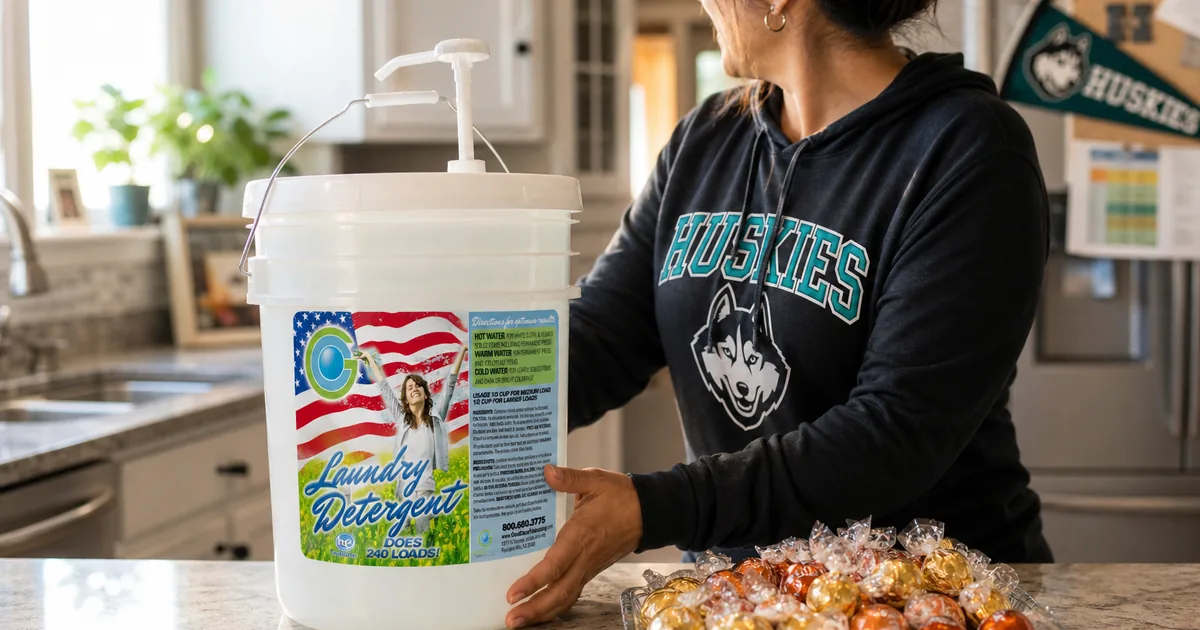
The strongest alternatives to catalog fundraisers are bulk household-necessity programs — especially bulk laundry detergent and cleaning supplies. They address the core problems that make catalogs hard to run: instead of dozens of SKUs sourced from many different vendors, a bulk order across a handful of formula choices ships together and can be distributed in far less time, even though volunteers still need to match quantities and formulas to each supporter's order; instead of novelty goods marked well above retail, supporters buy a staple they already need; and instead of per-item margins that vary widely by vendor and make forecasting difficult, the program has one price per bucket and a per-unit profit that is known by order size, so groups can plan. The best replacements are also no-upfront-cost, which removes the financial risk catalogs often carry, and they can shorten the lag between selling and delivery that can drain momentum in traditional catalog campaigns.
Catalog fundraisers were the default for decades — a glossy booklet with pages of gift items, candles, kitchen gadgets, and snacks, all marked up so both the group and the vendor could profit. For a while it worked, but the coordinators running these campaigns today often describe the same frustrations: a multi-hour sorting day matching hundreds of small items to individual buyers, a lead time of several weeks between selling and delivery that can drain momentum, and profit margins that swing across the catalog so the group may not know what it will actually make until the orders are in.
The bigger problem is that catalog fundraisers ask supporters to pay above retail for novelty goods they did not need in the first place. That was tolerable when people had fewer options, but today it can be a hard sell — and families running out of willing buyers is what can cap participation and total dollars raised.
The good news is that there are alternatives built around products people use, with simpler logistics. You are no longer choosing between a catalog and a worse version of the same idea. This guide covers why groups are switching, what makes a good replacement, the alternatives available now, how they compare on profit and effort, and the mistakes to avoid when you make the change.
- Catalog fundraisers create three common pain points: a multi-hour sorting day, a long lag between selling and delivery, and unpredictable profit because margins vary across SKUs.
- The strongest replacements are single-product programs built around household necessities people already buy and repurchase.
- A bulk household-necessity model cuts most item-by-item sorting — matching formula and quantity within one bulk delivery takes far less time than sorting a multi-vendor SKU order.
- Household staples can reach a wider buyer pool than novelty catalog items because most households buy them.
- No-upfront-cost structures remove the financial risk that catalog programs often carry.
- Supporters may pay well below premium national brands' typical per-ounce retail price for something useful, which can raise participation because the value is easy to see.
- A known per-unit profit lets groups plan backward from a dollar goal to a bucket count and participant target.
Why are groups moving away from catalog fundraisers?
Three problems are common for groups that have run a catalog campaign. First, sorting day: when orders arrive, volunteers can spend hours — often an entire evening or weekend afternoon — matching hundreds of small items across dozens of SKUs to individual buyers, bagging them, labeling them, and distributing them. It is the hidden cost of a catalog fundraiser, and it falls on volunteers.
Second, the lead time between selling and delivery can drain momentum. Many catalog programs take several weeks from order collection to product arrival, and by the time the items show up, families may have moved on and the energy that drove the kickoff may be gone. That lag can make it harder to run a second campaign the same year, because supporters remember the wait.
Third, profit can be hard to predict. A catalog mixes high-margin and low-margin items on the same order form, so the group cannot forecast what it will make until every order is tallied. One family might order all low-margin snacks; another might buy a high-margin candle. The average may look decent on paper, but coordinators may not know whether they hit their goal until the end — and by then it is too late to adjust.
What specific problems does sorting day create?
Sorting day is where much of the real cost of a catalog fundraiser lives, and it is often not explained up front. With many catalog vendors, the order arrives as a bulk shipment of individual SKUs rather than organized by buyer, so volunteers have to cross-reference every item on every order form, pull the right products, bag them by family, label them, and stage them for pickup or delivery. Exact practices vary by vendor, but for a campaign with even moderate participation, that can be a multi-hour volunteer shift, and it usually falls on the same few people who organized the whole thing.
The complexity scales badly. A catalog with fifty SKUs and a hundred participating families could create thousands of line items to sort. Miss one item and a supporter does not get what they paid for, which creates a customer-service problem the coordinator has to solve. The bigger the campaign, the worse sorting day can get.
A bulk household-necessity fundraiser removes most of this. Even with a handful of formula choices rather than one item, the shipment arrives together in bulk, and distribution mainly means matching each family's order to the right formula and quantity rather than sorting dozens of different SKUs from different vendors. What can take hours in a catalog model can take meaningfully less time here, and the volunteer load drops.
How does the long lead time hurt catalog fundraisers?
The gap between selling and delivery in a catalog fundraiser is often several weeks, and it varies by vendor. That lag can drain momentum from the kickoff and can train supporters to see fundraising as a slow process rather than a quick, energizing effort.
Momentum matters. A short campaign from kickoff to payout can keep families engaged, create urgency, and make it easier to run a second drive later in the year, while a catalog campaign that drags across a couple of months can feel like it never ends.
The best alternatives shorten that timeline. Good Clean Fundraising, for example, describes about two weeks of fulfillment after the group submits its paid order, so supporters get their product while they still remember ordering it. Speed is a feature, not a detail.
Why is unpredictable profit a problem?
A catalog mixes items with different margins on the same order form, so the group's total profit depends on what people happen to buy. If most families order low-margin snacks and wrapping paper, the group makes less. If they order high-margin candles and gift items, the group makes more. The coordinator has little control over the mix, and the final number is not clear until every order is counted.
That can make planning harder. A group with a specific dollar goal has a tougher time working backward to figure out how many participants they need or how much the average family should sell, because the per-order profit depends on what people buy. If the vendor publishes a per-item margin, a group can still forecast reasonably well as orders accumulate; without one, groups are left estimating until the orders are tallied.
A bulk household-necessity model with a known per-unit profit helps. When every unit is priced the same regardless of which formula a family chooses, a group can set a dollar goal, divide by the per-unit profit, and estimate how many units it needs to sell. That number can then be divided across participants to set a realistic per-family target, which turns fundraising from a guess into a plan.
What makes a good alternative to a catalog fundraiser?
The best replacements address the three core problems: they greatly reduce sorting day, they compress the timeline, and they offer more predictable profit. Beyond that, judge any alternative on four factors: buyer breadth, repeat use, upfront cost, and ease of running.
Buyer breadth is a key factor. A catalog relies on novelty appeal — people who want a scented candle or a kitchen gadget — which is a narrower slice of potential supporters. A household necessity reaches most households because most people need it, which can widen participation and raise the total.
Repeat use matters because a product people consume and repurchase creates the opportunity for a second campaign later in the year. Novelty items are one-time purchases; staples are not. Upfront cost decides risk: a no-upfront-cost program removes the financial exposure that catalog fundraisers often carry. And ease of running is the sum of logistics, volunteer hours, and how much the vendor handles versus how much falls on the coordinator.
What are the best alternatives to catalog fundraisers?
Measured against those factors, bulk household consumables — laundry detergent, cleaning products, and similar staples — stand out. They can score well on all four: most households buy them, they get repurchased, they are available as no-upfront-cost programs, and a single-product model is comparatively easy to run.
Good Clean Fundraising runs bulk laundry-detergent campaigns for schools, teams, and nonprofits. Groups sell a 5-gallon pump bucket for $49.95 (about $50) and keep about $13.45 to $15.45 per bucket at 100 or more buckets, depending on order volume; smaller orders of 50 to 99 buckets earn about $5 to $12 per bucket depending on shipping, and orders under 50 buckets are not accepted. There is a $0 upfront cost because the group collects orders and payment from supporters first, then submits the final order with payment. Shipping is free at 100 or more buckets, and Good Clean Fundraising provides a Getting Started packet, instructions, marketing materials, and social media strategies. Good Clean Fundraising advertises a 100% money-back guarantee under which, according to the company, any unsatisfied customer is refunded and the group keeps its profit. At about 7.8 cents per ounce, the bucket typically costs less per ounce than premium national-brand liquid detergent at retail — compare it to what you currently pay, since value-tier and store brands can cost less.
The logistics differ from a catalog's: volunteers reconcile formula choices and quantities within one bulk order rather than sorting dozens of SKUs from different vendors. The group arranges a commercial delivery address, plans for the 50-bucket minimum, and allows about two weeks for fulfillment after submitting the paid order. Because pricing is set per bucket with a profit tier known by order size, a group can set a dollar goal, divide by the per-bucket profit, and estimate how many buckets it needs — then work backward to a per-family target.
Good Clean Fundraising provides a Getting Started packet, instructions, marketing materials, and social media strategies so the group organizer is not starting from scratch.
How do the alternatives compare on profit and effort?
Profit depends on your product, your price, and how many families participate, so be skeptical of any program that promises one magic number. A useful way to think about it is that total dollars raised equals participants times average sales per family times profit per unit. Catalog fundraisers can lose on the first two terms: fewer families may find buyers because the products are novelty items, and each family may sell less because the buyer pool is narrower.
A household-necessity program can widen participation and average sales at the same time. With Good Clean Fundraising's bulk detergent program, groups sell a 5-gallon bucket for $49.95 and keep about $13.45 to $15.45 per bucket at 100 or more buckets. A group with a goal can work backward: divide the goal by the per-bucket profit to get the bucket count, then divide that by the number of participating families to set a per-family target. That kind of planning is harder with a catalog because the per-order profit varies with what people buy.
Effort is where the difference is most visible. A catalog fundraiser requires a sorting day, which is hours of volunteer time reconciling many different SKUs from different vendors. A bulk household-necessity order requires far less sorting — mainly matching formula choices and quantities within one shipment. A catalog can have a multi-week lead time; a program with about two weeks of fulfillment after the paid order is shorter. A catalog mixes high- and low-margin items across many vendors; this program offers one known profit tier per bucket regardless of formula. Added up, the alternative can be easier to run, easier to forecast, and easier to repeat.
How do you plan a fundraiser with predictable profit?
When the profit per unit is known, fundraising becomes a planning exercise instead of a guess. Start with your dollar goal, then divide by the per-unit profit to get the number of units you need to sell. Divide that by the number of participating families to get a per-family target, and you have a plan.
Here is what that looks like in practice. Say your group needs to raise a specific amount and you are selling a product with a per-unit profit of about $13.45 to $15.45 (Good Clean Fundraising's range at 100 or more buckets). Work backward: divide your goal by that per-unit range to estimate how many units you need, then check which tier that count actually falls into — $13.45 at 100–299 buckets, $14.45 at 300–499, $15.45 at 500 or more — and recalculate at the matching rate, rounding up so the total still covers your goal. Divide that final count by your participant count to set a per-family target. If the per-family number feels too high, you need more participants; if it feels easy, you can set a stretch goal.
That kind of clarity is harder with a catalog because the per-order profit swings based on what people buy. With a single-product model, the math is simple and the plan can be solid before you start.
| Factor | Catalog Fundraiser | Single-Product Necessity |
|---|---|---|
| Number of SKUs | Dozens to hundreds | Few formulas |
| Sorting day | Hours of volunteer time | Far less sorting |
| Lead time | Often several weeks | About 2 weeks |
| Profit predictability | Variable by item mix | Known per unit |
| Buyer appeal | Novelty goods above retail | ~7.8¢/fl oz |
| Upfront cost | Often required | No-cost options available |
| Repeat potential | One-time novelty items | Consumable, repurchased |
Common mistakes to avoid
Switching to a different multi-SKU program
Trading one catalog for another keeps the same sorting-day problem and unpredictable profit. The point of switching is to eliminate the complexity, not rearrange it.
Ignoring the sorting-day cost when comparing options
Volunteer hours are a real cost even if they are unpaid. A program that requires three hours of sorting is materially harder to run than one that requires three minutes, and that affects whether you can recruit help and whether you will do it again.
Choosing a replacement with the same long lead time
If the new program still takes weeks or months between selling and delivery, you have not solved the momentum problem. Favor options that ship fast and keep the energy high.
Not confirming consistent per-unit profit in writing
If the vendor cannot tell you exactly what the group keeps per item before you start, you are back to unpredictable profit and you cannot plan accurately. Lock in the margin up front.
Under-communicating the value to supporters
Participation rises when families understand why the new product is easier to sell. A short, honest kickoff explaining that supporters get something useful at a genuinely good price does most of the work.
- Sorting-day and lead-time descriptions reflect general fundraising-operations experience and are editorial observations, not measured data; catalog timelines and item mixes vary by vendor.
- GCF per-ounce price calculation — a 5-gallon (640 fl oz) bucket at $49.95 works out to about 7.8 cents per fluid ounce ($49.95 ÷ 640 fl oz = 7.8046875¢/fl oz). Compare this figure to what you currently pay for premium liquid detergent; exact retail pricing varies by store, size, and promotion, and value-tier and store brands can cost less per ounce.
- Good Clean Fundraising program terms — $49.95 per bucket; $13.45 profit per bucket at 100 to 299 buckets (usually $5 to $12 at 50 to 99 buckets, depending on actual shipping costs), $14.45 at 300 to 499, $15.45 at 500 or more; $0 upfront cost; free shipping at 100+ buckets; 50-bucket minimum (smaller orders are not accepted); 100% money-back guarantee under which, according to the company, any customer who is not satisfied is refunded and the group keeps its profit. — GCF pricing, GCF how it works, and GCF refund and returns policy
Our recommendation
If you are replacing a catalog fundraiser, one option worth considering is a single-product household-necessity program, and bulk laundry detergent is one example. Good Clean Fundraising runs The Good Clean Fundraiser, a bulk laundry-detergent program: groups sell a 5-gallon pump bucket for $49.95, keep about $13.45 to $15.45 per bucket at 100 or more buckets, and pay $0 upfront because the group collects orders and payment first, then submits the final order with payment. Shipping is free at 100 or more buckets, and the company provides a Getting Started packet, instructions, marketing materials, and social media strategies. Good Clean Fundraising advertises a 100% money-back guarantee under which, according to the company, any unsatisfied customer is refunded and the group keeps its profit. Volunteers reconcile formula and quantity within one bulk order rather than sorting dozens of catalog SKUs, and the group should plan for the 50-bucket minimum, a commercial delivery address, and about two weeks of fulfillment after the paid order is submitted.
Frequently asked questions
The core problem is complexity. A catalog mixes dozens or hundreds of SKUs on one order form, which creates a multi-hour sorting day where volunteers match individual items to buyers. Add a lead time of several weeks between selling and delivery, and profit that varies by item so you cannot forecast accurately, and you have a fundraiser that can require a lot of work for an unpredictable outcome.
Sorting day is when the catalog order arrives and volunteers spend hours cross-referencing every item on every order form, pulling products, bagging them by family, and staging them for distribution. For a campaign with even moderate participation, that can be a multi-hour volunteer shift. A single-product fundraiser removes most of the item-by-item sorting because the order is bulk delivery of one product.
A common replacement is a single-product household-necessity program, such as bulk laundry detergent or cleaning supplies. These programs remove item-by-item sorting, can shorten the timeline, offer a known per-unit profit so you can plan, and can reach a wider buyer pool because most households buy them — not just people who want novelty items.
It depends on participation and price, but single-product programs can raise more because they can widen the buyer pool and make it easier for families to sell. A household necessity can reach grandparents, neighbors, and coworkers who would not buy a novelty catalog item. The known per-unit profit also lets you plan, which catalogs make harder.
Total dollars raised depends on how many families participate and what you sell, so treat any single number with caution. As a concrete example, Good Clean Fundraising has groups sell a 5-gallon bucket of detergent for $49.95 and keep about $13.45 to $15.45 per bucket at 100 or more buckets. The bigger lever is participation: when the product is something people need rather than a novelty, more families may find buyers, which can raise the total more than a small change in per-item profit.
Some do and some do not. Traditional catalog programs often require ordering inventory in advance. With Good Clean Fundraising, the upfront cost is $0: the group collects orders and payment from supporters first, then submits the final order with payment, so it does not front money. A 50-bucket minimum applies.
It varies by program. With Good Clean Fundraising, groups run a selling window of about two to three weeks, submit a paid order, and should allow about two weeks for fulfillment. That can be faster than the several-week lag many catalog programs have, which helps keep momentum high.
Start by picking a single-product replacement that scores well on buyer breadth, repeat use, upfront cost, and simplicity. Confirm your per-unit profit and delivery timeline in writing, set a clear goal and selling window, and brief your families on why the new product is easier to sell. Some programs, including Good Clean Fundraising, provide a Getting Started packet, instructions, marketing materials, and social media strategies to help with setup.
The Good Clean Fundraiser is Good Clean Fundraising's bulk laundry-detergent program. Groups sell a 5-gallon pump bucket for $49.95 — about 7.8 cents per fluid ounce, typically less than premium national-brand liquid detergent costs per ounce at retail — and keep about $13.45 to $15.45 per bucket at 100 or more buckets. There is a $0 upfront cost because the group collects orders and payment first, free shipping at 100 or more buckets, and a Getting Started packet, instructions, marketing materials, and social media strategies. Good Clean Fundraising advertises a 100% money-back guarantee under which, according to the company, any unsatisfied customer is refunded and the group keeps its profit. The group still reconciles which formula and how many buckets each supporter ordered — GCF offers more than a dozen formula options — but that is far less sorting than a multi-vendor catalog, and the profit per bucket is known by order size, so groups can plan from the start.
Catalog programs often have a gap of several weeks between selling and delivery, which can drain the momentum that made the kickoff work. By the time the product arrives, families may have moved on, which can make it harder to run a second campaign later in the year. A shorter timeline can keep supporters engaged.
Catalog fundraisers are not failing because they are a bad idea — they can ask for a lot of work in exchange for an unpredictable outcome. A multi-hour sorting day, a lead time that can drain momentum, and profit that swings based on what people happen to buy are all addressable. Switch the model to a single product people already need, and the hardest parts of fundraising — logistics, forecasting, and participation — can get easier at the same time. That is the case for moving on.