
Non-Food & Alternative Fundraising
Alternatives to Restaurant & Dine-Out Fundraisers: What Raises More Without the Turnout Risk
Why groups are moving away from restaurant nights — and the fundraisers that deliver predictable results without depending on who shows up on one evening.
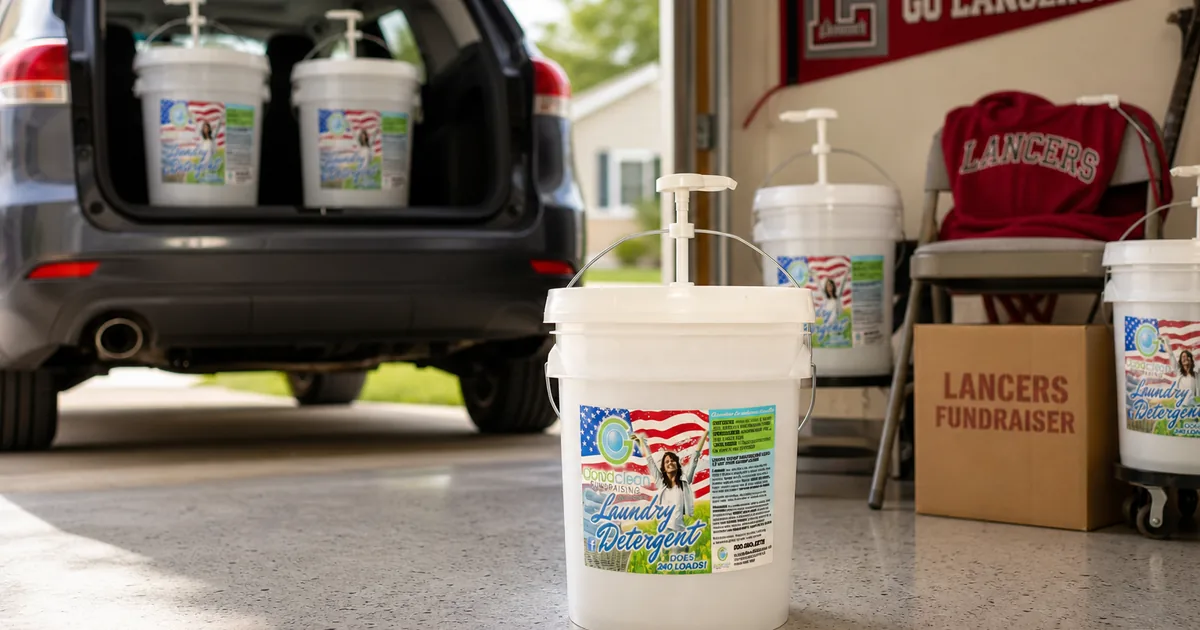
The strongest alternatives to restaurant and dine-out fundraisers are product-based programs that collect orders over a flexible window rather than depending on turnout during one fixed evening. Bulk household-necessity fundraisers — especially laundry detergent and cleaning supplies — can outperform restaurant nights because supporters buy on their own schedule, the group does not depend on weather or competing events, and families shift a purchase they already make rather than spending extra to go out. Restaurant fundraisers give the group only a percentage of sales (a published restaurant-fundraiser guide lists roughly 15% to 33%, with most chains clustering around 20%), often require families to dine in on a specific night — though some chains offer online, pickup, or delivery options that count toward the total — and deliver little if turnout disappoints. A product program spreads participation across weeks, can reach buyers who would not attend a restaurant event, and leaves the group with results based on orders collected, not on who walked through a door.
Restaurant fundraisers sound simple: pick a night, send families to a partner restaurant, and the group gets a share of the sales. But coordinators who have run them know the risk: the money depends on turnout during one fixed window on one evening, the restaurant sets the terms and keeps most of the check, and a dozen things outside your control — weather, sports fixtures, homework, illness — can cut attendance and leave you with less than you planned for.
The groups switching away from restaurant nights are not abandoning the idea of an easy fundraiser. They are abandoning the idea that easy and unpredictable should go together. The alternatives that work best remove the single-evening dependency and replace it with a flexible order-collection window, a product people actually need, and results you can predict before the campaign ends.
This guide covers why restaurant fundraisers underperform, what makes them risky for groups that need a specific dollar amount, the alternatives that deliver predictable results without the turnout gamble, and how to choose a replacement that raises more with less stress.
- Restaurant fundraisers concentrate all the risk into one evening — if turnout disappoints, there is no product left over and no way to recover the goal.
- The restaurant sets the profit split and keeps most of each check; a published restaurant-fundraiser guide lists group shares from about 15% to 33% of sales, with most chains clustering around 20%.
- For a single-evening, dine-in restaurant night, families must go out of their way on a school night and spend more than they would cooking at home, which can narrow participation.
- Weather, competing sports events, and homework all suppress attendance, and none are in the organizer's control.
- Product-based fundraisers spread participation across a flexible window, can reach buyers who would not attend a restaurant event, and produce results based on orders collected.
- Household-necessity products ask supporters to shift a purchase they already make rather than spending extra, which widens the buyer pool and raises participation.
- A bulk detergent or household-staple program removes the single-evening turnout risk and gives the group a per-unit profit it can plan around.
Why do restaurant fundraisers fail to hit their goals?
The central problem is that all the money rides on turnout during one fixed window. If fifty families say they will come and thirty show up, the group raises about sixty percent of what they planned for — and there is no product sitting in a box to sell the next week to close the gap. The fundraiser is over the moment the restaurant closes that night.
The second issue is profit structure. The restaurant is running a business, so it keeps most of each check to cover food cost, labor, and its own margin. A published restaurant-fundraiser guide lists group shares of roughly 15% to 33% of sales, with most chains clustering around 20%, so even strong turnout can deliver a modest total. A busy night that feels successful can translate to a number that falls short of the goal.
The third friction is the ask itself. A single-evening, dine-in restaurant night requires families to go out of their way on a school night, spend more than they would cooking at home, and coordinate schedules around a fixed window. That is a bigger lift than handing a neighbor an order form for something they were going to buy anyway, and it can affect participation rates.
What kills turnout at restaurant fundraiser events?
Weather is a common culprit. Rain, snow, or unseasonably cold evenings keep families home, and a single-evening event has no makeup date. A Wednesday night in October can look perfect two weeks out and turn into a storm the day of the event.
Competing sports schedules and school events fragment attendance. If the high school has a home game, the middle school has a concert, and the elementary school assigned a big project due Thursday, a meaningful share of your potential turnout is gone before anyone makes a choice.
Homework and weeknight fatigue suppress participation even when schedules are clear. Parents who would happily hand a coworker a product order form often skip a restaurant night because getting kids fed, through homework, and to bed on time is already the whole evening.
Distance and convenience may matter more than organizers expect. Families who live ten minutes from the restaurant may be more likely to attend than families who live twenty-five minutes away, which means geography can quietly decide who participates and who does not.
What do you lose when a restaurant fundraiser underperforms?
The most immediate loss is the dollar gap between your goal and what you raised. If the group needed a specific amount for uniforms or a trip and the restaurant night delivered less, that gap does not close itself — you either run a second fundraiser or the expense goes unpaid.
The less obvious cost is volunteer fatigue. Restaurant nights require weeks of promotion for one evening of results, and when turnout disappoints, the families who did show up and the organizers who spent two weeks promoting it all feel the effort was wasted. That makes it harder to recruit volunteers for the next campaign.
There is also less residual value. A product fundraiser that falls short of its goal still leaves the group with orders collected and profit earned. A restaurant night that underperforms still pays out whatever percentage the restaurant owes on the sales that did happen, but if turnout is low that amount can be small, some programs set a minimum-sales threshold below which the group receives nothing, and there is no second chance to recover the time invested.
What are the best alternatives to restaurant fundraisers?
The strongest replacements are product-based fundraisers that collect orders over a flexible window rather than depending on turnout during one fixed evening. The best of these share three traits: they sell something people already buy, they let supporters participate on their own schedule, and they deliver predictable results based on orders collected rather than on who showed up.
Household-necessity products — laundry detergent, cleaning supplies, and similar staples — can outperform restaurant nights because the buyer pool can be much wider. A restaurant event appeals mainly to families willing to dine out on a school night; a household staple appeals to households that do laundry, which includes grandparents, neighbors, coworkers, and friends who would not attend a restaurant fundraiser.
These programs also change the economics. Instead of asking supporters to spend extra to go out, they ask supporters to shift a purchase they were already going to make — buy this detergent from the group instead of from the store, at a per-ounce price (about 7.8 cents) that typically runs below premium national-brand pricing at retail, though value-tier and store brands can cost less. That can reduce the guilt and budget friction that suppress restaurant-night participation.
The other major category is no-inventory digital programs, which work well for tech-comfortable groups but lack the tangible value proposition that drives repeat participation. For most groups, a consumable household product delivers the best balance of broad appeal, repeat use, and profit.
How does a household-necessity fundraiser compare to a restaurant night?
The comparison comes down to control. A restaurant night puts all the variables outside your hands: whether people show up, whether the weather cooperates, whether competing events pull families away, and how much the restaurant keeps. A household-necessity product program puts the variables in your hands: how many families participate, how many orders each collects, and how long the selling window runs.
Profit structure is the second major difference. Restaurant fundraisers split revenue with the restaurant, and the restaurant keeps most of it. A product program with transparent per-unit profit lets the group keep a clear, predictable amount per item sold. For example, Good Clean Fundraising's bulk laundry-detergent program has groups sell a 5-gallon bucket for $49.95 and keep about $13.45 to $15.45 per bucket at 100 or more buckets, depending on order volume, with free shipping at 100 or more buckets. That per-bucket profit is known before the campaign starts, so the group can work backward from its goal to a bucket count and a participation target.
Timing flexibility is the third advantage. A restaurant night happens during one fixed window; a product drive runs for a few weeks (Good Clean Fundraising's selling window is about two to three weeks), and supporters buy whenever it fits their schedule. That flexibility can make it easier for families to take part than a single-evening event.
How do you plan around a fundraising goal without depending on turnout?
Start by turning your dollar goal into a unit-count question, and check which pricing tier your estimate actually falls into before you finalize a target. For example, if the goal is $4,000, the $13.45 rate applies through 299 buckets: $4,000 ÷ $13.45 ≈ 297.4, so the group needs at least 298 buckets to clear the goal (298 × $13.45 = $4,008.10; 297 buckets falls short at $3,994.65). If the group instead plans for the 300-bucket tier, the rate rises to $14.45, and 300 buckets yields $4,335. Either way, that is a concrete target you can plan around, calculated at the rate that actually applies.
From there, estimate how many units the average participating family will sell. If your past fundraisers suggest most families sell two to four units, divide your total unit target by that average to estimate how many families need to participate. In this illustration, at three units per family, the group would need about 100 participating families to comfortably clear the goal (99 families selling three each would fall just short, at 297 buckets).
This approach removes the single-evening turnout gamble. You are not hoping people show up on one evening — you are tracking orders as they come in over the selling window, so you can tell whether you are on pace to hit the goal well before the campaign ends. If participation is lower than expected, you have time to send reminders, extend the window, or adjust expectations. With a restaurant night, you find out the result when the evening is over and it is too late to adjust.
What makes a household-necessity fundraiser easier to run than a restaurant event?
Logistics are different rather than simply lighter. A restaurant night requires promoting one specific date and time, coordinating with the restaurant, and often managing flyers or codes to track which sales count toward the fundraiser. A product drive requires handing out order forms, collecting them back, placing one bulk order, then receiving the delivery at a commercial address, and unloading, sorting, and distributing buckets to families — work a restaurant night does not have. Which process is more forgiving of a first-time coordinator depends on which set of tasks the group has more volunteers for.
There is less of a single point of failure. If a restaurant-night coordinator gets sick the day of the event, the whole fundraiser is at risk. If a product-drive coordinator is unavailable for a day, someone else can collect a few order forms and the campaign can continue.
Volunteer load can also be lighter. Restaurant nights demand intensive promotion for one evening of results. Product drives spread the work across a longer window, and some of it — families reaching out to their own networks — happens without the coordinator's direct involvement.
Our recommendation
If you are moving away from restaurant fundraisers, one option that reduces the turnout risk and gives predictable per-unit results is a bulk household-necessity product — laundry detergent is one example. Good Clean Fundraising runs The Good Clean Fundraiser, a program for groups that want a product drive instead of a single-evening gamble. Groups sell a 5-gallon pump bucket of laundry detergent for $49.95 — about 7.8 cents per ounce, typically less than premium national-brand liquid detergent costs per ounce at retail — and keep about $13.45 to $15.45 per bucket at 100 or more buckets, depending on order volume, with $0 upfront cost and free shipping at 100 or more buckets.
Supporters get a household staple they already buy at a lower per-ounce price than premium national brands, and they buy on their own schedule rather than coordinating a family dinner out on a school night. That value proposition can widen participation and raise the total. Good Clean Fundraising advertises a 100% money-back guarantee under which, according to the company, any unsatisfied customer is refunded and the group keeps its profit.
Good Clean Fundraising provides a Getting Started packet, instructions, marketing materials, and social media strategies, and the group collects orders and payment first, then submits the final order with payment. The group should plan for the 50-bucket minimum, a commercial delivery address, and about two weeks of fulfillment after the paid order is submitted. For groups that want to see their total build before the campaign ends, this is one option to consider.
| Factor | Restaurant Fundraiser | Household-Necessity Product |
|---|---|---|
| Timing & flexibility | One fixed evening window | Flexible multi-week window |
| Profit structure | Restaurant keeps most; group gets small share | Clear per-unit profit |
| Risk & predictability | Unknown until evening ends; no recovery | Track orders as they come in |
| Participation breadth | Families willing to dine out on school night | Every household that uses the staple |
| Supporter ask | Go out of way, spend extra, coordinate schedules | Shift a purchase already making |
| Weather & external factors | Suppresses turnout; no makeup date | Less exposed to weather or events |
Common mistakes to avoid
Promoting a restaurant night without a backup plan
If turnout disappoints, there is no product left over and no way to recover the goal. Always have a contingency or choose a fundraiser where results are not all-or-nothing.
Assuming strong promotion guarantees strong turnout
Weather, sports schedules, homework, and distance all suppress attendance regardless of how well you promoted the event. Promotion helps, but it cannot control the variables that decide who shows up.
Not calculating the real per-family cost before committing
A restaurant meal for a family often runs higher than cooking at home, and that cost friction quietly reduces participation. If your supporter base is budget-conscious, a restaurant night is a harder sell than a product they need anyway.
Choosing a restaurant that is inconveniently located
Families who live far from the restaurant are far less likely to attend. If the venue is not central to most of your group, turnout will suffer no matter how good the food is.
Running a restaurant fundraiser when you need a specific dollar amount
Restaurant nights deliver unpredictable results. If your group has a fixed expense and needs to hit a specific goal, choose a fundraiser where you can track progress and predict the outcome before the campaign ends.
- Restaurant fundraiser profit-share ranges — a published restaurant-fundraiser guide lists group shares from about 15% to 33% of sales, with most chains clustering around 20%. Terms vary by restaurant and program. — source
- GCF per-ounce price calculation — a 5-gallon (640 fl oz) bucket at $49.95 works out to about 7.8 cents per fluid ounce ($49.95 ÷ 640 fl oz = 7.8046875¢/fl oz). Compare this figure to what you currently pay for premium liquid detergent; exact retail pricing varies by store, size, and promotion, and value-tier and store brands can cost less per ounce.
- Good Clean Fundraising program terms — $49.95 per bucket; $13.45 profit per bucket at 100 to 299 buckets (usually $5 to $12 at 50 to 99 buckets, depending on actual shipping costs), $14.45 at 300 to 499, $15.45 at 500 or more; $0 upfront cost; free shipping at 100+ buckets; 50-bucket minimum (smaller orders are not accepted); 100% money-back guarantee under which, according to the company, any customer who is not satisfied is refunded and the group keeps its profit. — GCF pricing, GCF how it works, and GCF refund and returns policy
Our recommendation
If you are replacing a restaurant fundraiser, a bulk household-necessity product drive is one option that removes the single-evening turnout risk. Good Clean Fundraising runs The Good Clean Fundraiser, a bulk laundry-detergent program: groups sell a 5-gallon pump bucket for $49.95, keep about $13.45 to $15.45 per bucket at 100 or more buckets, and pay $0 upfront because the group collects orders and payment first, then submits the final order with payment. Shipping is free at 100 or more buckets, and the company provides a Getting Started packet, instructions, marketing materials, and social media strategies. Good Clean Fundraising advertises a 100% money-back guarantee under which, according to the company, any unsatisfied customer is refunded and the group keeps its profit. Groups that need to know their total before the campaign ends can track orders as they come in during the selling window; plan for the 50-bucket minimum, a commercial delivery address, and about two weeks of fulfillment after the paid order is submitted.
Frequently asked questions
All the money depends on turnout during one fixed evening, and if fewer people show up than expected, there is no product left over to sell and no easy way to recover the goal. The restaurant also keeps most of each check — a published restaurant-fundraiser guide lists group shares from about 15% to 33% of sales, with most chains clustering around 20% — so even strong turnout can deliver a modest total. Weather, sports schedules, homework, and distance can all suppress attendance, and none are in the organizer's control.
Common replacements are product-based fundraisers that collect orders over a flexible window rather than depending on turnout during one fixed evening. Household-necessity products like laundry detergent and cleaning supplies can outperform restaurant nights because supporters buy on their own schedule, the buyer pool can be much wider, and the group gets results based on orders collected rather than on who showed up.
It depends on participation and what you sell, so focus on the structure rather than a single number. As a concrete example, Good Clean Fundraising has groups sell a 5-gallon bucket of detergent for $49.95 and keep about $13.45 to $15.45 per bucket at 100 or more buckets. The bigger difference is predictability: you track orders as they come in and can see your total build before the campaign ends, rather than finding out the result when the restaurant closes.
A product drive runs for a few weeks — Good Clean Fundraising's selling window is about two to three weeks, plus about two weeks of fulfillment after the paid order — while a restaurant night is one evening. But the product drive spreads the work across that window and produces results based on orders collected, while the restaurant night concentrates the risk into one evening.
Weather is a common culprit — rain, snow, or cold can keep families home, and there is usually no makeup date. Competing sports schedules and school events can fragment attendance, homework and weeknight fatigue can suppress participation even when schedules are clear, and distance can matter: families who live far from the restaurant may be less likely to attend.
Turn your dollar goal into a unit-count question. If you know the profit per unit, divide your goal by that profit to get the number of units you need to sell, then estimate how many participating families it will take to hit that count. You track orders as they come in and can tell whether you are on pace well before the campaign ends, which removes the single-evening turnout gamble.
It depends on the coordinator and the group's volunteer base. A restaurant night requires promoting one specific date and time, coordinating with the restaurant, and managing flyers or codes to track sales, but no receiving or distribution work. A product drive requires handing out order forms, collecting them back, placing one bulk order, then receiving the delivery, unloading it, and distributing buckets to families. The product drive removes the single-evening point of failure, but it trades that for a receiving-and-distribution job the restaurant night does not have.
The Good Clean Fundraiser is Good Clean Fundraising's bulk laundry-detergent program. Groups sell a 5-gallon pump bucket for $49.95 — about 7.8 cents per fluid ounce, typically less than premium national-brand liquid detergent costs per ounce at retail — and keep about $13.45 to $15.45 per bucket at 100 or more buckets. There is a $0 upfront cost because the group collects orders and payment first, free shipping at 100 or more buckets, and a Getting Started packet, instructions, marketing materials, and social media strategies. Good Clean Fundraising advertises a 100% money-back guarantee under which, according to the company, any unsatisfied customer is refunded and the group keeps its profit. It removes the single-evening turnout risk because results are based on orders collected, not on who showed up.
Restaurant fundraisers are not failing because they are a bad idea — they can struggle because all the money rides on turnout during one evening, and many things outside your control decide whether people show up. Switch the model to a product people already buy, spread participation across a flexible window, and give the group a clear per-unit profit it can track as orders come in, and two of the hardest parts of a restaurant night — unpredictability and risk — can ease.