
Non-Food & Alternative Fundraising
Alternatives to Wrapping Paper Fundraisers: What Works Better Year-Round
Why groups are dropping seasonal wrapping paper drives — and the year-round, practical-product alternatives that reach more buyers and raise more per family.
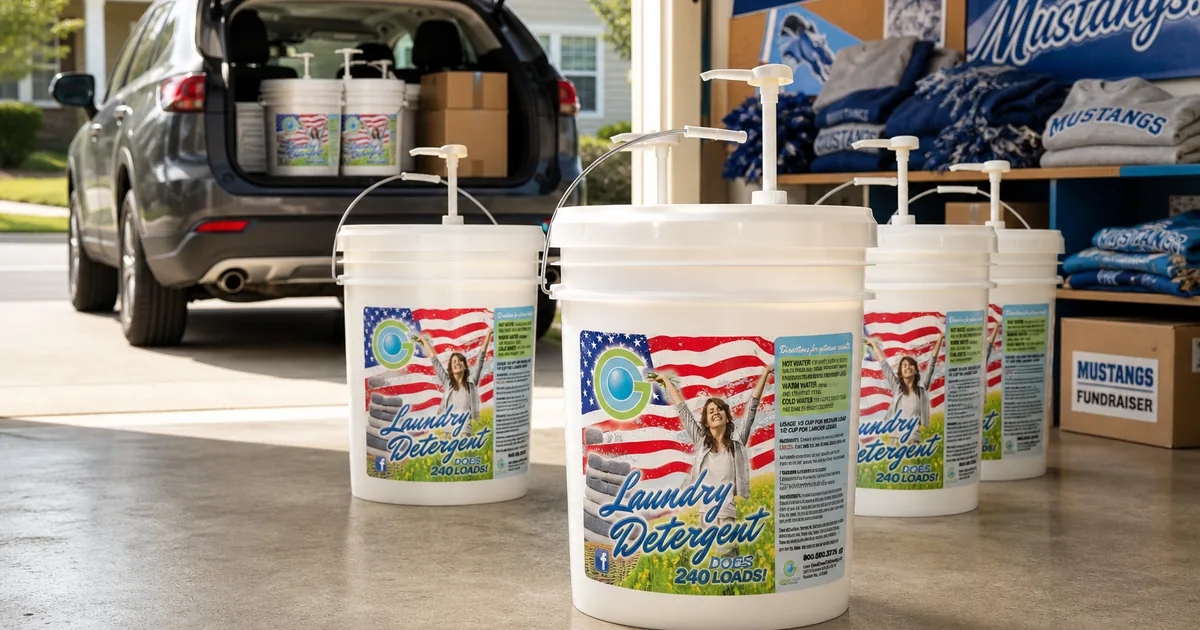
The best alternatives to wrapping paper fundraisers are household necessities — especially bulk laundry detergent and cleaning supplies — that people buy regardless of season, use up rather than discard, and need rather than purchase out of obligation. Wrapping paper fundraisers typically lock you into a narrow autumn window, sell a single-use product supporters throw away soon after gifts are opened, and can price rolls above comparable paper at a big-box store, which buyers may notice. A household-necessity fundraiser is not tied to a holiday selling season, sells something most households already budget for, and can reach grandparents, neighbors, and coworkers who would not buy wrapping paper but need detergent. The shift from seasonal obligation to a product people already use is what can widen participation and lift totals.
Wrapping paper fundraisers were a staple for decades — recognizable, festive, and easy to explain. But coordinators running them today often run into the same walls: a narrow autumn selling window that collides with other groups' drives, a single-use product people throw away days after the holidays, catalog prices that can sit above what similar rolls cost at a big-box retailer, and awkward rolls that crease in storage and turn delivery day into a sorting challenge.
The good news is that there are alternatives built around products people use year-round — which can change when you can run, who buys, how much a group raises, and how much logistics work falls on volunteers. You are no longer choosing between wrapping paper and a worse version of the same catalog idea.
This guide covers why groups are moving away from wrapping paper, what makes a strong replacement, the best year-round alternatives available now, how they compare on profit and timing, and the mistakes to avoid when you make the switch.
- Wrapping paper fundraisers typically lock you into a narrow autumn window when many groups are selling, and the product is single-use — discarded soon after gifts are opened.
- Catalog wrapping paper prices can sit above what similar rolls cost at major retailers, and supporters may notice the markup.
- Household necessities people buy regardless of season — laundry detergent, cleaning supplies, and similar staples — are one replacement to consider.
- A product that is not tied to a holiday season lets you choose your timing rather than following the catalog company's schedule.
- Household necessities can reach buyers who would not purchase wrapping paper — grandparents, neighbors, coworkers — because most households need them.
- Non-perishable bulk products eliminate the awkward sorting, storage, and delivery logistics that make wrapping paper hard to manage.
- A necessity fundraiser asks supporters to shift a purchase they already make, at a better price, rather than buy something out of obligation.
Why are groups dropping wrapping paper fundraisers?
The problems cluster around timing, value, and logistics. First, wrapping paper is strongly seasonal — you have a narrow autumn window before the holidays, and that window is when many schools, teams, and troops in your area are also selling. Families can exhaust their buyer pool fast when everyone is being asked at once. Second, the product is single-use: supporters pay for rolls they will use once and throw away, and catalog prices can run visibly higher than similar paper at a major retailer. Third, the logistics can be awkward — rolls are bulky, crease easily, and can require sorting and distributing many patterns and sizes on delivery day, which can turn into a volunteer-intensive scramble.
The problem is often not that wrapping paper is a bad product, but that fewer people may want it at catalog prices, the selling window can collide with other groups' drives, and handling it can be harder than it looks. When the product changes to something people need year-round, all three problems can ease at once.
What does the seasonal window actually cost you?
A seasonal product does not just narrow when you can sell — it can cap how much you can raise. When your drive has to run in October or November, you are competing with other groups for the same supporters at the same moment, which can lead to buyer fatigue before families finish their sheets. A product that is not tied to a season lets you choose a month when fewer groups are asking, and your families may reach buyers who have more budget and attention to give.
The seasonal lock also means you cannot respond to your group's actual calendar. If your big expense lands in March, you are either running your drive months early and holding the money, or scrambling to find a different fundraiser. A product that is not tied to a holiday removes that constraint — you run when your group needs the money, not when the catalog company's production schedule allows it. Confirm current program dates and availability with any vendor before you plan.
Why does single-use versus repeat-use matter?
Wrapping paper is typically used once and discarded. A supporter pays for paper, wraps a gift, and throws the paper away soon after — for many buyers there is little lasting value and no reason to buy again until next year, which can limit purchases mainly to people who feel obligated to support the group, though some buyers genuinely want or need wrapping paper.
A household necessity is different. Laundry detergent, for example, is used up over weeks or months and then repurchased — it is a recurring line item in many household budgets. That repeat-use dynamic can widen the buyer pool: grandparents, neighbors, and coworkers who would not buy wrapping paper may buy detergent because they need it anyway, and a 5-gallon bucket at a lower per-ounce price than premium national brands can feel like a good deal rather than a guilt purchase. The product does not end up in the trash; it ends up in the laundry room.
What are the best year-round alternatives to wrapping paper?
Measured against the wrapping paper problems — seasonal lock, single-use, obligation purchase, awkward logistics — a few categories stand out:
Household consumables are a standout. Everyday necessities like laundry detergent and cleaning products are not tied to a holiday, reach most households, get repurchased, are non-perishable, and avoid the seasonal collision. Bulk laundry detergent is one example. Because families reorder detergent whether or not there is a fundraiser, the product may not need to be sold so much as offered at a good price, and the 5-gallon bucket format means fewer transactions for the same dollars raised compared to small-ticket items.
No-inventory digital programs where supporters give or order online remove logistics almost completely and can run any time. They work well for tech-comfortable groups, though they lack the tangible value proposition that drives repeat participation.
Reusable practical goods like water bottles or tote bags avoid single-use waste and can carry decent margins, but most are one-time purchases with no repeat cycle, so they score lower on long-term fundraising potential.
How do the alternatives compare on profit and timing?
Profit depends on your product, your price, and how many families participate, so be skeptical of any program that promises one magic number. A useful way to think about it is that a product that is not tied to a season lets you run when participation may be highest — not when the calendar forces you to — and a necessity product can widen who will buy, which can move the total more than a few points of margin.
Here is what that looks like with one household-necessity program. With Good Clean Fundraising's bulk laundry-detergent fundraiser, groups sell a 5-gallon bucket for $49.95 and keep about $13.45 to $15.45 per bucket at 100 or more buckets, depending on order volume, with free shipping at 100 buckets or more. The group chooses its own selling window and should confirm current dates and availability with the company.
Compare that to a typical wrapping paper drive: you are usually locked into autumn, competing with other groups, selling a single-use product at a possible markup, and spending delivery day sorting roll varieties. The necessity model can remove those constraints, though the group still plans for the 50-bucket minimum and a commercial delivery address.
What is the value to the person buying?
This is the part that may change who participates. A 5-gallon bucket holds 640 ounces, so at $49.95 the buyer pays about 7.8 cents per ounce. Premium national-brand liquid detergents typically cost more per ounce at retail, though exact pricing varies by store, size, and promotion — compare that figure to what you currently pay, since value-tier and store brands can cost less per ounce. Supporters are not paying for wrapping paper they will throw away in three days — they are stocking up on a staple while backing the group.
That value proposition may reach the grandparents, neighbors, and coworkers who would not buy wrapping paper. They are not making a guilt purchase; they may be making a smart one. And because the product is used and repurchased, those same buyers may come back for the group's next drive, which wrapping paper rarely offers.
How do you plan around a goal with a year-round product?
A dollar goal is a bucket-count question. If your group needs to raise a certain amount, work backward: at $13.45 per bucket for 100–299 buckets, $14.45 for 300–499, or $15.45 for 500 or more, how many buckets do you need at the tier your estimate actually falls into, and how does that divide across your participants? As an illustration, a group with 60 families and a goal that requires 180 buckets — within the 100–299 tier, so $13.45 per bucket applies — is asking each family to find three buyers — a target that may be realistic when the product is something people already purchase. Choosing your own timing means you can pick the month when participation may be strongest, not when the wrapping paper catalog forces you to run.
Another possible advantage is running more than once. A group could run a short detergent drive in fall and another in spring, which a seasonal product does not allow, though whether that suits your families and the program's current terms is worth confirming.
Our recommendation
If you are replacing a wrapping paper fundraiser, one option worth considering is a household necessity that is not tied to a holiday season — it can remove the seasonal lock, widen participation, and avoid the single-use guilt purchase. Good Clean Fundraising runs The Good Clean Fundraiser, a bulk laundry-detergent program: groups sell a 5-gallon pump bucket for $49.95, keep about $13.45 to $15.45 per bucket at 100 or more buckets, and pay $0 upfront because the group collects orders and payment first, then submits the final order with payment. Shipping is free at 100 or more buckets, and the company provides a Getting Started packet, instructions, marketing materials, and social media strategies. Good Clean Fundraising advertises a 100% money-back guarantee under which, according to the company, any unsatisfied customer is refunded and the group keeps its profit. The group chooses its own timing and should confirm current program dates, the 50-bucket minimum, a commercial delivery address, and about two weeks of fulfillment after the paid order is submitted.
Running outside the autumn crush is the real advantage here — picking a month when your community is not also fielding requests from three other school groups, rather than defaulting to fall out of habit because that is when wrapping paper always ran.
The shift from a seasonal, single-use, obligation product to a repeat-use necessity may be what makes the difference. You may reach more buyers, choose your own timing, and give supporters real value instead of paper they throw away.
| Factor | Wrapping Paper | Household Necessity |
|---|---|---|
| Selling window | Narrow autumn only | Not tied to a season |
| Product lifespan | Single-use, discarded in days | Used over weeks, repurchased |
| Buyer motivation | Obligation purchase | Genuine need |
| Perceived value | Often above store price | ~7.8¢/fl oz |
| Delivery logistics | Sort dozens of patterns/sizes | Uniform buckets, far less sorting |
| Repeat potential | Once a year at most | Repeat drives possible |
| Buyer pool | Often obligation purchases | Most households |
Common mistakes to avoid
Running in the autumn crush out of habit
If you switch to a year-round product but still run in October because that is when you always did wrapping paper, you are giving up the biggest advantage — the ability to run when no one else is asking.
Swapping one seasonal product for another
Trading wrapping paper for holiday cookies or poinsettias keeps the same seasonal lock and single-use problem. The point of switching is to escape the narrow window, not move it.
Not explaining the value shift to families
Participation rises when families understand why the new product is easier to sell. A short kickoff explaining that supporters pay well below premium national brands' typical per-ounce retail price for something they already buy does a lot of the work.
Underestimating the delivery-day relief
One logistical relief worth planning for is less pattern-sorting, no creased paper, and fewer mismatched orders. Do not dismiss that as a minor benefit.
- Catalog-versus-retail wrapping paper price differences vary by program, size, and store; no price comparison is cited here, so statements about markup are general observations rather than measured data.
- GCF per-ounce price calculation — a 5-gallon (640 fl oz) bucket at $49.95 works out to about 7.8 cents per fluid ounce ($49.95 ÷ 640 fl oz = 7.8046875¢/fl oz). Compare this figure to what you currently pay for premium liquid detergent; exact retail pricing varies by store, size, and promotion, and value-tier and store brands can cost less per ounce.
- Good Clean Fundraising program terms — $49.95 per bucket; $13.45 profit per bucket at 100 to 299 buckets (usually $5 to $12 at 50 to 99 buckets, depending on actual shipping costs), $14.45 at 300 to 499, $15.45 at 500 or more; $0 upfront cost; free shipping at 100+ buckets; 50-bucket minimum (smaller orders are not accepted); 100% money-back guarantee under which, according to the company, any customer who is not satisfied is refunded and the group keeps its profit. — GCF pricing, GCF how it works, and GCF refund and returns policy
Our recommendation
If you are replacing a wrapping paper fundraiser, one option worth considering is a household necessity that is not tied to a holiday season — it can remove the seasonal lock, widen participation, and avoid the single-use guilt purchase. Good Clean Fundraising runs The Good Clean Fundraiser, a bulk laundry-detergent program: groups sell a 5-gallon pump bucket for $49.95, keep about $13.45 to $15.45 per bucket at 100 or more buckets, and pay $0 upfront because the group collects orders and payment first, then submits the final order with payment. Shipping is free at 100 or more buckets, and the company provides a Getting Started packet, instructions, marketing materials, and social media strategies. Good Clean Fundraising advertises a 100% money-back guarantee under which, according to the company, any unsatisfied customer is refunded and the group keeps its profit. The group chooses its own timing and should confirm current program dates, the 50-bucket minimum, a commercial delivery address, and about two weeks of fulfillment after the paid order is submitted.
Frequently asked questions
Common reasons: wrapping paper typically locks you into a narrow autumn window when many groups are selling, the product is single-use and discarded soon after gifts are opened, and catalog prices can sit above what similar rolls cost at a big-box store. The seasonal collision can cap participation, the single-use nature can limit who will buy, and price markup can make it a harder sell.
Common replacements are household necessities people buy regardless of season — laundry detergent, cleaning supplies, and similar staples. These can reach more buyers than a seasonal obligation product, are not tied to a holiday selling season, and offer supporters value rather than something they throw away.
Yes, if you choose a product that is not tied to a holiday. Wrapping paper pushes you into autumn, but a household necessity like detergent can be offered when your budget need lands. Confirm current program dates and availability with any vendor, including Good Clean Fundraising, before you plan.
For many groups — mainly because you escape the seasonal lock and reach a much wider buyer pool. A necessity like detergent is something most households already purchase, so it reaches grandparents, neighbors, and coworkers who would never buy wrapping paper. It is also year-round, so you run when participation will be highest rather than when the catalogue company dictates.
It depends on your product, timing, and how many families participate. As a concrete example, Good Clean Fundraising has groups sell a 5-gallon bucket of detergent for $49.95 and keep about $13.45 to $15.45 per bucket at 100 or more buckets, with free shipping at 100 or more buckets. The bigger lever, though, is timing and buyer breadth: when you can choose your own timing and the product reaches people who would not buy wrapping paper, more families may find buyers, which can raise the total more than a small change in per-item profit.
Parents tend to prefer fundraisers where supporters get something genuinely useful for their money and where selling does not feel awkward. A household staple people were going to buy anyway — at well below premium national brands' typical per-ounce retail price — checks both boxes. Buyers feel they got real value, and sellers are not pushing an overpriced single-use item that ends up in the trash.
Start by picking a replacement product that scores well on buyer breadth, repeat use, and value. Confirm your profit terms and delivery method in writing, set a clear goal and timeline outside the autumn crush, and brief your families on why the new product is easier to sell. Some programs, including Good Clean Fundraising, provide a Getting Started packet, instructions, marketing materials, and social media strategies to help with setup.
The Good Clean Fundraiser is Good Clean Fundraising's bulk laundry-detergent program. Groups sell a 5-gallon pump bucket for $49.95 — about 7.8 cents per fluid ounce, typically less than premium national-brand liquid detergent costs per ounce at retail — and keep about $13.45 to $15.45 per bucket at 100 or more buckets. There is a $0 upfront cost because the group collects orders and payment first, free shipping at 100 or more buckets, and a Getting Started packet, instructions, marketing materials, and social media strategies. Good Clean Fundraising advertises a 100% money-back guarantee under which, according to the company, any unsatisfied customer is refunded and the group keeps its profit. Unlike a seasonal wrapping paper catalog, the product is a household staple that is not tied to a holiday; confirm current program dates with the company.
Wrapping paper is not failing because it is a bad product — it can struggle because it locks you into a narrow seasonal window when other groups are asking, sells something people throw away soon after, and may price rolls above what supporters can buy at a store. Switch the product to a household necessity people already budget for, and the hardest parts of fundraising — timing, participation, and value — can get easier at the same time. That is the case for moving on.