Non-Food & Alternative Fundraising
Fundraisers Where Customers Get Something Useful
Why fundraisers where supporters walk away with something they need can work well — and how to choose a program built that way.
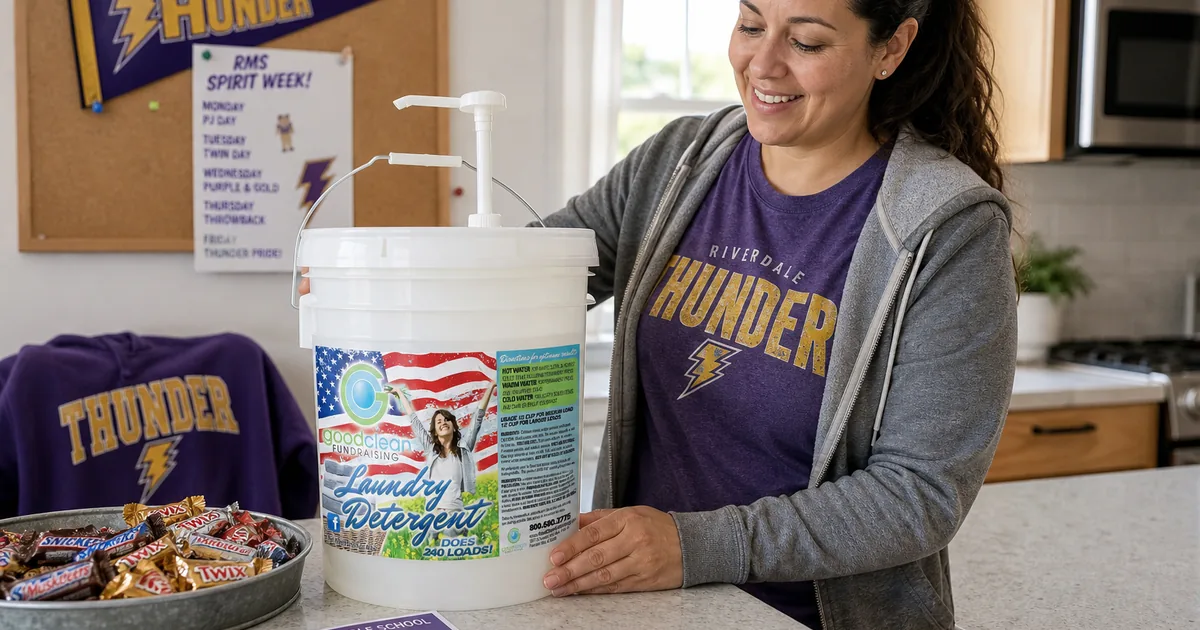
Fundraisers where customers receive something genuinely useful can outperform novelty and treat-based programs because supporters may feel they are getting real value rather than making a donation disguised as a purchase. One category that fits this description is bulk household-necessity fundraisers — laundry detergent, cleaning supplies, and similar staples people already buy and use regularly. They ask supporters to shift a purchase they were already going to make rather than spend extra on something they may not need, they can reach a wider buyer pool than niche products, and the value proposition is transparent: A 5-gallon bucket holds 640 ounces, so at $49.95 the buyer pays about 7.8 cents per ounce. Premium national-brand liquid detergents typically cost more per ounce at retail, though exact pricing varies by store, size, and promotion — compare that figure to what you currently pay, since value-tier and store brands can cost less per ounce. When judging whether a fundraiser offers real utility, look for three things: is it something households repurchase, does it cost less than the everyday alternative, and would a rational buyer choose it even without the fundraising connection.
There is a reason some fundraisers feel like an obligation and others feel like a good deal: the difference is often whether the person buying walks away with something they actually wanted. When a supporter pays for a tub of cookie dough they did not need or a candle they will never burn, the transaction can feel like a favor dressed up as a sale. When they pay for a household staple at a lower per-ounce price, it is a purchase they may have been going to make anyway — and the group benefits from it.
Fundraisers where the value flows both ways can work well. Supporters may feel good about buying because they got something useful for their money, sellers may feel good because they are not pushing a guilt purchase, and groups may raise more if participation is wider and repeat orders happen.
This guide explains why utility can help fundraising, what makes a product genuinely useful versus nominally useful, how to evaluate whether a fundraiser delivers real value, and how a household-necessity program compares when utility is the priority.
- Fundraisers where supporters receive something useful can raise more because the purchase feels like value, not charity; results still depend on participation and price.
- Household necessities — products people already buy and repurchase — can reach a wider buyer pool than novelty items or treats.
- For a repeat-purchase strategy, real utility means three things: the product is something households use regularly, it costs less than the everyday alternative, and a rational buyer would choose it without the fundraising tie. A durable one-time product can meet a genuine need too, just by different criteria.
- Programs that ask supporters to shift an existing purchase rather than spend extra money can remove a significant barrier to participation, for supporters whose timing and preferences line up.
- Transparent value propositions can build trust and support repeat orders in ways guilt-based or novelty fundraisers may not.
- Consumables that get used up and reordered can create a repeatable revenue stream for the group.
Why do fundraisers where people get something useful raise more?
The reasoning is straightforward: when a supporter buys something they need at a fair price, the transaction can feel like a win rather than a favor. They are not spending extra money to help the group — they are shifting a purchase they were already going to make. That can reduce the friction, guilt, and buyer fatigue that may cap participation in novelty and treat fundraisers. These are general observations rather than measured findings.
Contrast that with a traditional product fundraiser where the item is priced well above its everyday value so both the group and the fundraising company can profit from that single sale. The supporter may know they are overpaying, the seller may know it too, and the interaction can end up built on obligation rather than value. Participation may stay narrow because only the most committed supporters make that trade, and repeat orders may be less likely if no one especially wanted the product.
Utility-based fundraisers can flip that dynamic. When the product is something people use and the price is competitive, the buyer pool may expand — grandparents, neighbors, coworkers, and extended family who would not buy a novelty item may buy a household staple at a good price. Sellers may find it easier because they are offering value, not asking for a favor.
What makes a fundraiser product genuinely useful versus nominally useful?
Not every product a fundraiser calls useful actually is. A reusable water bottle or tote bag might seem practical, but many households already own several, so the purchase may still be a favor disguised as utility unless it fills an actual gap. For a repeat-purchase strategy built on consumables, real utility means the product meets three tests: it is something households use regularly and repurchase, it costs less than the everyday alternative, and a rational buyer would choose it even without the fundraising connection. A well-made durable item can still be genuinely useful by a different standard — filling a real gap and holding up to use — even without generating repeat orders.
Household consumables — laundry detergent, cleaning supplies, paper products — can pass all three tests. Most households use them, they get used up and need replacing, and when the fundraiser price is lower than the everyday alternative, the purchase can be rational. Compare that to a one-time novelty item: even if it is technically useful, it may not get repurchased, so the fundraiser is a single transaction rather than a repeatable relationship.
The other key test is price transparency. If the product is priced so far above its everyday value that supporters can tell they are overpaying, the utility claim weakens. Real utility requires real value — a quality product at a price that makes economic sense on its own, not just as a donation vehicle.
How do you evaluate whether a fundraiser delivers real value to supporters?
Before you commit to a program, run it through the supporter's lens. Ask: would I buy this product at this price if there were no fundraising connection? If the honest answer is no, the program may be asking supporters to make a favor purchase, and participation may stay narrow. If the answer is yes, you may have a fundraiser built on genuine value.
The second question is: does this replace something the supporter was already going to buy, or does it ask them to spend extra money? Programs that ask supporters to shift an existing purchase — buying their detergent from the group instead of the store, for example — can remove a major barrier to participation. Programs that ask supporters to buy something new on top of their normal spending rely on goodwill, and goodwill has limits.
The third question is: will supporters reorder this product, or is it a one-time purchase? Consumables that get used up and repurchased can create a repeatable fundraising relationship; one-time novelty items usually do not. If your goal is repeatable revenue rather than a single campaign, favor programs where the product naturally leads to repeat orders.
What are the best fundraisers where people get something useful?
When you filter for real utility — products people use regularly, repurchase, and can buy at a competitive price — a few categories rise to the top. Bulk household-necessity fundraisers, especially laundry detergent and cleaning supplies, can meet every test: broad need, regular repurchase, transparent value, and a price that can compete with or beat retail on a per-unit basis (check the comparison for the specific product and brand).
Good Clean Fundraising's bulk laundry-detergent program is one example of this model. Groups sell a 5-gallon pump bucket for $49.95 and keep about $13.45 to $15.45 per bucket at 100 or more buckets, depending on order volume. A 5-gallon bucket holds 640 ounces, so at $49.95 the buyer pays about 7.8 cents per ounce. Premium national-brand liquid detergents typically cost more per ounce at retail, though exact pricing varies by store, size, and promotion — compare that figure to what you currently pay, since value-tier and store brands can cost less per ounce. There is a $0 upfront cost because the group collects orders and payment first, then submits the final order with payment, and shipping is free at 100 or more buckets.
The value proposition is transparent: supporters get a useful product at a lower per-ounce price than premium national brands, and the group raises funds without asking anyone to buy a novelty item. Because detergent is a repurchase product, some supporters may reorder in future campaigns, though reorder rates are not published here. Good Clean Fundraising advertises a 100% money-back guarantee under which, according to the company, any unsatisfied customer is refunded and the group keeps its profit. The company also provides a Getting Started packet, instructions, marketing materials, and social media strategies.
Other utility-based options include consumable household products like paper goods and cleaning supplies, but the test is the same: the product must be something people use, the price must represent real value, and the program should favor repeat purchases over one-time transactions.
How does a utility-based fundraiser compare to traditional product fundraisers?
The table below shows how a household-necessity fundraiser stacks up against traditional treat and novelty fundraisers across the factors that decide whether supporters feel they are getting real value.
| Factor | Traditional Product Fundraiser | Household-Necessity Fundraiser |
|---|---|---|
| Buyer pool | Narrow segment (dessert, gifts) | Most households |
| Repeat purchases | Occasional or one-time | Repurchased regularly |
| Price vs. retail | Often priced above value | ~7.8¢/fl oz |
| Purchase motivation | Obligation, goodwill | Genuine value, rational choice |
| Supporter perception | Overpaying as a favor | May see a good deal |
| Fundraising sustainability | Single-transaction campaign | Reorder potential (unmeasured) |
Common mistakes to avoid
Confusing nominal utility with real utility
A product can be technically useful but still fail the value test if households already own it or if the price is too high. For a program built around repeat purchases, real utility means the product is consumable, repurchased, and priced competitively; a durable non-consumable can still be useful, judged instead by whether it fills a genuine gap rather than by repurchase rate.
Choosing a one-time product over a consumable
Novelty items and one-time purchases can cap your fundraising at a single campaign. Consumables that get used up and reordered can create a repeatable relationship.
Ignoring the supporter's economic lens
If you would not buy the product at that price without the fundraising tie, treat that as a signal worth checking — though your supporters' preferences will not all match yours. Run every program through the rational-buyer test as one input, not the final word, before you commit.
Overlooking price transparency
Supporters may notice when they are overpaying. If the value proposition is not clear, the fundraiser can feel like a favor rather than a fair exchange, and participation may stay narrow.
- GCF per-ounce price calculation — a 5-gallon (640 fl oz) bucket at $49.95 works out to about 7.8 cents per fluid ounce ($49.95 ÷ 640 fl oz = 7.8046875¢/fl oz). Compare this figure to what you currently pay for premium liquid detergent; exact retail pricing varies by store, size, and promotion, and value-tier and store brands can cost less per ounce.
- Good Clean Fundraising program terms — $49.95 per bucket; $13.45 profit per bucket at 100 to 299 buckets (usually $5 to $12 at 50 to 99 buckets, depending on actual shipping costs), $14.45 at 300 to 499, $15.45 at 500 or more; $0 upfront cost; free shipping at 100+ buckets; 50-bucket minimum (smaller orders are not accepted); 100% money-back guarantee under which, according to the company, any customer who is not satisfied is refunded and the group keeps its profit. — GCF pricing, GCF how it works, and GCF refund and returns policy
- Editorial note: statements about perceived value, supporter motivation, and repeat purchasing in this article are general reasoning and observations, not cited research findings or measured survey data.
Our recommendation
If you want a fundraiser where supporters feel they are getting value, one option worth considering is a bulk household-necessity program — specifically laundry detergent. Good Clean Fundraising runs The Good Clean Fundraiser, a bulk laundry-detergent program: groups sell a 5-gallon pump bucket for $49.95, keep about $13.45 to $15.45 per bucket at 100 or more buckets, and pay $0 upfront because the group collects orders and payment first, then submits the final order with payment. Shipping is free at 100 or more buckets, and the company provides a Getting Started packet, instructions, marketing materials, and social media strategies. Good Clean Fundraising advertises a 100% money-back guarantee under which, according to the company, any unsatisfied customer is refunded and the group keeps its profit. Groups should plan for the 50-bucket minimum, a commercial delivery address, and about two weeks of fulfillment after the paid order is submitted.
Frequently asked questions
They may raise more because when supporters receive something they need at a fair price, the purchase can feel like value rather than charity, which can reduce the friction and guilt that cap participation in novelty fundraisers. The buyer pool may expand because people are shifting an existing purchase rather than spending extra, and repeat orders are possible because the product is something they use and repurchase.
For a program built around repeat purchases, real utility means three things: the product is something households use regularly and repurchase, it costs less than the everyday alternative, and a rational buyer would choose it even without the fundraising connection. Household consumables like laundry detergent can pass all three tests. A durable, one-time product can also be genuinely useful, judged instead by whether it fills a real need and holds up to regular use, even though it will not generate repeat orders the way a consumable does.
Bulk household-necessity fundraisers — especially laundry detergent and cleaning supplies — can meet the utility tests: broad need, regular repurchase, transparent value, and a competitive per-unit price. These programs can reach a wider buyer pool than treat or novelty fundraisers and can create repeatable revenue through reorders.
Ask three questions: would I buy this product at this price without the fundraising tie, does it replace something I was already going to buy, and will I reorder it? If the answers are yes, the fundraiser is built on genuine value and may reach a wider buyer pool. If any answer is no, participation may stay narrow.
For many groups — mainly because the buyer pool can be wider. Detergent is a necessity most households purchase, so it can reach grandparents, neighbors, and coworkers who might not buy a dessert product. It is also non-perishable, which removes the frozen-delivery logistics, and at well below premium national brands' typical per-ounce retail price supporters may see real value rather than a favor.
It depends on how many families participate and what you sell, so treat any single number with caution. As one example, Good Clean Fundraising has groups sell a 5-gallon bucket of detergent for $49.95 and keep about $13.45 to $15.45 per bucket at 100 or more buckets, with free shipping at that volume. The bigger lever is participation: when more families find buyers, the total can rise more than a small change in per-item profit would.
Many likely do. Supporters may notice when they are overpaying for a novelty item as a favor, which can limit how many participate and how much they buy. When the product is something they need at a price that makes economic sense, the purchase may feel like a win rather than an obligation. This is a general observation, not survey data.
A donation fundraiser asks supporters to give money and receive nothing tangible in return. A utility-based fundraiser gives supporters a useful product at a competitive price, so they receive something for their money. The latter may reach a wider pool of supporters because the value exchange is transparent and the purchase is practical, not just charitable.
Possibly. When the product is a consumable that gets used up — like laundry detergent — supporters may reorder in future campaigns because they need the product again, which can create a repeatable fundraising relationship. Whether a repeat drive suits your families, and current program terms, are worth confirming with the vendor.
The Good Clean Fundraiser is Good Clean Fundraising's bulk laundry-detergent program. Groups sell a 5-gallon pump bucket for $49.95 — about 7.8 cents per fluid ounce, typically less than premium national-brand liquid detergent costs per ounce at retail — and keep about $13.45 to $15.45 per bucket at 100 or more buckets. There is a $0 upfront cost because the group collects orders and payment first, free shipping at 100 or more buckets, and a Getting Started packet, instructions, marketing materials, and social media strategies. Good Clean Fundraising advertises a 100% money-back guarantee under which, according to the company, any unsatisfied customer is refunded and the group keeps its profit. It is a household staple rather than a novelty item, which fits the utility tests described above.
Fundraisers where supporters get something useful can work well because the value flows both ways: supporters receive a product they need at a fair price, sellers are not pushing a guilt purchase, and participation may be wider. Build your fundraiser around real utility, transparent value, and a product people repurchase, and test any program against the three utility questions before you commit.