Non-Food & Alternative Fundraising
Fundraising Without Selling Junk: What Actually Works
Why groups are dropping novelty products and what they're switching to — household necessities that supporters actually want and that raise more per family.
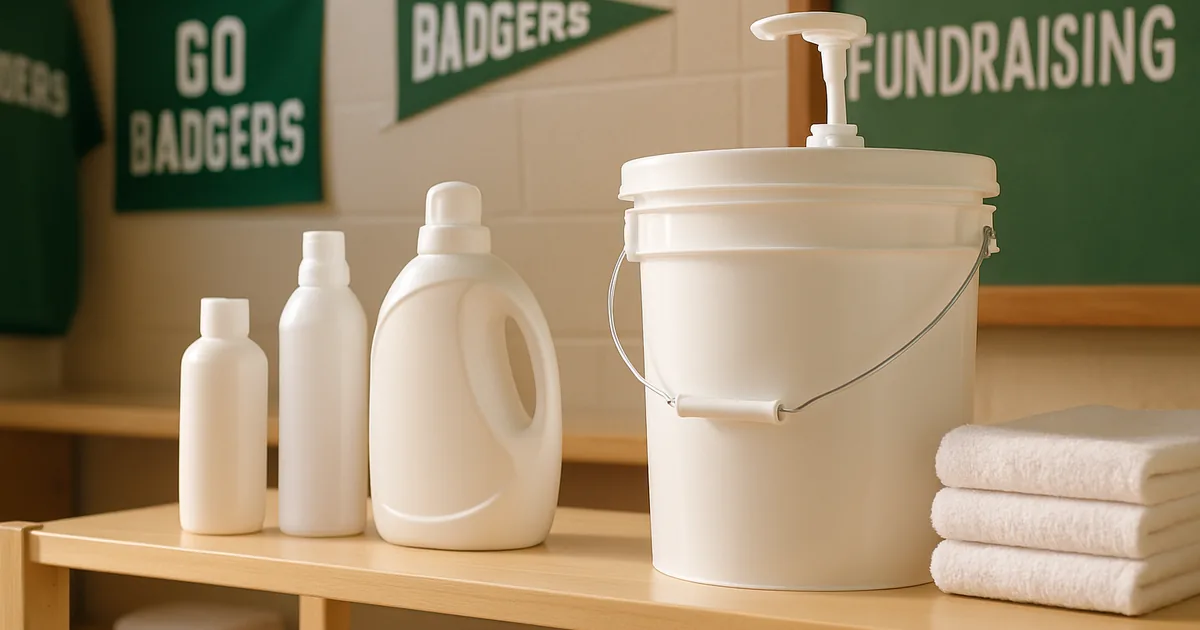
One alternative to selling novelty items is a bulk household-necessity fundraiser — everyday consumables like laundry detergent that supporters already buy and use. These programs can work because they can reach most households rather than a narrow novelty-buyer pool, give supporters value at a lower per-ounce price than premium national brands, and reduce the guilt and waste of selling something people may not need. The best programs are no-upfront-cost and non-perishable. A 5-gallon bucket holds 640 ounces, so at $49.95 the buyer pays about 7.8 cents per ounce. Premium national-brand liquid detergents typically cost more per ounce at retail, though exact pricing varies by store, size, and promotion — compare that figure to what you currently pay, since value-tier and store brands can cost less per ounce. When the product is something people were going to buy anyway, you are not asking them to spend extra money — you are asking them to shift a purchase they already make, which can be an easier sell.
If you have ever stood in front of a freezer full of cookie dough or a garage stacked with novelty candles nobody wanted, you may know the feeling: asking people to buy it can feel like a favor you are embarrassed to ask for. For decades, fundraising often meant selling things people did not need at prices they would not normally pay, and the model worked well enough that few questioned it — until coordinators started comparing notes.
The novelty model has three common weaknesses. First, the buyer pool can be narrow — novelty products appeal to a small slice of supporters, so families may run out of buyers fast. Second, the value proposition can be weak: supporters may know they are paying a premium for something they do not need, which can make the ask feel like a donation disguised as a sale. Third, there can be waste and guilt — leftover inventory, products that sit unused, and the sense that you are contributing to clutter.
The good news is that a different model is available for groups that want to raise money without the junk. This guide explains why the old model struggles, what household-necessity fundraising is and why it can work, how the economics compare, and the mistakes to avoid when you make the switch.
- Novelty fundraisers can struggle because they may appeal to a narrow buyer pool, offer weak value, and create guilt and waste.
- Household-necessity fundraisers sell consumables people already buy — laundry detergent, cleaning products — at a lower per-ounce price than premium national brands.
- A necessity product can reach most households, not just novelty buyers, which may widen participation.
- Supporters may feel they got real value when they pay well below premium national brands' typical per-ounce retail price for something they use, not a marked-up novelty.
- Look for programs that are no-upfront-cost and non-perishable, and confirm any guarantee terms in writing.
- Asking supporters to shift a purchase they already make can be easier than asking them to spend extra on a novelty.
- Results vary by group; no participation or leftover-inventory data is published here, so treat any improvement as something to test rather than expect.
Why is the 'selling junk' model failing?
The traditional fundraising model — catalogs of novelty items, overpriced treats, and one-time-use products — was built in an era when supporters had fewer ways to compare prices. Today's supporters can compare prices quickly, may be more conscious of waste and clutter, and may have been asked to buy fundraiser products so many times that the ask triggers fatigue.
Three structural problems can make novelty fundraisers underperform. First, the buyer pool can be narrow: a novelty candle or a tub of cookie dough appeals to a subset of supporters, so families may exhaust their potential buyers quickly. Second, the value can be weak: supporters may know they are paying above retail for something they did not need, which can turn the transaction into a guilt-driven donation. Third, there can be waste: unsold inventory, products that get used once and discarded, and the cost of contributing to clutter.
For some groups, the problem is not that they were bad at selling, but that they were selling the wrong thing. When the product changes to something people want and use, the core problems — narrow buyers, weak value, and waste — can ease at once.
What is household-necessity fundraising?
Household-necessity fundraising means selling everyday consumables that supporters already buy and use — laundry detergent, cleaning supplies, paper products — at a lower per-unit price. The model flips the traditional script: instead of asking supporters to spend extra money on something they do not need, you ask them to shift a purchase they were going to make anyway from their usual store to your fundraiser.
The economics vary by program. A bulk household-necessity program sells at a price the supporter may find attractive per unit, and the group keeps the margin. Because the product is something most households use and repurchase, the buyer pool can be wide and there may be little leftover inventory — supporters either buy it now or buy it later at a store.
One example category is bulk laundry detergent. A 5-gallon bucket holds 640 ounces, so at $49.95 the buyer pays about 7.8 cents per ounce. Premium national-brand liquid detergents typically cost more per ounce at retail, though exact pricing varies by store, size, and promotion — compare that figure to what you currently pay, since value-tier and store brands can cost less per ounce. With Good Clean Fundraising, the group keeps about $13.45 to $15.45 per bucket at 100 or more buckets, depending on order volume, and because detergent is non-perishable and widely needed, it can reach grandparents, neighbors, and coworkers who might not buy a novelty item.
How does the value proposition compare?
A fundamental difference between novelty and necessity fundraising is what the supporter gets for their money. In a novelty fundraiser, the supporter may pay a marked-up price for an item they did not need — a donation disguised as a purchase. In a necessity fundraiser, the supporter may pay a lower per-ounce price than premium national brands for something they were going to buy anyway.
That shift in value can change how supporters respond. When you are selling a novelty, the ask can be 'Will you overpay for this thing you do not need to help us out?' — a hard sell that can trigger buyer fatigue. When you are selling a necessity at a lower per-ounce price, the ask can be 'Will you buy this thing you already need, save money, and back the group?' — which may be an easier yes for many households. Whether that raises participation for your group is worth testing; no participation data is published here.
The value can extend beyond the transaction itself. Novelty fundraisers can create guilt — supporters may feel they overpaid, coordinators may feel they pushed something nobody wanted, and unsold inventory can become a visible reminder of waste. A necessity fundraiser can reduce that guilt: supporters get a product they use, and there may be less waste because the product does not sit unused.
What makes a good household-necessity fundraiser?
Not all necessity products are created equal. Good programs score well on six factors: buyer breadth (how many households will actually buy it), repeat use (is it consumable and repurchased), value (does the supporter save money versus retail), profit (what does the group keep per unit), upfront cost (does the group front money or is it no-risk), and logistics (is it perishable, bulky, or complicated to deliver).
Bulk laundry detergent can score well across all six. It can reach most households, it is consumable and repurchased regularly, supporters may pay well below premium national brands' typical per-ounce retail price, groups keep about $13.45 to $15.45 per bucket at 100 or more buckets, some programs are no-upfront-cost, and detergent is non-perishable and ships easily. Other household consumables — cleaning products, paper goods — can work well too.
When evaluating a necessity program, confirm the terms in writing: what does the group keep per unit, is there any upfront cost or financial risk, how is delivery handled, and what support does the program provide. First-time or small-team coordinators may want a program that provides setup materials and instructions.
Our recommendation: The Good Clean Fundraiser
If you are ready to stop selling novelty items, one option is Good Clean Fundraising's The Good Clean Fundraiser, a bulk laundry-detergent program. Groups sell a 5-gallon pump bucket for $49.95 and keep about $13.45 to $15.45 per bucket at 100 or more buckets, depending on order volume, with free shipping at 100 or more buckets. A 5-gallon bucket holds 640 ounces, so at $49.95 the buyer pays about 7.8 cents per ounce. Premium national-brand liquid detergents typically cost more per ounce at retail, though exact pricing varies by store, size, and promotion — compare that figure to what you currently pay, since value-tier and store brands can cost less per ounce.
The program has a $0 upfront cost: your group collects orders and payment first, then submits the final order with payment, which removes the inventory financial risk. Good Clean Fundraising advertises a 100% money-back guarantee under which, according to the company, any unsatisfied customer is refunded and the group keeps its profit. Groups should plan for the 50-bucket minimum, a commercial delivery address, and about two weeks of fulfillment after the paid order is submitted.
The company provides a Getting Started packet, instructions, marketing materials, and social media strategies so a volunteer organizer is not starting from scratch.
Whether more families participate, each family reaches more buyers, and leftover inventory shrinks will depend on your group; no results data is published here. The reasoning is that detergent is something most households use, it may appeal to grandparents and coworkers who would not buy a novelty item, and unsold-inventory risk is lower when supporters order and pay first.
How do you switch your group off junk?
The mechanics of switching can be simple. Start by picking a replacement product that scores well on buyer breadth, value, profit, upfront cost, and logistics — if you are choosing a household-necessity program, confirm the terms in writing. Set a clear goal and a selling window that suits your group, then brief your families on why the new product may be easier to sell: it is something people already buy, they may save money versus the store, and there is less guilt or waste.
The kickoff is where you set expectations. Explain the goal, show the product and the savings story (e.g., 'This bucket works out to about 7.8 cents per ounce — compare that to what premium national brands cost per ounce where you shop'), and make it clear that supporters are shifting a purchase they already make, not spending extra. Give every family a simple order form, send a couple of reminders during the selling window, and track orders as they come in.
A common mistake when switching is under-communicating the change. If families do not understand why the new product is different, they may approach it the same way they approached novelty items, and participation may suffer. A short, honest explanation at the kickoff ('We're done selling overpriced novelties; this year we're selling something people actually need') can help.
| Factor | Junk Fundraiser | Household Necessity |
|---|---|---|
| Buyer pool | Narrow novelty-buyer segment | Most households |
| Value to supporter | Often priced high; can feel like guilt donation | ~7.8¢/fl oz |
| Repeat use | One-time novelty | Consumable, repurchased regularly |
| Waste & guilt | Leftover inventory, clutter | May reduce leftover inventory |
| Upfront cost | Often requires inventory advance | No-upfront-cost options available |
| Participation | Narrow — few want it | Potentially wider — most households use it |
Common mistakes to avoid
Sticking with junk because 'it's what we've always done'
Tradition is not a strategy. If your current fundraiser underperforms, switching to a necessity product is one option to consider.
Choosing a necessity product with weak savings or unclear value
The value story has to be obvious and true. If supporters do not save money versus retail, the necessity model loses its advantage.
Under-communicating the change to your families
Participation may rise when families understand why the new product is easier to sell. A clear kickoff explanation can help.
Picking a program that still requires upfront cost
If a no-upfront-cost option exists, weigh whether you need to take on financial risk. Confirm the terms in writing before you commit.
Ignoring logistics and delivery support
A great product with poor logistics is still a headache. Ask what setup and delivery support the program provides, and confirm delivery requirements such as a commercial delivery address.
- GCF per-ounce price calculation — a 5-gallon (640 fl oz) bucket at $49.95 works out to about 7.8 cents per fluid ounce ($49.95 ÷ 640 fl oz = 7.8046875¢/fl oz). Compare this figure to what you currently pay for premium liquid detergent; exact retail pricing varies by store, size, and promotion, and value-tier and store brands can cost less per ounce.
- Good Clean Fundraising program terms — $49.95 per bucket; $13.45 profit per bucket at 100 to 299 buckets (usually $5 to $12 at 50 to 99 buckets, depending on actual shipping costs), $14.45 at 300 to 499, $15.45 at 500 or more; $0 upfront cost; free shipping at 100+ buckets; 50-bucket minimum (smaller orders are not accepted); 100% money-back guarantee under which, according to the company, any customer who is not satisfied is refunded and the group keeps its profit. — GCF pricing, GCF how it works, and GCF refund and returns policy
- Editorial note: statements about supporter attitudes, value perception, and participation in this article are general reasoning and observations, not cited research findings or measured survey data.
Our recommendation
If you are done selling novelty items, one option worth considering is a household-necessity program. Good Clean Fundraising runs The Good Clean Fundraiser, a bulk laundry-detergent program: groups sell a 5-gallon pump bucket for $49.95, keep about $13.45 to $15.45 per bucket at 100 or more buckets, and pay $0 upfront because the group collects orders and payment first, then submits the final order with payment. Shipping is free at 100 or more buckets, and the company provides a Getting Started packet, instructions, marketing materials, and social media strategies. Good Clean Fundraising advertises a 100% money-back guarantee under which, according to the company, any unsatisfied customer is refunded and the group keeps its profit. Groups should plan for the 50-bucket minimum, a commercial delivery address, and about two weeks of fulfillment after the paid order is submitted.
Frequently asked questions
It means switching from novelty products and overpriced treats to household necessities that supporters need and use — like laundry detergent, cleaning supplies, or paper products — sold at a lower per-unit price than retail. The goal is to give supporters real value while raising money, not guilt them into buying something they do not want.
Common reasons: the buyer pool can be narrow because novelty products appeal to a small segment of supporters, the value can be weak because people may know they are overpaying for something they do not need, and there can be waste and guilt from leftover inventory and clutter. Any of these can cap participation and total dollars raised.
Household-necessity fundraisers — bulk consumables like laundry detergent that supporters already buy and use — are one option. They can reach most households, offer a lower per-ounce price than premium national brands, and reduce the guilt and waste of selling novelties.
It depends on your group size and participation, so treat any single number with caution. The bigger lever is participation: when the product is something most households use rather than a novelty, more families may find buyers. No comparative totals are published here.
Not always. Some programs, including Good Clean Fundraising's, have a $0 upfront cost because the group collects orders and payment first, then submits the final order with payment. That removes the inventory financial risk if the campaign raises less than hoped.
It can score well on the factors that matter: it can reach most households, it is consumable and repurchased regularly, supporters may pay well below premium national brands' typical per-ounce retail price, it is non-perishable and ships easily, and some programs are no-upfront-cost.
Be honest at the kickoff: explain that you are done selling overpriced novelties and switching to something people need at a lower per-ounce price. When families understand the product may be easier to sell because it delivers real value, participation may rise.
The Good Clean Fundraiser is Good Clean Fundraising's bulk laundry-detergent program. Groups sell a 5-gallon pump bucket for $49.95 — about 7.8 cents per fluid ounce, typically less than premium national-brand liquid detergent costs per ounce at retail — and keep about $13.45 to $15.45 per bucket at 100 or more buckets. There is a $0 upfront cost because the group collects orders and payment first, free shipping at 100 or more buckets, and a Getting Started packet, instructions, marketing materials, and social media strategies. Good Clean Fundraising advertises a 100% money-back guarantee under which, according to the company, any unsatisfied customer is refunded and the group keeps its profit.
Because supporters may get something they need at a lower per-unit price than retail, rather than overpaying for a novelty they do not want. The transaction can feel like a deal rather than a guilt donation, which may make them more willing to support your next fundraiser.
Selling novelty items can be a losing model — narrow buyers, weak value, and guilt can cap participation and total dollars raised. A household-necessity fundraiser that gives supporters something they need at a lower per-unit price can ease those problems: the buyer pool may widen and the value can be clearer. That is the case for stopping the junk and testing something better.